Today, in my optics class, I discussed optical forces due to momentum in electromagnetic waves. Towards the late 1800s, it was realized that light can impart momentum. This manifested as radiation pressure in the electromagnetic theory proposed by James Maxwell.
Pyotr Nikolaevich Lebedev (24 February 1866 – 1 March 1912) was one of the earliest to experimentally measure (~1899) the radiation pressure on a surface (link to his 1900 paper in German). In 1991, the Soviet Union released a 1 ruble coin (pictured above) to commemorate Lebedev’s scientific achievement.
The formula expresses the total momentum transferred per unit time ( radiation pressure, P) by a beam of N photons, each of energy hν, that is incident on a surface with a coefficient of reflectivity ρ. The constant, c, is the speed of light.
From 15th to 18th June 2025, I attended a focused meeting called ConForce.
The location was at an interesting place: Casuarina Resort Park- Kurunji, which is about 70 km from Pune. It was a scenic and raw place, with an amazing landscape. The resort facilities were ok with limited facilities, but the landscape was just breathtaking. It rained almost all the time, but it created a wonderful visual across the horizon with lush green patches of mountains and grey clouds (see image).
The main theme of the meeting was related to force spectroscopy, with a greater tilt towards biophysical applications. I spoke in the optical tweezers section and enjoyed the discussion with various participants and speakers. Specifically, I presented some of our recent, unpublished work on optical binding and its optical perturbation.
New ideas are often created by the merging of two old ideas. How often is this true, and how often do we tend to forget this?
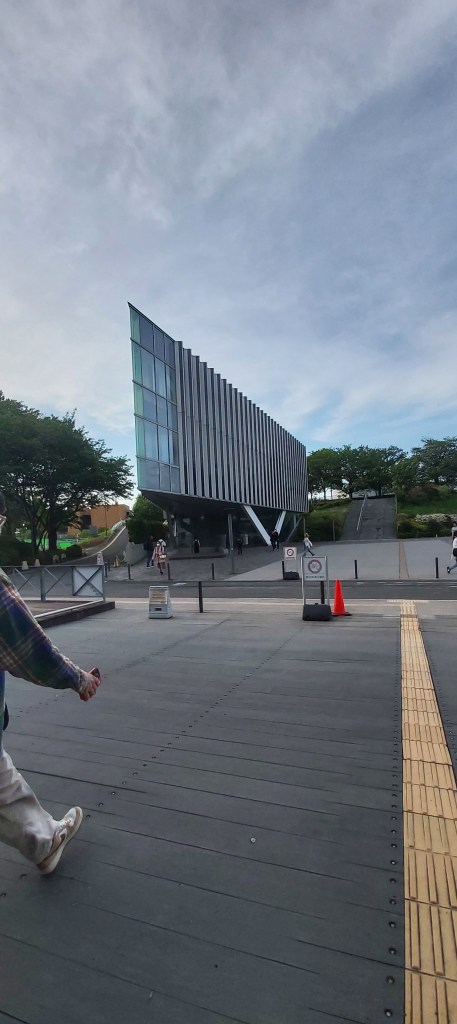
Today I visited the Institute of Science Tokyo, formerly known as Tokyo Tech. This is a new avatar of a very interesting institution funded by the government of Japan. By merging the Tokyo Institute of Technology with the Tokyo Medical and Dental University, a very interesting concept has emerged: the Institute of Science Tokyo. These two institutions have been important pillars of the research and educational landscape of Tokyo, and I had the privilege of visiting this new place, which is a result of a new merger.
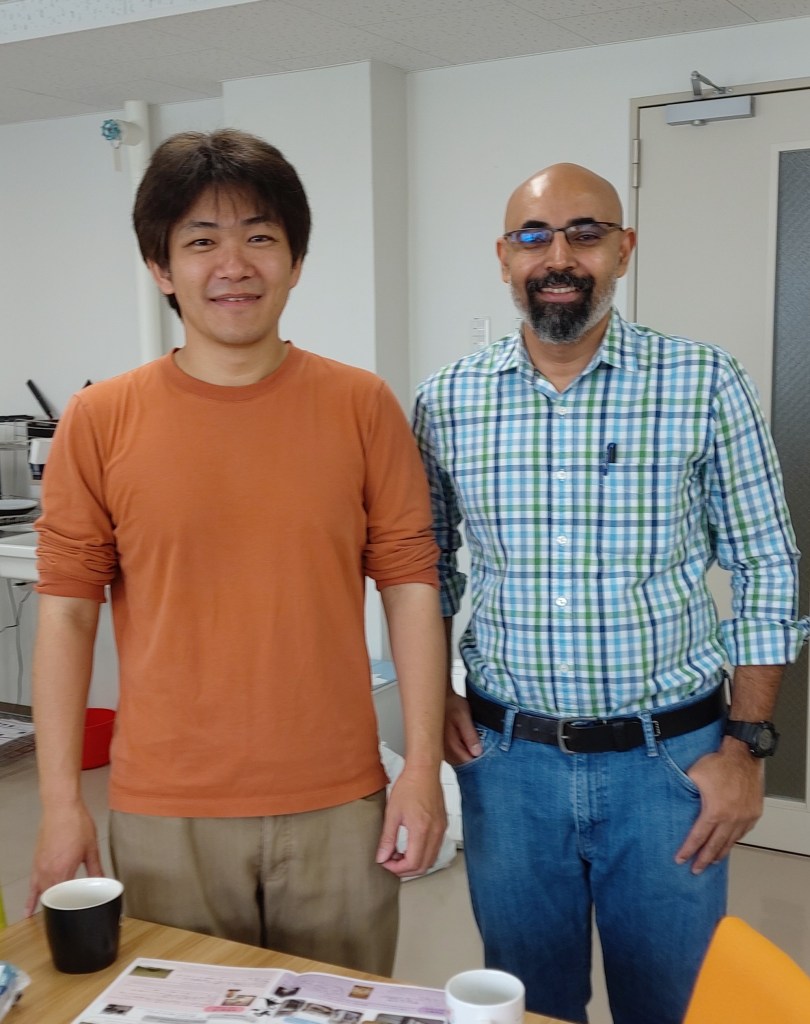
Thanks to the invitation and fantastic hospitality of Prof. Daiki Nishiguchi, a faculty member in the Physics Department of the Institute of Science Tokyo, I had a memorable experience. I met Daiki a couple of years ago at the University of Tokyo, where he previously held a faculty position. Recently, he has moved to the Institute of Science Tokyo to establish his independent research group as an Associate Professor.
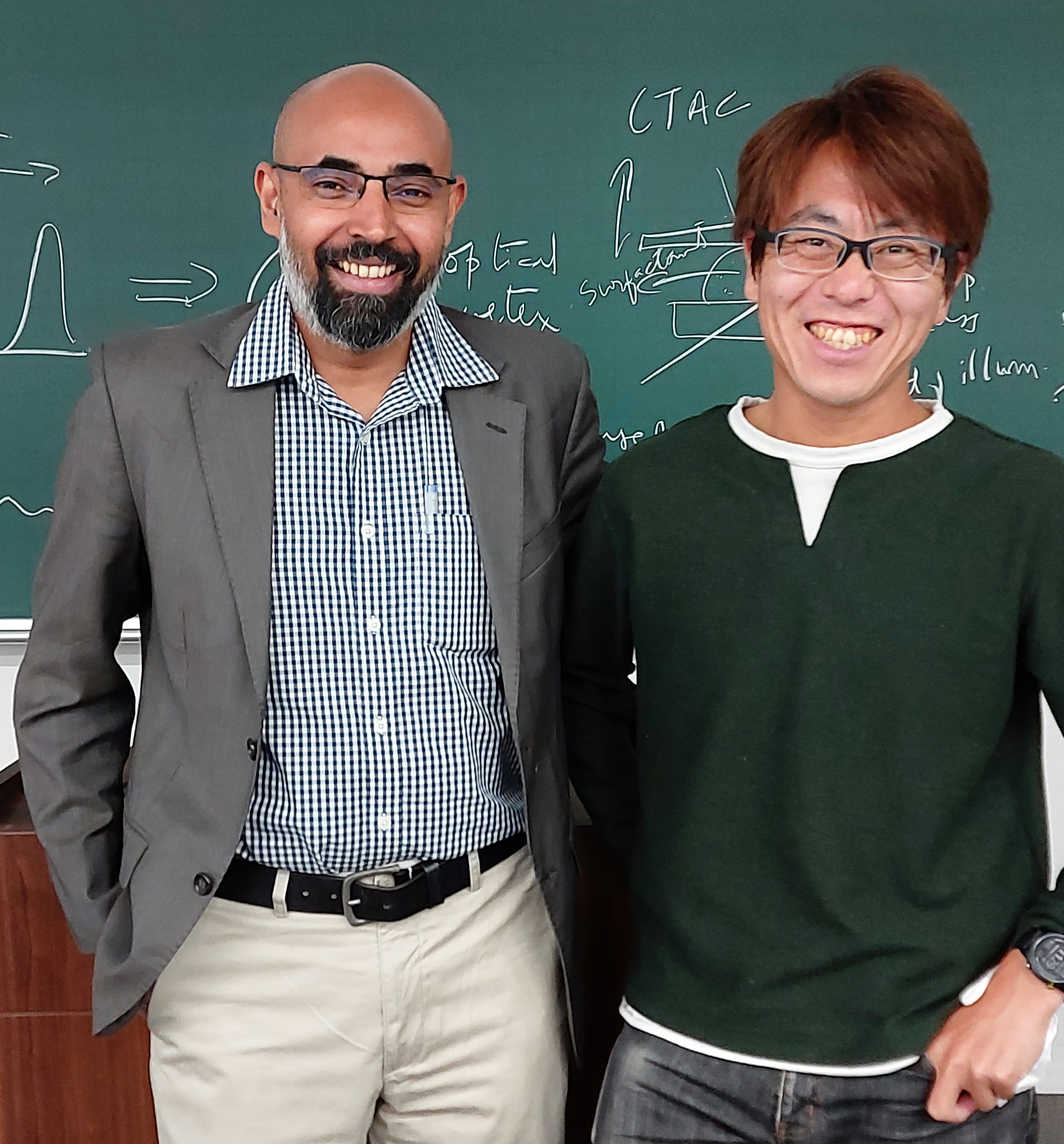
I gave a physics seminar on some of our work on structured light and confinement of soft matter, especially thermally active colloidal matter in optothermal potentials. Since Daiki and his group (see image below) have expertise in topological soft matter, my seminar emphasized structured topological beams, including ring optical beams and optical vortices. I gave an overview of our experimental results and highlighted the prospect of utilizing the topology of light to interact with topological soft matter.
There is much to explore at this interface, and again, it brings me back to the point that new ideas often emerge from the merging of evolving old ideas, such as topological light and topological soft matter.
This is my third visit to Japan, and I always find their calm, focused, and deeply committed research environment inspiring. There is much to learn from their approach to science and technology, and my visit to the Institute of Science Tokyo reinforced this thought.
I thank Daiki and his research group for the wonderful time I had at their laboratory and offer my best wishes to him in his new explorations.
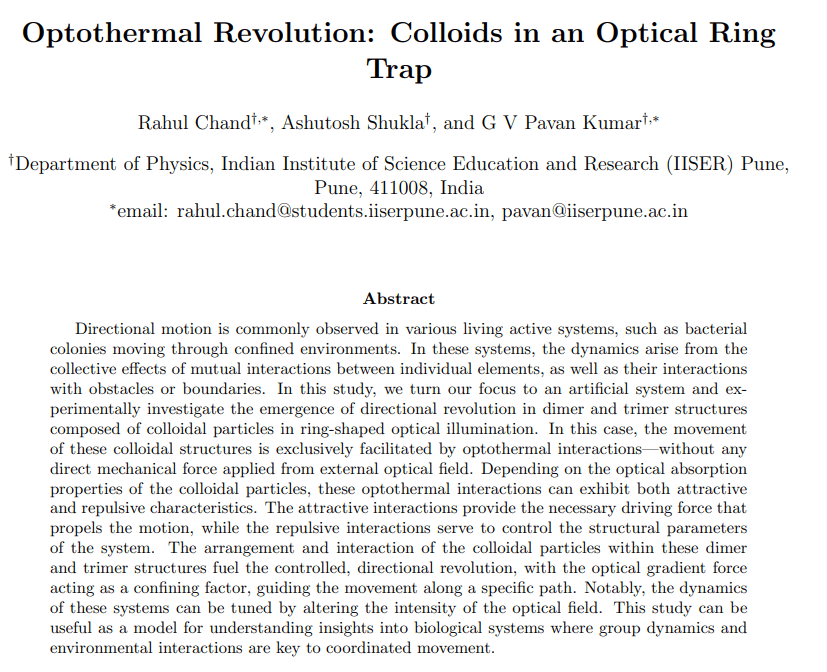
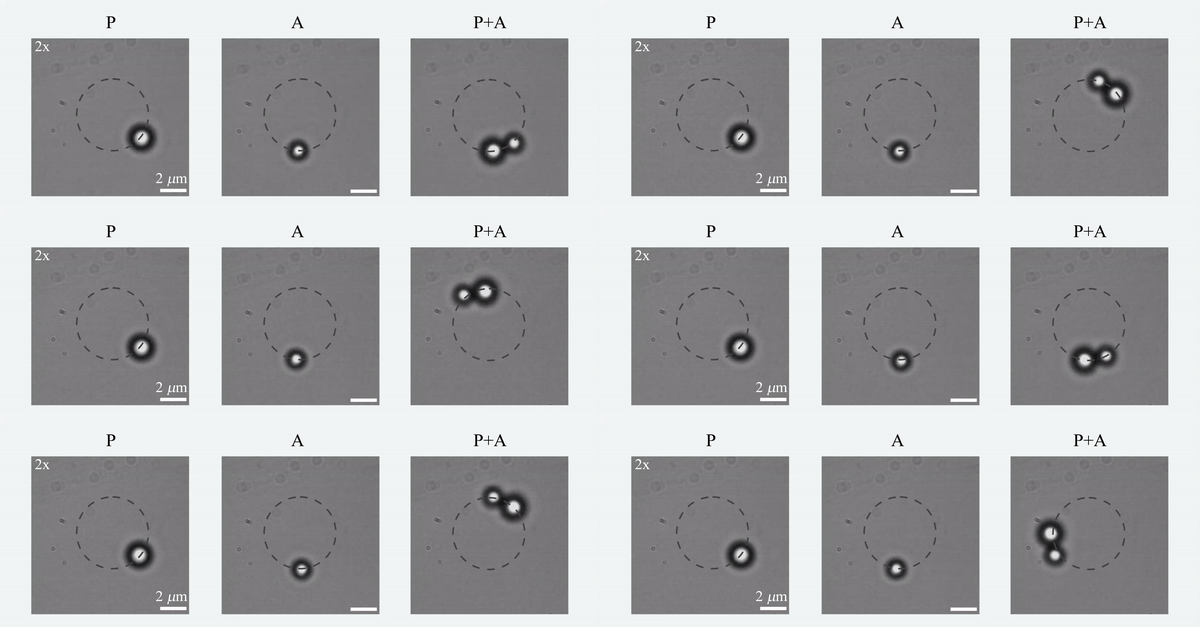
We have an Arxiv preprint on how a mixture of colloids (thermally active + passive particles in water) can lead to the emergence of revolution dynamics in an optical ring trap (dotted line). Super effort by our lab members Rahul Chand and Ashutosh Shukla.
Interestingly, the revolution emerges only when an active and a passive colloid are combined (not as individuals) in a ring potential (dotted line)
the direction (clock or anti-clockwise) of the revolution depends on the relative placement of the colloids in the trap
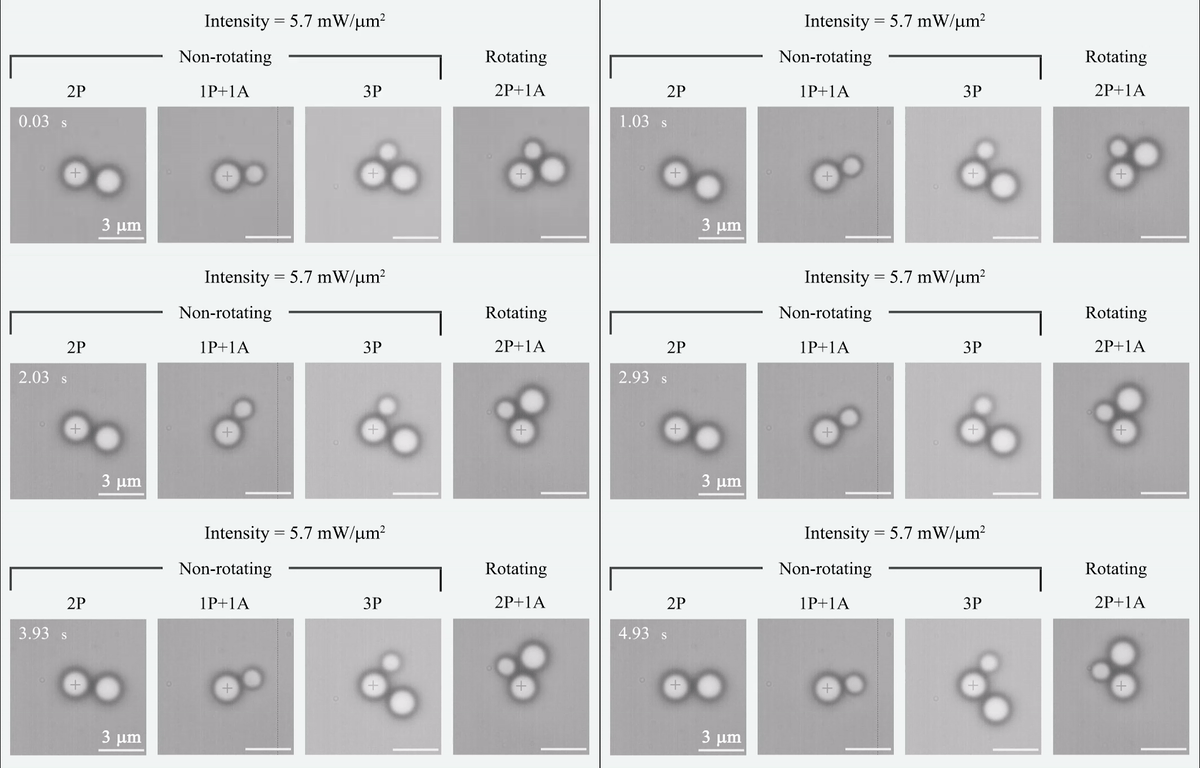
This revolution can be further used to propel a third active colloid
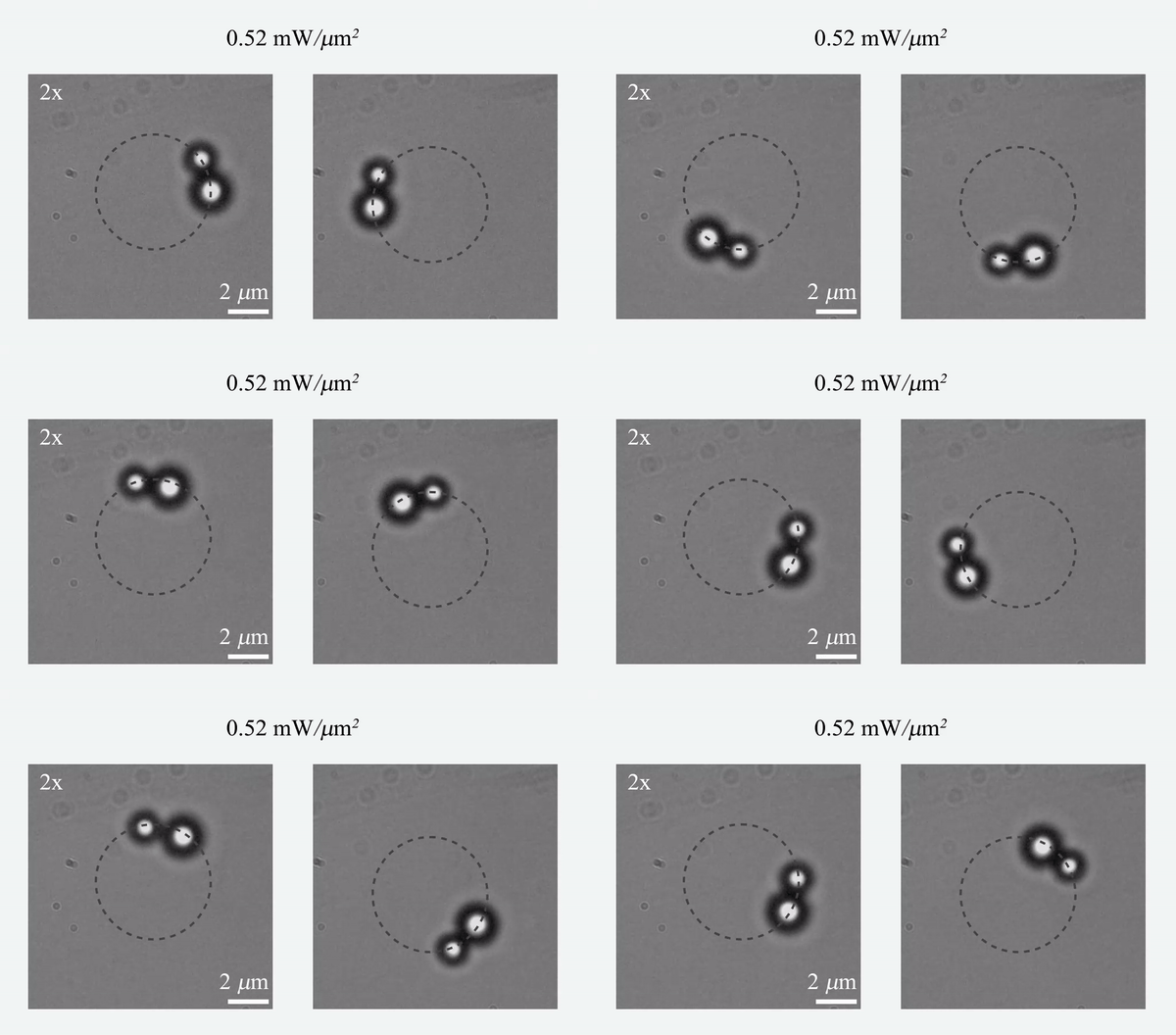
We have a new paper to appear in ACSPhotonics. Great effort by Rahul Chand, Chaudhary Eksha Rani and Diptabrata Paul from our group. We ask : How & why does directional rotation emerge in an optical trap of thermally active (smaller) + passive colloidal combination ?
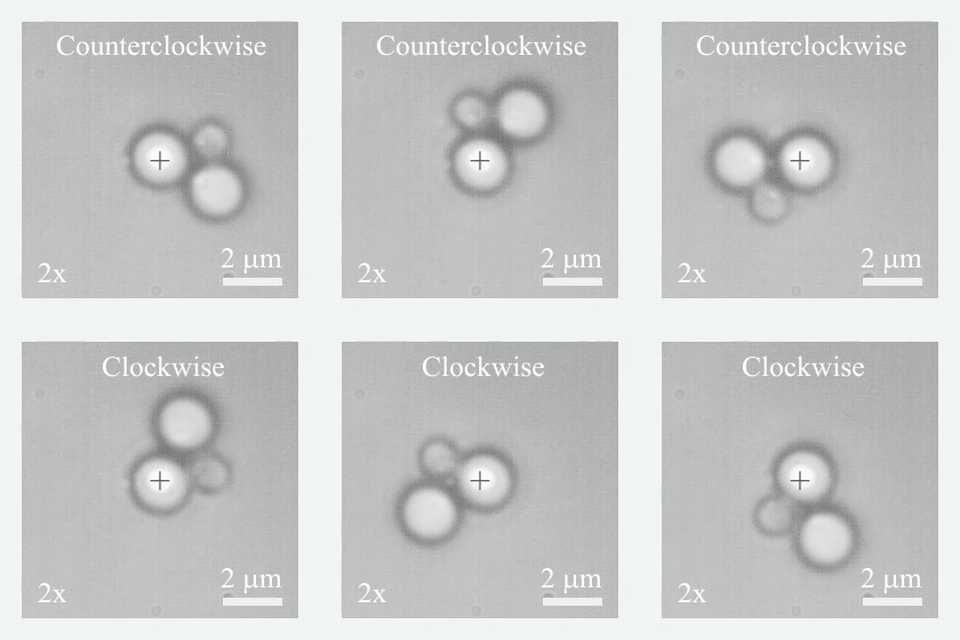
By combining light absorbing colloid (smaller one) with a normal colloid (bigger ones), we can observe directional rotation in a 2D optical trap. What determines the rotation direction is the relative position of the active colloid in the assembly.
One can switch the direction of rotation, by changing the relative position of active colloid.
For the rotation to emerge, the symmetry of the colloidal arrangement matters. As you see, if there are two active colloids (smaller ones) are symmetrically positions with respect to passive colloids (bigger one), we do not observe rotation.
There is a lot more interesting stuff and explanation of the observed effect discussed in our paper. You can read the pre-print of the our paper in arxiv : https://arxiv.org/abs/2309.12740
Thanks to the invitation of Prof. Hajime Ishihara, I visited Osaka from 29th April to 2nd May 2023.
I arrived in Osaka on Saturday (29th Apr). On 30th Apr (Sunday) I headed out to visit the famous Kiyomizudera Temple in Kyoto with 2 PhD students from Ishihara’s group : Hideki Arahari and Takao Horai
Kiyomizudera Temple towards the right and beautiful landscape surrounding it.
Apart from the temple, we had a wonderful time exploring the Nishiki Market and Kamo river.
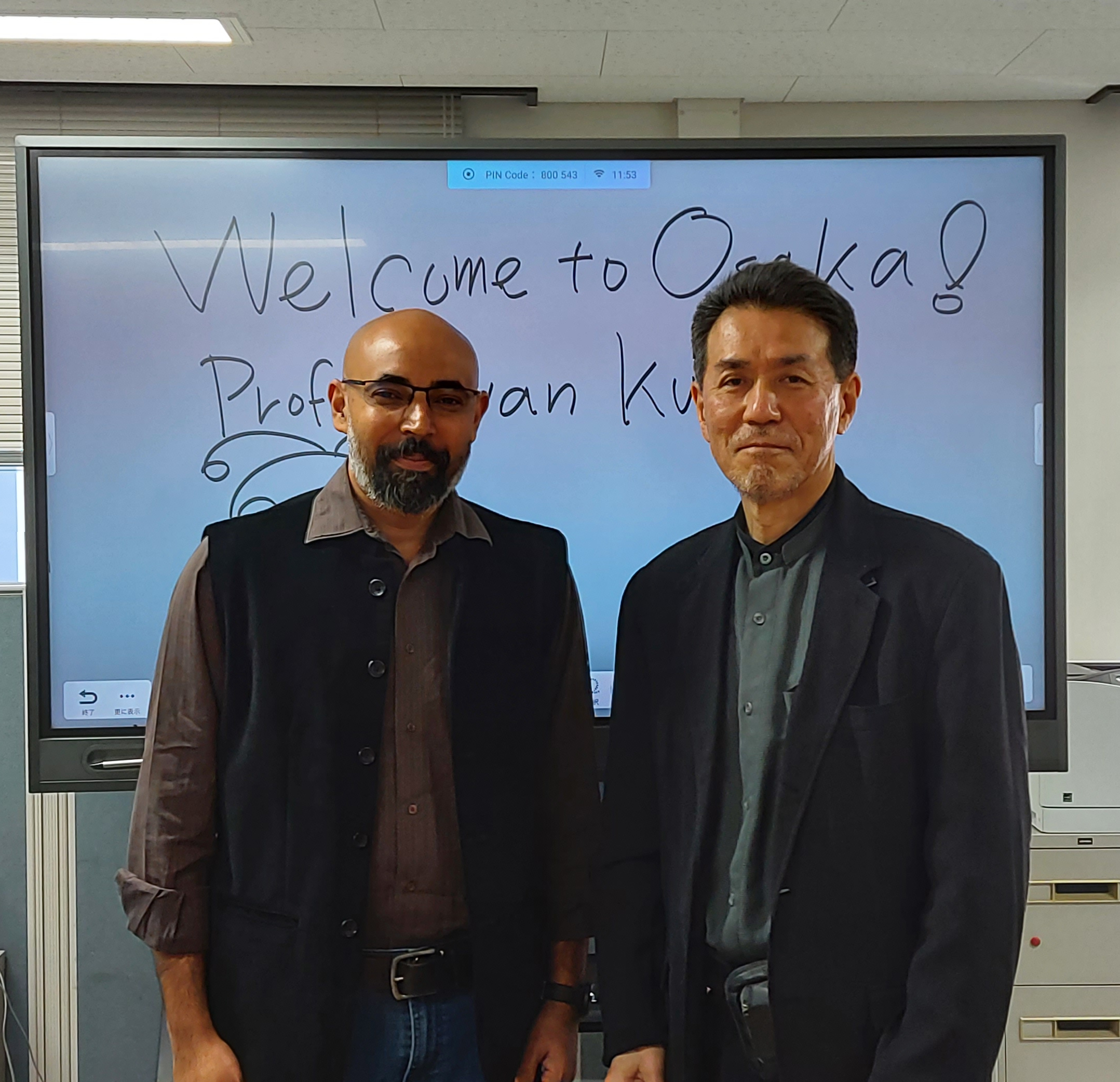
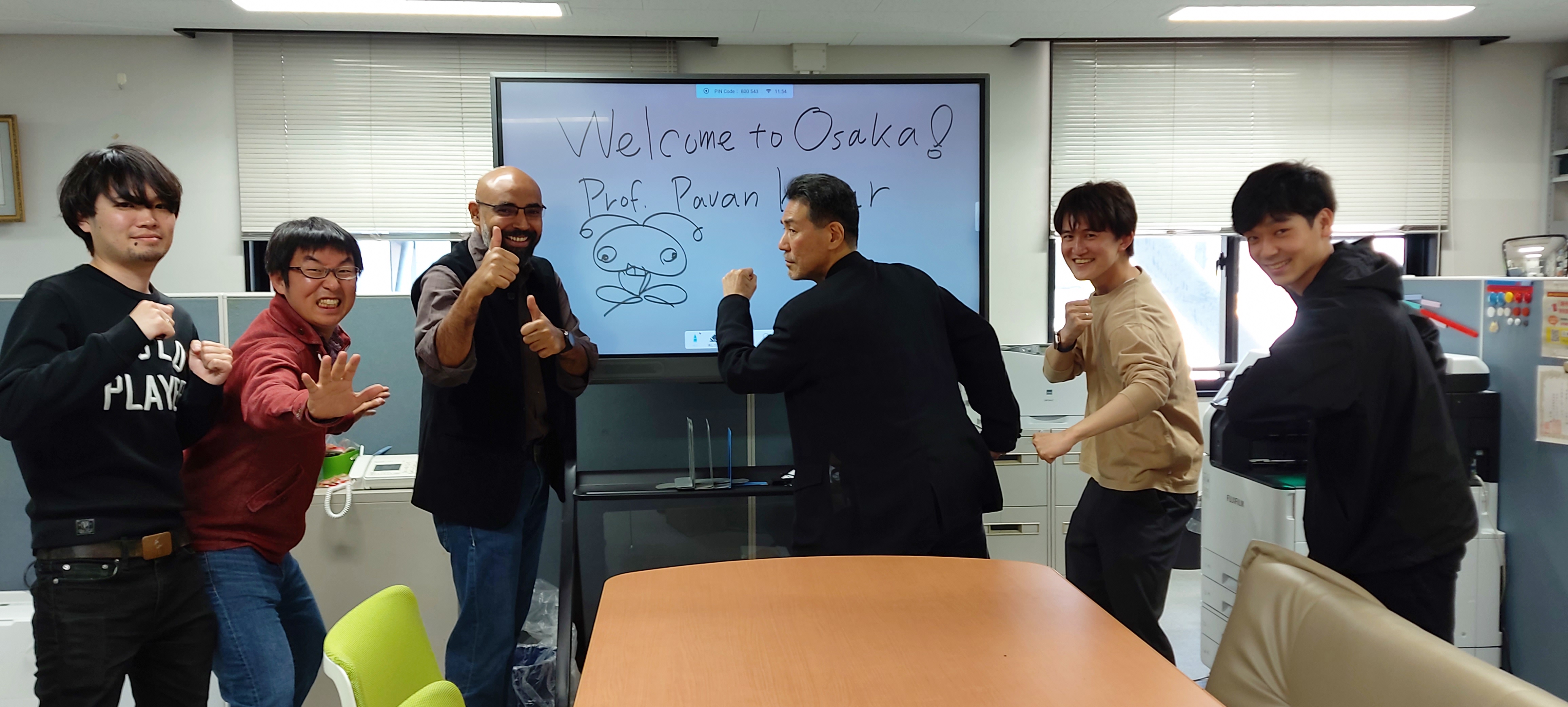
On 1st May, I visited Osaka University to officially meet Prof Ishihara, his group and other research groups in the university. We had a wonderful discussion on optical manipulation and major projects related to it especially in Japan, and undoubtedly Osaka has emerged as a major center in optical manipulation.
with Prof. Ishihara
I was delighted to see so many students and research groups interested in optical trapping/manipulation and related science and technology. I learnt about some very interesting applications of optical manipulation. Also, it was great to see such a great sense of humor in this group of researchers. It was truly amazing.
Science + Humor …..we had a great time..
I also visited labs of Prof. Ashida and Prof Ito, and got a very nice overview of their work including optical manipulation in liquid helium and photochemical reactions in an optical trap.
At 4pm, I gave my talk on “Optical Manipulation based on Opto-Thermal Gradients“. I elaborated on the role of absorption and related thermal gradient in optical manipulation. I presented some of our ongoing work on optical manipulation with structured light. The talk was attended by at least 30 to 40 people, and I was informed that students from various groups in Osaka were present (there are a few universities). The quality of questions and the follow up discussion was very good, and really enjoyed it.
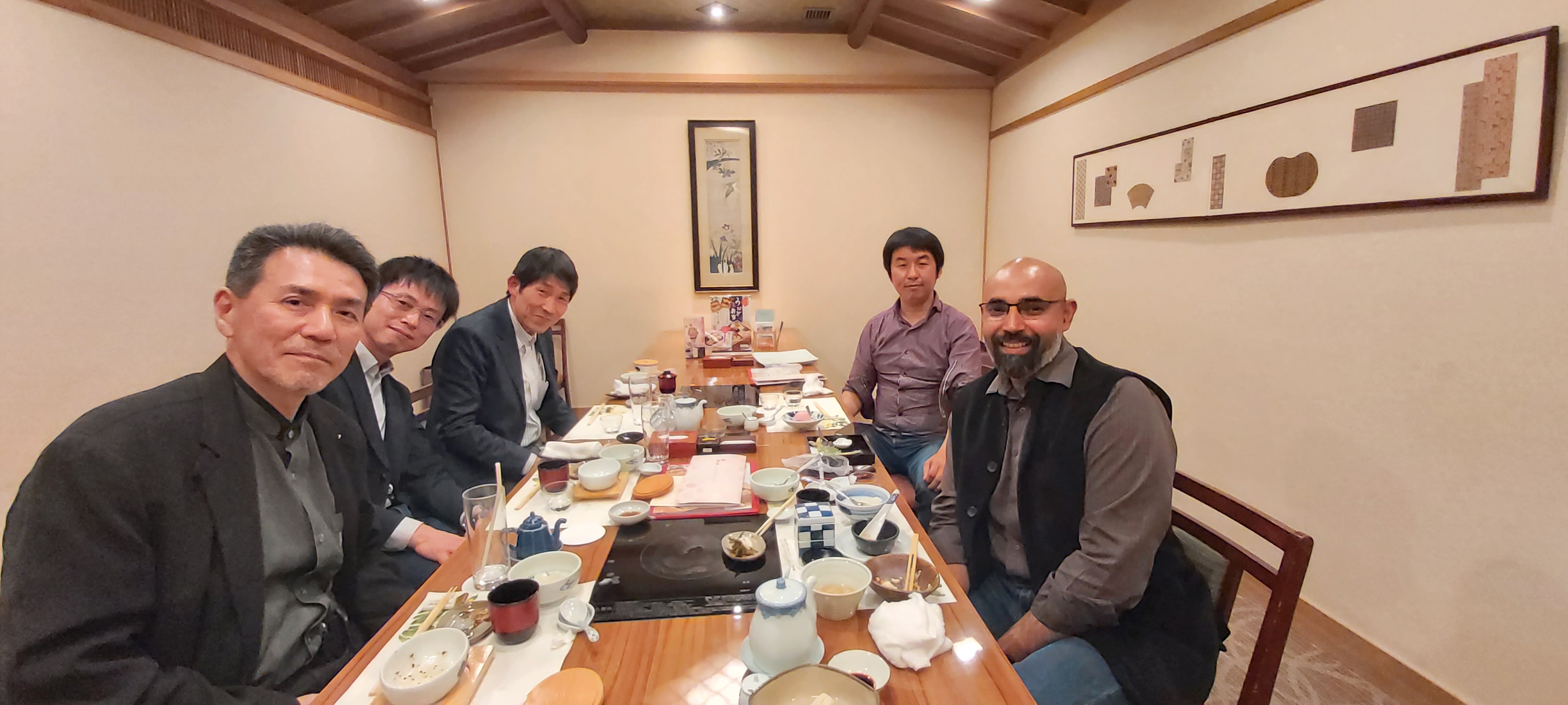
Finally, the day ended with a wonderful dinner at a tofu-themed Japanese restaurant. We had wonderful discussion on history and philosophy in our countries, and was very interesting.
Dinner with Professors Ishihara, Ito, Ashida and Yokoyama
My trajectory in Japan has been Yokohama –> Tokyo –> Okinawa –> Osaka. After 16 days, one conference talk and 4 research seminar across Japan, I am now heading back from Osaka to Tokyo (and writing this blog) on Shinkansen – the bullet train. Tomorrow, I will be leaving to India.
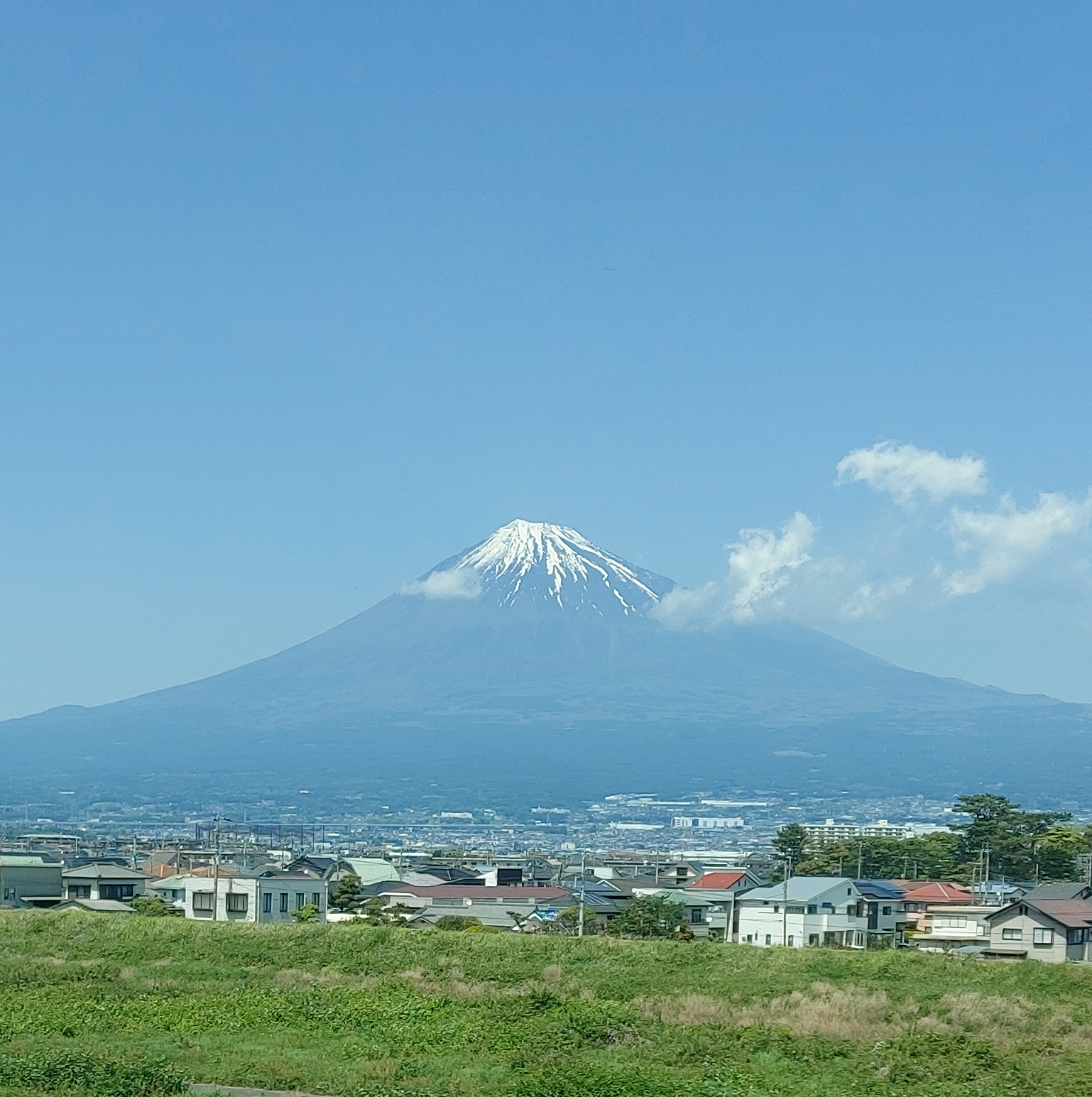
In Japanese, the word ‘Osaka’ also means ‘a large hill’. Japan’s geography has many large hills (see a picture of Mt. Fuji I took from the moving Shinkansen), and metaphorically speaking Japanese like to scale complex landscapes of life by bringing culture with science and technology. There is a lot to learn from this approach to life.
the majestic Mt. Fuji
Osaka, optical manipulation and the perennial ascent towards knowledge. What a memorable trip this has been.
To Japan and to all the people I met here – Doumo Arigatou Gozaimasu !
Fluorescent video imaging of trapping a single fluorescent nano-diamond on a gold nanoparticle
We have a new paper appearing in Optics Letters on optical manipulation of fluorescent nano-diamonds. This experimental work (with some simulations) was performed by our group member Ashutosh Shukla in collaboration with the group of Prof. Kasturi Saha (IIT-Bombay). Our alumni, Sunny Tiwari, gave vital inputs to perform the experiments.
Fluorescent nano-diamonds have emerged as important (quantum) imaging agents in biological applications. It remains a challenge to manipulate them in complex fluidic environments.
Herein, we have come up with an optical trapping method based on opto-thermoelectric effect (see Fluorescence imaging video above). By using opto-thermal potentials created by a single gold nanoparticle (~200nm) on a glass surface, we have been able to trap individual nano-diamonds, and capture their spectral signatures. The Brownian motion in the trap can be tracked, and this leads to the measurement of effective trap stiffness. Furthermore, we extrapolate this thermo-plasmonic trapping method to trap and track individual nano-diamonds on silver nanowires.
As mentioned in the abstract of the manuscript, we envisage that our drop-casting platform can be extrapolated to perform targeted, low-power trapping, manipulation, and multimodal imaging of FNDs inside biological systems such as cells.
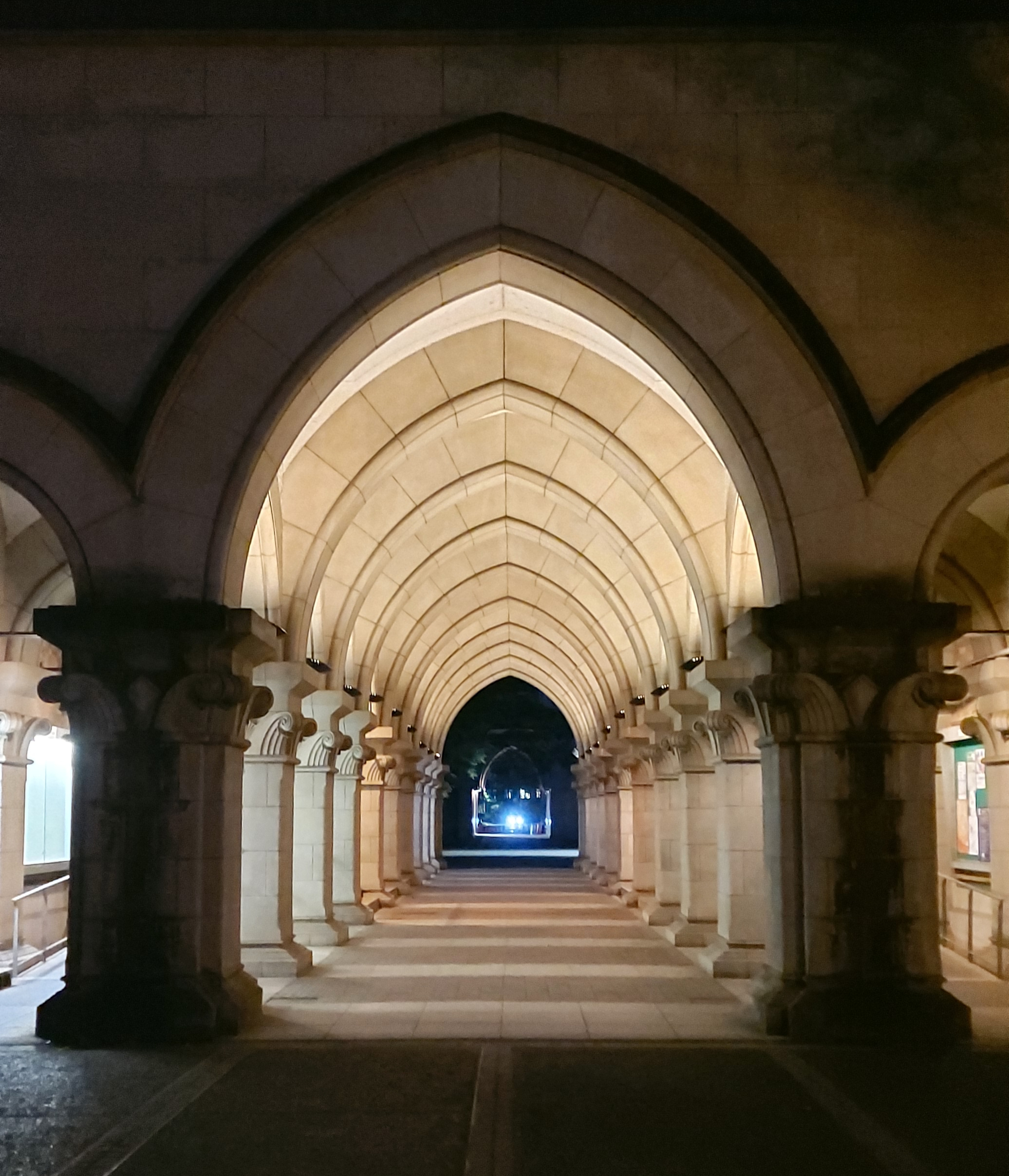
Wonderful Japanese-Gothic architecture at The University of Tokyo
I gave two talks in Tokyo.
First was on 24th April at Department of Applied Physics, Faculty of Advanced Engineering, Tokyo University of Science. My host was Prof. Yutaka Sumino. I spoke about “Soft Matter in Opto-Thermal Gradients“. I gave a short introduction to opto-thermal perturbations and potentials, and discussed some of our work on opto-thermophoretic trapping and Brownian dynamics. The audience contained a few master students too, and I really enjoyed discussing some concepts related to Brownian motion in an optothermal trap, and related experiments. Also, I had a very interesting discussion with Sumino and his students on their experiments on Janus particles.
with Yutaka
with Yutaka”s group
The second talk was on 25th April at Department of Physics, University of Tokyo. My host was Prof. Kazumasa Takeuchi. I spoke about “Soft Matter in Opto-Thermal Gradients : Evolutionary Dynamics and Pattern Formation“.
This talk was also announced on Japan’s statphys mailing list, and also live-casted over zoom. I discussed about the origins of optothermal effects in a laser trap, and how it can lead to some interesting dynamics and pattern formation in soft-matter system. Specifically, I highlighted the concept of Hot Brownian motion, and how it can be influenced using thermo-plasmons. The talk and discussion went on for almost 2 hours, and I really loved it. Also, Takeuchi and his students gave an overview of their work including a live demonstration on turbulence in liquid crystals, and it was fantastic.














 VISMAYA - History & Philosophy of Physics