3 Questions for the AI age

3 Questions to Ponder in the Age of Artificial Intelligence (AI).

  1. What will you do with the time you gain from the utility of AI?
  2. How will you utilize your individual short-term and long-term memory?
  3. What is your definition of intelligence in humans?

I think it is worth thinking about.

‘We’gnana !

Recently, I saw the following tweet from the well-known historian William Dalrymple.

Congrats to the listed authors, who deserve rewards (and the money) for their effort.

I have 3 adjacent points to make:

1) India badly needs to read (and write) more on science and technology. Here, I am not referring to textbooks, but some popular-level science books (at least). Generally, educated Indians are exposed to science only through their textbooks, which are mostly dull, or, in this era, YouTube videos, which have a low signal-to-noise ratio. Good quality science & tech books at a popular level can add intellectual value, excitement, and expand scientific thinking via reading, not just in students, but also in adults.

2) In India, most of the non-fiction literature is dominated by the social sciences, particularly history (as seen in the best-seller list). I have no problem with that, but non-fiction as a genre is a broad tree. Indian readers (and publishers) can and should broaden this scope and explore other branches of the tree. Modern science books (authentic ones), especially written in the Indian context, are badly in need. I hope trade publishers are reading this!

3) Most of the public and social media discourse in India does not emphasize (or underplays) the scientific viewpoint. Scientific literature and scientific discourse should become a central part of our culture. Good books have a major role to play. Remember what Sagan’s Cosmos did to American scientific outlook, and indirectly to its economic progress. The recent Nobel in economics, especially through the work of Joel Mokyr, further reinforces the connection between science, economics and human progress. This realization should be bottom-up, down to individual families and public places.

One of the great scientists, James Maxwell, is attributed to have said: “Happy is the man who can recognise in the work of today a connected portion of the work of life and an embodiment of the work of Eternity.

Science, with its rich, global history and philosophy, in the form of good books, can connect India (and the world) to the ‘work of eternity’, and make us look forward.

Embedding science within culture, in a humane way, can lead to progress. Science books have a central role to play in this.

विज्ञान (Vignana) should transform to ‘We’gnana !

Builders of Modern Scientific India

Images from: Leslie, Stuart W., and Indira Chowdhury. ‘Homi Bhabha Master Builder of Nuclear India’. Physics Today 71, no. 9 (2018): 48–55. https://doi.org/10.1063/PT.3.4021.

When we remember and talk about building modern, scientific India, we must acknowledge past scientists who played a critical role in taking ideas and turning them into reality. Homi Bhabha (image on left) was one of the pioneers. But we must also remember many unknown people of India who literally built modern scientific facilities, such as the CIRUS nuclear reactor (image on right is from 1958). Although their faces are invisible, their contributions should not be.

Sir MV on Education

In India, “National Engineers’ Day is celebrated every year on September 15 to honor the birth anniversary of Sir Mokshagundam Visvesvaraya, one of India’s greatest engineers”. Sir MV, as he was known, is one of the 20th-century Indians I admire. He was a forward-looking statesman who contributed immensely to building India (literally and figuratively). MV was a well-read and well-travelled person for his era, and wrote a few books and memos that are still pertinent to the current developments in India and the world.

Reconstructing India (1920)

One of his books, Reconstructing India (1920), reveals his thoughts on how and why India needs to reconstruct itself based on knowledge in science, technology and humanities. The title page is shown below, and the book is free to read online, thanks to the Internet Archive.

The book, as mentioned by MV in the preface, was written just after the First World War, and contemplates problems faced by India in light of geopolitical developments. In the 17 chapters of the book, divided into 4 parts, MV discusses specific issues faced by India, and proposes that political and administrative reforms can help India become a progressive society.

The largest part of the book is on economic reconstruction, in which he proposes contemporary methods (for the 1920s) to improve various sectors of manufacturing, including agricultural technology and communication media.

The third part of the book is on social reforms, and in there, he has a dedicated chapter on Education, which caught my attention, and I found it relevant even for today’s India.

Education, Humanities, and STEM

It is important that students of science and technology have a good exposure to some aspects of the humanities, including economics, history and philosophy. The pursuit and ability to choose good problems in science and technology critically depend on the social and economic structure in which they are practiced in universities and research institutions. MV anticipated this and highlights it as:

“Secondary and university education, though producing many able recruits for subordinate positions in the Civil Service, does not provide the men needed to carry on the work of agriculture, engineering, commerce and technology. The provision for training in economics and history is inadequate, and the study of those subjects is even discouraged. An attempt is actually made to teach economics in such a way as to render India’s emergence from a state of dependency difficult.”

Even in 2025, I would suggest that STEM students pay attention to economics, as it anchors them to understand the need and functions of a society, and therefore, their work can be calibrated accordingly. This is not to discourage open-ended research, but to understand how natural sciences are connected to the societal thoughts and needs. It gives us a broader understanding of the context, which is so important while understanding the evolution of ideas.

Comparative Education Systems

There is always a lot to learn from various societies and cultures. In order to do so, one needs comparative analysis. This helps one to choose some good elements from a society that can be emulated elsewhere. MV compares and comments on the 1900s British educational system in contrast to the German and Japanese counterparts. Note that India in the 1920s was still a British colony, and in a way, MV is critical of the system in which he himself was educated and trained. As he notes:

“Britain herself has had to pay a heavy price for her hand-to-mouth policy in regard to education. The educational chaos still existing there compares unfavourably with the great yet orderly progress made by Germany and Japan, both of which countries, after weighing and testing the educational systems of the world, absorbed the best of all.”

These were words written long before the Second World War, and give us a glimpse of how German and Japanese systems were functioning in the 1920s and had a lot to offer to the world. Of course, history took its own path, and German and Japanese society had other ideas.

Incidentally, I am writing this piece sitting in Leipzig (eastern Germany), and I am amazed by its architectural marvels that date back centuries. Indeed, German society had (and has) a lot to offer to the world. As MV indicates above, we need to absorb the best that is on offer. In doing so, we also need to reject that which is not good for any society.

Liberal Education and Financial Support

He further adds how liberal education adds value to a society, and calls not only the government but also the people to recognize the importance of financial support for education.

“Both the Government and the people must recognize that only by pursuing a liberal educational policy, and making generous financial provision for schools and colleges can they lift India out of her present low condition and ensure rapid progress.”

These words still hold good, and as a society, India has to re-emphasize modern education that helps us become not only better doctors and engineers, but also better human characters that can add value to the “modern” world.

Call to Action

In the final part of the book, MV makes a passionate appeal to the people of India, calling them to take action and move towards becoming a progressive nation:

“Do the people of India propose to profit by the lessons which world experience has to teach them, or will they be content to allow matters to drift and themselves grow weaker and poorer year by year?
This is the problem of the hour. They have to choose whether they will be educated or remain ignorant; whether they will come into closer touch with the outer world and become responsive to its influences, or remain secluded and indifferent; whether they will be organized or disunited, bold or timid, enterprising or passive ; an industrial or an agricultural nation ; rich or poor ; strong and respected, or weak and dominated by forward nations. The future is in their own hands.”

Indeed, the future is in our hands, and these words written more than 100 years ago still resonate loudly. We need more engineers like Sir MV. The reason he was so effective was that he combined thinking and doing. Importantly, the lesson we can learn from MV’s life and by reading this book, is that an open mind can grasp good ideas at any time and anywhere. Implementing those ideas is an equally important challenge, and MV was up to this in his own way. Are we, as Indians, open to this prospect and engineer our future?
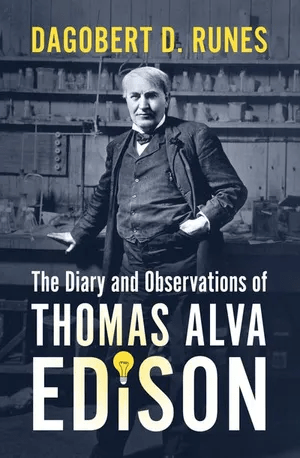
THE DIARY AND OBSERVATIONS OF THOMAS ALVA EDISON

Thomas Alva Edison was one of the greatest inventors we know about. Sometime ago, I stumbled upon a book titled THE DIARY AND OBSERVATIONS OF THOMAS ALVA EDISON, and it was an interesting read. In there, we obtain an insight into Edison’s view on many different subjects, including education, work, religion, etc. Edison was a person with strong views. His working methods were unconventional. Here are a few interesting facts I learnt from this book:

1) Edison had to recruit many executives to his labs; he always emphasized on a memory test and gave them a questionnaire to answer. He insisted that memory is very important for decision making, and he usually employed those people who had very good memory. Edison wrote “…Certainly the brain should have the facts. If a brain possesses an enormous number of facts, those facts, through action of the subconscious mind, will automatically keep themselves available when needed and will automatically keep themselves out of the way, not interfering when not required.”

2) Edison’s view on education was interesting and bold for his times, and he believed that learning through movies would be vital for future education. As early as the 1890s, he said that the best way to teach geography is either by taking the student on a tour or by showing them a movie. Edison wrote

…motion pictures can be applied to a scientific, systematic course of memory training in the schools, taking the children at an early age when the mind is plastic enough to adapt itself most readily to new habit of thought.

Most of our text books fail on two big counts. They are not sufficiently human, and their application is not sufficiently practical”

3) In the following lines, Edison gives an insight into how he worked: “When I want to discover something, I begin by reading up everything that has been done along that line in the past-that’s what all these books in the library are for. I see what has been accomplished at great labor and expense in the past. I gather the data of many thousands of experiments as a starting point, and then I make thousands more.”

“ …..The motive that I have for inventing is, I guess, like the motive of the billiard player, who always wants to do a little better-to add to his record. Under present conditions I use the reasonable profit which I derive from one invention to make experiments looking towards another invention…..”

4) Edison rates the phonograph as his greatest discovery. He writes, “Which do I consider my greatest invention ? Well, my reply to that would be that I like the phonograph best. Doubtless this is because I love music. And then it has brought so much joy into millions of homes all over this country, and , indeed, all over the world.”

5) The following quotation by Joshua Reynolds was hung in every room of Edison’s laboratory “ There is no expedient to which a man will not resort to avoid the real labor of thinking”

There are many more fascinating thoughts of Edison, many agreeable and a few disagreeable ones, in the above-mentioned book, and if you happen to find it, read it through…it’s a classic and insightful read.

The above text is from a 2011 post on my old blog.

Sanskrit subhashita – don’t waste

Here is a Sanskrit subhashita that I like.

वृथा वृष्टि: समुद्रेषु वृथा तृप्तेषु भोजनम्।

वृथा दानम् धनाढ्येषु वृथा दीपो दिवाऽपि च॥

LLMs are getting better at translations.

Below is a comparison of translations on 2 platforms

English Translation from perplexity AI:

Rain over the ocean is wasted, food for those who are already full is wasted; Charity to the wealthy is wasted, and a lamp during the daytime is wasted.

English translation from ChatGPT:

Rain over the ocean is in vain, food for one who is already full is in vain; Charity to the wealthy is in vain, and a lamp during the day is also in vain.

ChatGPT – an experiment

Below is a small experiment with ChatGPT (GPT-4o, which is OpenAI’s most advanced model as of July 2025).

I asked for thoughts (from authentic sources) from Indian writers on the nature of the writing process (handwriting vs typewriting).

It confidently gave me quotations from Rabindranath Tagore, R.K. Narayan and U.R. Ananthmurthy. I was intrigued, and below is my conversation:

me: list the quotes from Indian writers above and give the exact sources

Chatgpt: I couldn’t find reputable sources for the exact quotes I previously suggested by Indian writers—so it’s safer to reconsider them.

This is something I have been observing with LLM chatboxes, especially when it comes to the sources that may not be mainstream. One may even say it is hallucinating, but after enquiring further, it said:

The quotes I initially provided appear to be popular paraphrases or second-hand interpretations, but none could be verified in primary texts or reliable interviews.

Then, it asked me if I wanted to use authentic sources to be presented to corroborate the initially mentioned sources. I said yes, and below was its reply:

Here are verified quotes from Rabindranath Tagore, with clear attributions to reliable sources—unfortunately, I couldn’t locate authenticated quotes for other Indian writers on writing methods

The quotes that it gave were peripheral to my initial question. It identified two to three quotations, but none of them were directly connected to my initial query.

There may be at least 2 hypotheses that I can draw from this, which need further testing:

  1. ChatGPT and its kind may be getting trained more intensely on sources that are mainly anglophonic, and its geographical distribution of sources may be skewed. Online literary sources from countries such as India may not be as dense as, say USA, the UK or even some European countries. Will depositing more authentic sources online, including their translations, help the authentic discovery of information from countries such as India?
  2. With the current developments and model training, there may already be a bias in the answers that LLM chatbots give. It may reinforce many viewpoints from Western repositories that may sometimes be disconnected or irrelevant to the user outside Western geographies. In that sense, new information is being built on old information. Are we entering a stage where data deposition asymmetry is creating an asymmetry of discovery?

I know these questions are not trivial to answer, but for LLM chatboxes to be authentic, they need to address questions with proper citations. I know some of them are trying to do that (eg, perplexity AI), but I find the links it provides for certain focused questions are not up to the mark.

My inference:

  1. I am cautiously optimistic about the developments and achievements in source-based LLM interfaces, especially when you feed an authentic source (eg, NotebookLM).
  2. But LLM chatboxes may be hyped when:
    • It comes to its capability of sourcing authentic information, and
    • The immediacy of replacements of existing knowledge systems.
  3. LLM chatboxes should be treated as an experimental tool for utilitarian tasks where the information can be verified independently.
  4. It is important to take the bottom line of ChatGPT seriously: ‘ChatGPT can make mistakes. Check important info.

YouTube as an Archival Source

There are several models for using YouTube. One of them is to use it as a substitute for television and media outlets. This is where the number of views, subscriptions, and reach becomes important.

Another model is to harness YouTube as an archival source that is open to the public. This is one of the crucial elements of a platform that is easily accessible and, importantly, searchable. Such a platform becomes a repository for many informal academic discussions and interactions.

The archive model is an important category, especially if there is no need to generate revenue from the content deposited on the platform. A crucial aspect is that it can be accessed across the world and, in that sense, represents truly open-access content without paywalls, publication charges or subscriptions. Therefore, I am glad to see that many Indian academic programs, including NPTEL, ICTS, Science Activity Center/Media Center at IISER-Pune and many others are utilizing platforms such as YouTube to post their lectures and talks. Also, many individual academics in India are gradually using YouTube to discuss their work, in the context of research, teaching and entrepreneurship.

This development is slowly turning out to be an invaluable resource that can reach a large audience. Although YouTube is one of the most well-known platforms, many other platforms in the context of social media can also be tapped to spread knowledge. Given their reach and simplicity of use, both for creators and users, these tools become important in a vast country such as India.

As audio-visual public platforms join hands with artificial intelligence tools, they can positively (hopefully) affect how people, especially students, consume educational content. Going forward, I anticipate language translation through direct dubbing to be a game-changer. It could attract many new viewers who have been hesitant to watch technical content simply because it was in a foreign language. Of course, on these platforms, the noise is equally high compared to the signal, and therefore, curating good, targeted resources will be vital. Also, these platforms cannot be treated as a substitute for formal education, but as an extension or complementary source for research and education.

Interesting times ahead.

FOLLOW THE MONEY – A useful model

Our world is a place with complex ideas superimposed on people with ever-changing attention. Complex ideas are complex because they depend on multiple parameters. If something changes in the world, then that change can occur due to multiple reasons.

Unlike a carefully designed physics experiment, there are too many ‘hidden variables’ in human life and behavior, especially when they act collectively. In such a situation, it is pertinent to search for models to understand the complex world. Models, by definition, capture the essence of a problem and do not represent the complete system. They are like maps, zoomed out, but very useful if you know their limitations. I keep searching for mental models that will help me understand the complex world in which I live, interact, and comprehend.

Among many models, one of them that I use extensively is the follow-the-money model. This model explains some complex processes in a world where one does not have complete information about a problem. 

Take, for example, the incentives to choose a research project. This is a task that as scientists, we need to do very often. In the process of choosing a project to work on, researchers have to factor in the possibility of that research being funded prior to the start of the project. This is critical for scientific research that is dependent on infrastructure, such as experimental sciences, including physics, chemistry, and biology. Inherently, as researchers, we tend to pick a topic that is at the interface of personal interest, competence, relevance, and financial viability.

The viability is an important element because sustained funding plays a critical role in our ability to address all the contours of a research project. Thus, as scientists, we need to follow the money and ask ourselves how our research can be adapted to the financial incentives that a society creates. A case in point is research areas such as AI, where many people are aware of its potential and, hence, support from society and an opportunity to utilize the available incentive.

It is important for the public to be aware of this aspect of research where the financial incentive to execute a project plays a role in the choice of the project itself. The downstream of this incentive is the opportunity to employ more people. This means large funding projects and programs attract more researchers. More people in the research area generate more data, and more data, hopefully, will result in more knowledge in the chosen research area. This shows how financial incentives play a critical role in propelling a research area. In that sense, the ‘follow the money’ model has a direct correlation with more researchers flocking towards a research area.

The downside of this way of functioning is that it skews people towards certain areas of research at the cost of another research area which may not find financial support from the society. This is a topic that is generally not discussed in science classes, especially at the undergraduate and research level but I think we should discuss with students about this asymmetry as their futures are dependent on financial support that they can garner.

Broadening the scope further, the ‘follow the money’ model is useful to understand why a certain global trend rises or falls. A contemporary global upheaval is the situation of war in Ukraine and Gaza. At first sight, it looks like these wars are based on ideologies, but a closer look reveals that these wars cannot be fought without financial support. Such underpinning of the money running the war reveals patterns in geopolitics that are otherwise not easy to grasp.

Ideologies have the power to act as vehicles of human change, but these vehicles cannot be propelled without the metaphorical fuel – that is, money. The ‘follow-the-money’ model can show some implicit motivation and showcase how ideologies can be used as trojan horses to gain financial superiority either through captured resources or through showcasing the ability to capture that resource. Following money is also a very powerful and useful model for understanding many cultural, sociological and political evolution, even in a complex country like India and other South Asian countries. I leave it as an intellectual assignment for people who want to explore it 😊. You will be surprised how effective it can be in explaining many complex issues, provided we know the limitations of the model. 

As I mentioned earlier, a model is like a map. It is limited by resolution, the dimension and the viewpoint. But they are useful for navigating a complex world.

Quadcopters in 1950s

Drones are common technology today. But people have been interested in small flying machines for a long time (since the early 1900s). In the 1950s, helicopters were modified to be devices similar to today’s drones. This led to the invention of so-called quadcopters or quadrotors. They form some early models of today’s drones.

The image below shows a quadrotor carrying a human, discussed in the January 1958 edition of Popular Mechanics.

Reference: Popular Mechanics, 1958

Most of the current day drones do not carry a human being, unlike the one shown above in the image.

Is a quadrotor the same as a drone? The contemporary definitions are more complex. Below is the description of the quadrotor compared to the drone (from this source) :

Quadcopter, on the other hand, is a much more specific qualifier compared to drones. The term quadcopter specifically describes an uncrewed rotary wing aircraft that can take flight using four rotors each consisting of a motor and propellers. Quadcopters are sometimes referred to as quadrotors as well. Unlike traditional fixed wing aircraft or helicopters which rely on engines and/or tail rotors to take flight, quadcopters have neither.

Inference: It is often worth visiting the past to innovate for the future!