Some writing advice (mainly physics) for UG students

Some writing advice (mainly physics) I shared with my undergraduate class. This may be useful to others.

  1. Equations, data and figures make meaning when you include a context. This context is expressed using words. Symbols and data by themselves cannot complete the meaning of an argument, unless one knows the context. A common mistake undergraduates make in an exam is to answer questions using only symbols and figures and assume the reader can understand the context.
  2. One way to treat writing in physics (in this case, an exam paper or an assignment) is to imagine you are talking to a fellow physics student who is not part of the course you are writing about. This means you can assume some knowledge, but not the context. Anticipate their questions and address them in the text you are writing. This model also works while writing research papers with some caveats.
  3. While you refer to equations, data and figures in your assignment, make sure you cite the reference at the location of the content you are discussing. Merely listing the references at the end of the document does not make the connection. Remember, while talking, you never do this kind of referencing.
  4. It is useful to structure your arguments with headings, sub-headings and a numbered list. This gives a visual representation of your arguments. You may not find this kind of structured writing in novels, other forms of fictional writing and also in some literature related to social sciences, but in natural sciences with dense information, this will be very useful. Always remember, while writing science (or any form of nonfiction writing), clarity comes before aesthetics.

Also, below is another blog related to written assignments.
Optothermally induced active & chiral motion – a new paper

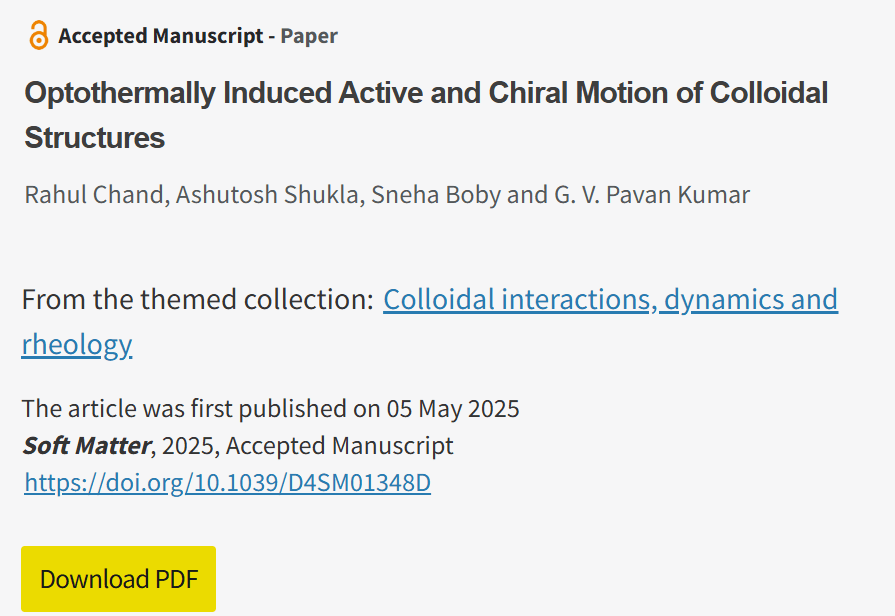
We have a new paper in Soft Matter

link to the paper (free to access, thanks to IISER Pune library)

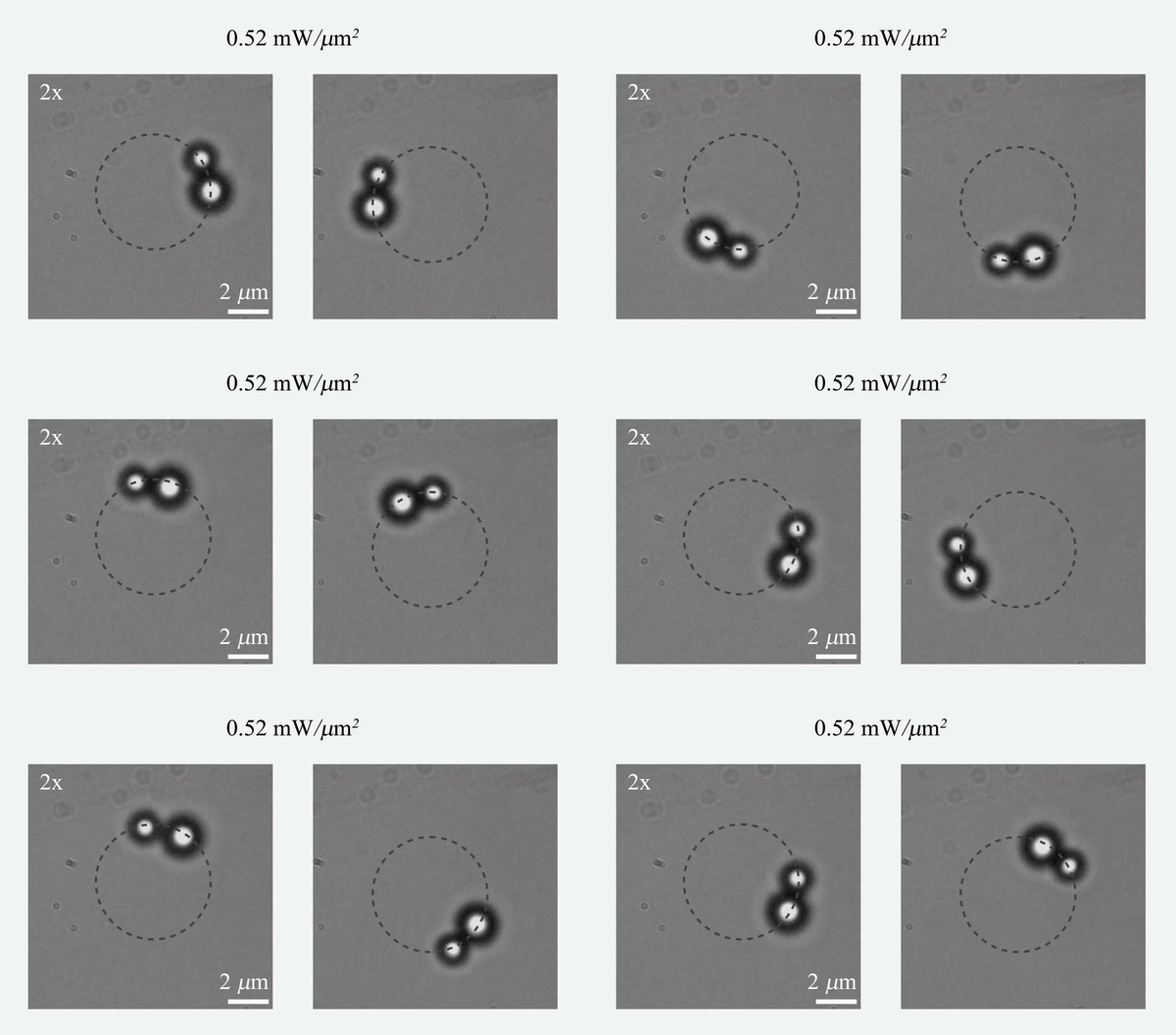
We use optical illumination to generate thermal fields, creating non-reciprocal interactions between passive and active colloids. Active colloids absorb light and produce thermal gradients, driving thermo-osmotic forces that induce propulsion and chiral motion. Our Langevin simulations, backed by experimental observation, reveal how to control colloidal behavior. May have implications in light-driven chiral motion and nonlinear dynamics.

Super effort by Rahul, Ashutosh & Sneha from our group, who combined numerical simulations, analytical theory, with experimental observations.

The 2 anonymous reviewers made us think and work hard, and we thank them!

Also, the paper is part of the journal’s themed collection on “Colloidal interactions, dynamics and rheology”

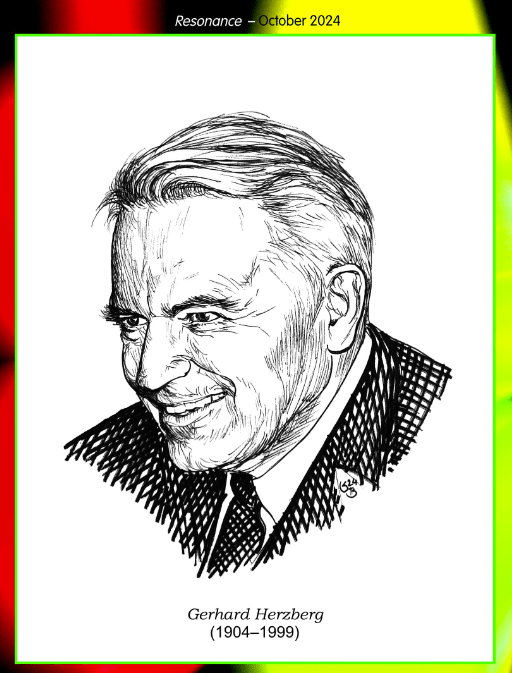
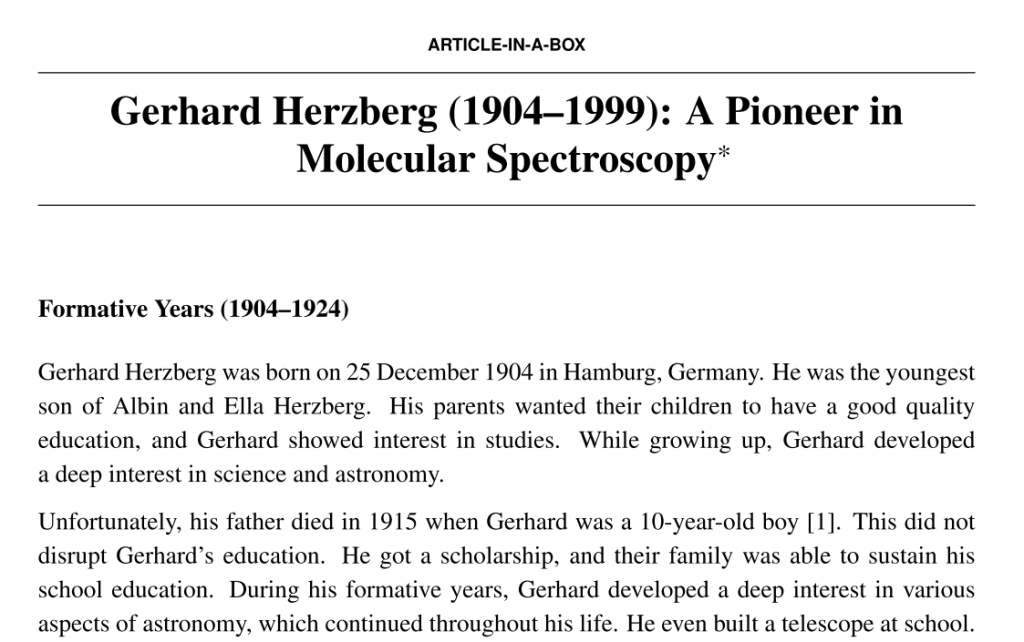
Article on Gerhard Herzberg

The October 2024 issue of Resonance, Journal of Science Education

highlights the life and science of Gerhard Herzberg.

He was one of the greatest molecular spectroscopists who laid the foundation of atomic and molecular quantum mechanics and deeply impacted molecular astrophysics and astrochemistry.

He lived an extraordinary life, first in Europe learning quantum mechanics and then escaping 1930s Germany as his wife was of Jewish origin. Then, he settled in Canada to build and lead his lab, which was considered the ‘mecca of spectroscopy’ at NRC, Ottowa.

I wrote a sci-biography article about him in this issue

Link to full edition: https://www.ias.ac.in/listing/articles/reso/029/10

If you don’t know – Resonance is a pedagogical journal published by the Indian Academy of Sciences. It is a true open-access journal. Free to read and does not charge the authors to publish.

Do explore the past editions. There are some absolute gems. https://www.ias.ac.in/listing/issues/reso

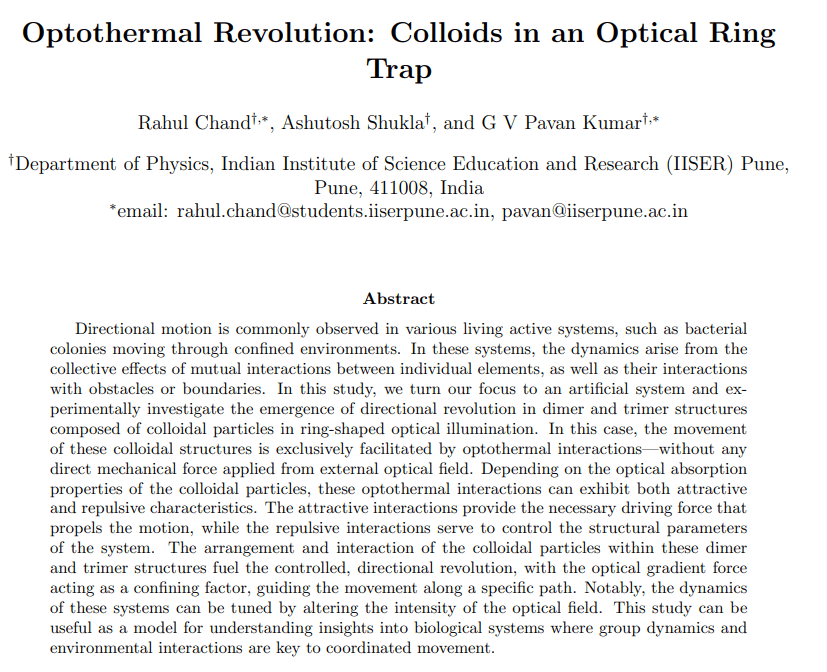
Optothermal revolution – preprint

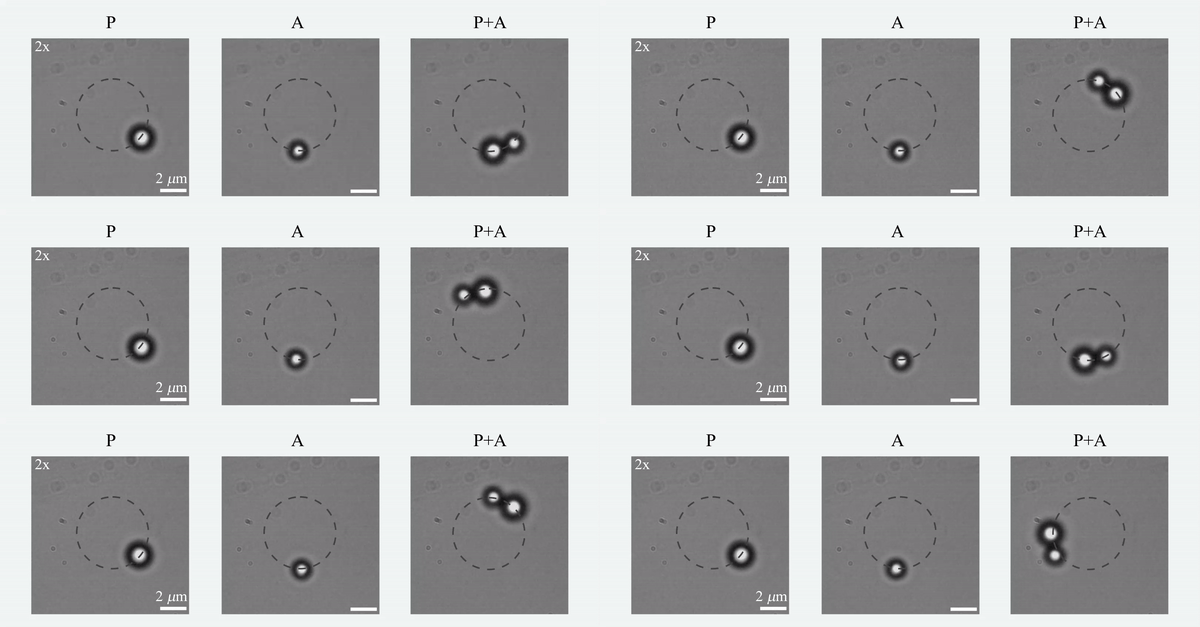
We have an Arxiv preprint on how a mixture of colloids (thermally active + passive particles in water) can lead to the emergence of revolution dynamics in an optical ring trap (dotted line). Super effort by our lab members Rahul Chand and Ashutosh Shukla.

Interestingly, the revolution emerges only when an active and a passive colloid are combined (not as individuals) in a ring potential (dotted line)

the direction (clock or anti-clockwise) of the revolution depends on the relative placement of the colloids in the trap

This revolution can be further used to propel a third active colloid

There are many more details in the paper. Check it out: https://arxiv.org/abs/2409.16792

Some policies of my research

In the past 14 yrs of my research group, I have made a few policies for myself, which may be helpful to others:

1) Any group member is free to criticize my input with reason. This has been one of the most liberating experience. Importantly, it has helped me learn.

2) Physical and mental health of group members is of primary importance. Good health and good research is not a zero sum game.

3) Constancy of thought and work is vital. We overestimate work that can be done in short term and underestimate the long term. Constant effort, spread over months and years, can build intellectual and technical monuments.

4) Set internal standards. Let this standard be reasonable and focused towards oneself. The biggest stress in work comes from comparison with others. Instead, compare your past with present, & strive for a +ve difference. Be sceptical of external metrics.

5) Write regularly. Writing is not only about publication in a journal or a book. It is a way to reflect, learn, revise and communicate. Writing is the process. A publication is one of the outcomes, a temporary goal. Focus on the process, goals will follow.

6) Share your knowledge. If possible – TEACH. Teaching informally is very enjoyable. It is devoid of judgements. In the longer run, it is perhaps the most impactful thing you will do, and will be remembered for. Remember Feynman.

7) None of the above points matter if your work does not make you a better human being. Be compassionate to others. The biggest strength of scientific research, if done well is it elevates the individual & collective – both local & global.

8) Academia, in its good form, can feed your stomach, brain and heart. Nurturing and enabling all the three is the overarching goal of academics. And perhaps the goal of humanity.

Zijie Yan…gone too soon

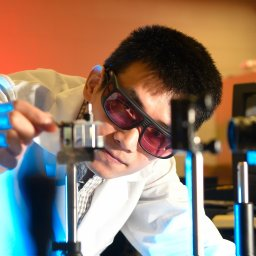
picture from Zijie Yan’s google scholar page

Scientific research is a creative pursuit. As researchers, we are always looking out for new ideas and inculcate them in our work. One way to get new ideas is to explore existing ideas and bring them together with certain degree of uniqueness and utility. As part of this exploration, scientists communicate with each other and gain some new knowledge. Therefore, as researchers, we encourage and value cooperation as part of our work culture.

Over the past couple of decades, I have been greatly benefited, motivated, and inspired by many of my fellow-colleagues across the globe. Dr. Zijie Yan was one of them. I never met Zijie in person, but I and my research group have read many of his interesting papers related to optical trapping and binding of plasmonic nanoparticles. I have been following his work ever since he was a post doc at University of Chicago, and found his work creative, interesting, and illuminating, to say the least.

In 2020, during the pandemic, we exchanged a few emails related to some technical details of trapping plasmonic colloids, and he was very generous and forthcoming in sharing his knowledge. He gave me some important leads into the wavelength-dependence of trapping capabilities, and suggested a few references. These leads were very beneficial for us to build upon some concepts and techniques that we were developing in my lab, which further led to some publications. After we published some of our results, I sent him our pre-prints, and thanked him for his input.

When I heard the sad news of Yan’s untimely death at University of North Carolina (UNC) at Chapel Hill, I was shocked. As you may, know this was caused by gun shooting (allegedly by his own graduate student). What a tragic news.

USA has great universities. In late 2000s, I spent two of my post-doctoral years in the US (Purdue University), and it was a pleasure living and working there. As an intellectual ecosystem, USA still leads the way, and it has been home to so many scientists and intellectuals from across the world. As with any society, USA has some flaws, and among them gun violence is turning out to be a major hurdle to its own progress and values. I sincerely hope that sanity will prevail among a large section of American society, and somehow this meaningless and violent aspect of their society is eliminated.

Sometimes, we take peace of mind for granted, but it is probably the most important pre-requisite to work. It is also a timely reminder for all of us in this world to emphasize the importance of humanness, compassion and rationality. Violence is never an answer.

 Zijie was emerging as one of the stars in our research community, and what a shame that we have lost him so early. Let me end with the first few sentences of Zijie’s reply to my email in 2020:

“Dear Pavan,

Thank you for your interest on our research!  Glad to hear someone from the community……”

My thoughts are with his family and well-wishers.

Goodbye Zijie. We, as a community, will remember you.

New paper : Optothermoelectric trapping of single nano-diamonds

Fluorescent video imaging of trapping a single fluorescent nano-diamond on a gold nanoparticle

We have a new paper appearing in Optics Letters on optical manipulation of fluorescent nano-diamonds. This experimental work (with some simulations) was performed by our group member Ashutosh Shukla in collaboration with the group of Prof. Kasturi Saha (IIT-Bombay). Our alumni, Sunny Tiwari, gave vital inputs to perform the experiments.

Fluorescent nano-diamonds have emerged as important (quantum) imaging agents in biological applications. It remains a challenge to manipulate them in complex fluidic environments.

Herein, we have come up with an optical trapping method based on opto-thermoelectric effect (see Fluorescence imaging video above). By using opto-thermal potentials created by a single gold nanoparticle (~200nm) on a glass surface, we have been able to trap individual nano-diamonds, and capture their spectral signatures. The Brownian motion in the trap can be tracked, and this leads to the measurement of effective trap stiffness. Furthermore, we extrapolate this thermo-plasmonic trapping method to trap and track individual nano-diamonds on silver nanowires.

As mentioned in the abstract of the manuscript, we envisage that our drop-casting platform can be extrapolated to perform targeted, low-power trapping, manipulation, and multimodal imaging of FNDs inside biological systems such as cells.

arxiv link to the paper : https://arxiv.org/abs/2210.02874

below is the snapshot of the abstract of the paper from journal’s early posting :

New paper : Microsphere can narrow emission from a 2D material on a mirror

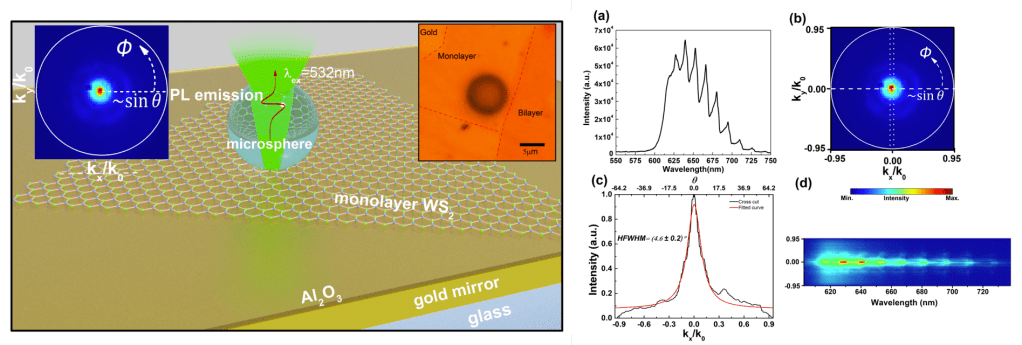
We have new paper appearing in Applied Physics Letters on how a dielectric microsphere placed on a 2D material deposited on a mirror can act as an optical antenna (see left panel for the schematic of the geometry and an optical image of the realized antenna).

The experimental and simulation efforts were mainly driven by our dynamic PhD student Shailendra Kumar Chaubey, who is very passionate about nanophotonics of 2D materials. He along with Sunny Tiwari and Diptabrata Paul explicitly show how experimental parameters such as sphere size and location of focusing can influence the photoluminescence emission from a WS2 monolayers. The experiments were mainly possible thanks to our collaboration with my colleague Atikur Rahman and his student Gokul, who continue to produce fantastic 2D materials for our nanophotonics study.

Interestingly, the emission from the WS2 monlayers can be as narrow as 4.6 degrees (see right side panel of the figure) which is one of the narrowest angular spread at room temperature. We also capture the energy-momentum photoluminescence spectra from WS2 monolayers, which is convoluted with the beautiful whispering gallery modes of the microsphere (see parts (a) and (d) of the figure).

We envisage such ’emission engineering’ using a simple microsphere can be further harnessed to control emission from quantum and nonlinear photonic 2D materials. Also, it raises new questions on how local photonic density of states can be tailored by altering the local environment around quantum emitters in solid state materials.

Arxiv version of the paper : https://arxiv.org/abs/2110.10387

OAM + SAM -New paper from my lab

We have a new paper from our lab to appear in the journal : Laser & Photonics Reviews

on “Simultaneous detection of spin and orbital angular momentum of light through scattering from a single silver nanowire”

preprint version on arxiv : https://arxiv.org/abs/2111.14919

Light can carry orbital angular momentum (OAM) and spin angular momentum (SAM). This momentum can be transferred to an object that is interacting with the light. What we show is the experimental proof of concomitant detection of OAM and SAM in the coherent light scattering signatures from a single, silver nanowire. Essentially, the nanowire acts like a slit, and scatters the light. During this scattering process, the distribution of light in momentum space gets altered according to the spin (polarization) and orbital (topological charge) state illuminating the nanowire.

A notable point is that unlike other (metamaterials) methods, this unambiguous detection scheme does not require sophisticated nanofabrication methods and is mainly founded on fundamental principles of vectorial light scattering in the momentum space.

This experimental work (with a good dose of theoretical optics) was mainly due to the sustained efforts of an outstanding PhD student in my lab : Diptabrata Paul (about to finish PhD !)

He had excellent support and inputs from our PhD alumni Deepak K Sharma (now a postdoc/research scientist at ASTAR, Singapore).

Going further, this study motivates some interesting questions, of which we are interested in exploring the direct transfer of OAM and SAM at sub-wavelength scale to nanoscale objects including (macro)molecules. This will have some interesting manifestation on optical forces and torques at sub-wavelength scale, and we intend to study them in detail. This can be studied in a unique set-up that we have built in our lab that combines nano-optical tweezers with momentum-space imaging microscope. Look out for some studies in this direction from our lab.

We will spend a lot time…in momentum space :)