Meghnad Saha – lest we forget

Meghnad Saha (6 October 1893 – 16 February 1956), of the fame of Saha’s ionization formula, was born this day. In 1993, a postage stamp in India was released commemorating his birth centenary.

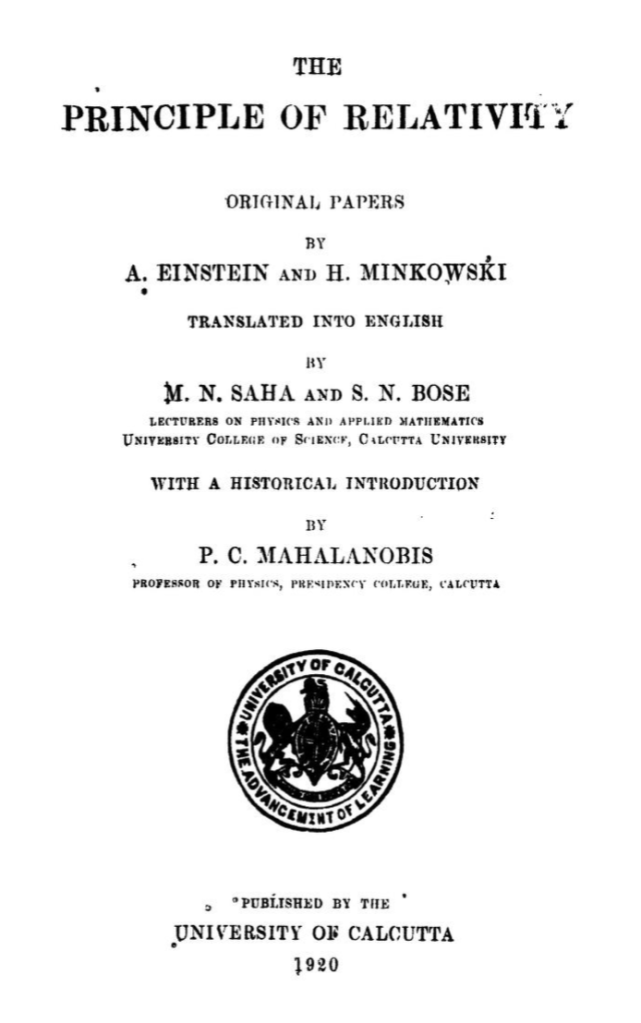
Saha was an astrophysicist with a broad knowledge and appreciation of various branches of physics. One of the earliest English translations (1920) of the papers on relativity by Einstein and Minkowski was written by Meghnad Saha and S.N.Bose.

At the beginning of the book, Mahalanobis introduces the topic with a historical introduction. He begins with a thoughtful discussion on experiments that eventually ruled out the presence of ether, and it sets the stage as follows:

Lord Kelvin writing in 1893 in hig preface to the English edition of Hertz’s Researches on Electric Waves, says many workers and many thinkers have helped to build up the nineteenth century school of plenum, one ether for light, heat, electricity, magnetism; and the German and English volumes containing Hertz’s electrical papers, given to the world in the last decade of the century, will be a permanent monument of the splendid consummation now realised.”

Ten years later, in 1905, we find Einstein declaring that “the ether will be proved to be superflous”. At first sight the revolution in scientific thought brought about in the course of a single decade appears to be almost too violent. A more careful even though a rapid review of the subject will, however, show how the Theory of Relativity gradually became a historical necessity.

Towards the beginning of the nineteenth century, the luminiferous ether came into prominence as a result of the brilliant successes of the wave theory in the hands of Young and Fresnel. In its stationary aspect, the elastic solid ether was the outcome of the search for a medium in which the light waves may “undulate.” This stationary ether, as shown by Young, also afforded a satisfactory explanation of astronomical aberration. But its very success gave rise to a host of new questions all bearing on the central problem of relative motion of ether and matter.

Saha, in various capacities, took a stance against British colonialism. Although it affected some opportunities, he continued to do science and was recognized for his outstanding contributions. As Rajesh Kochhar mentions:

Saha had wanted to join the government service, but was refused permission because of his pronounced anti-British stance. For the same reason, the British government would have liked The Royal Society to exclude Saha. It goes to the credit of the Society that it ignored the pressures and the hints, and elected him a fellow, in 1927. This recognition brought him an annual research grant of £300 from the Indian government followed by the Royal Society’s grant of £250 in 1929 (DeVorkin 1994, p. 164).

Saha led a tough life. He not only had to face suppressive British colonial rule but also academic politics and battles (versus Raman, no less). His knowledge of physics, his contributions to Indian science, and his commitment to people (he was a politician too) were significant. Let me end the blog with a few lines from Arnab Rai Choudhuri’s article, which nicely summarizes Saha’s work (specifically his ionization formula), and his scientific life:

Saha’s tale of extraordinary scientific achievements is simultaneously a tale of triumph and defeat, a tale both uplifting and tragic. Saha showed what a man coming from a humble background in an impoverished colony far from the active centres of science could achieve by the sheer intellectual power of his mind. But his inability to follow the trail which he himself had blazed makes it clear that there are limits to what even an exceptionally brilliant person could achieve in science under very adverse circumstances.

India and Indian science should remember Meghnad Saha.

Satish Dhawan – truly a man for all seasons

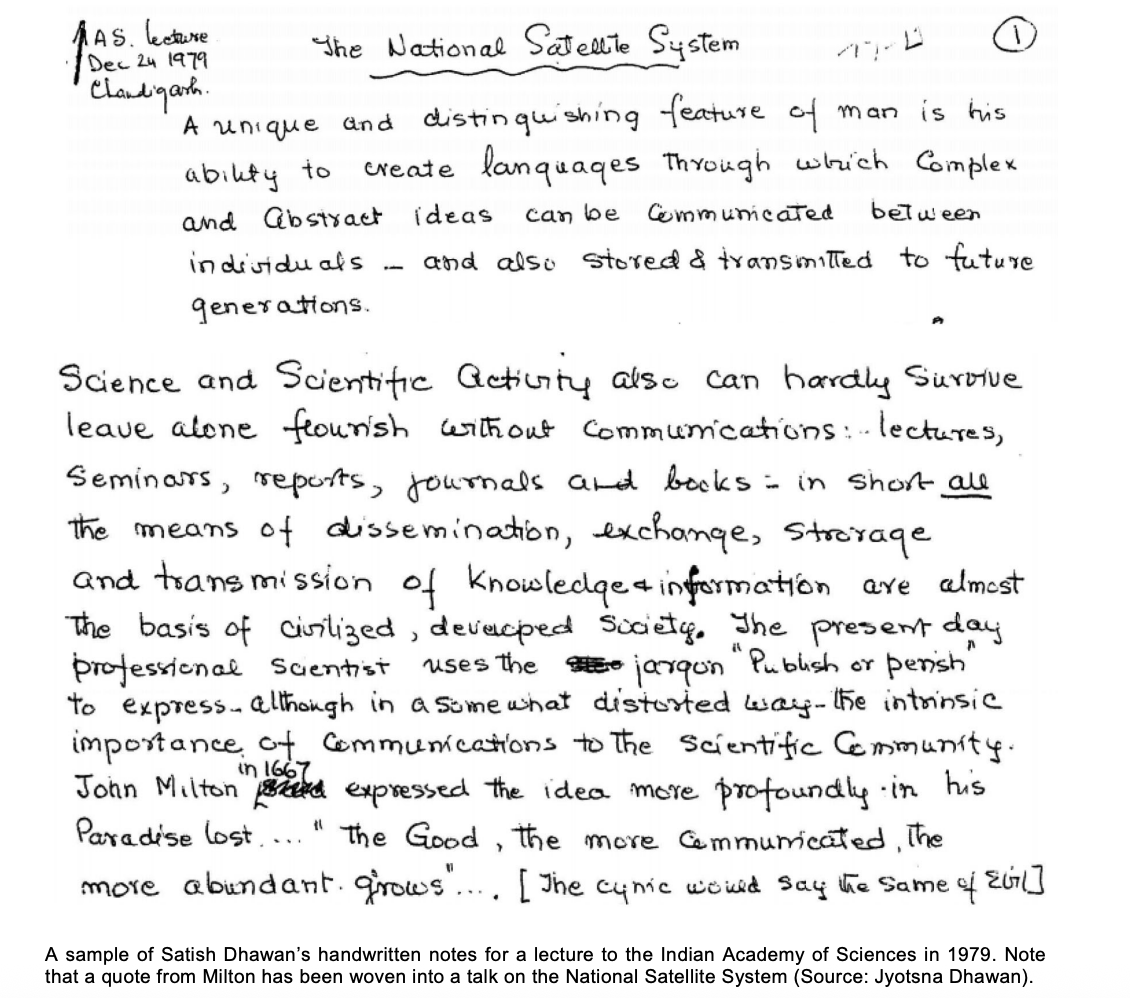
Image credit: Current Science 119, no. 9 (2020): 1427–32

Today is the birth anniversary of Satish Dhawan (25 September 1920 – 3 January 2002). He was probably India’s best scientist-administrator who headed institutions such as the Indian Institute of Science and the Indian Space Research Organization. With a PhD from Caltech, he came back to India and set up a marvellous research enterprise on fluid mechanics, including aerospace science and engineering. He mentored some of the outstanding scientists of India and led scientific institutions with vision, openness and informality, which is still a great benchmark to emulate1.

Below are a couple of historical documents related to Dhawan:

The first one is a lecture note from 1979, on making a case for a national satellite system and how it influences science and scientific activity (a copy of this note has been reproduced in a wonderful tribute to Satish Dhawan written by P. Balaram on his birth centenary2).

The next one is a beautiful perspective article written by Dhawan on ‘Bird Flight’ from an aerodynamics perspective3. It is a detailed overview of the dynamics of bird flight and shows Dhawan’s interest and ability to bridge two facets of science. It is a prototypical example of interdisciplinary research.

Finally, let me end the blog with a quote from P. Balaram on Satish Dhawan4:

“Dhawan mentored some remarkable students and built the discipline of aeronautical engineering at the Institute. He influenced aeronautical research and industry in India in a major way. He shepherded the Indian space programme following Vikram Sarabhai’s untimely death. He served the Indian scientific community in many ways. His stewardship transformed IISc. How then do we describe such a man? Dhawan studied English literature obtaining a Master’s degree in his youth. It may therefore be appropriate for me to borrow a 16th century description of Sir Thomas More:


‘[Sir Thomas] More is a man of an angel’s wit and
singular learning. I know not his fellow. For where is
the man of that gentleness, lowliness and affability?
And, as time requireth, a man of marvelous mirth and
pastimes, and sometime of as sad gravity. A man for
all seasons.’

Satish Dhawan was truly a man for all seasons.”

Happy Birthday to Prof. Satish Dhawan!

References:

  1. Current Science, in 2020, had a section of a volume dedicated to the birth centenary of Satish Dhawan, and has a foreword by his daughter and articles by many of his students and co-workers. https://www.jstor.org/stable/e27139029 ↩︎
  2. P. Balaram, “Satish Dhawan: The Transformation of the Indian Institute of Science, Bangalore,” Current Science 119, no. 9 (2020): 1427–32. This reference has many interesting references, including a handwritten obituary of CV Raman written by Dhawan https://www.jstor.org/stable/27139041. ↩︎
  3. S. Dhawan, “Bird Flight,” Sadhana 16, no. 4 (1991): 275–352, https://doi.org/10.1007/BF02745345. ↩︎
  4. P. Balaram, Current Science 119, no. 9 (2020), page 1432. https://www.jstor.org/stable/27139041. ↩︎

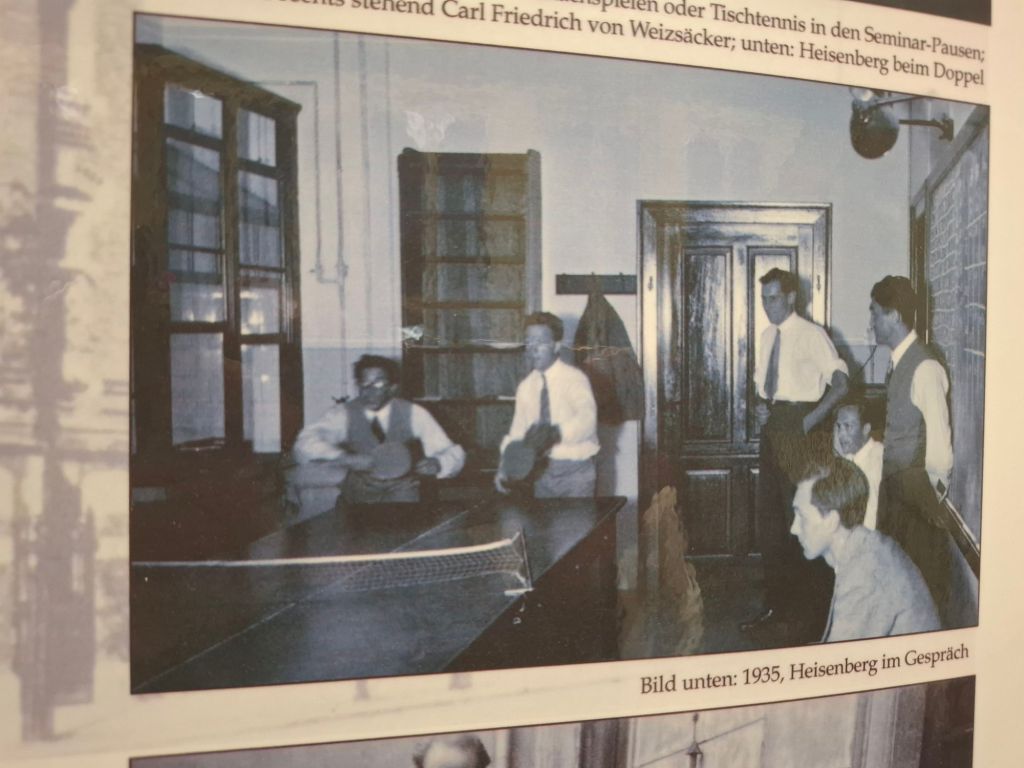
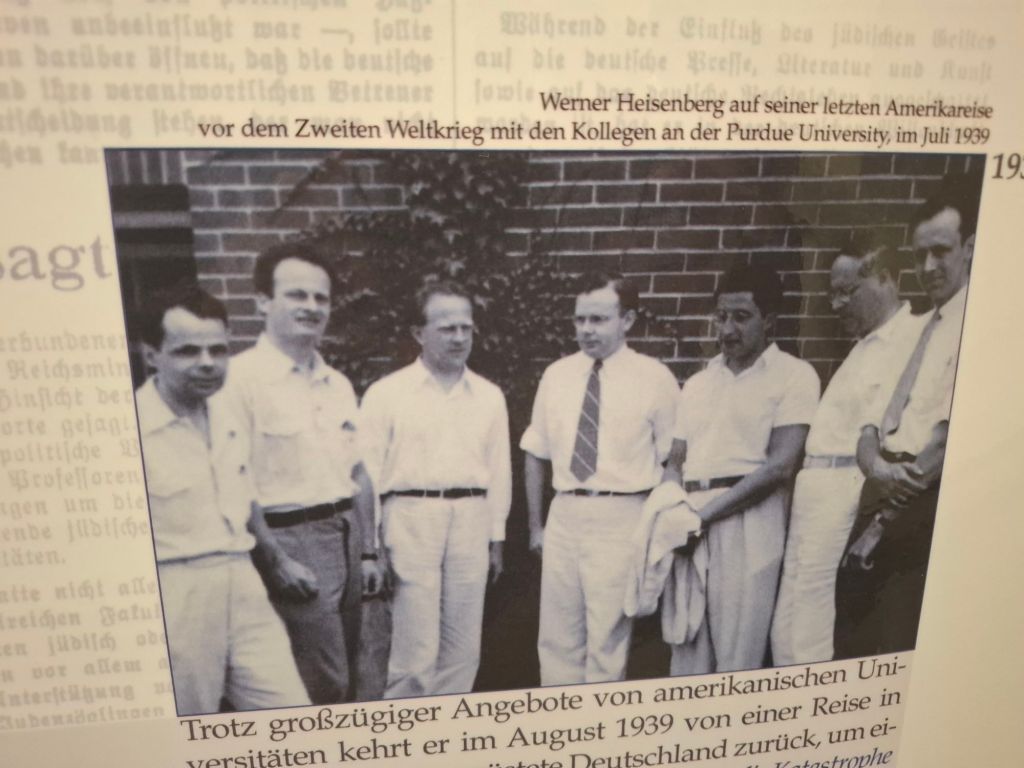
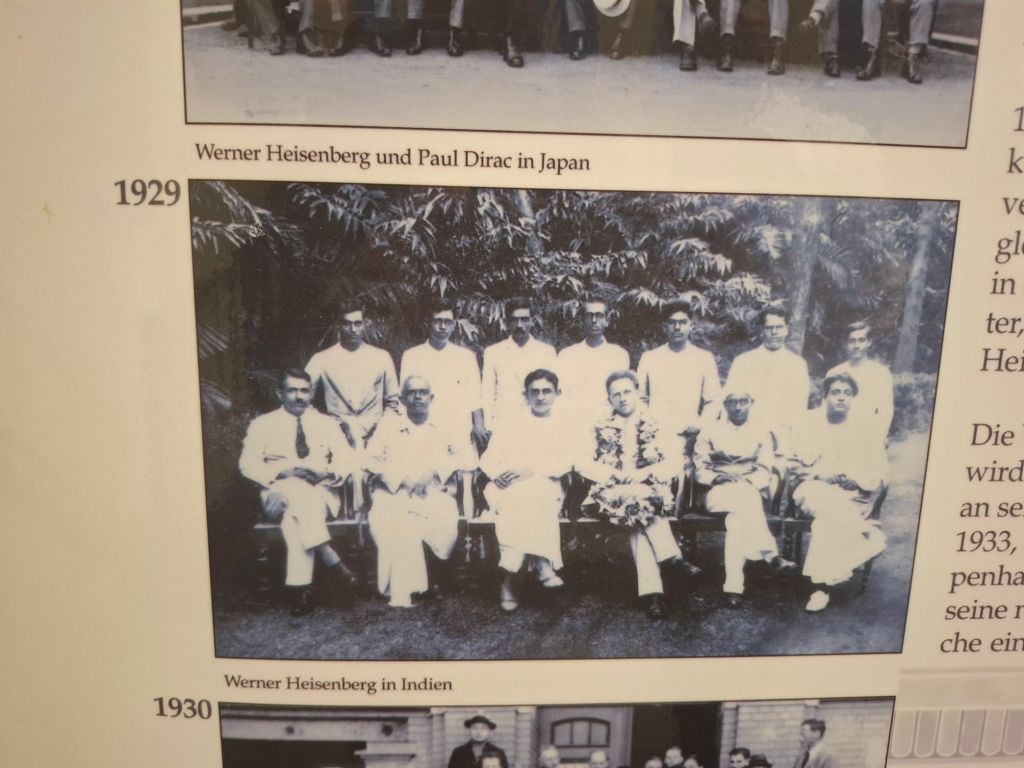
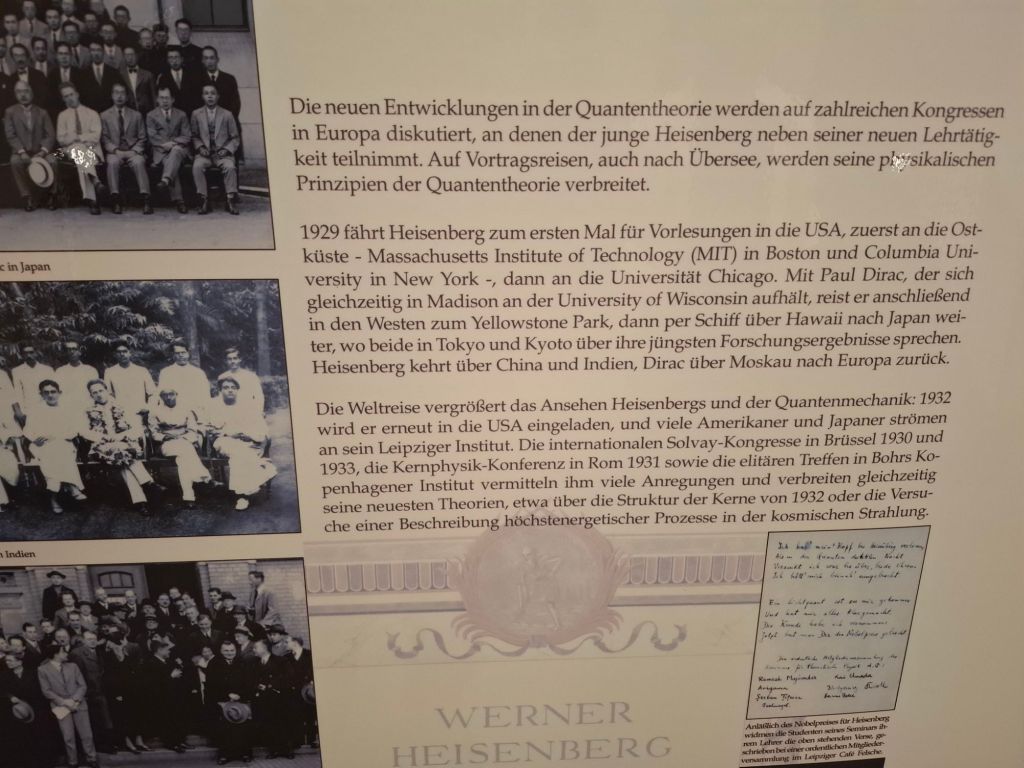
Leipzig – where Heisenberg worked…

From 16th to 18th Sept, 2025, I attended and gave a talk at Optofluidix 2025, thanks to the invitation of Prof. Frank Cichos and his team, Department of Physics, University of Leipzig.

This department is steeped in history, and this post is to give you a pictorial glimpse of some people who worked there.

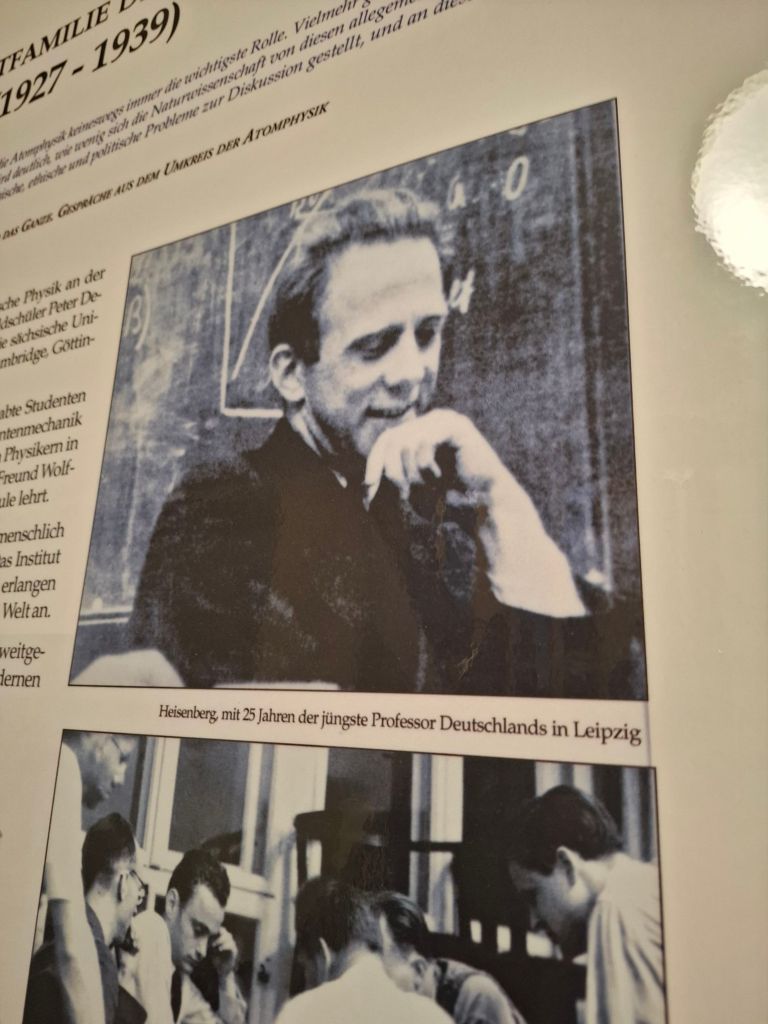
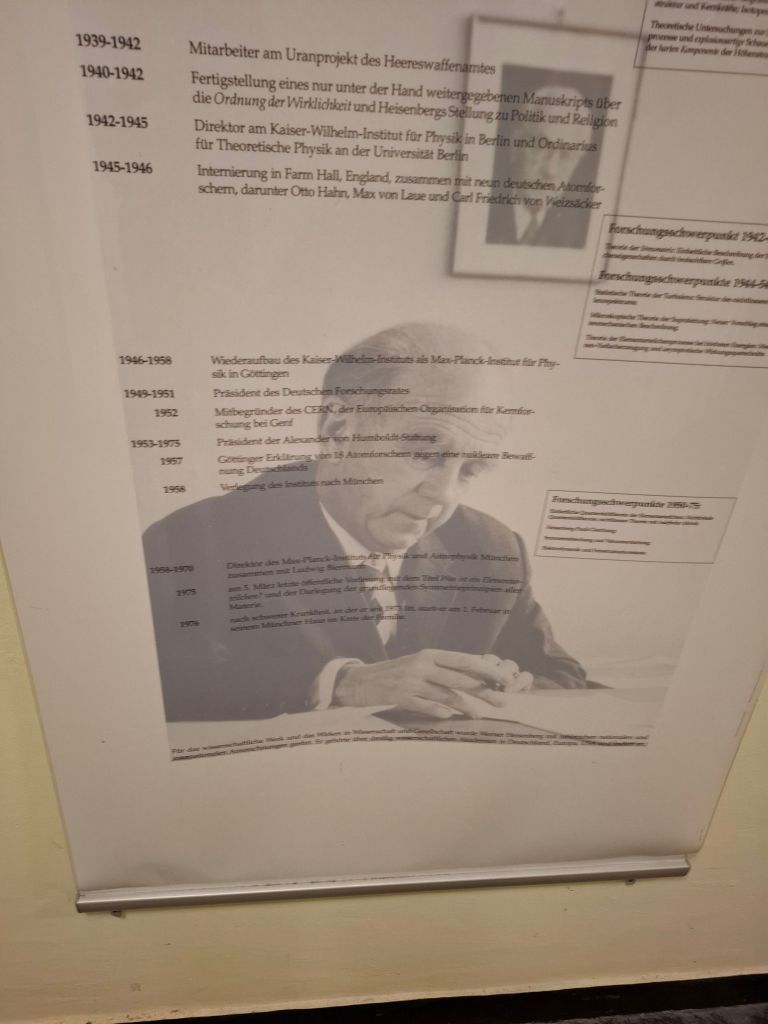
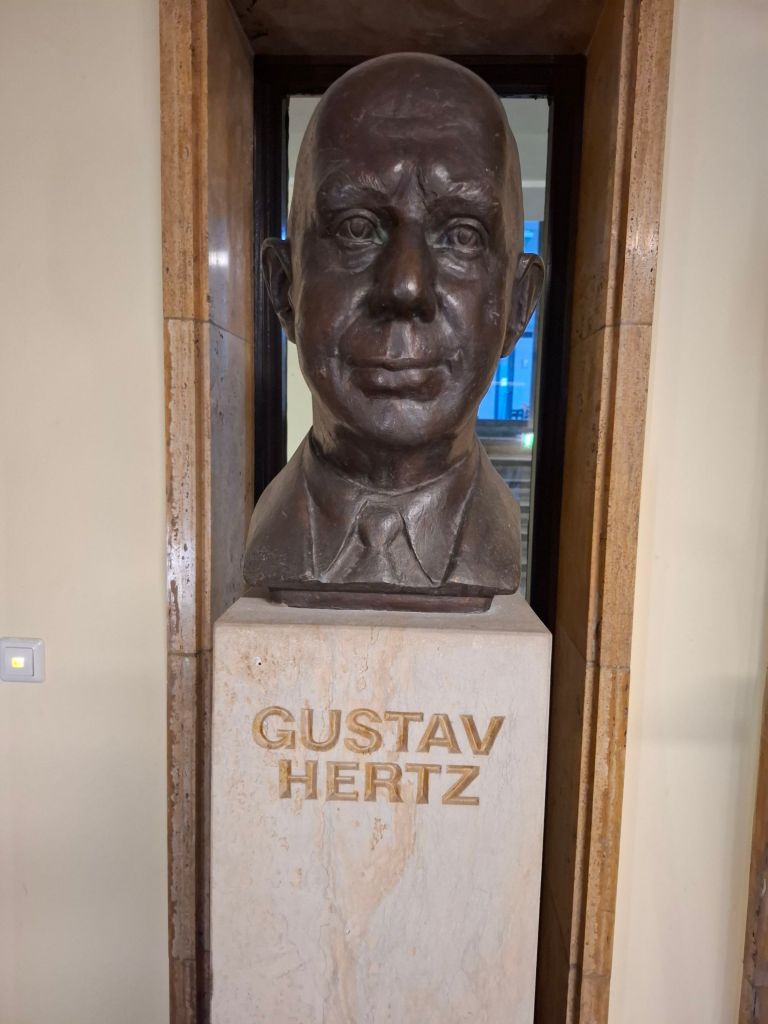
Werner Heisenberg, aged 25, became a Professor at the University of Leipzig, Germany. It was an illustrious department then, had professors such as Peter Debye, Gustav Hertz (of the Franck-Hertz experiment fame), Friedrich Hund and many others. Felix Bloch was a student of Heisenberg in Leipzig.

As the AIP archives describe, “Only 25 years old in October 1927, Heisenberg accepted appointment as professor of theoretical physics at the University of Leipzig, Germany. Friedrich Hund soon joined his former Göttingen colleague as Leipzig’s second professor of theoretical physics. Heisenberg headed the Institute for Theoretical Physics, which was a sub-section of the university’s Physics Institute, headed until 1936 by the experimentalist Peter Debye. Each of the three professors had his own students, assistants, postdocs, and laboratory technicians.”

Below are a few snapshots that I took while visiting the department. Special thanks to Diptabrata Paul (my former PhD student and currently a post-doc in Cichos’ group) for showing me around the department.

Liquid Crystal Droplets + Plasmonic nanoparticle clusters

A droplet of liquid can act as an optical resonator. One can create a droplet of a liquid crystal and utilize its optical and topological properties. In recent times, liquid crystal droplets have emerged as a ‘soft photonic element’ in topological optics and photonics. Studying their optical behaviour in a controlled environment is a contemporary research problem.

In this context, we have an arXiv preprint on liquid crystal droplets and their reversible coupling to a small assembly of nanoparticles on a glass surface (see video).

Specifically, we ask: What happens to the modes of light inside the droplet due to such an interaction?

Thanks to the efforts of Sumant Pandey, we experimentally demonstrate the utility of optical tweezers to proximally couple (and decouple) nematic liquid crystal droplets to gold nanoparticle clusters, and record whispering gallery modes in coupled and decoupled states. We observe tuning of sharp resonant modes.
For more details, see the preprint: https://arxiv.org/abs/2509.10126v1

Art and Chu – in Bell labs

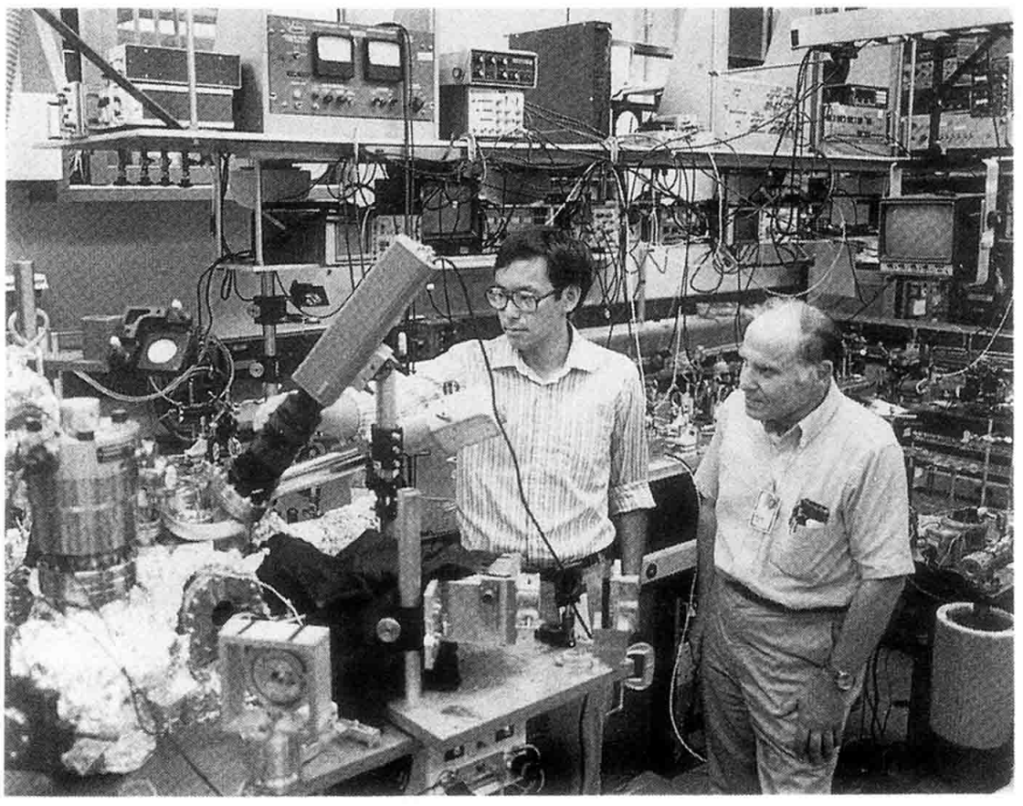
Steven Chu and Arthur Ashkin in 1986, in front of the apparatus shortly after the first optical trapping experiment was completed. Image from Chu’s Nobel lecture.

Steven Chu’s Nobel lecture has some gems. Below, he shares his experience of working with Arthur Ashkin.

“In 1986, the world was excited about atom trapping. During this time, Art Ashkin began to use optical tweezers to trap micron sized particles. While experimenting with colloidal tobacco mosaic viruses, he noticed tiny, translucent objects in his sample. Rushing into my lab, he excitedly proclaimed that he had ‘discovered Life’. I went into his lab, half thinking that the excitement of the last few years had finally gotten the better of him. In his lab was a microscope objective focusing an argon laser beam into a petri dish of water. Off to the side was an old Edmund Scientific microscope. Squinting into the microscope, I saw my eye lashes. Squinting harder, I occasionally saw some translucent objects. Many of these objects were ‘floaters’, debris in my vitreous humor that could be moved by blinking my eyes. Art assured me that there were other objects there that would not move when I blinked my eyes. Sure enough, there were objects in the water that could be trapped and would swim away if the light were turned off. Art had discovered bugs in his apparatus, but these were real bugs, bacteria that had eventually grown in his sample beads and water.”

Chu won the physics Nobel in 1997, and Ashkin won the same in 2018. Ashkin was the pioneer of optical trapping and tweezers, and applied it to a variety of problems, including the manipulation of biological matter. Chu harnessed the momentum of light to trap and cool atoms. Both started their work and collaborated at Bell Labs. Chu moved to Stanford, whereas Ashkin stayed back. Bell Labs was a remarkable place in the 1980s, as Chu describes in his lecture :

“Bell Labs was a researcher’s paradise. Our management supplied us with funding, shielded us from bureaucracy, and urged us to do the best science possible. The cramped labs and office cubicles forced us to rub shoulders with each other. Animated discussions frequently interrupted seminars and casual conversations in the cafeteria would sometimes mark the beginning of a new collaboration.”

Can the world afford to have another Bell Labs in 2025? Can it recreate the magic?

Real is imaginary and vice versa

This week in my optics class, I have been teaching Kramers-Kronig (KK) relations of electric susceptibility. It is fascinating to see the causality argument emerge from the relationship between the real and imaginary parts of the complex susceptibility. Whereas the time domain explanation is relatively easier to appreciate (that dissipation follows perturbation in time), for me, the frequency domain implication in KK relation is fascinating: the fact that information about the real part of the function at all frequencies can give you insight into the imaginary part at any given frequency (and vice versa) makes it such a powerful mathematical and physical tool. For example, by knowing the absorption spectrum of a medium, you can find out the refractive index of a medium at a particular frequency that is not easily accessible in experiments.

Two inferences I draw:

1) Complex analysis combined with differential calculus is one of the most beautiful and powerful mathematical tools invented, and exploring its application in experimental scenarios has made physics intriguing, useful, and profound.

2) The KK relationship shows how causality and the structure of matter are connected to each other, and by studying them, one will be able to extrapolate the idea beyond the problem at hand and apply it to a different context in physics. It just shows how ideas hop from one domain to another and how mathematics plays a critical role in intellectual arbitrage.

Real is imaginary and vice versa. Complex numbers zindabad!

When Chandra wrote to Hawking

Learning is a lifelong process, and even the best researchers have to update their knowledge as and when they come across new information. Subrahmanyan Chandrasekhar was undoubtedly one of the most accomplished mathematical astrophysicists in the 20th century, and his range of topics covered almost all aspects of astrophysics.  Chandra (as he was known) was a lifelong learner, and took up new topics within astrophysics, researched them deeply, and wrote definitive books on them, which are still of great utility even today. In his research process, Chandra consulted various scholars across the world, irrespective of their age, and learned new things.

In 1967, Chandra, aged 57, wrote a letter to a 25-year-old researcher, Stephan Hawking, to learn more about his work ‘on the occurrence of singularities in cosmology’. In this letter, which is written in a desperate tone, Chandra mentions that he is grappling with some mathematical aspects of Stephen Hawking’s work and is asking him for references that he can consult to understand his papers. Chandra describes reading Hawking’s papers as  ‘climbing a staircase moving downwards’. Below, I reproduce the letter (from the University of Chicago archives).

 To this letter, Hawking dutifully replies (see below), suggesting specific books on topology and differential geometry. Hawking also suggests some of his published papers. Hawking himself downplays his knowledge of mathematical aspects related to the work, and mentions that it improved after he consulted the mentioned books. Below, I reproduce the handwritten letter (from the University of Chicago archives).

There are two aspects that are interesting to note:  one is the fact that even accomplished researchers have to learn and relearn many things as they get exposed to new information, which calls for humility and setting aside egos, and the second aspect is that ideas are built on existing ideas available at that time, and a major part of it is to learn from papers, books and of course communicating with people, as Chandra did in this case.

Science, after all, is a human endeavor.

Happy Independence Day & de Broglie’s birthday

Happy Independence Day to my fellow Indians !

15th Aug also happens to be birthday of Louis de Broglie, the famous French physicist who played a critical role in understanding wave-particle duality in quantum physics, and laid an important foundation through his formula

λ = h / p ;

where, λ is the wavelength of quantum particle with momentum p and h is the Planck constant.

See here for more details.

de Broglie studied and discovered the wave nature of electron, for which he received the Nobel prize in physics in the year 1929. In 1920s, understanding light from a quantum mechanical viewpoint was a challenge. Reconciling light, both as a particle and a wave, was counterintuitive and required a leap of thought that was provided by de Broglie. On 12th Dec 1928, delivered his Nobel lecture and mentions:

“I thus arrived at the following overall concept which guided my studies:
for both matter and radiations, light in particular, it is necessary to introduce
the corpuscle concept and the wave concept at the same time. In other words
the existence of corpuscles accompanied by waves has to be assumed in all
cases. However, since corpuscles and waves cannot be independent because,
according to Bohr’s expression, they constitute two complementary forces
of reality, it must be possible to establish a certain parallelism between the
motion of a corpuscle and the propagation of the associated wave.

This duality still remains, as we try understand the nature of light and harness it for information processing.

Interestingly, de Broglie was one of persons who nominated CV Raman for the Nobel prize in 1930 ! Below snapshot is from the Nobel prize nomination archives.

Light as EM wave – in Maxwell’s words

Every year, I teach an optics course to physics majors (including physics iPhD students and MS Quantum Tech students). In the process of introduction, I discuss how light was discovered to be an electromagnetic wave. One of the thrills of this topic is to quote Maxwell from his legendary 1865 paper1, in which he makes this monumental connection. Every time I teach this, I get an intellectual kick, even after doing this for almost 1.5 decades.

The highlighted text is the famous statement. Before that, Maxwell compares his result with two experimental results and confirms his prediction. I follow this up with Hertz’s experiment.

Note: Electric waves and telegraphy were already known before Maxwell’s paper. There were papers that discussed about velocity of light and its connection to electric waves. See this paper2, for example. However, these interpretations were not as comprehensive as Maxwell’s case, and importantly, the field theory viewpoint needed Faraday’s experiments and Maxwell’s interpretation.

  1. Maxwell, James Clerk. 1865. “VIII. A Dynamical Theory of the Electromagnetic Field.” Philosophical Transactions of the Royal Society of London 155 (January): 459–512. https://doi.org/10.1098/rstl.1865.0008.
    ↩︎
  2. https://www.ifi.unicamp.br/~assis/Weber-Kohlrausch(2003).pdf ↩︎