Most of the leaves have a hydrophobic surface. Interestingly, they act as self cleaning surfaces.
— G V Pavan Kumar (@Pavan_KumarGV) July 14, 2023
1/5 pic.twitter.com/3FbzK35LEo
Category: physics
New episode on podcast : Conversation with Aditi Sen (De)
Aditi Sen (De) is a Professor at HRI, Allahabad. We had a freewheeling conversation on her biography, research on quantum information, motherhood, her experience of working in Europe and India. Also we have small segment in Bengali বাংলা (her mother tongue) on quantum research and motivations. Listen as we humanize science…
Spotify: https://open.spotify.com/episode/0PxgZe1sdPwlIkDCUXwDht?si=1aWctGNcRmmc3i1H4SmT9g
YouTube: https://youtu.be/NPxLccZ5Z64
1. “Aditi Sen (De).” Accessed June 27, 2023. https://sites.google.com/view/aditisende
2. “Aditi Sen De.” In Wikipedia, April 14, 2023. https://en.wikipedia.org/w/index.php?title=Aditi_Sen_De&oldid=1149772049.
3. Konar, Tanoy Kanti, Ayan Patra, Rivu Gupta, Srijon Ghosh, and Aditi Sen De. “Multimode Advantage in Continuous Variable Quantum Battery.” arXiv.org, October 29, 2022. https://arxiv.org/abs/2210.16528v1.
4. Physics World. “Quantum Batteries Harvest Energy from Light,” April 9, 2022. https://physicsworld.com/quantum-batteries-harvest-energy-from-light/.
5. “Schrödinger’s Cat.” In Wikipedia, May 16, 2023. https://en.wikipedia.org/w/index.php?title=Schr%C3%B6dinger%27s_cat&oldid=1155122246.
6. “Dagmar Bruß | Falling Walls.” Accessed June 27, 2023. https://falling-walls.com/people/dagmar-brus/.
7. ICFO. “ICFO – The Institute of Photonic Sciences.” Accessed June 27, 2023. https://www.icfo.eu/.
8. “ICREA.” Accessed June 27, 2023. https://www.icrea.cat/Web/ScientificStaff/anna-sanpera–trigueros-318.
9. “Maciej Lewenstein.” In Wikipedia, June 24, 2023. https://en.wikipedia.org/w/index.php?title=Maciej_Lewenstein&oldid=1161681689.
10. “Marek Żukowski.” In Wikipedia, February 9, 2023. https://en.wikipedia.org/w/index.php?title=Marek_%C5%BBukowski&oldid=1138310178.
11. “Universität Düsseldorf: People.” Accessed June 27, 2023. https://www.tp3.hhu.de/en/people.
Leidenfrost effect in my kitchen
Jerel Walker of the fame of Halliday, Resnick ,Walker textbook fame has a superb article on this: https://www.reed.edu/physics/332/pdf/Leidenfrost.pdf
Wikipedia has a reasonable explanation: https://en.m.wikipedia.org/wiki/Leidenfrost_effect#:~:text=The%20Leidenfrost%20effect%20is%20a,the%20liquid%20from%20boiling%20rapidly.
Michelson’s legend in a poem

Albert Abraham Michelson was a celebrated American experimental physicist. He was associated with one of the most famous experiments in physics : Michelson-Morley Experiment, which formed an important input for Einstein’s special theory of relativity.
Recently, I discussed about this experiment in one of my podcasts.
Michelson’s ability to design and develop optical instruments including the interferometer named after him, was one of vital elements in his legendary pursuit to measure velocity of light. He continued to refine this measurement over a period of 40 years or so.
He was also the first American to win a Nobel prize in science (physics, 1907). Americans adored him, and he shot up to fame with his ingenious experiments and became a folklore of United States.
There is a very nice historical account of the Michelson-Morley-Miller experiment in the book titled : The Ethereal Aether; a History of the Michelson-Morley-Miller Aether-Drift Experiments, 1880-1930. by Swenson, Loyd S. published in 1972.
(Yes, you read it right, there was another guy called Dayton Miller who played a critical role in refining the experiment initiated by Michelson and Morley )
In Swenson’s book, there are two stanzas from a poem by Edwin Herbert Lewis that highlights Michelson’s legend. Below I reproduce the same :
But in Kyerson rainbows murmur the music of heavenly things.
Is not this stranger than heaven that a man should hear around
The whole of earth and the half of heaven and see the shadow of sound?
He gathereth up the iris from the plunging of planet’s rim
With bright precision of fingers that Uriel envies him.
But when from the plunging planet he spread out a hand to feel
How fast the ether drifted back through flesh or stone or steel
The fine fiducial fingers felt no ethereal breath. They penciled the night in a cross of light and found it still as death.
Have the stars conspired against him? Do measurements only seem?
Are time and space but shadows enmeshed in a private dream?But dreaming or not, he measured. He made him a rainbow bar,
E.H. Lewis
And first he measured the measures of man, and then he measured a star.
Now tell us how long is the metre, lest fire should steal it away?
Ye shall fashion it new, immortal, of the crimson cadmium ray.
Now tell us how big is Antares, a spear-point in the night?
Four hundred million miles across a single point of light.
He has taught a world to measure. They read the furnace and gauge
By lines of the fringe of glory that knows nor aging nor age.
Now this is the law of Ryerson and this is the price of peace-
That men shall learn to measure or ever their strife shall cease.
Indeed humans shall learn to measure or ever their strife shall cease…
June is for Joule
Galileo’s moon
Osaka and Optical Manipulation
Thanks to the invitation of Prof. Hajime Ishihara, I visited Osaka from 29th April to 2nd May 2023.
I arrived in Osaka on Saturday (29th Apr). On 30th Apr (Sunday) I headed out to visit the famous Kiyomizudera Temple in Kyoto with 2 PhD students from Ishihara’s group : Hideki Arahari and Takao Horai

Apart from the temple, we had a wonderful time exploring the Nishiki Market and Kamo river.
On 1st May, I visited Osaka University to officially meet Prof Ishihara, his group and other research groups in the university. We had a wonderful discussion on optical manipulation and major projects related to it especially in Japan, and undoubtedly Osaka has emerged as a major center in optical manipulation.
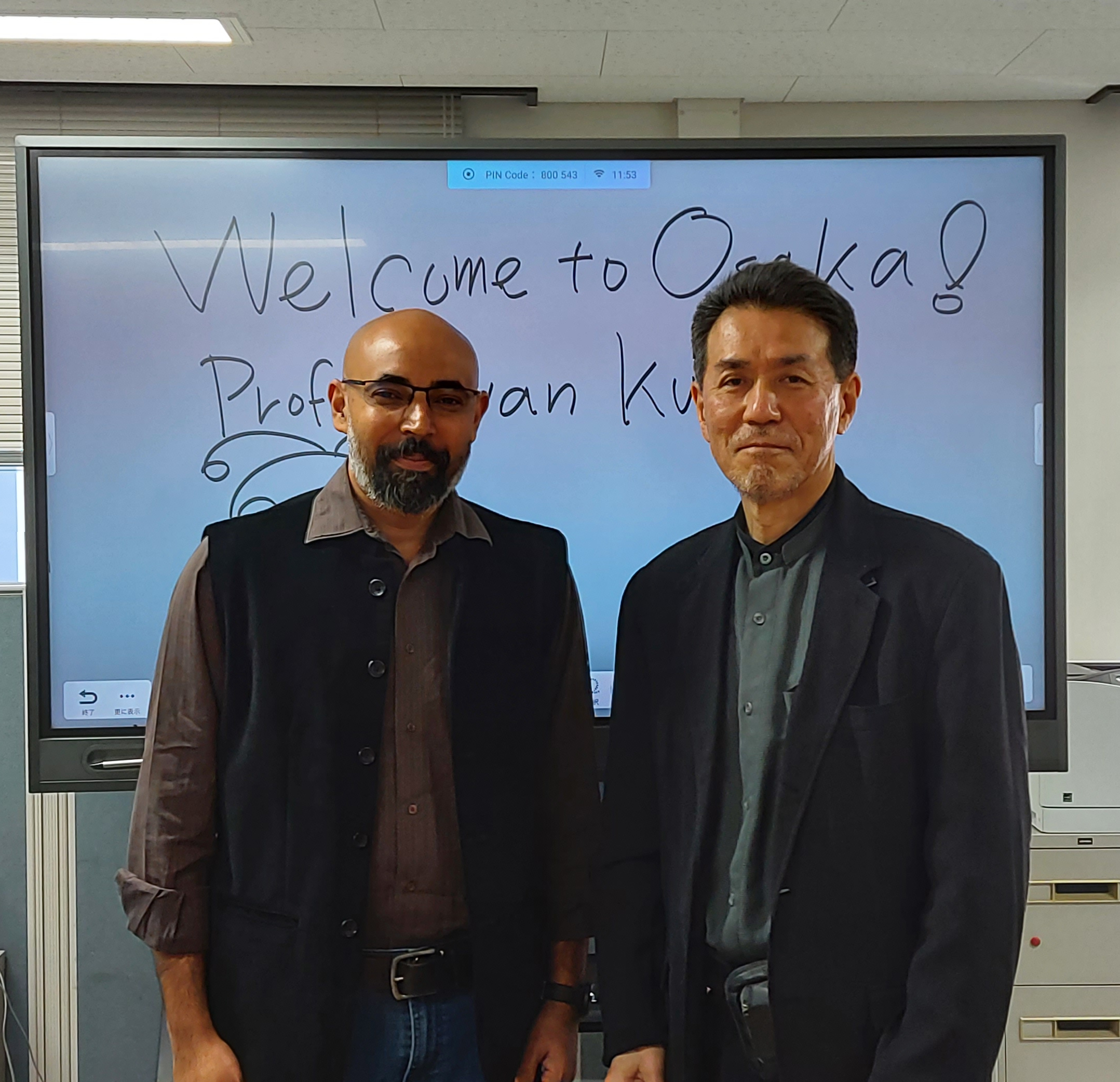
I was delighted to see so many students and research groups interested in optical trapping/manipulation and related science and technology. I learnt about some very interesting applications of optical manipulation. Also, it was great to see such a great sense of humor in this group of researchers. It was truly amazing.
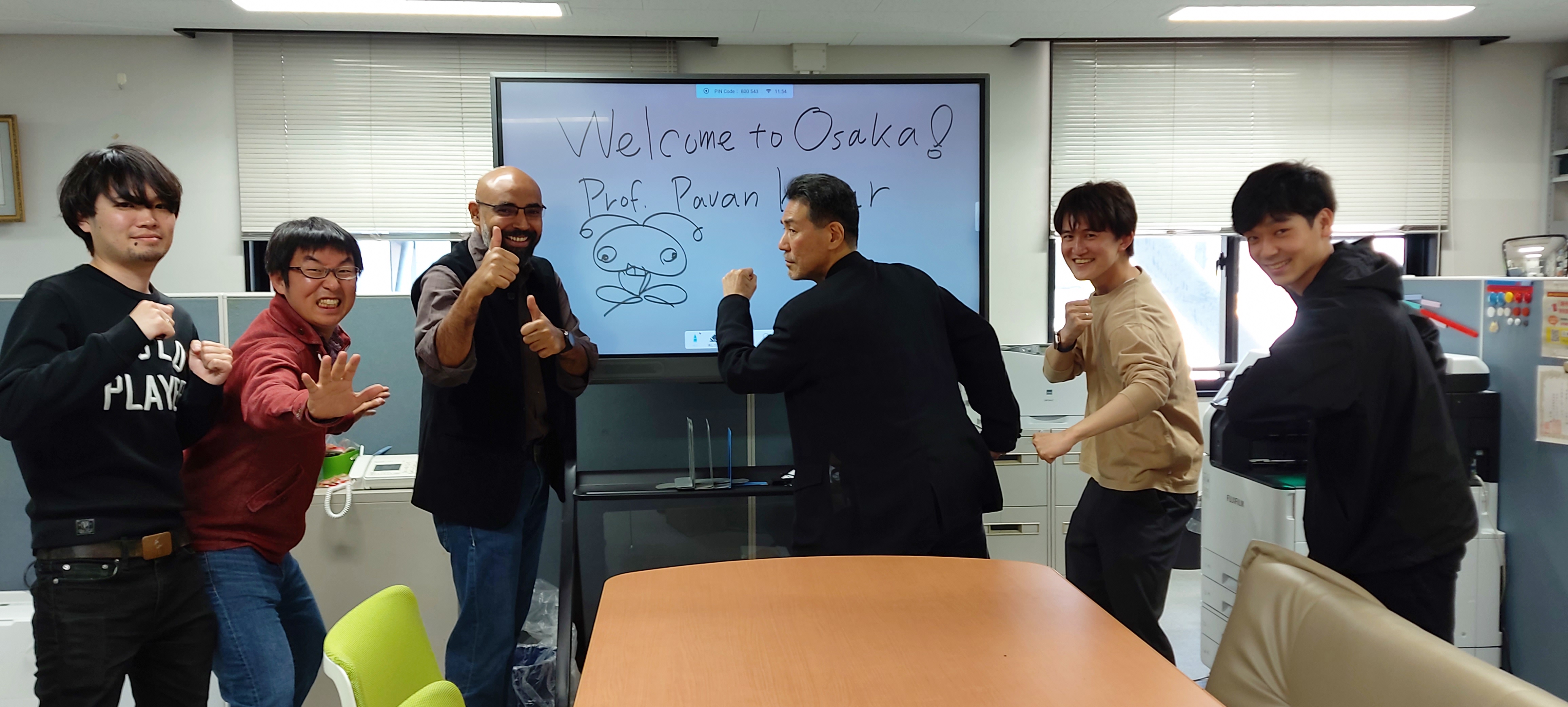
I also visited labs of Prof. Ashida and Prof Ito, and got a very nice overview of their work including optical manipulation in liquid helium and photochemical reactions in an optical trap.
At 4pm, I gave my talk on “Optical Manipulation based on Opto-Thermal Gradients“. I elaborated on the role of absorption and related thermal gradient in optical manipulation. I presented some of our ongoing work on optical manipulation with structured light. The talk was attended by at least 30 to 40 people, and I was informed that students from various groups in Osaka were present (there are a few universities). The quality of questions and the follow up discussion was very good, and really enjoyed it.
Finally, the day ended with a wonderful dinner at a tofu-themed Japanese restaurant. We had wonderful discussion on history and philosophy in our countries, and was very interesting.
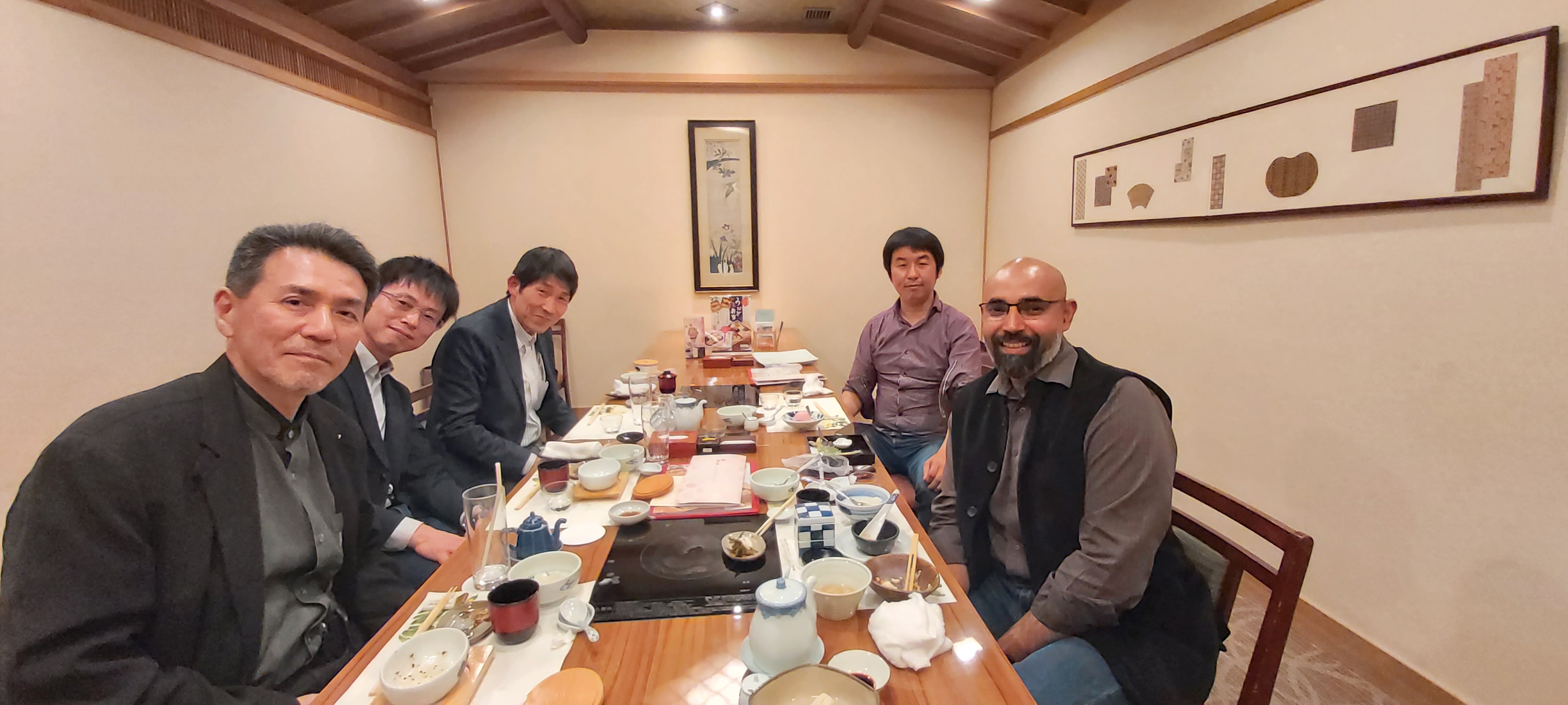
My trajectory in Japan has been Yokohama –> Tokyo –> Okinawa –> Osaka. After 16 days, one conference talk and 4 research seminar across Japan, I am now heading back from Osaka to Tokyo (and writing this blog) on Shinkansen – the bullet train. Tomorrow, I will be leaving to India.
In Japanese, the word ‘Osaka’ also means ‘a large hill’. Japan’s geography has many large hills (see a picture of Mt. Fuji I took from the moving Shinkansen), and metaphorically speaking Japanese like to scale complex landscapes of life by bringing culture with science and technology. There is a lot to learn from this approach to life.
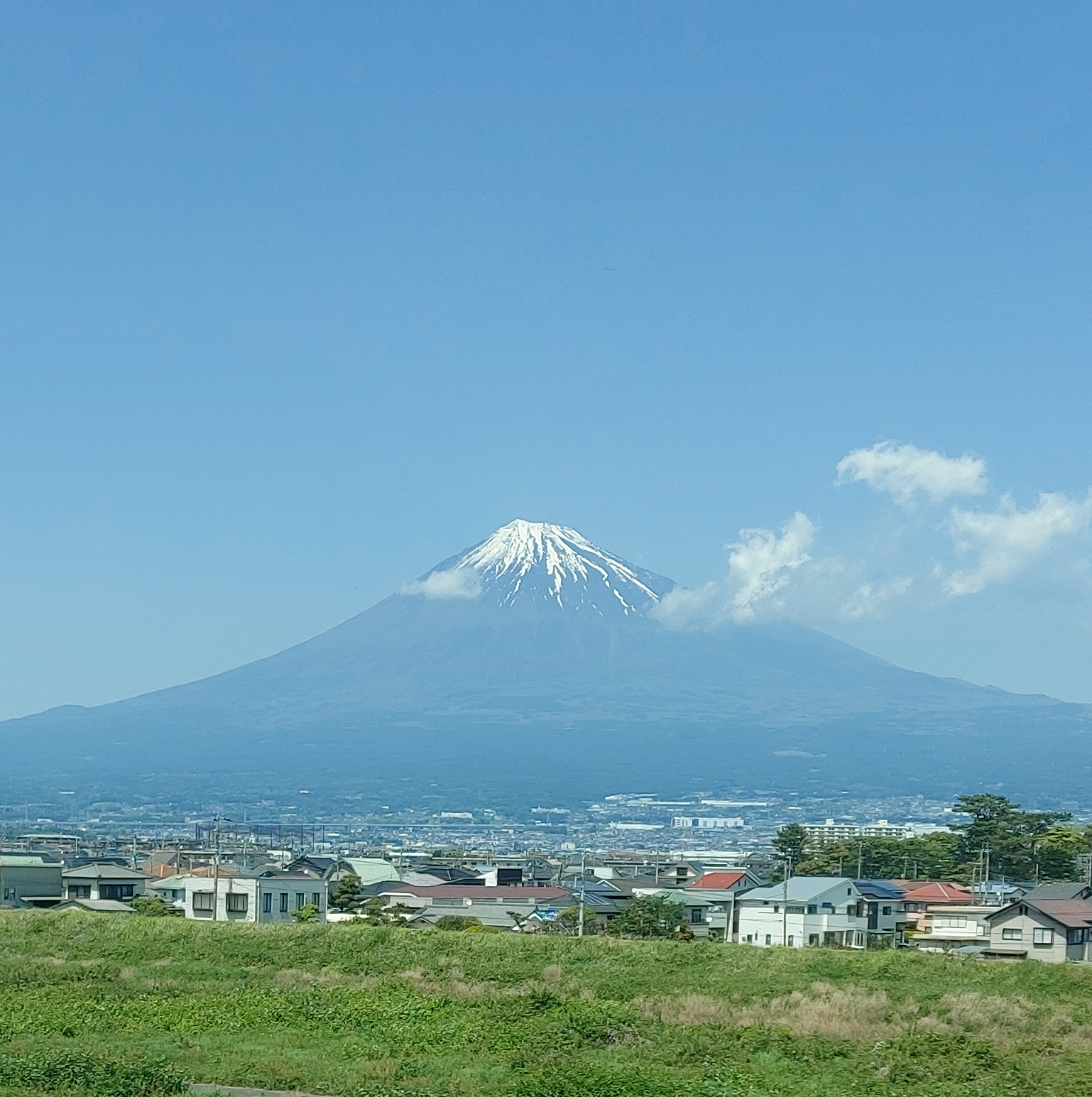
Osaka, optical manipulation and the perennial ascent towards knowledge. What a memorable trip this has been.
To Japan and to all the people I met here – Doumo Arigatou Gozaimasu !
Two talks in Tokyo
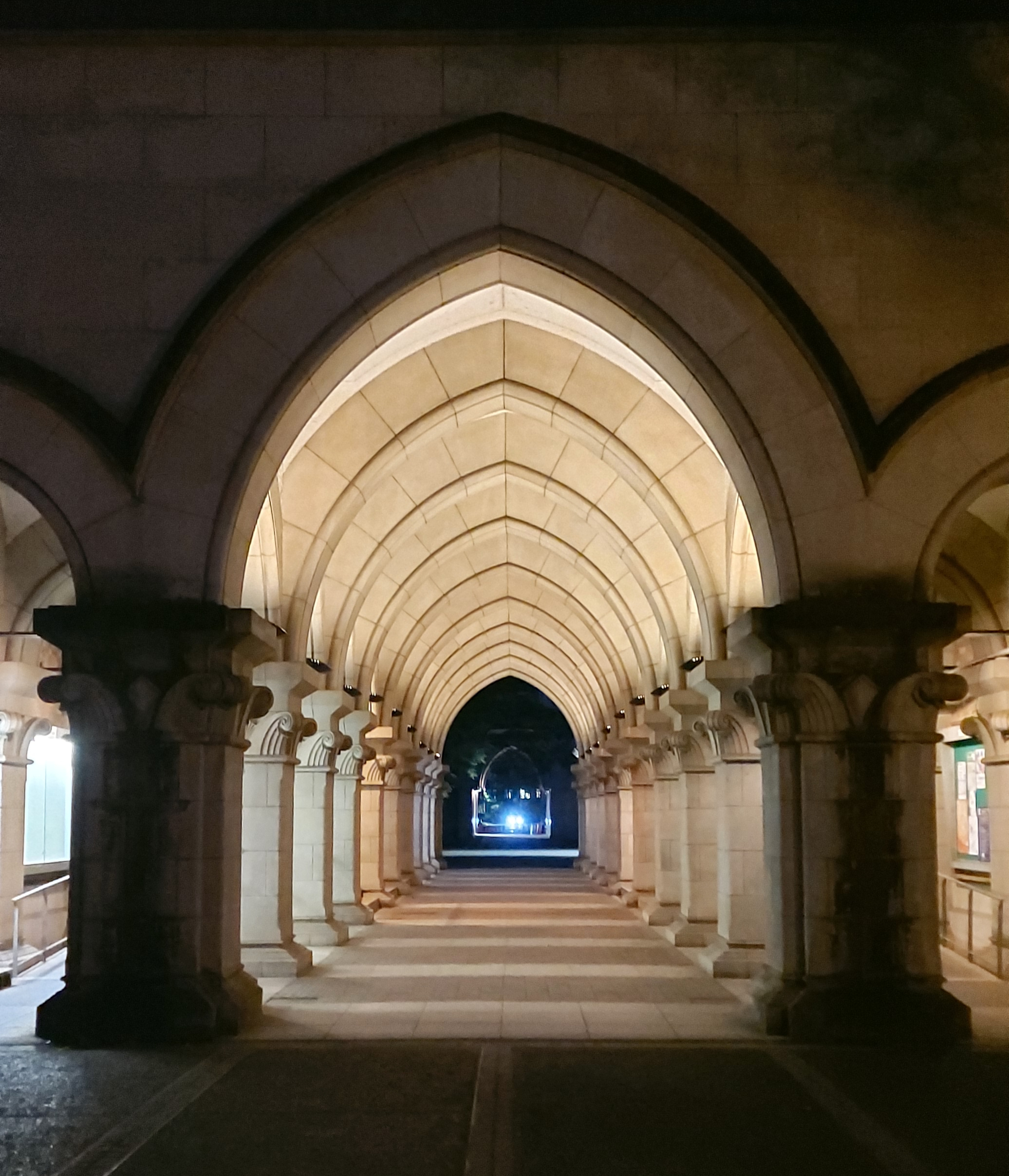
I gave two talks in Tokyo.
First was on 24th April at Department of Applied Physics, Faculty of Advanced Engineering, Tokyo University of Science. My host was Prof. Yutaka Sumino. I spoke about “Soft Matter in Opto-Thermal Gradients“. I gave a short introduction to opto-thermal perturbations and potentials, and discussed some of our work on opto-thermophoretic trapping and Brownian dynamics. The audience contained a few master students too, and I really enjoyed discussing some concepts related to Brownian motion in an optothermal trap, and related experiments. Also, I had a very interesting discussion with Sumino and his students on their experiments on Janus particles.
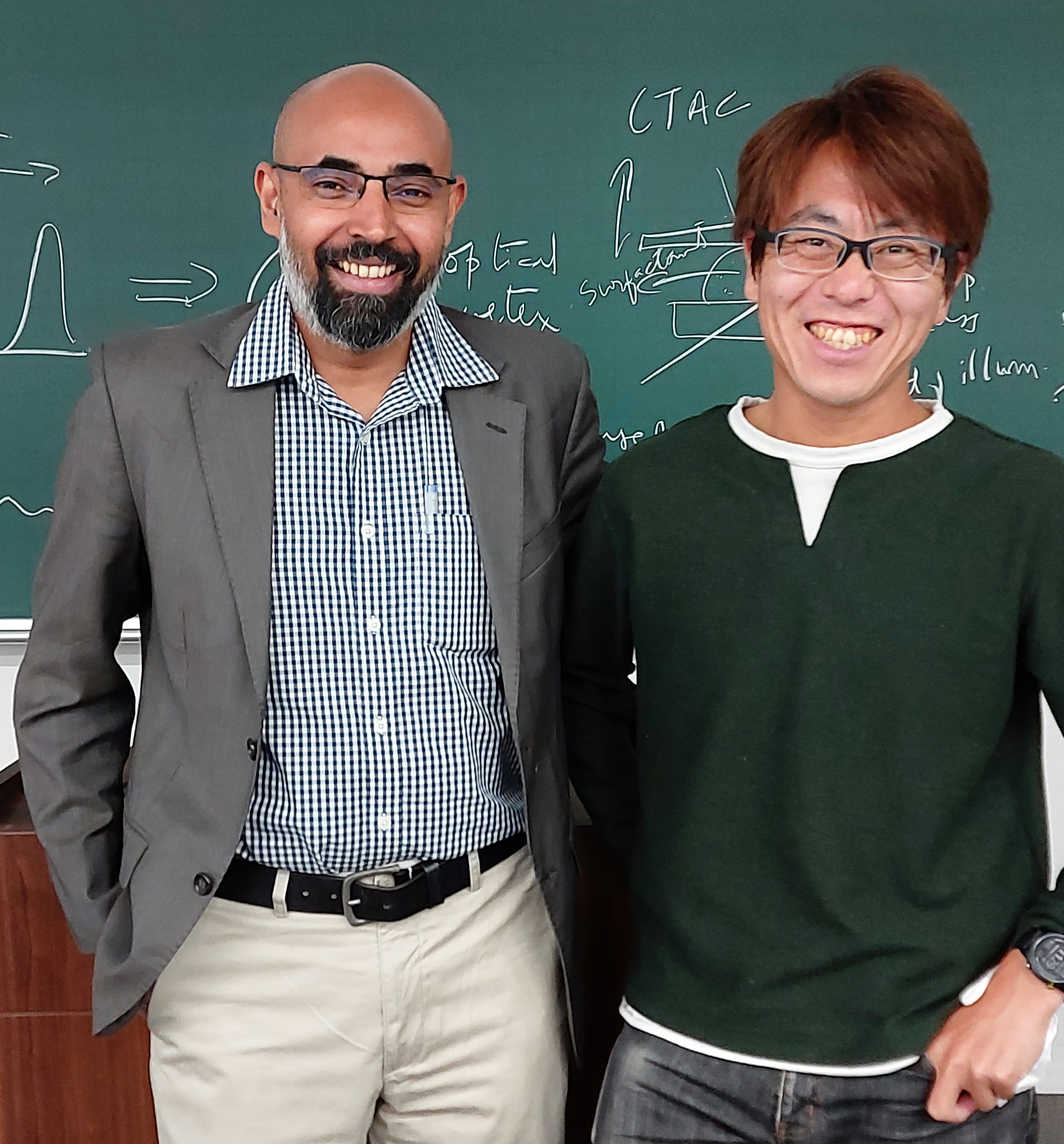

The second talk was on 25th April at Department of Physics, University of Tokyo. My host was Prof. Kazumasa Takeuchi. I spoke about “Soft Matter in Opto-Thermal Gradients : Evolutionary Dynamics and Pattern Formation“.
This talk was also announced on Japan’s statphys mailing list, and also live-casted over zoom. I discussed about the origins of optothermal effects in a laser trap, and how it can lead to some interesting dynamics and pattern formation in soft-matter system. Specifically, I highlighted the concept of Hot Brownian motion, and how it can be influenced using thermo-plasmons. The talk and discussion went on for almost 2 hours, and I really loved it. Also, Takeuchi and his students gave an overview of their work including a live demonstration on turbulence in liquid crystals, and it was fantastic.


Halina Rubinsztein-Dunlop – History of Optical Manipulation
Below is a video blog featuring Halina Rubinsztein-Dunlop as part of history of optical manipulation. Also pictured in the blog are : Giorgio Volpe (UC, London) and Agnese Callegari (University of Gothenburg). Pictures taken at OMC 2023 in Yokohama, Japan.
Some relevant links at the end :
Notes :
Professor Halina Rubinsztein-Dunlop (2023). Available at: https://smp.uq.edu.au/profile/204/halina-rubinsztein-dunlop (Accessed: 19 April 2023).
Halina Rubinsztein-Dunlop – Google Scholar Available at: https://scholar.google.se/citations?user=4_sqVfYAAAAJ&hl=en (Accessed: 19 April 2023).
‘Halina Rubinsztein-Dunlop’ (2023) Wikipedia. Available at: https://en.wikipedia.org/w/index.php?title=Halina_Rubinsztein-Dunlop&oldid=1145639271 (Accessed: 19 April 2023).
seminal papers :
Friese, M.E.J. et al. (1998) ‘Optical alignment and spinning of laser-trapped microscopic particles’, Nature, 394(6691), pp. 348–350. Available at: https://doi.org/10.1038/28566.
He, H. et al. (1995) ‘Direct Observation of Transfer of Angular Momentum to Absorptive Particles from a Laser Beam with a Phase Singularity’, Physical Review Letters, 75(5), pp. 826–829. Available at: https://doi.org/10.1103/PhysRevLett.75.826.
 VISMAYA - History & Philosophy of Physics