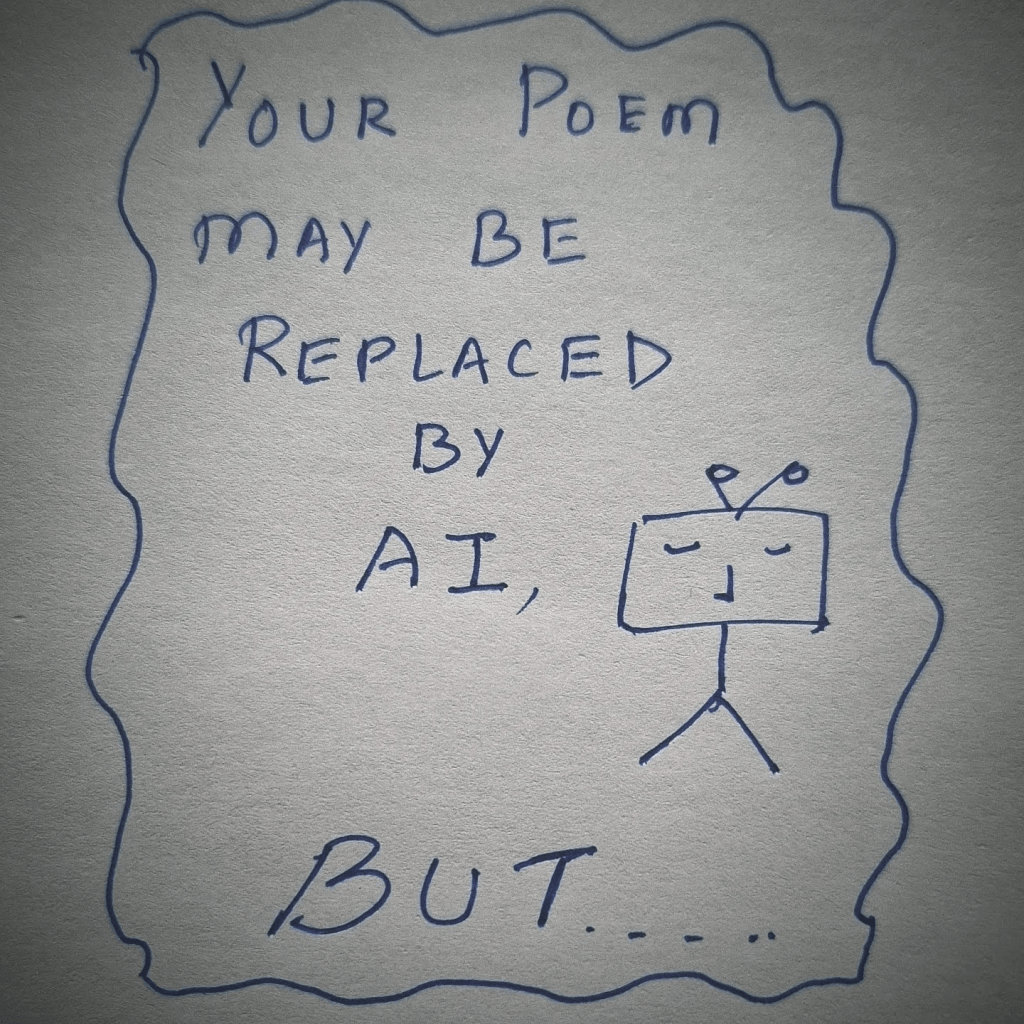
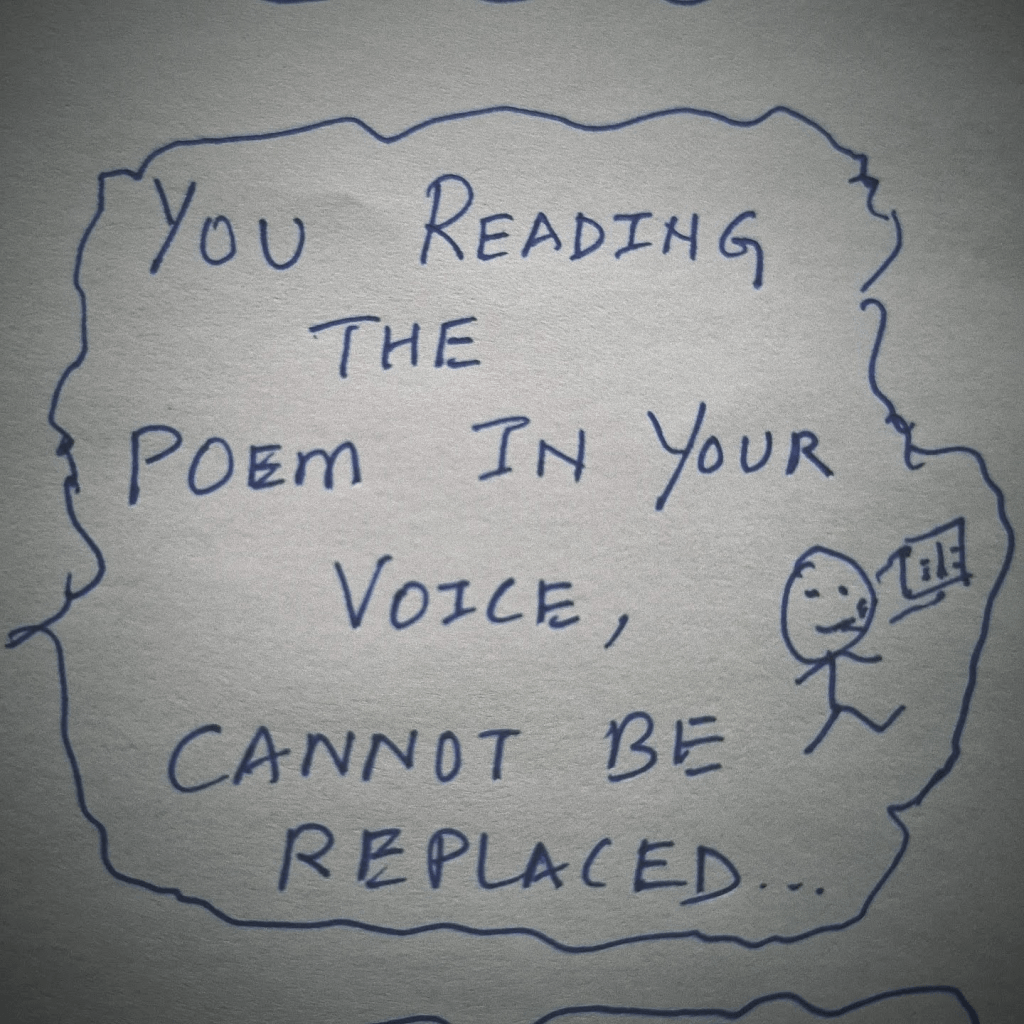
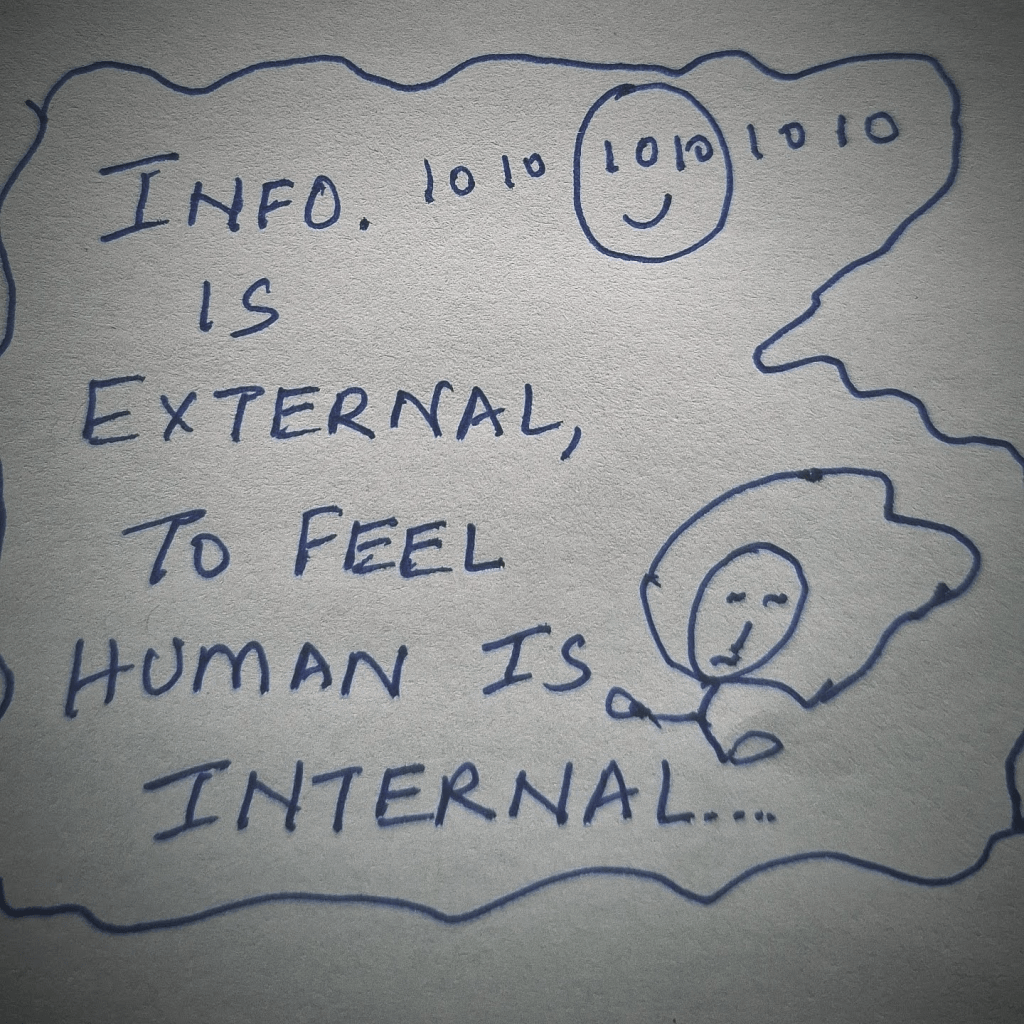
3 Questions for the AI age

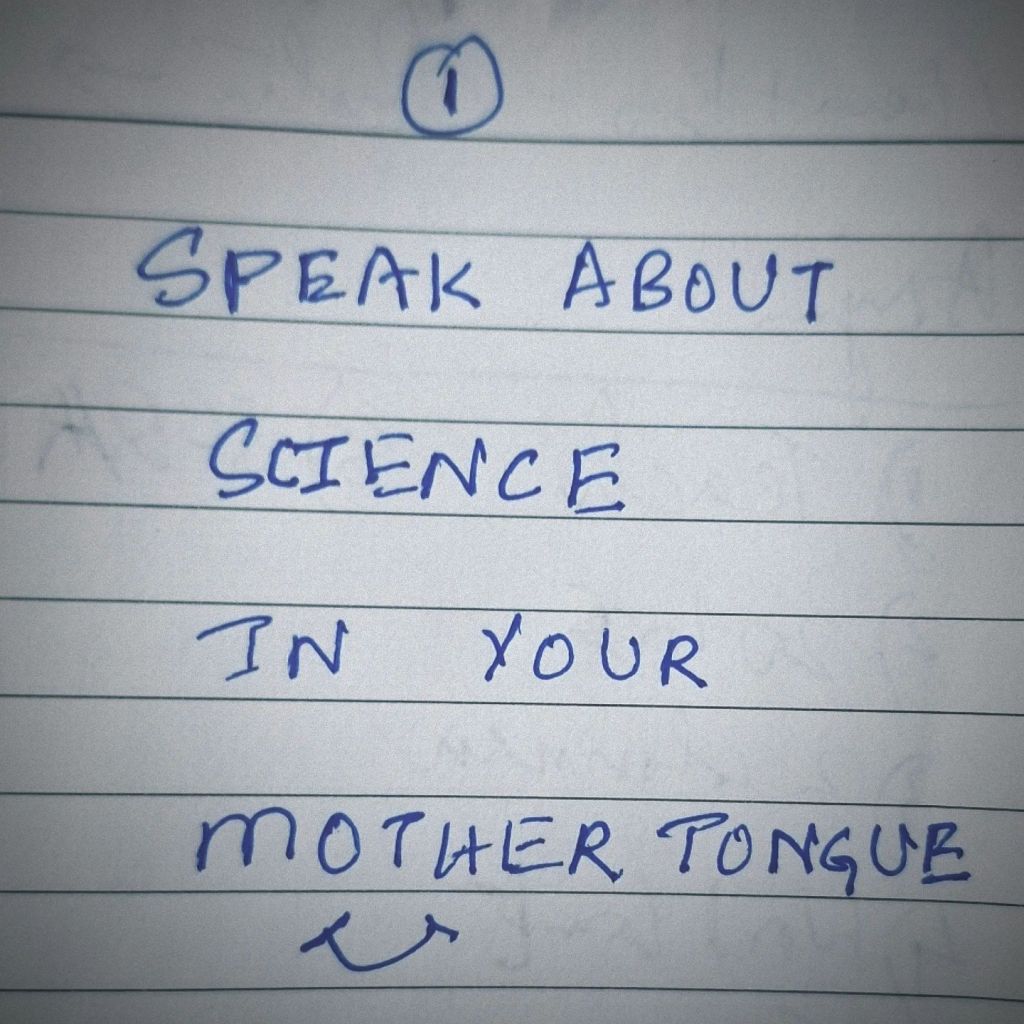
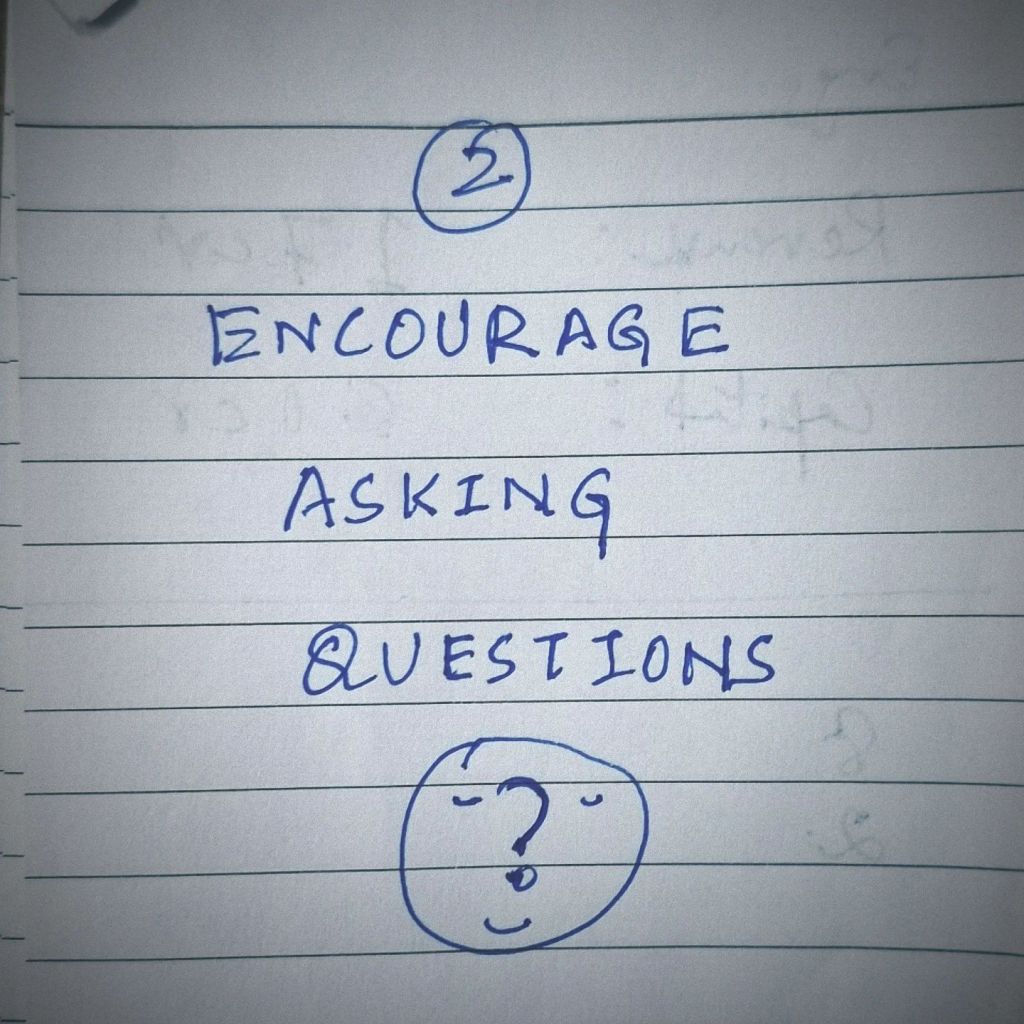
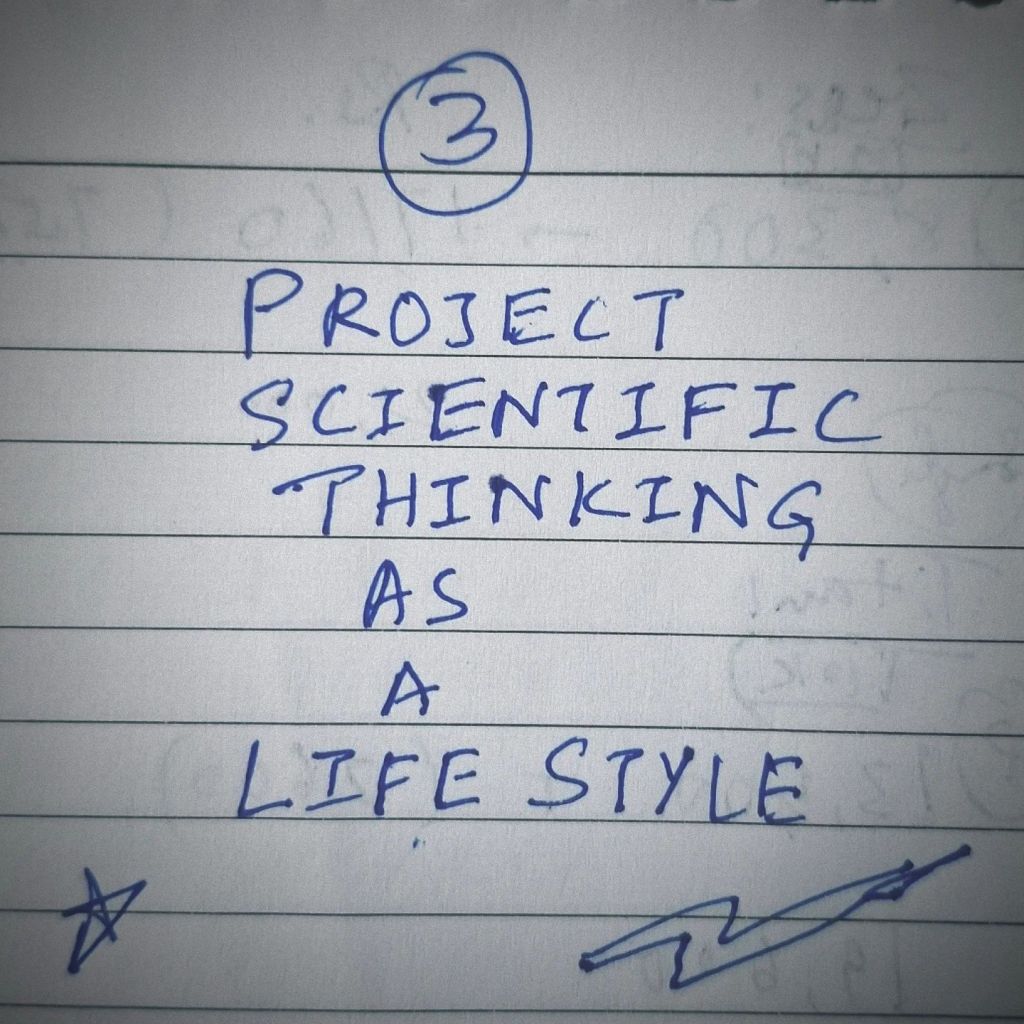
3 Questions to Ponder in the Age of Artificial Intelligence (AI).

  1. What will you do with the time you gain from the utility of AI?
  2. How will you utilize your individual short-term and long-term memory?
  3. What is your definition of intelligence in humans?

I think it is worth thinking about.

‘We’gnana !

Recently, I saw the following tweet from the well-known historian William Dalrymple.

Congrats to the listed authors, who deserve rewards (and the money) for their effort.

I have 3 adjacent points to make:

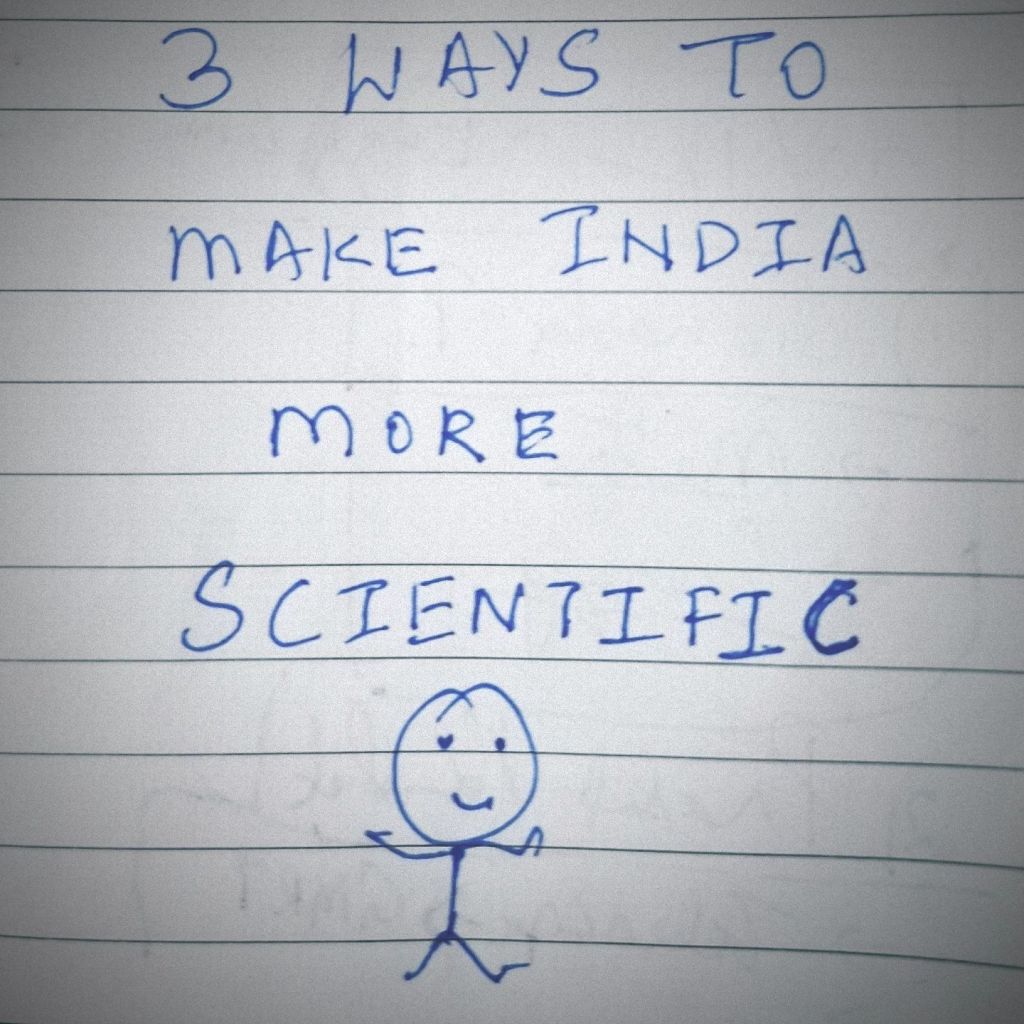
1) India badly needs to read (and write) more on science and technology. Here, I am not referring to textbooks, but some popular-level science books (at least). Generally, educated Indians are exposed to science only through their textbooks, which are mostly dull, or, in this era, YouTube videos, which have a low signal-to-noise ratio. Good quality science & tech books at a popular level can add intellectual value, excitement, and expand scientific thinking via reading, not just in students, but also in adults.

2) In India, most of the non-fiction literature is dominated by the social sciences, particularly history (as seen in the best-seller list). I have no problem with that, but non-fiction as a genre is a broad tree. Indian readers (and publishers) can and should broaden this scope and explore other branches of the tree. Modern science books (authentic ones), especially written in the Indian context, are badly in need. I hope trade publishers are reading this!

3) Most of the public and social media discourse in India does not emphasize (or underplays) the scientific viewpoint. Scientific literature and scientific discourse should become a central part of our culture. Good books have a major role to play. Remember what Sagan’s Cosmos did to American scientific outlook, and indirectly to its economic progress. The recent Nobel in economics, especially through the work of Joel Mokyr, further reinforces the connection between science, economics and human progress. This realization should be bottom-up, down to individual families and public places.

One of the great scientists, James Maxwell, is attributed to have said: “Happy is the man who can recognise in the work of today a connected portion of the work of life and an embodiment of the work of Eternity.

Science, with its rich, global history and philosophy, in the form of good books, can connect India (and the world) to the ‘work of eternity’, and make us look forward.

Embedding science within culture, in a humane way, can lead to progress. Science books have a central role to play in this.

विज्ञान (Vignana) should transform to ‘We’gnana !

Have You Seen the Bird Flying? by D. R. Bendre

ಕನ್ನಡ ರಾಜ್ಯೋತ್ಸವದ ಶುಭಾಶಯಗಳು

Reproducing one of Da. Ra. Bendre’s Kannada poems titled “ಹಕ್ಕಿ ಹಾರುತಿದೆ ನೋಡಿದಿರಾ?” which translates to Have You Seen the Bird Flying?

A comment on the poem: In my reading, this poem is a metaphor for the exploration of the universe through the exploration of a bird. The poet periodically asks: “Have you seen the bird flying?”, thereby motivating the reader to observe what the bird may be seeing and doing. It is a poem read by school children, but there is a deeper philosophical meaning in asking humans to look up at the sky and realize the flight of a bird in themselves. YouTube also has the original audio of Bendre reciting the first few lines of the poem, and it is worth listening to.

Below is the poem, followed by a decent translation.

“ಹಕ್ಕಿ ಹಾರುತಿದೆ ನೋಡಿದಿರಾ?”

ಇರುಳಿರುಳಳಿದು ದಿನದಿನ ಬೆಳಗೆ
ಸುತ್ತಮುತ್ತಲೂ ಮೇಲಕೆ ಕೆಳಗೆ
ಗಾವುದ ಗಾವುದ ಗಾವುದ ಮುಂದಕೆ
ಎವೆ ತೆರೆದಿಕ್ಕುವ ಹೊತ್ತಿನ ಒಳಗೆ
ಹಕ್ಕಿ ಹಾರುತಿದೆ ನೋಡಿದಿರಾ?

ಕರಿನೆರೆ ಬಣ್ಣದ ಪುಚ್ಚಗಳುಂಟು
ಬಿಳಿ-ಹೊಳೆ ಬಣ್ಣದ ಗರಿ-ಗರಿಯುಂಟು
ಕೆನ್ನನ ಹೊನ್ನನ ಬಣ್ಣಬಣ್ಣಗಳ ರೆಕ್ಕೆಗಳೆರಡೂ ಪಕ್ಕದಲುಂಟು
ಹಕ್ಕಿ ಹಾರುತಿದೆ ನೋಡಿದಿರಾ?

ತಿಂಗಳಿನೂರಿನ ನೀರನು ಹೀರಿ
ಆಡಲು ಹಾಡಲು ತಾ ಹಾರಾಡಲು
ಮಂಗಳಲೋಕದ ಅಂಗಳ ಕೇರಿ
ಹಕ್ಕಿ ಹಾರುತಿದೆ ನೋಡಿದಿರಾ?

ಮುಟ್ಟಿದೆ ದಿಙ್ಮಂಡಲಗಳ ಅಂಚ
ಆಚೆಗೆ ಚಾಚಿದೆ ತನ್ನಯ ಚುಂಚ
ಬ್ರಹ್ಮಾಂಡಗಳನು ಒಡೆಯಲು ಎಂದೋ
ಬಲ್ಲರು ಯಾರಾ ಹಾಕಿದ ಹೊಂಚ
ಹಕ್ಕಿ ಹಾರುತಿದೆ ನೋಡಿದಿರಾ?

Translation (ChatGPT):

Have You Seen the Bird Flying?
(by D. R. Bendre — English rendering)

Night after night melts into day,
All around, above and below —
the world moves on and on,
as the moment of awakening opens —
Have you seen the bird flying?

It has a tail dark as rainclouds,
and feathers white, shining bright;
its wings on either side
are tinted with colors of gold and light —
Have you seen the bird flying?

It drinks the silvery water of the moon,
to play, to sing, to soar;
it enters the courtyard of the blessed world —
Have you seen the bird flying?

It’s touched the edge of the horizon,
stretched its beak to the farthest reach;
who knows — since when it has tried
to break open the universe itself —
Have you seen the bird flying?

π and population

There is a story about two friends, who were classmates in high school,
talking about their jobs. One of them became a statistician and was working
on population trends. He showed a reprint to his former classmate, The
reprint started, as usual, with the Gaussian distribution and the statistician
explained to his former classmate the meaning of the symbols for the actual
population, for the average population, and so on. His classmate was a
bit incredulous and was not quite sure whether the statistician was pulling
his leg. “How can you know that?” was his query. “And what is this
symbol here?” “Oh,” said the statistician, “this is π.” “What is that?”
“The ratio of the circumference of the circle to its diameter.” “Well, now
you are pushing your joke too far,” said the classmate, “surely the population has nothing to do with the circumference of the circle.
”’

These are the opening lines of Wigner’s famous essay titled: The Unreasonable Effectiveness of Mathematics in the Natural Sciences

Ability to Wonder

More than 25 years ago, Prof. G. Srinivasan (RRI, Bengaluru), in an astrophysics class, narrated something that has stuck in my mind. 

I am paraphrasing here. 

He told us about a conversation he had with Prof. Jocelyn Bell, the discoverer of pulsars (rotating neutron stars). 

When Jocelyn was asked: What is the most important quality to do scientific research? 

She replied: ‘ability to wonder’. 

Pursuit of Radiance – musical & philosophical

What happens when Carnatic music, eastern and western philosophy and optics come together?

Well….if you ask my friend Karthik Raveendran, who is a Carnatic vocalist and a physicist, he will say Kānthimathīm – which is his musical video perspective on ‘Pursuit of Radiance’.

Below I post his spectacular art, which includes his music and philosophical thoughts on the mentioned topics. All this visualized through Indian architecture, Finnish lakes and auroras over its sky.

He has been very kind to acknowledge me in his video for my minor input on scientific philosophy. I am truly honored.

Do watch+listen (~ 14 min)

A telescope built over 20 years

For ages, human beings have been curious about stars. Telescopes as observational tools have changed how human beings have studied and understood astronomical objects. Below is a snapshot from a 1947 edition of popular mechanics that features someone named John Cartlidge from USA. He was a mechanical engineer and an amateur astronomer. The story reveals that he took 20 years to build the telescope, and the description text from the magazine is an interesting read. An amount of $600 plus, for that era, sounds expensive. But what is astonishing is the 20-year effort to build a telescope.

This instance of human effort to pursue curiosity connects well to a wonderful poem: ‘Curiosity’ by David Jilk, and below I reproduce a stanza from it:

Your greatest teacher is the world itself
and glory comes to those who find her codes;
for she is coy, no book upon a shelf,
and must be queried via crab-walk modes:
your question is, which questions make inroads?
Instruction thus proceeds aesthetically
with obverse strokes of creativity.

Amateur astronomy fosters that strokes of creativity. After all, sky is the only limit !

Blog highlighted by SciRio

A nice article by @RutujaUgale in @Sci_Rio that discusses public engagement by scientists as influencers of scientific thought.

Thanks, Rutuja, for profiling my blog, ‘Vismaya’.

Here is my quote from the article:

For me, there are two implications of doing science. One is that science is extremely useful to society, and the second is that it is a good, thoughtful way of living one’s life. Communicating the second implication is important to me, and I do this by researching, writing, and podcasting about the history and philosophy of science (physics in particular). This path helps people understand the human element of doing science and reveals a context. Some of my blogs (filtered here) discuss why I do science and how I do it. More than ‘influencing’ the audience, I am interested in inviting them to explore science by themselves via their own curiosity. That is one reason why my blog is called VISMAYA.”

Link to the full article.

Physics Nobel – 2025 : Schrödinger’s cat and her laboratory cousins

The 2025 Nobel Prize in physics has been awarded to John Clarke, Michel H. Devoret and John M. Martinis “for the discovery of macroscopic quantum mechanical tunnelling and energy quantisation in an electric circuit.

The Nobel Prize webpage has an excellent summary of the work at popular and technical levels.

In this blog, I want to draw attention to an interesting review article from 1984 by Anthony Leggett that pre-empts the awarded work. Leggett himself was a Nobel laureate (2003), and his work on the theory of superconductors and superfluids forms one of the conceptual foundations for this year’s Nobel prize. Four of his papers have been cited by the Nobel committee as part of the scientific description of the award, and one of them is a review article I wish to emphasize.

The title of Leggett’s review is “Schrödinger’s cat and her laboratory cousins“. It discusses the detection and implication of macroscopic quantum mechanical entities, and has a description of the so-called Schrödinger’s cat, which is essentially a thought experiment describing quantum superposition and the bizarre consequence of such a formulation. Leggett utilizes this conceptual picture of the cat (in alive and dead states) and extends this to possible scenarios in which the macroscopic quantum superposition can be detected and verified under laboratory conditions. The text below from his review captures the essence of the concept and connects it to experimental verification :

It is probably true to say that most physicists who are even conscious of the existence of the Cat paradox are inclined to dismiss it somewhat impatiently as a typical philosophers’ problem which no practising scientist need worry about. The reason why such an attitude can be maintained is that close examination of the paradox has seemed to lead to the conclusion that, worrying or not at the metaphysical level, it has at any rate no observable consequences: that is, the experimental consequences of the above apparently bizarre description are quite undetectable. Since physicists, by virtue of their profession, tend to be impatient of questions to which they know a priori no experiment can conceivably be relevant, they have tended to shrug off the paradox and leave the philosophers to worry about it.

Over the last few years, thanks to rapid advances in cryogenics, noise control and microfabrication technologies, it has become clear that the above conclusion may be over-optimistic (or pessimistic, depending on one’s point of view!). To be sure, it is unlikely that in the foreseeable future we will be able to exhibit the experimental consequences of a cat being in a linear superposition of states corresponding to life and death. However, at a more modest level it is possible to ask whether it would be possible to exhibit any macroscopic object in a superposition of states which by a reasonable common-sense criterion could be called macroscopically different. The answer which seems to be emerging is that it is almost certainly possible to obtain circumstantial evidence of such a state of affairs, and not out of the question that one might be able to set up a more spectacular, direct demonstration. This is the subject of this article.

Cut to 2025, this is also the subject of the Nobel Prize in Physics today.

This year’s laureates, John Clarke, Michel H. Devoret and John M. Martinis, experimentally revealed the quantum mechanics of a macroscopic variable in the form of a phase difference of a Josephson Junction. They called their system a “macroscopic nucleus with wires.”

Quantum Physics Zindabad.

Gandhi, Tagore and Celebration of Ideas

One of the books that I have enjoyed reading over the years is  The Mahatma and The Poet – Letters and Debates between Gandhi and Tagore 1915-1941’ compiled and edited by Sabyasachi Bhattacharya. The theme of the book is centered around the intellectual exchanges between M.K. Gandhi and Rabindranath Tagore on a variety of topics, including education, scientific outlook, philosophy and human dignity. Sabyasachi introduces the book with an overview of letters and debates and emphasizes that ‘The intellectual quality of the dialogue between Mahatma Gandhi and Rabindranath Tagore is such that it possesses an enduring interest. In these pages, I have tried to situate their debates, in private letters and in public statements, in the historical context of India’s national life and the cultural and political discourse of those times.’(page 20)

The book has a rich intellectual texture and showcases two minds that are open to ideas and not hesitant to express them. As Sabyasachi mentions that:‘…. the differences between them were real and at the same time they shared a common highground above the terrain of differences. Despite their differences on many crucial questions, they were willing to learn from each other.’(page 34) It shows what two engaging minds can reveal not only about themselves, but also about the place and time in which they live and operate. In there, we learn something that was a hallmark of Gandhi’s life: he was open to criticism and changed his mind in the light of evolving times and thoughts, as Sabyasachi indicates with an example:

‘Gandhi was equally open to candid criticism. It is possible that in some respects his outlook evolved, in response to the debates with Tagore. Consider, for instance, his: approach in Hind Swaraj: “I believe that the civilization India has evolved is not to be beaten in the world. Nothing can equal the seeds sown by our ancestors…. India remains immovable and that is her glory…. India has nothing to learn from anybody else and this is as it should be.” One can compare that with his later pronouncements, most notably his reply to Tagore in 1921, a truly memorable statement: “I do not want my house to be walled in all sides and my windows to be stuffed. I want the culture of all the lands to be blown about my house as freely as possible. But I refuse to be blown off my feet by any.’ (page 36)

A snapshot from the book: The Mahatma And The Poet.

Gandhi is many things to many people, some positive and some negative. For me, what stands out is his ability to utilize philosophical ideas such as ahimsa (non-violence) and satyagraha (pursuit of truth) for a political goal and effectively communicate it to a large population in that era. He may well have failed in this era, but he remains an excellent benchmark for human dignity across the world, even today. In that sense, he represents ‘the swadeshi’ in all of us and yet appeals to the whole world, just as Tagore does.

The book (freely available online) is a great read; it is a visit not only to the past, but also into the depths of two human minds, and perhaps into the depths of oneself. After all, ideas too need celebration.