Light pressure – Lebedev coin

Today, in my optics class, I discussed optical forces due to momentum in electromagnetic waves. Towards the late 1800s, it was realized that light can impart momentum. This manifested as radiation pressure in the electromagnetic theory proposed by James Maxwell.

Pyotr Nikolaevich Lebedev (24 February 1866 – 1 March 1912) was one of the earliest to experimentally measure (~1899) the radiation pressure on a surface (link to his 1900 paper in German). In 1991, the Soviet Union released a 1 ruble coin (pictured above) to commemorate Lebedev’s scientific achievement.

The formula expresses the total momentum transferred per unit time ( radiation pressure, P) by a beam of N photons, each of energy hν, that is incident on a surface with a coefficient of reflectivity ρ. The constant, c, is the speed of light.

The discussion in the class was mainly related to Ashkin’s work. I have written about this in the past.

Shared below is a delightful lecture given by Ashkin at the age of ~96, after he received his Nobel prize.

Physics Nobel – 2025 : Schrödinger’s cat and her laboratory cousins

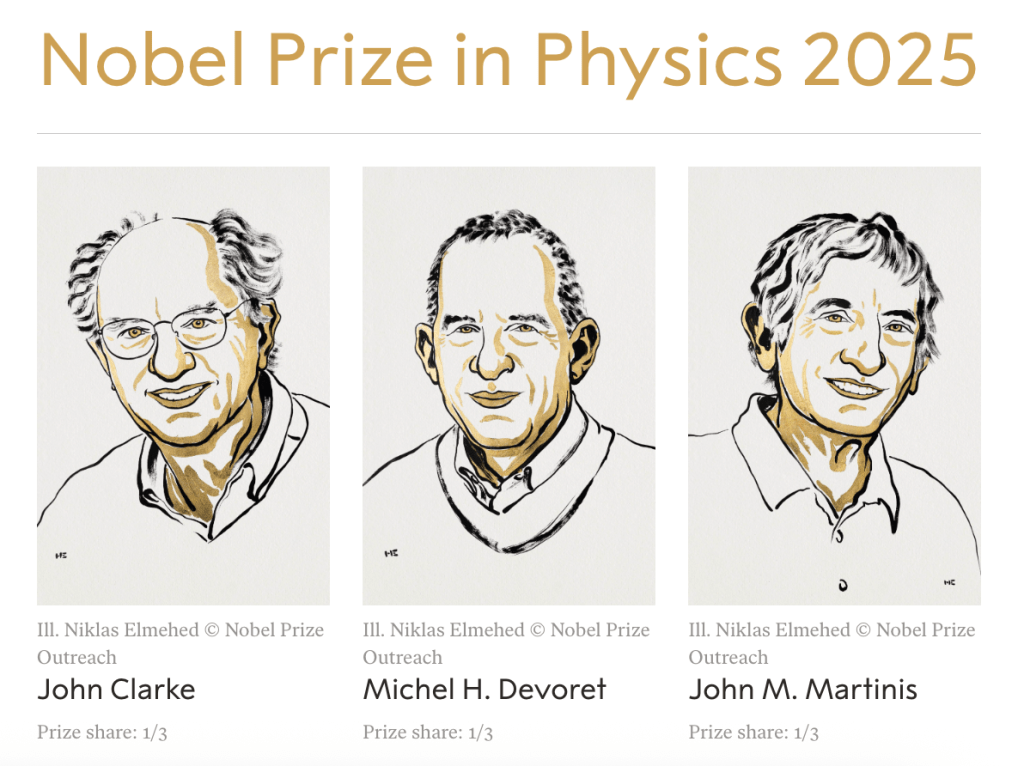
The 2025 Nobel Prize in physics has been awarded to John Clarke, Michel H. Devoret and John M. Martinis “for the discovery of macroscopic quantum mechanical tunnelling and energy quantisation in an electric circuit.

The Nobel Prize webpage has an excellent summary of the work at popular and technical levels.

In this blog, I want to draw attention to an interesting review article from 1984 by Anthony Leggett that pre-empts the awarded work. Leggett himself was a Nobel laureate (2003), and his work on the theory of superconductors and superfluids forms one of the conceptual foundations for this year’s Nobel prize. Four of his papers have been cited by the Nobel committee as part of the scientific description of the award, and one of them is a review article I wish to emphasize.

The title of Leggett’s review is “Schrödinger’s cat and her laboratory cousins“. It discusses the detection and implication of macroscopic quantum mechanical entities, and has a description of the so-called Schrödinger’s cat, which is essentially a thought experiment describing quantum superposition and the bizarre consequence of such a formulation. Leggett utilizes this conceptual picture of the cat (in alive and dead states) and extends this to possible scenarios in which the macroscopic quantum superposition can be detected and verified under laboratory conditions. The text below from his review captures the essence of the concept and connects it to experimental verification :

It is probably true to say that most physicists who are even conscious of the existence of the Cat paradox are inclined to dismiss it somewhat impatiently as a typical philosophers’ problem which no practising scientist need worry about. The reason why such an attitude can be maintained is that close examination of the paradox has seemed to lead to the conclusion that, worrying or not at the metaphysical level, it has at any rate no observable consequences: that is, the experimental consequences of the above apparently bizarre description are quite undetectable. Since physicists, by virtue of their profession, tend to be impatient of questions to which they know a priori no experiment can conceivably be relevant, they have tended to shrug off the paradox and leave the philosophers to worry about it.

Over the last few years, thanks to rapid advances in cryogenics, noise control and microfabrication technologies, it has become clear that the above conclusion may be over-optimistic (or pessimistic, depending on one’s point of view!). To be sure, it is unlikely that in the foreseeable future we will be able to exhibit the experimental consequences of a cat being in a linear superposition of states corresponding to life and death. However, at a more modest level it is possible to ask whether it would be possible to exhibit any macroscopic object in a superposition of states which by a reasonable common-sense criterion could be called macroscopically different. The answer which seems to be emerging is that it is almost certainly possible to obtain circumstantial evidence of such a state of affairs, and not out of the question that one might be able to set up a more spectacular, direct demonstration. This is the subject of this article.

Cut to 2025, this is also the subject of the Nobel Prize in Physics today.

This year’s laureates, John Clarke, Michel H. Devoret and John M. Martinis, experimentally revealed the quantum mechanics of a macroscopic variable in the form of a phase difference of a Josephson Junction. They called their system a “macroscopic nucleus with wires.”

Quantum Physics Zindabad.

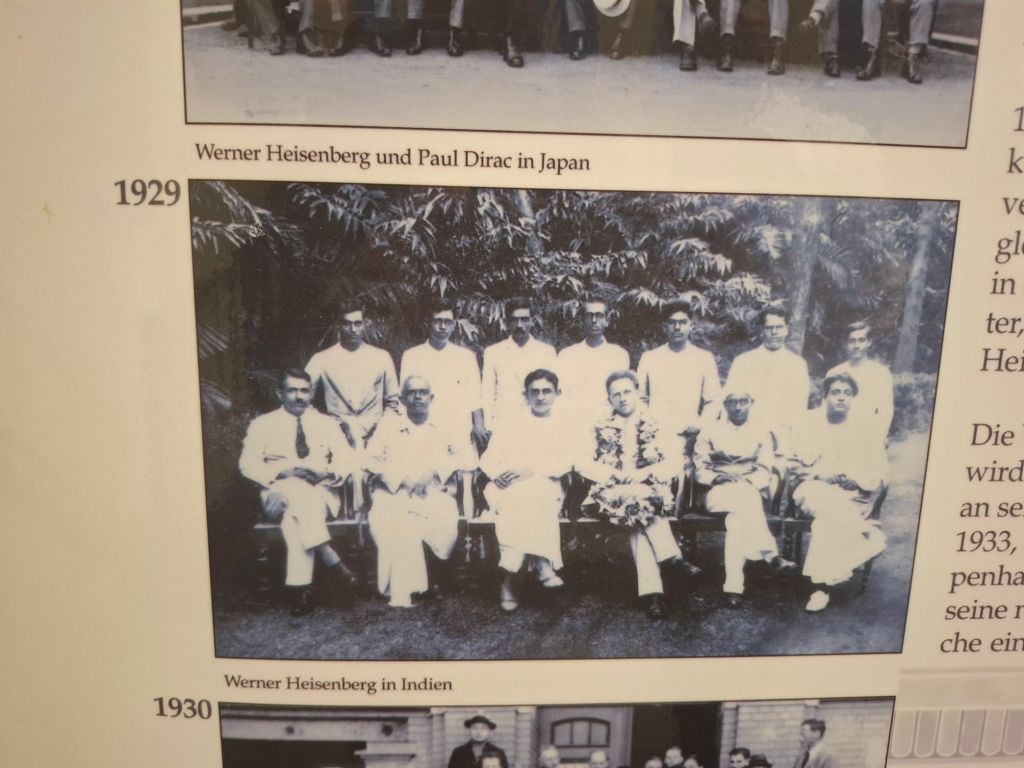
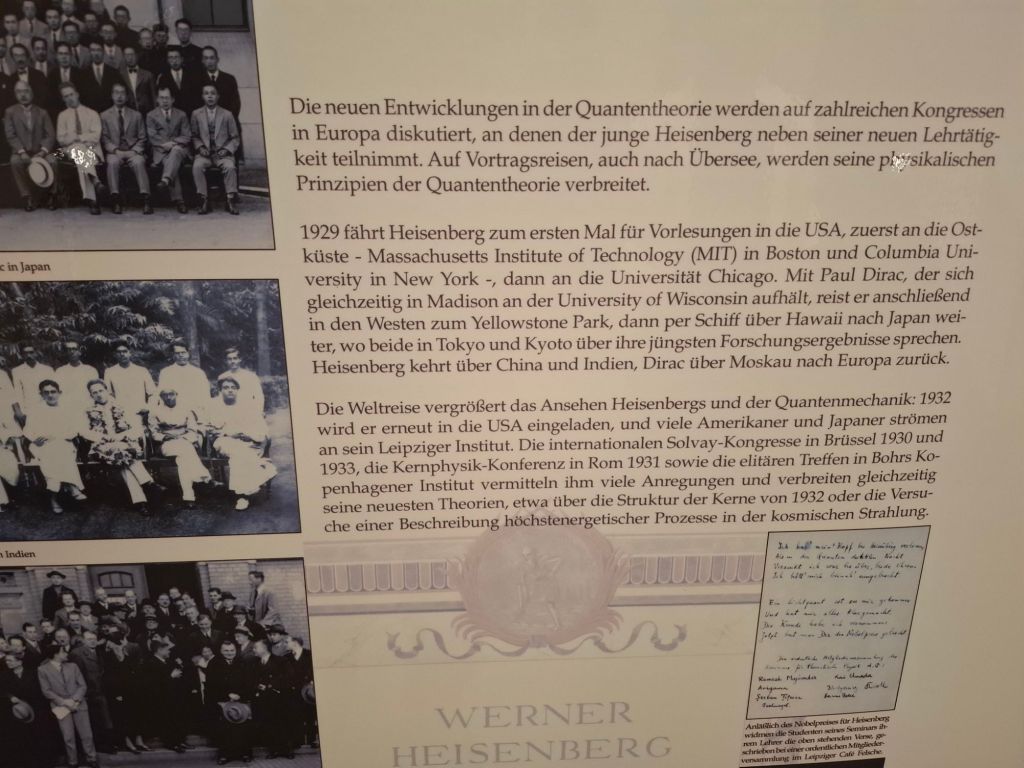
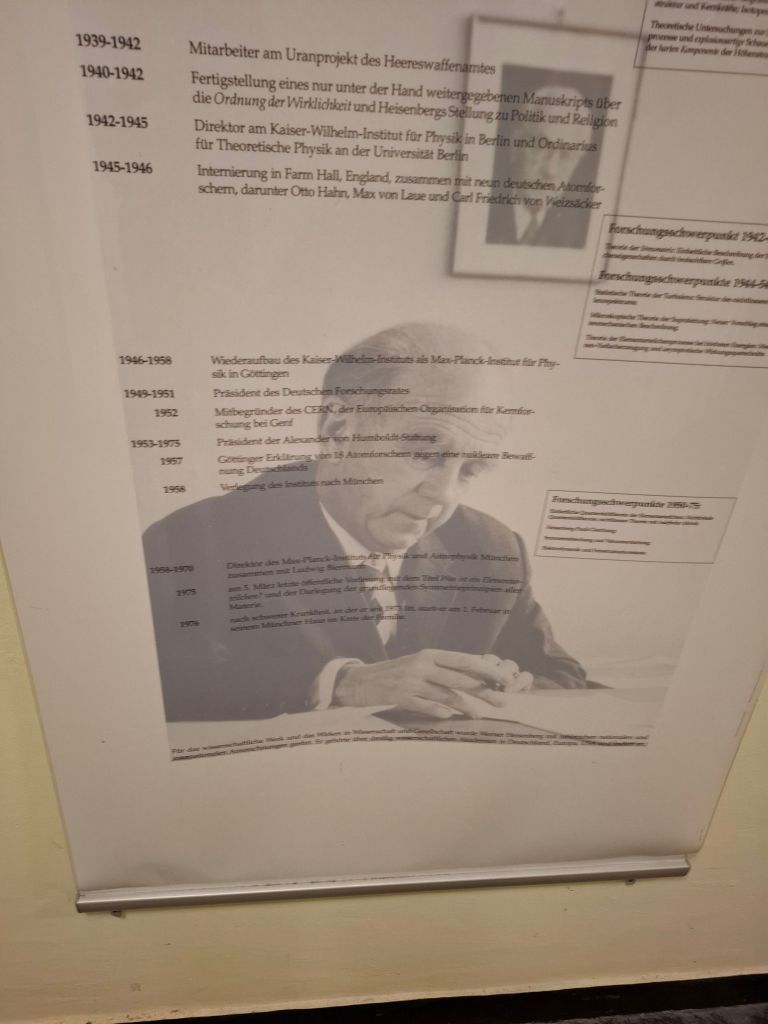
Leipzig – where Heisenberg worked…

From 16th to 18th Sept, 2025, I attended and gave a talk at Optofluidix 2025, thanks to the invitation of Prof. Frank Cichos and his team, Department of Physics, University of Leipzig.

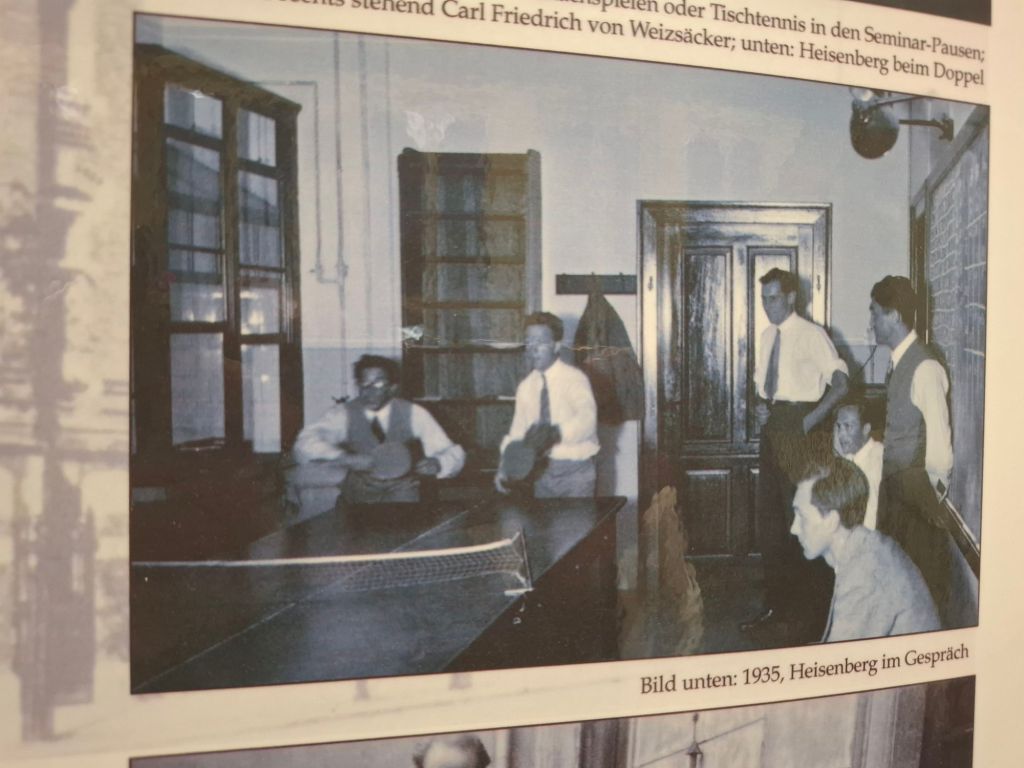
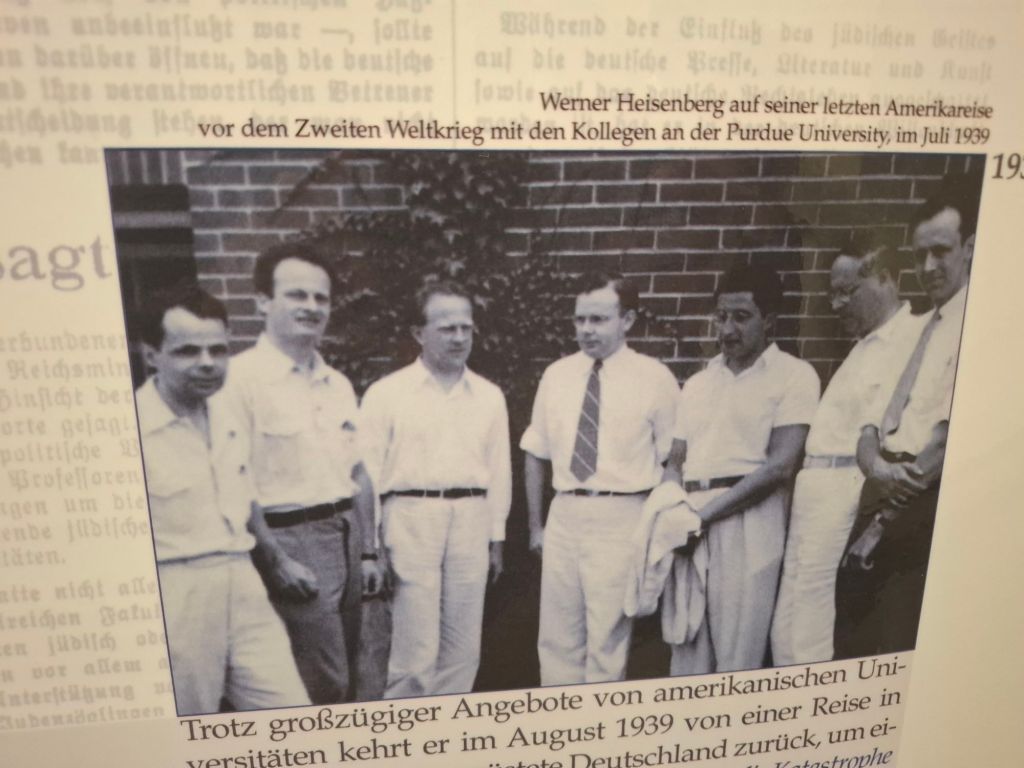
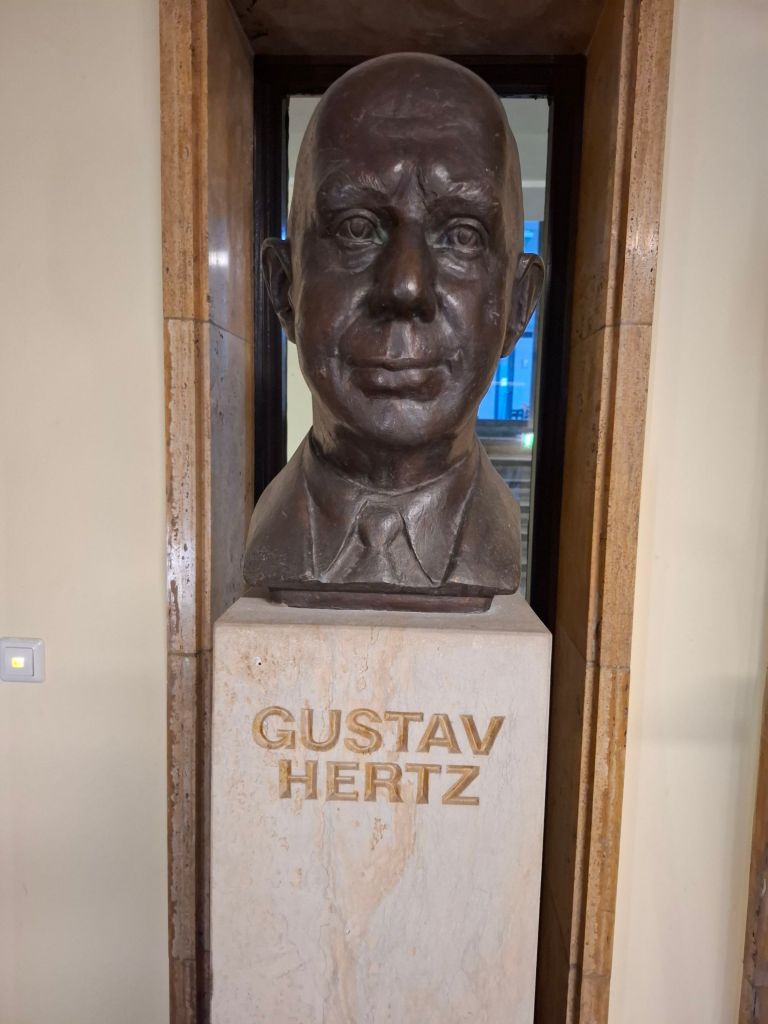
This department is steeped in history, and this post is to give you a pictorial glimpse of some people who worked there.

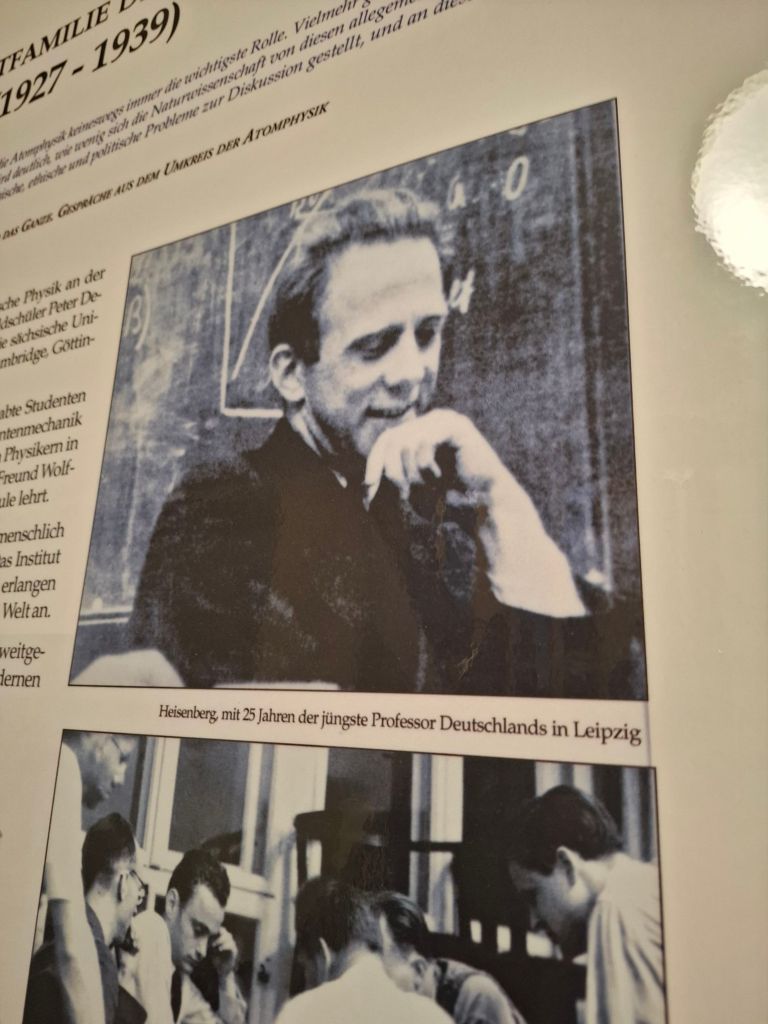
Werner Heisenberg, aged 25, became a Professor at the University of Leipzig, Germany. It was an illustrious department then, had professors such as Peter Debye, Gustav Hertz (of the Franck-Hertz experiment fame), Friedrich Hund and many others. Felix Bloch was a student of Heisenberg in Leipzig.

As the AIP archives describe, “Only 25 years old in October 1927, Heisenberg accepted appointment as professor of theoretical physics at the University of Leipzig, Germany. Friedrich Hund soon joined his former Göttingen colleague as Leipzig’s second professor of theoretical physics. Heisenberg headed the Institute for Theoretical Physics, which was a sub-section of the university’s Physics Institute, headed until 1936 by the experimentalist Peter Debye. Each of the three professors had his own students, assistants, postdocs, and laboratory technicians.”

Below are a few snapshots that I took while visiting the department. Special thanks to Diptabrata Paul (my former PhD student and currently a post-doc in Cichos’ group) for showing me around the department.

Art and Chu – in Bell labs

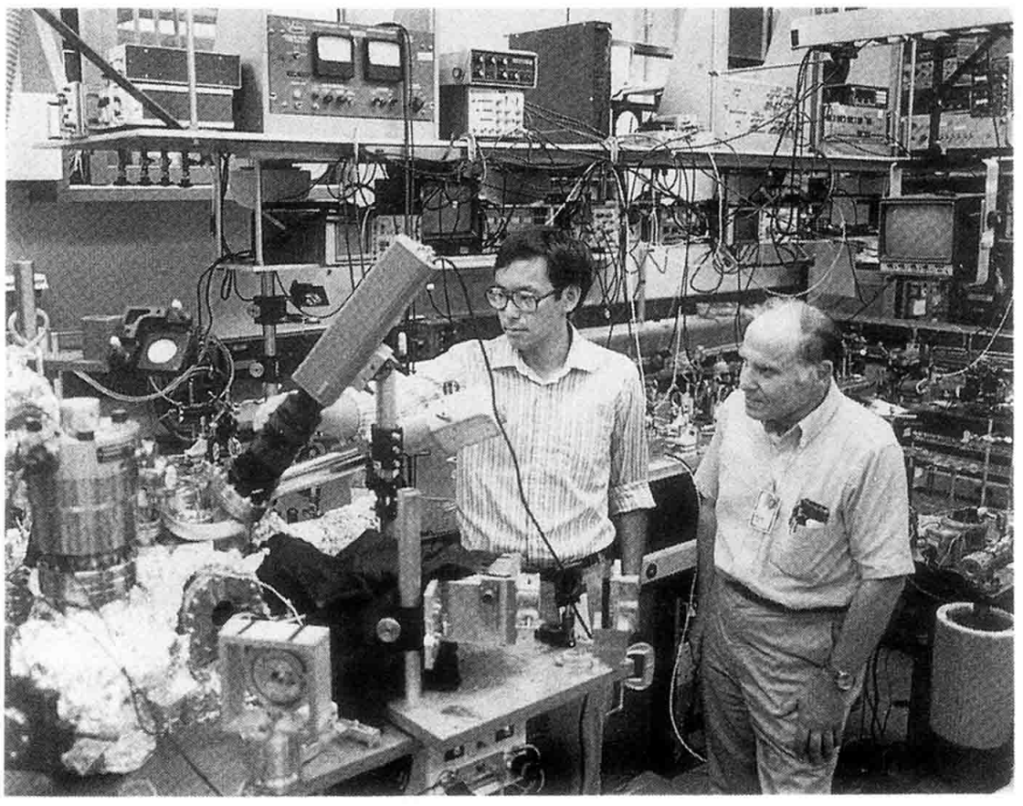
Steven Chu and Arthur Ashkin in 1986, in front of the apparatus shortly after the first optical trapping experiment was completed. Image from Chu’s Nobel lecture.

Steven Chu’s Nobel lecture has some gems. Below, he shares his experience of working with Arthur Ashkin.

“In 1986, the world was excited about atom trapping. During this time, Art Ashkin began to use optical tweezers to trap micron sized particles. While experimenting with colloidal tobacco mosaic viruses, he noticed tiny, translucent objects in his sample. Rushing into my lab, he excitedly proclaimed that he had ‘discovered Life’. I went into his lab, half thinking that the excitement of the last few years had finally gotten the better of him. In his lab was a microscope objective focusing an argon laser beam into a petri dish of water. Off to the side was an old Edmund Scientific microscope. Squinting into the microscope, I saw my eye lashes. Squinting harder, I occasionally saw some translucent objects. Many of these objects were ‘floaters’, debris in my vitreous humor that could be moved by blinking my eyes. Art assured me that there were other objects there that would not move when I blinked my eyes. Sure enough, there were objects in the water that could be trapped and would swim away if the light were turned off. Art had discovered bugs in his apparatus, but these were real bugs, bacteria that had eventually grown in his sample beads and water.”

Chu won the physics Nobel in 1997, and Ashkin won the same in 2018. Ashkin was the pioneer of optical trapping and tweezers, and applied it to a variety of problems, including the manipulation of biological matter. Chu harnessed the momentum of light to trap and cool atoms. Both started their work and collaborated at Bell Labs. Chu moved to Stanford, whereas Ashkin stayed back. Bell Labs was a remarkable place in the 1980s, as Chu describes in his lecture :

“Bell Labs was a researcher’s paradise. Our management supplied us with funding, shielded us from bureaucracy, and urged us to do the best science possible. The cramped labs and office cubicles forced us to rub shoulders with each other. Animated discussions frequently interrupted seminars and casual conversations in the cafeteria would sometimes mark the beginning of a new collaboration.”

Can the world afford to have another Bell Labs in 2025? Can it recreate the magic?

From Yukawa Archives: a draft, a letter & a rejection

I have been amazed to explore the archives on Hideki Yukawa, which have been systematically categorized and meticulously maintained by Osaka University in Japan. My sincere thanks and acknowledgment to the Yukawa Memorial.

Below are a few gems from their public archives :

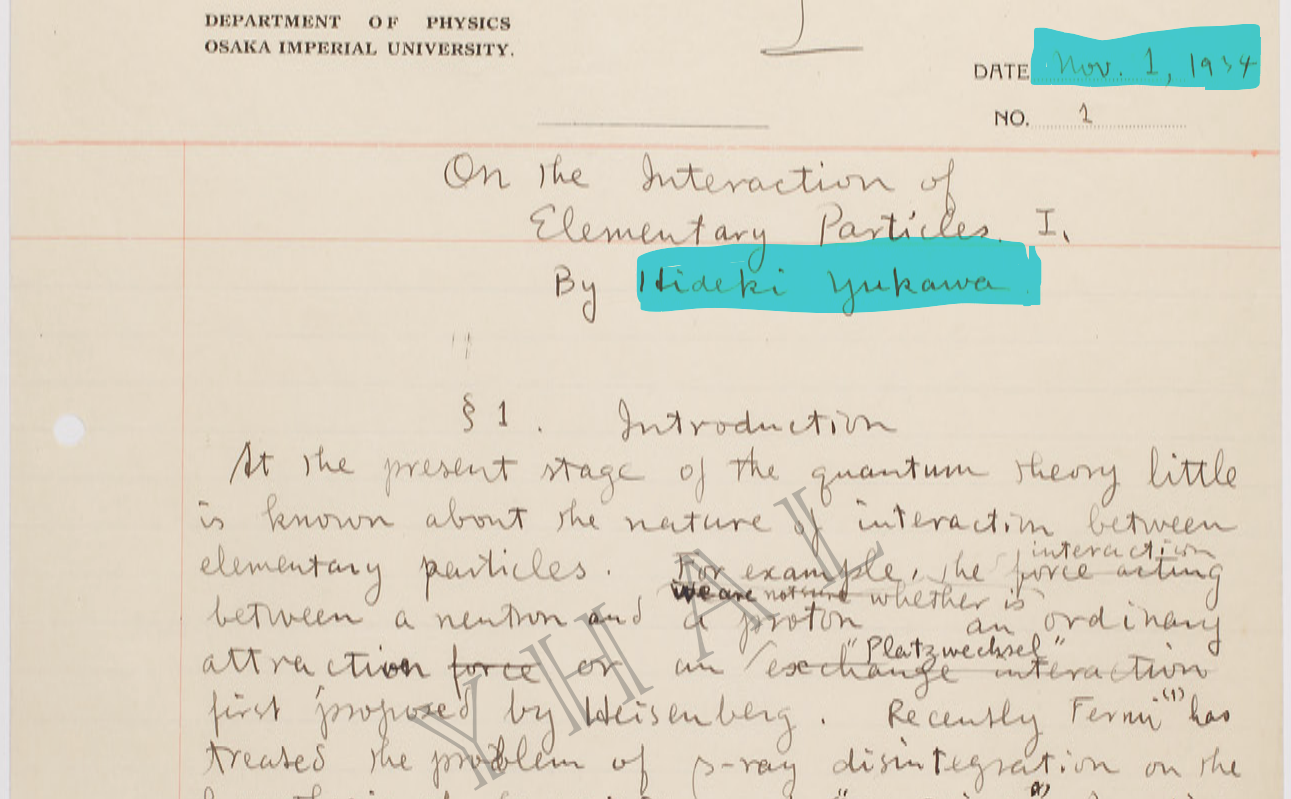
  1. Draft of the paper written in 1934 – The making of the groundbreaking paper of Yukawa, which eventually led to his Nobel Prize in 1949.

The archive draft is accompanied by a note which reads:

Yukawa had not published any paper before then. In 1933, Yukawa began working at Osaka Imperial University and tackled the challenge of elucidating the mystery of nuclear forces while Seishi Kikuchi and other prominent researchers were producing achievements in nuclear physics and quantum physics. The idea of γ’ (gamma prime) that Yukawa came up with in early October led to the discovery of a new particle (meson) that mediates nuclear forces. The idea of introducing a new particle for the purpose of explaining the forces that act between particles was revolutionary at that time. Yukawa estimated the mass of the new particle and the degree of its force. No other physicists in the world had thought of this idea before.

2. Letters between Tomonaga and Yukawa

Sin-Itiro Tomonaga was a legendary theoretical physicist from Japan, who independently formulated the theory of quantum electrodynamics (apart from Feynman and Schwinger) and went on to win the Nobel Prize in physics in 1965.

Tomonaga was a friend and classmate of Yukawa, and they inspired each other’s work. Below is a snapshot of the letter from 1933 written in Japanese.

Both these theoreticians were intensely working on interrelated problems and constantly exchanged ideas. The archival note related to the letter has to say the following:

During this period, Yukawa and Tomonaga concentrated on elucidating nuclear forces day in and day out, and communicated their thoughts to each other. In this letter, before starting the explanation, Tomonaga wrote “I am presently working on calculations and I believe that the ongoing process is not very interesting, so I omit details.” While analyzing the Heisenberg theory of interactions between neutrons and protons, Tomonaga attempted to explain the mass defects of deuterium by using the hypothesis that is now known as Yukawa potential. The determination of potential was arbitrary and the latest Pegrum’s experiment at that time was taken into consideration. Tomonaga also compared his results with Wigner’s theorem and Majorana’s theory.

3. Rejection letter from Physical Review

Which physicist can escape a rejection from the journal Physical Review?

Even Yukawa was not spared :-) Below is a snapshot of a rejection letter from 1936, and John Tate does the honours.

The influence of Yukawa and Tomonaga can be seen and felt at many of the physics departments across Japan. Specifically, their influence on nuclear and particle physics is deep and wide, and has inspired many in Japan to do physics. As the archive note says:

Yukawa and Tomonaga fostered the theory of elementary particles in Japan from each other’s standpoint. Younger researchers who were brought up by them, so to speak, must not forget that the establishment of Japan’s rich foundation for the research of the theory of elementary particles owes largely to Yukawa and Tomonaga.

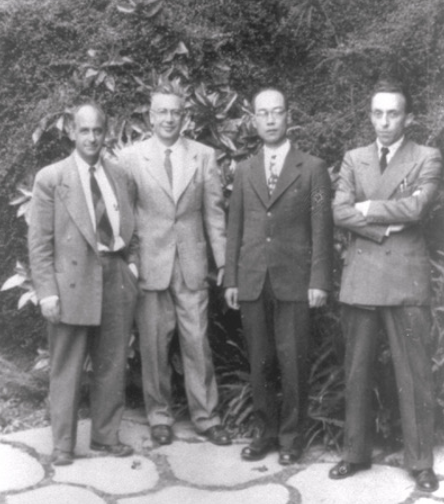
4. Lastly, below is a picture of the legends from the archive: Enrico Fermi, Emilio Segrè, Hideki Yukawa, and James Chadwick.

From the archive note on the picture from September 1948:

Yukawa met Prof. Fermi and other physicists of the University of Chicago who were staying in Berkeley for the summer lectures. From the left: Enrico Fermi, Emilio Segrè, Hideki Yukawa, and James Chadwick.

Tomorrow, I will conclude my third trip to Japan. I always take a lot of inspiration from this wonderful country. As usual, I have not only met and learnt a lot from contemporary Japanese researchers, but also have metaphorically visited the past masters who continue to inspire physicists like me across the world.

For this, I have to say: Dōmo arigatōgozaimasu !
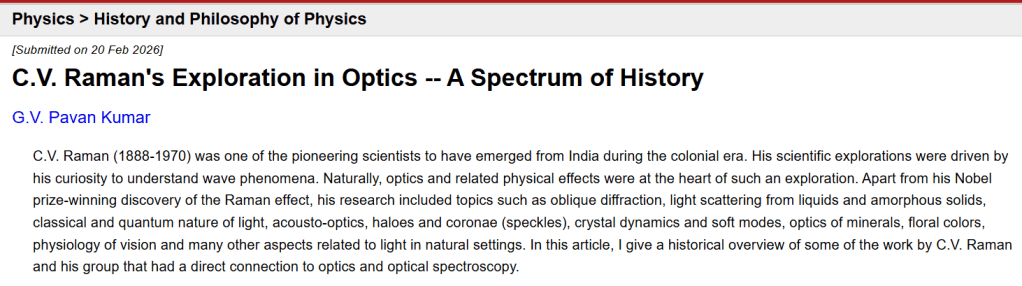
Nobel is secondary

Many of the Nobel winners in science deserve the prize they get, but there are many deserving who do not make the list for various reasons, including sociology, geography & financial support. Using the Nobel prize as a benchmark of progress may lead to errors in the judgment of a country.

A better way to judge is to ask: how are science and technology in a country making lives better for the people of the country & the world? A better life includes both intellectual & material aspects. We, in India & the global south, can make progress if scientific thinking becomes prevalent in the everyday discourse of society, from family conversations to political debates. And prizes, by design, are exclusive. It is easier to exclude a country that is not scientific as no one cares in such a situation.

Scientific progress in a society is generally bottom-up. We have a large population of young people who should be more scientific in their worldview. If we have a large, scientifically oriented population, science and technological achievements become proportional.

If science-based intellectual & material progress is achieved, prizes will follow. But a Nobel should not be our primary goal. Better lives & better minds should be.

Everything flows from there.

Gerhard Herzberg – scientific life


References:

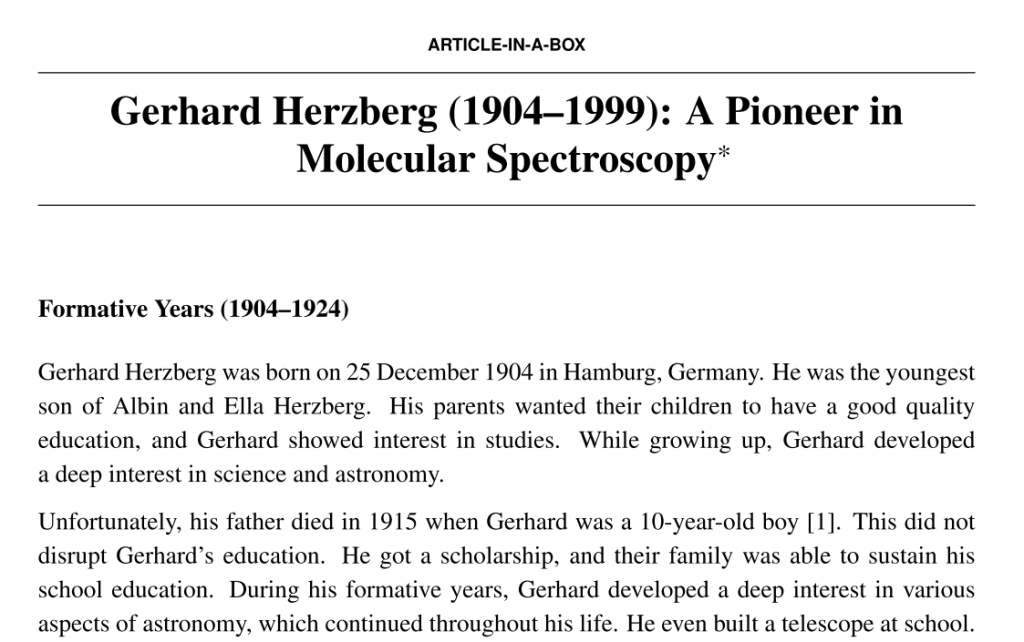
Pavan Kumar, G. V. “Gerhard Herzberg (1904–1999): A Pioneer in Molecular Spectroscopy.” Resonance 29 (2024): 1339. https://www.ias.ac.in/describe/article/reso/029/10/1339-1345.

Stoicheff, Boris. Gerhard Herzberg: An Illustrious Life in Science. Ottawa : Montréal ; Ithaca N.Y.: Canadian Forest Service,Canada, 2002.

Stoicheff, Boris P. “Gerhard Herzberg PC CC. 25 December 1904 – 3 March 1999.” Biographical Memoirs of Fellows of the Royal Society 49 (December 2003): 179–95. https://doi.org/10.1098/rsbm.2003.0011.

Article on Gerhard Herzberg

The October 2024 issue of Resonance, Journal of Science Education

highlights the life and science of Gerhard Herzberg.

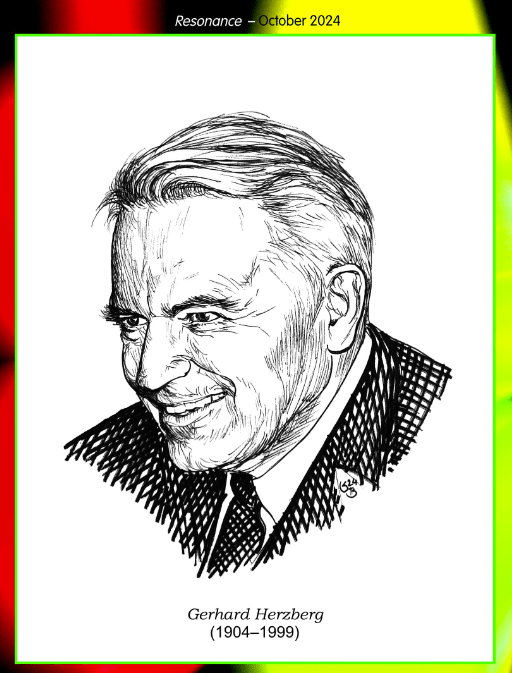
He was one of the greatest molecular spectroscopists who laid the foundation of atomic and molecular quantum mechanics and deeply impacted molecular astrophysics and astrochemistry.

He lived an extraordinary life, first in Europe learning quantum mechanics and then escaping 1930s Germany as his wife was of Jewish origin. Then, he settled in Canada to build and lead his lab, which was considered the ‘mecca of spectroscopy’ at NRC, Ottowa.

I wrote a sci-biography article about him in this issue

Link to full edition: https://www.ias.ac.in/listing/articles/reso/029/10

If you don’t know – Resonance is a pedagogical journal published by the Indian Academy of Sciences. It is a true open-access journal. Free to read and does not charge the authors to publish.

Do explore the past editions. There are some absolute gems. https://www.ias.ac.in/listing/issues/reso

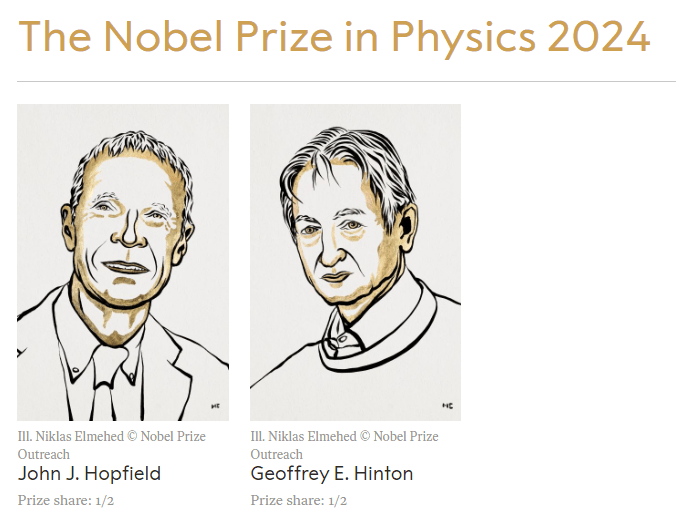
Physics Nobel 2024 – anywhere to everywhere

The Nobel Prize in Physics 2024 was awarded to John J. Hopfield and Geoffrey E. Hinton “for foundational discoveries and inventions that enable machine learning with artificial neural networks“. There has been much buzz surrounding this prize, especially in the context of whether these discoveries are indeed in the realm of mainstream physics. Many science commentators have questioned the choice and have provocatively dismissed it as ‘not part of mainstream physics’.

This has also brought into focus an important question: What is physics?

This question does not have a simple answer, given the rich history of the subject and its applicability over centuries. What we now call engineering is essentially an extrapolation of thinking in physics. New avenues have branched out from physics that cannot be readily identified as mainstream physics; a case in point is artificial intelligence and machine learning.

One of the aspects of mainstream physics is that the intellectual investment in the contemporary scenario is mainly driven by discoveries happening in the realm of quantum mechanics and general relativity. One of the mainstream problems in physics is to combine quantum mechanics and gravitation, which remains an unresolved task. Therefore, significant attention is paid to understanding these theories and verifying them through experimentation. Other areas and sub-disciplines in physics have become loosely connected to these two important theories.

There is another dimension to physics that is equally important and has vast applications: statistical physics. In statistical physics, the motivation comes from multi-particle systems and their applicability as models to understand our world, including biological systems. One utilizes knowledge from mathematics and statistics, combining them with physical laws to predict, invent and understand new forms and assemblies of matter. This thinking has been extrapolated to abstract assemblies and hence applied to a variety of situations. This approach has led to a revolution in how we can understand the realistic world because a statistical viewpoint is very useful for studying complex systems, such as many-body quantum mechanical aggregates (such as groups of electrons), dynamics of molecules inside a cell and the evolution of the stock market. Statistical physics plays a dominant role in all these situations. It has become a ubiquitous tool, making it difficult to directly connect it to basic principles of physics as taught in college textbooks and classrooms. It reminds me of a saying: if you are everywhere, then you are from nowhere.

This situation leads us back to the question: What is physics? John Hopfield himself offers an interesting definition related to this question, emphasizing that viewpoint is a crucial element. This perspective allows for greater freedom in using physics beyond conventional definitions. Among scientific disciplines, physics is always associated with its depth of understanding. This is a good opportunity to emphasize the breadth of physics, which is equally noteworthy.

In that light, the 2024 Nobel Prize in Physics should be welcomed as an expansion of the horizon of what constitutes physics. In a day and age where basic science has been questioned regarding its applicability to modern-day life and technology, this prize serves as a welcome change to showcase that basic science has played a fundamental role in establishing a contemporary tool of primary importance to society.

This point is particularly important because policymakers and politicians tend to focus on immediate issues and ask how they can influence them by using modern-day technology. Utility is central to this form of thinking. Given that basic sciences are often viewed as ‘not immediately useful’, this viewpoint diminishes the prominence of foundational disciplines: physics, chemistry, biology, and mathematics. In contrast, this prize reinforces the idea that building cutting-edge technology, which holds contemporary relevance and societal impact, has its roots in these foundational disciplines. In that sense, this prize is an important message because, like it or not, the Nobel Prize captures the attention not only of the scientific world but also of the public and, hence, of interest to politicians and policymakers.

Issac Asimov is attributed to have said: “There is a single light of science, and to brighten it anywhere is to brighten it everywhere.” The Nobel Prize in Physics 2024 fits that bill.

Physics is a point of view about the world

picture from : Hopfield, John J. “Whatever Happened to Solid State Physics?” Annual Review of Condensed Matter Physics 5, no. Volume 5, 2014 (March 10, 2014): 1–13. https://doi.org/10.1146/annurev-conmatphys-031113-133924.

The title of this blog is the closing line of an autobiographical essay written by John Hopfield (pictured above), one of the physics Nobel laureates today: “for foundational discoveries and inventions that enable machine learning with artificial neural networks.”

In this essay, he retraces his trajectory across various sub-disciplines of physics and how he eventually used his knowledge of physics to work on a problem in neurobiology that further connects to machine learning.

The title of the essay is provocative(see below) but worth reading to understand how physics has evolved over the years and its profound impact on various disciplines.

Reference: Hopfield, John J. “Whatever Happened to Solid State Physics?” Annual Review of Condensed Matter Physics 5, no. Volume 5, 2014 (March 10, 2014): 1–13. https://doi.org/10.1146/annurev-conmatphys-031113-133924.

Thanks to Gautam Menon for bringing the essay to my notice.

By the way, Hopfield and Deepak Dhar shared the 2022 Boltzmann medal, and after the award, he gave a wonderful online talk at IMSc, Chennai. Thanks to Arnab Pal of IMSc for bringing this to my notice on X.

Let me end this post quoting Hopfield from the mentioned essay:

What is physics? To me—growing up with a father and mother who were both physicists—physics was not subject matter. The atom, the troposphere, the nucleus, a piece of glass, the washing machine, my bicycle, the phonograph, a magnet—these were all incidentally the subject matter. The central idea was that the world is understandable, that you should be able to take anything apart, understand the relationships between its constituents, do experiments, and on that basis be able to develop a quantitative understanding of its behavior. Physics was a point of view that the world around us is, with effort, ingenuity, and adequate resources, understandable in a predictive and reasonably quantitative fashion. Being a physicist is a dedication to the quest for this kind of understanding.

Let that quest never die!