15 years at IISER Pune – Journey so far

Today, I complete 15 years as a faculty member at IISER-Pune. I have attempted to put together a list of some lessons (based on my previous writings) that I have learnt so far. A disclaimer to note is that this list is by no means a comprehensive one, but a text of self-reflection from my viewpoint on Indian academia. Of course, I write this in my personal capacity. So here it is..

  1. People First, Infrastructure Next
    As an experimental physicist, people and infrastructure in the workplace are of paramount importance. When I am forced to prioritize between them, I have chosen people over infrastructure. I am extremely fortunate to have worked with, and continue to work with, excellent students, faculty colleagues, and administrative staff members. A good workplace is mainly defined by the people who occupy it. I do not neglect the role of infrastructure in academia, especially in a country like India, but people have a greater impact on academic life.
  2. Create Internal Standards
    In academia, there will always be evaluations and judgments on research, teaching, and beyond. Every academic ecosystem has its own standards, but they are generalized and not tailored to individuals. It was important for me to define what good work meant for myself. As long as internal standards are high and consistently met, external evaluation becomes secondary. This mindset frees the mind and allows for growth, without unnecessary comparisons.
  3. Compare with Yourself, Not Others
    The biggest stress in academic life often arises from comparison with peers. I’ve found peace and motivation in comparing my past with my present. Set internal benchmarks. Be skeptical of external metrics. Strive for a positive difference over time.
  4. Constancy and Moderation
    Intellectual work thrives not on intensity alone, but on constancy. Most research outcomes evolve over months and years. Constant effort with moderation keeps motivation high and the work enjoyable. Binge-working is tempting, but rarely effective for sustained intellectual output.
  5. Long-Term Work
    We often overestimate what we can do in a day or a week, and underestimate what we can do in a year. Sustained thought and work over time can build intellectual and technical monuments. Constancy is underrated.
  6. Self-Mentoring
    Much of the academic advice available is tailored for Western systems. Some of it is transferable to Indian contexts, but much of it is not. In such situations, I find it useful to mentor myself by learning from the lives and work of people who have done extraordinary science in India. I have been deeply inspired by many people, including M. Visvesvaraya, Ashoke Sen, R. Srinivasan, and Gagandeep Kang.
  7. Write Regularly—Writing Is Thinking
    Writing is a tool to think. Not just formal academic writing, but any articulation of thought, journals, blogs, drafts, clarifies and sharpens the mind. Many of my ideas have taken shape only after I started writing about them. Writing is part of the research process, not just a means of communicating its outcomes.
  8. Publication is an outcome, not a goal Publication is just one outcome of doing research. The act of doing the work itself is very important. It’s where the real intellectual engagement happens. Focus on the process, not just the destination.
  9. Importance of History and Philosophy of Physics
    Ever since my undergraduate days, I have been interested in the history and philosophy of science, especially physics. Although I never took a formal course, over time I have developed a deep appreciation for how historical and philosophical perspectives shape scientific understanding. They have helped me answer the fundamental question, “Why do I do what I do?” Reflecting on the evolution of ideas in physics—how they emerged, changed, and endured—has profoundly influenced both my teaching and research.
  10. Value of Curiosity-Driven Side Projects
    Some of the most fulfilling work I’ve done has emerged from side projects, not directly tied to funding deadlines or publication pressure, but driven by sheer curiosity. These projects, often small and exploratory, have helped me learn new tools, ask new questions, and sometimes even open up new directions in research. Curiosity, when protected from utilitarian pressures, can be deeply transformative.
  11. Professor as a Post-doc
    A strategy I found useful is to treat myself as a post-doc in my own lab. In India, retaining long-term post-docs is difficult. Hence, many hands-on skills and subtle knowledge are hard to transfer. During the lockdown, I was the only person in the lab for six months, doing experiments, rebuilding setups, and regaining technical depth. That experience was invaluable.
  12. Teaching as a Social Responsibility
    Scientific social responsibility is a buzzword, but for me, it finds its most meaningful expression in teaching. The impact of good teaching is often immeasurable and long-term. Watching students grow is among the most rewarding experiences in academia. Local, visible change matters.
  13. Teaching Informally Matters
    Teaching need not always be formal. Informal teaching, through conversations, mentoring, and public outreach, can be more effective and memorable. It is free of rigid expectations and evaluations. If possible, teach. And teach with joy. As Feynman showed us, it is a great way to learn.
  14. Foster Open Criticism
    In my group, anyone is free to critique my ideas, with reason. This open culture has been liberating and has helped me learn. It builds mutual respect and a more democratic intellectual space.
  15. Share Your Knowledge
    If possible, teach. Sharing knowledge is a fundamental part of academic life and enriches both the teacher and the learner. The joy of passing on what you know is priceless.
  16. Social Media: Effective If Used Properly
    Social media, if used responsibly, is a powerful tool, especially in India. It can bridge linguistic and geographical divides, connect scientists across the world, and communicate science to diverse audiences. For Indian scientists, it is a vital instrument of outreach and dialogue. My motivation to start the podcast was in this dialogue and self-reflection.
  17. Emphasis on Mental and Physical Health
    In my group, our foundational principle is clear: good health first, good work next. Mental and physical well-being are not optional; they are necessary conditions for a sustainable, meaningful academic life. There is no glory in research achieved at the cost of one’s health.
  18. Science, Sports, and Arts: A Trinity
    I enjoy outdoor sports like running, swimming, and cricket. Equally, I love music, poetry, and art from all cultures. This trinity of pursuits—science, sports, and the arts—makes us better human beings and enriches our intellectual and emotional lives. They complement and nourish each other.
  19. Build Compassion into Science
    None of this matters if the journey doesn’t make you a better human being. Be kind to students, collaborators, peers, and especially yourself. Scientific research, when done well, elevates both the individual and the collective. It has motivated me to humanize science.
  20. Academia Can Feed the Stomach, Brain, and Heart
    Academia, in its best form, can feed your stomach, brain and heart. Nurturing and enabling all three is the overarching goal of academics. And perhaps the goal of humanity.

My academic journey so far has given me plenty of reasons to love physics, India and humanity. Hopefully, it has made me a better human being.
Optothermally induced active & chiral motion – a new paper

We have a new paper in Soft Matter

link to the paper (free to access, thanks to IISER Pune library)

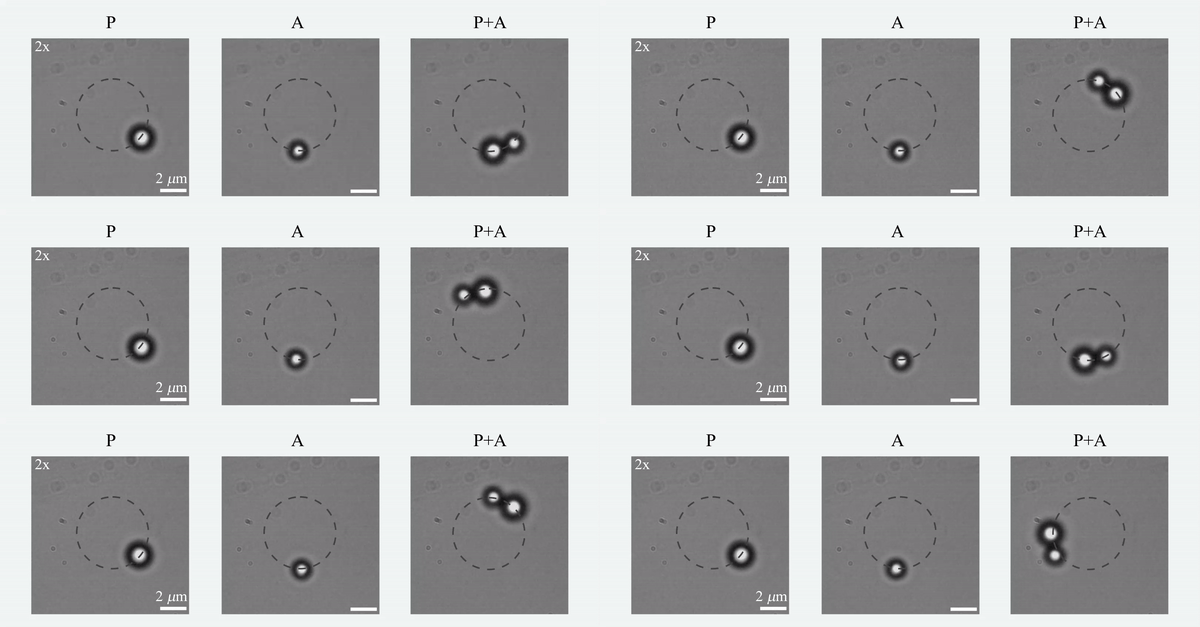
We use optical illumination to generate thermal fields, creating non-reciprocal interactions between passive and active colloids. Active colloids absorb light and produce thermal gradients, driving thermo-osmotic forces that induce propulsion and chiral motion. Our Langevin simulations, backed by experimental observation, reveal how to control colloidal behavior. May have implications in light-driven chiral motion and nonlinear dynamics.

Super effort by Rahul, Ashutosh & Sneha from our group, who combined numerical simulations, analytical theory, with experimental observations.

The 2 anonymous reviewers made us think and work hard, and we thank them!

Also, the paper is part of the journal’s themed collection on “Colloidal interactions, dynamics and rheology”

Optothermal revolution – preprint

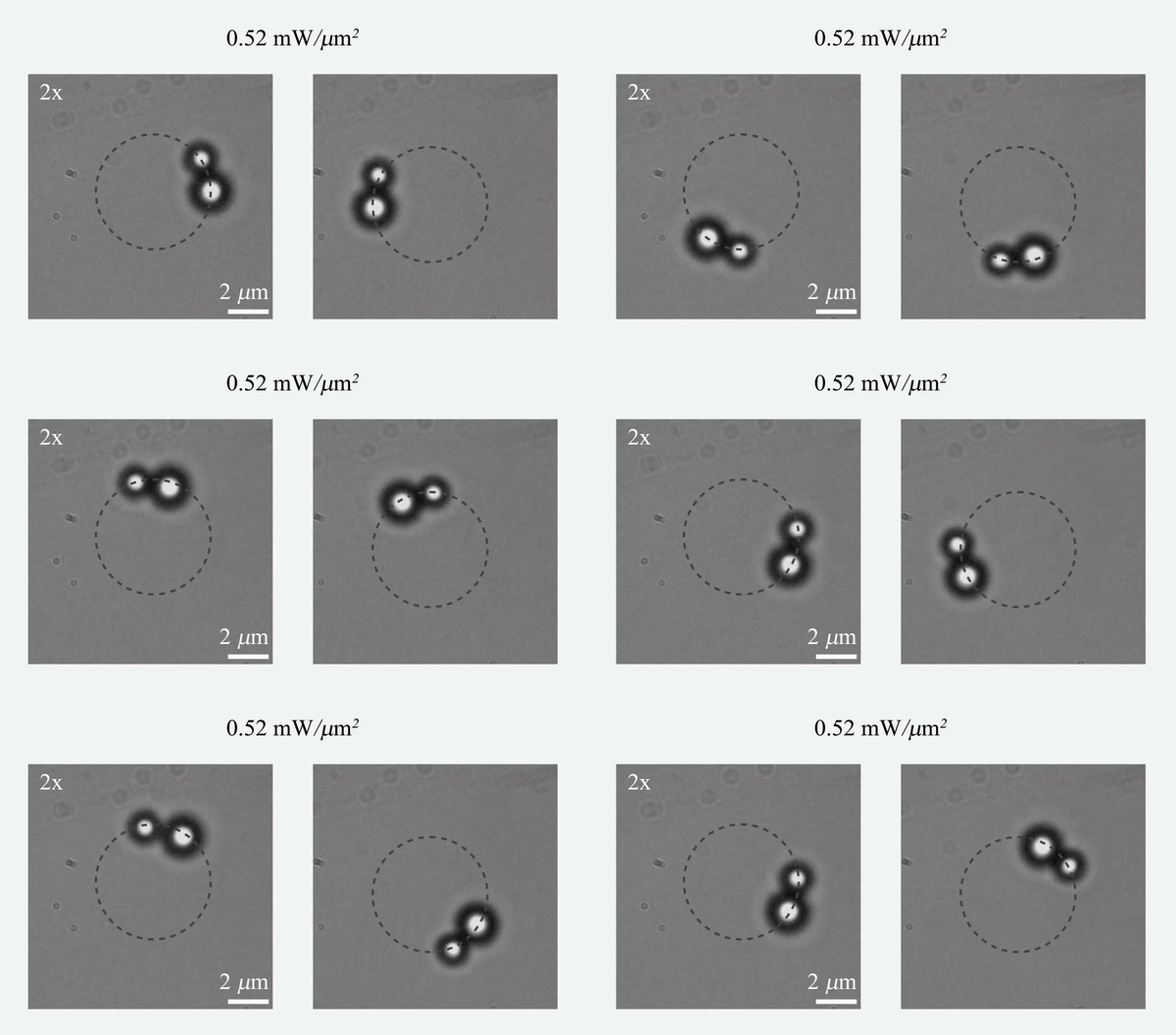
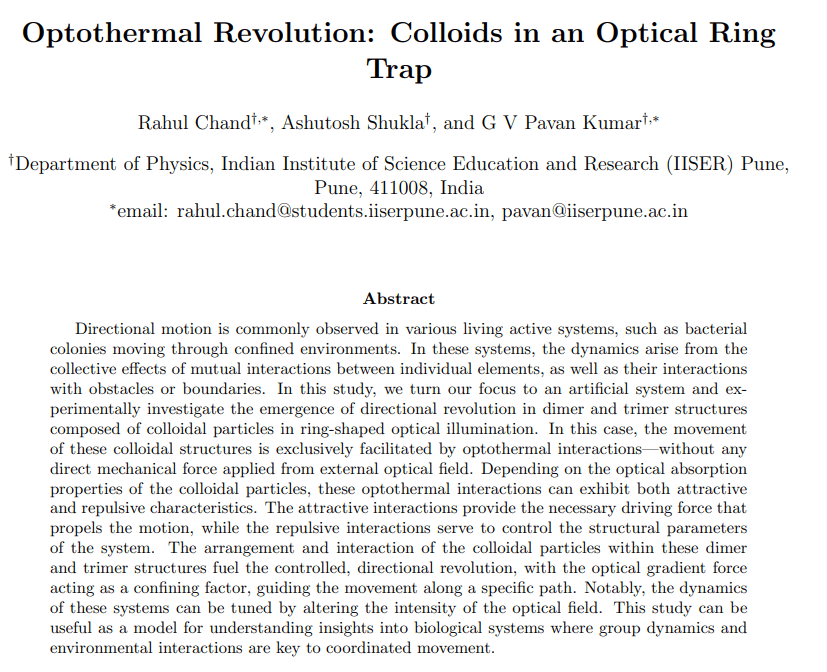
We have an Arxiv preprint on how a mixture of colloids (thermally active + passive particles in water) can lead to the emergence of revolution dynamics in an optical ring trap (dotted line). Super effort by our lab members Rahul Chand and Ashutosh Shukla.

Interestingly, the revolution emerges only when an active and a passive colloid are combined (not as individuals) in a ring potential (dotted line)

the direction (clock or anti-clockwise) of the revolution depends on the relative placement of the colloids in the trap

This revolution can be further used to propel a third active colloid

There are many more details in the paper. Check it out: https://arxiv.org/abs/2409.16792

Osaka and Optical Manipulation

Thanks to the invitation of Prof. Hajime Ishihara, I visited Osaka from 29th April to 2nd May 2023.

I arrived in Osaka on Saturday (29th Apr). On 30th Apr (Sunday) I headed out to visit the famous Kiyomizudera Temple in Kyoto with 2 PhD students from Ishihara’s group : Hideki Arahari and Takao Horai

Kiyomizudera Temple towards the right and beautiful landscape surrounding it.

Apart from the temple, we had a wonderful time exploring the Nishiki Market and Kamo river.

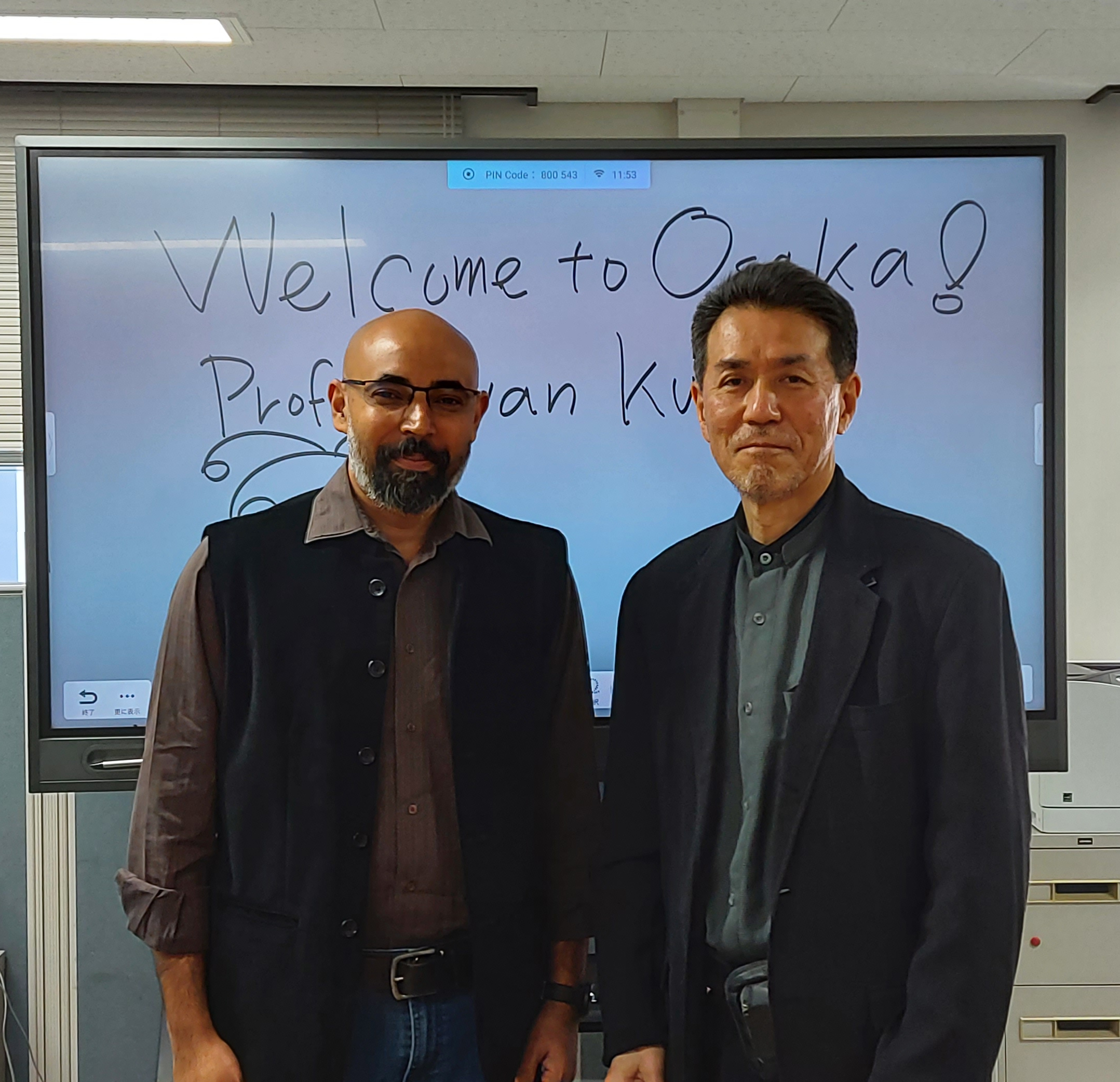
On 1st May, I visited Osaka University to officially meet Prof Ishihara, his group and other research groups in the university. We had a wonderful discussion on optical manipulation and major projects related to it especially in Japan, and undoubtedly Osaka has emerged as a major center in optical manipulation.

with Prof. Ishihara

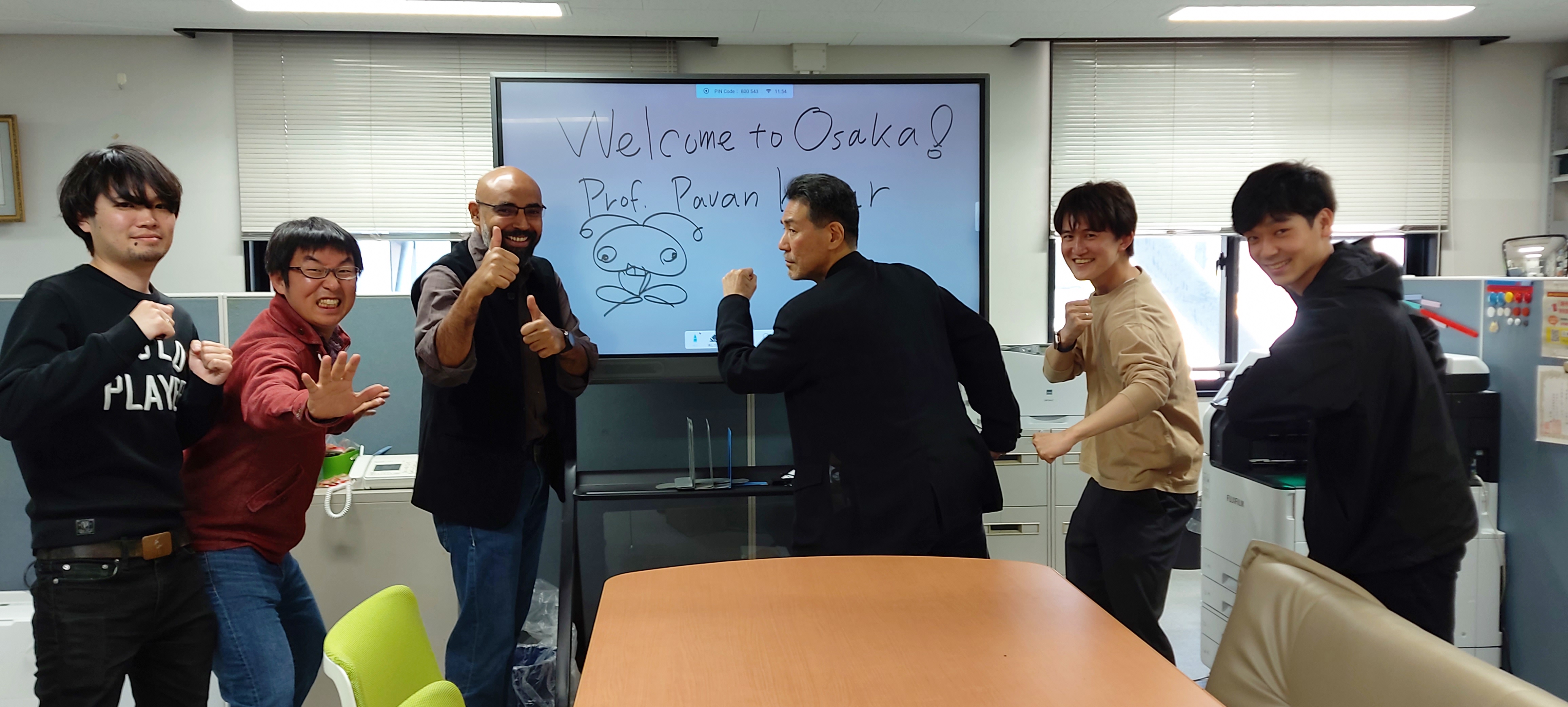
I was delighted to see so many students and research groups interested in optical trapping/manipulation and related science and technology. I learnt about some very interesting applications of optical manipulation. Also, it was great to see such a great sense of humor in this group of researchers. It was truly amazing.

Science + Humor …..we had a great time..

I also visited labs of Prof. Ashida and Prof Ito, and got a very nice overview of their work including optical manipulation in liquid helium and photochemical reactions in an optical trap.

At 4pm, I gave my talk on “Optical Manipulation based on Opto-Thermal Gradients“. I elaborated on the role of absorption and related thermal gradient in optical manipulation. I presented some of our ongoing work on optical manipulation with structured light. The talk was attended by at least 30 to 40 people, and I was informed that students from various groups in Osaka were present (there are a few universities). The quality of questions and the follow up discussion was very good, and really enjoyed it.

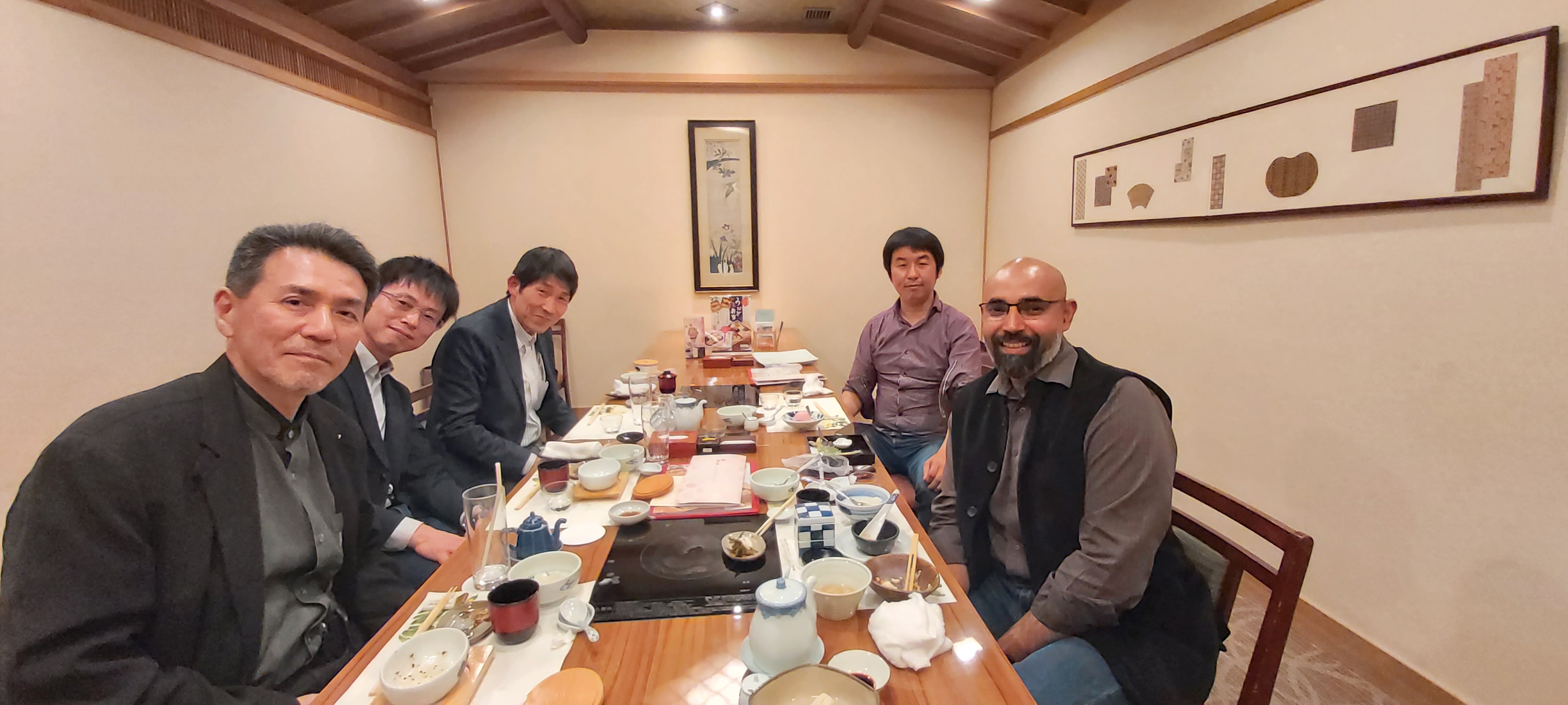
Finally, the day ended with a wonderful dinner at a tofu-themed Japanese restaurant. We had wonderful discussion on history and philosophy in our countries, and was very interesting.

Dinner with Professors Ishihara, Ito, Ashida and Yokoyama

My trajectory in Japan has been Yokohama –> Tokyo –> Okinawa –> Osaka. After 16 days, one conference talk and 4 research seminar across Japan, I am now heading back from Osaka to Tokyo (and writing this blog) on Shinkansen – the bullet train. Tomorrow, I will be leaving to India.

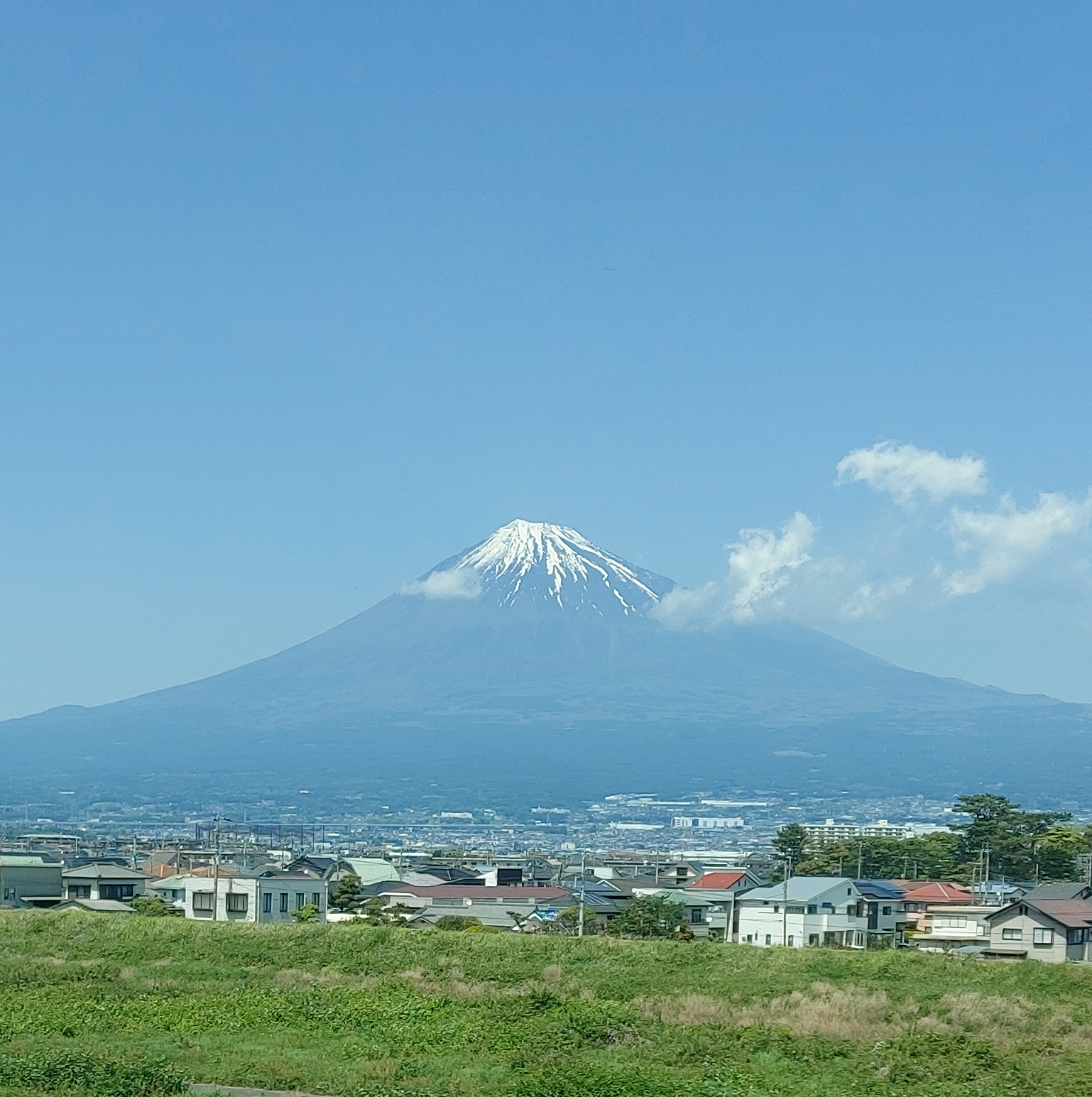
In Japanese, the word ‘Osaka’ also means ‘a large hill’. Japan’s geography has many large hills (see a picture of Mt. Fuji I took from the moving Shinkansen), and metaphorically speaking Japanese like to scale complex landscapes of life by bringing culture with science and technology. There is a lot to learn from this approach to life.

the majestic Mt. Fuji

Osaka, optical manipulation and the perennial ascent towards knowledge. What a memorable trip this has been.

To Japan and to all the people I met here – Doumo Arigatou Gozaimasu !

Two talks in Tokyo

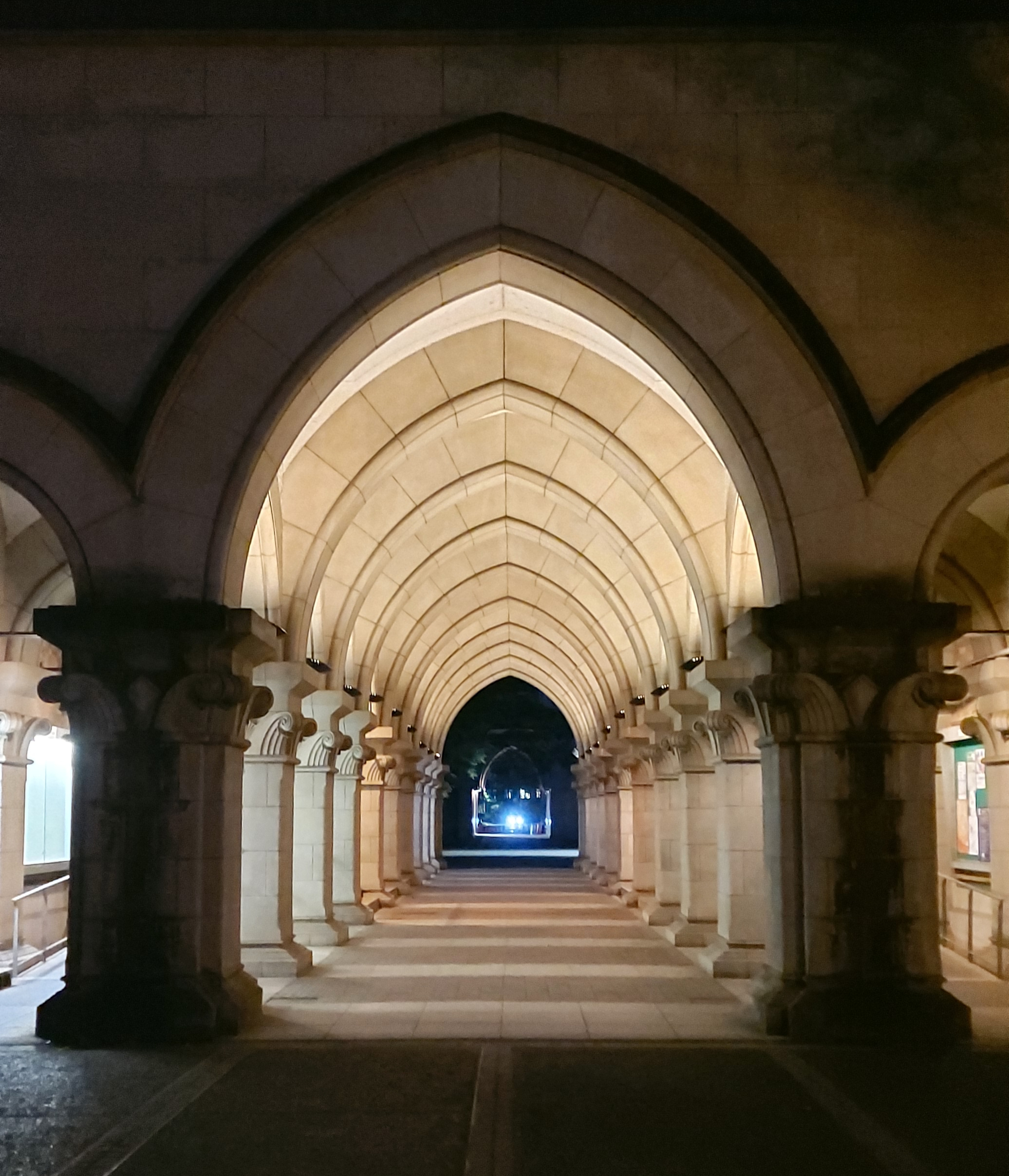
Wonderful Japanese-Gothic architecture at The University of Tokyo

I gave two talks in Tokyo.

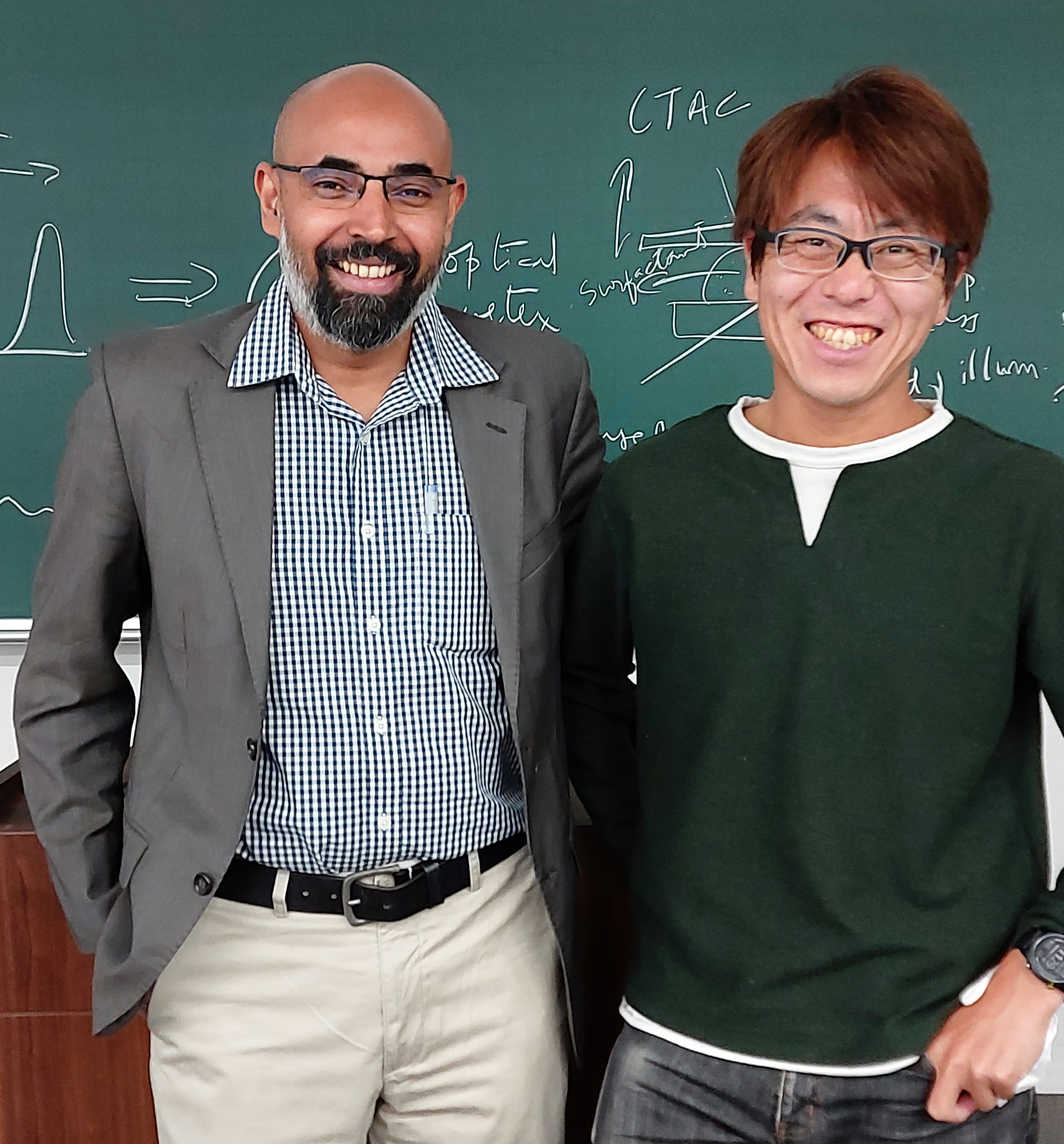
First was on 24th April at Department of Applied Physics, Faculty of Advanced Engineering, Tokyo University of Science. My host was Prof. Yutaka Sumino. I spoke about “Soft Matter in Opto-Thermal Gradients“. I gave a short introduction to opto-thermal perturbations and potentials, and discussed some of our work on opto-thermophoretic trapping and Brownian dynamics. The audience contained a few master students too, and I really enjoyed discussing some concepts related to Brownian motion in an optothermal trap, and related experiments. Also, I had a very interesting discussion with Sumino and his students on their experiments on Janus particles.

with Yutaka
with Yutaka”s group

The second talk was on 25th April at Department of Physics, University of Tokyo. My host was Prof. Kazumasa Takeuchi. I spoke about “Soft Matter in Opto-Thermal Gradients : Evolutionary Dynamics and Pattern Formation“.

This talk was also announced on Japan’s statphys mailing list, and also live-casted over zoom. I discussed about the origins of optothermal effects in a laser trap, and how it can lead to some interesting dynamics and pattern formation in soft-matter system. Specifically, I highlighted the concept of Hot Brownian motion, and how it can be influenced using thermo-plasmons. The talk and discussion went on for almost 2 hours, and I really loved it. Also, Takeuchi and his students gave an overview of their work including a live demonstration on turbulence in liquid crystals, and it was fantastic.

with Takeuchi
with Takeuchi’s group

Toys, Geim and Gupta

Recently I came across an editorial in Nature Physics, titled as Physics is our playground, which emphasized how playfulness has had an important role in some of the major inventions and discoveries in physics.

A particular example of this is the discovery of graphene, and how it has evolved into one of the most important topics in condensed matter science. Nowadays graphene is used as ‘Lego’ blocks to build higher order structures and the so-called ‘Van der Walls’ heterostructures are one of the most exciting applications of 2D materials. What started as a playful project in the lab has now turned out to be an important part of emerging technologies.

Two important inferences can be drawn from the playful attitude towards doing science :

First is that making modular elements and stacking them creatively can lead to emergence of new structures and function. Anyone who has used lego blocks can immediately relate to it.

Second is that toys are powerful research and teaching aids. Please note, that I emphasized research and teaching here. This is because toy-models are ubiquitous in research, and they help us create modular state of a problem in which unnecessary details are discarded and only the essential parts are retained. This way of thinking has been extremely powerful in science and technology (for example : see ball and stick models in chemistry and mega-construction models in civil engineering )

When it comes to toys and education, there is no better example than the remarkable Arvind Gupta (see his TED talk). His philosophy of using toys as thinking aids is very inspiring. Being in Pune, I have had a few opportunities to attend his talks and interact with him (as part of an event at science activity center at IISER-Pune), and I found his approach both refreshing and implementable. Importantly, it also showed me how creativity can emerge from constraints. To re-emphasize this, let me quote APS news article on Andre Geim :

“Geim has said that his predominant research strategy is to use whatever research facilities are available to him and try to do something new with the equipment at hand. He calls this his “Lego doctrine”: “You have all these different pieces and you have to build something based strictly on the pieces you’ve got.””

Now this is an effective research strategy for experiments in India !

Review article – Plasmonic colloids + Optical Vortex

Appended is a link to arxiv preprint of an invited review article that I wrote as part of a special issue on nanophotonics in the Indian Journal of Physics and Applied Physics. The issue is edited by Dr. Achanta Venugopal (TIFR/NPL).

In this review, I discuss about assembly and dynamics of plasmonic colloids under the influence of optical vortex fields.

The abstract reads :
Structured light has emerged as an important tool to interrogate and manipulate matter at micron and sub-micron scale. One form of structured light is an optical vortex beam. The helical wavefront of these vortices carry orbital angular momentum which can be transferred to a Brownian colloid. When the colloid is made of metallic nanostructures, such as silver and gold, resonant optical effects play a vital role, and the interaction leads to complex dynamics and assembly. This brief review aims to discuss some recent work on trapping plasmonic colloids with optical vortices and their lattices. The role of optical scattering and absorption has important implications on the underlying forces and torques, which is specifically enunciated. The effect of spin and orbital angular momentum in an optical vortex can lead to spin-orbit coupling dynamics, and these effects are highlighted with examples from the literature. In addition to assembly and dynamics, enhanced Brownian motion of plasmonic colloids under the influence of a vortex-lattice is discussed. The pedagogical aspects to understand the interaction between optical vortex and plasmonic colloids is emphasized.

I welcome comments on the review.

arxiv : https://arxiv.org/abs/2211.03547

New paper : Microsphere can narrow emission from a 2D material on a mirror

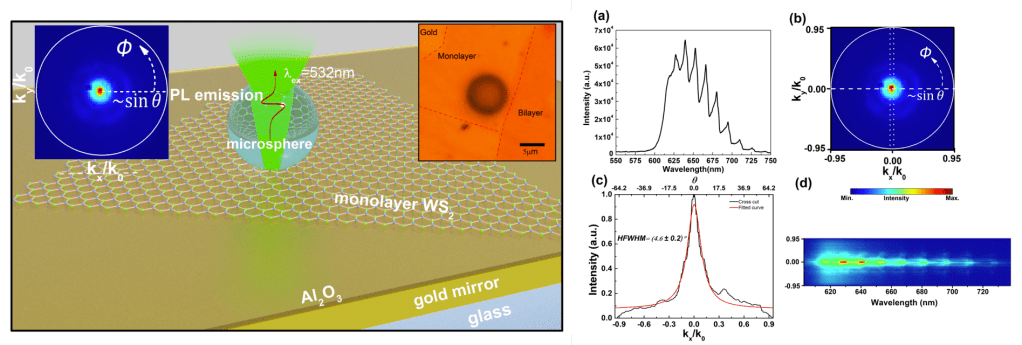
We have new paper appearing in Applied Physics Letters on how a dielectric microsphere placed on a 2D material deposited on a mirror can act as an optical antenna (see left panel for the schematic of the geometry and an optical image of the realized antenna).

The experimental and simulation efforts were mainly driven by our dynamic PhD student Shailendra Kumar Chaubey, who is very passionate about nanophotonics of 2D materials. He along with Sunny Tiwari and Diptabrata Paul explicitly show how experimental parameters such as sphere size and location of focusing can influence the photoluminescence emission from a WS2 monolayers. The experiments were mainly possible thanks to our collaboration with my colleague Atikur Rahman and his student Gokul, who continue to produce fantastic 2D materials for our nanophotonics study.

Interestingly, the emission from the WS2 monlayers can be as narrow as 4.6 degrees (see right side panel of the figure) which is one of the narrowest angular spread at room temperature. We also capture the energy-momentum photoluminescence spectra from WS2 monolayers, which is convoluted with the beautiful whispering gallery modes of the microsphere (see parts (a) and (d) of the figure).

We envisage such ’emission engineering’ using a simple microsphere can be further harnessed to control emission from quantum and nonlinear photonic 2D materials. Also, it raises new questions on how local photonic density of states can be tailored by altering the local environment around quantum emitters in solid state materials.

Arxiv version of the paper : https://arxiv.org/abs/2110.10387

12 Years as a faculty member in India – 12 lessons

Today I complete 12 years as a faculty member at IISER-Pune. I have attempted to put together a list of some lessons that I have learnt so far. A disclaimer to note is that this list is by no means a comprehensive one, but a text of self-reflection from my viewpoint on Indian academia. Of course, I write this in my personal capacity. So here is it..

  1. People first, infrastructure next – As an experimental physicist, people and infrastructure at working place are of paramount importance. When I am forced to prioritize between them, I have chosen people over infrastructure. I am extremely fortunate to have worked with and continue to work with excellent students, faculty colleagues, and admin staff members. I think a good work place is mainly defined by the people who occupy it. I am no way neglecting the role of infrastructure in academia, especially in a country like India, but people have a greater impact in academic life than infrastructure.
  2. Create internal standards – In academia, whether you like it or not, there will be evaluations and judgments on your research and teaching. Generally, every academic ecosystem has its own standards for evaluating people. These standards are generalized principles and are not customized to an individual. Therefore, it was important for me to realize what good work meant and how to judge myself. As long as internal standards are high, and are properly met with consistency, the external evaluation becomes secondary. This attitude totally frees up the mind, and helps me to get better compared to my previous self. This also means I can appreciate others work without having to compare myself to them.
  3. Constancy and Moderation – When it comes to any work, it is important to be consistent over a long period of time. An equally important aspect is to moderate the amount of work done for a period. Most of the important work in research happens in units of months if not years. Therefore, constant effort with moderation keeps the motivation high, and makes the work enjoyable. Binge-working is attractive, but for intellectual work it is ineffective.
  4. Writing is a great tool to think – One of the most underestimated tools of thinking is writing. Not just formal writing, but the process of external articulation of thought on paper does wonders. Countless times, I have obtained, clarified and developed my thoughts only after I started writing about it. Writing is integral part of research and not just a communication tool.
  5. Importance of philosophy – Ever since I was an undergrad, I have been interested in philosophy of science. I had never taken a formal course on philosophy, but I have gradually started appreciating the role of philosophy of science. Specifically, it has catered to my question on ‘why I do what I do?’
  6. Teaching as social responsibility – In the Indian academia, scientific social responsibility is a buzz word. For me, the greatest social responsibility as an academic comes in the form of teaching. In larger scheme of things, some how we tend to neglect the impact of conventional teaching on students. Also, this impact is not easily measured. But the joy one obtains seeing a student do well is priceless. This local impact is what I value more because the feedback is there to see, right in front of you.
  7. Science, sports and arts : a trinity – I love outdoor sports including running, swimming, cricket etc. Equally, I enjoy listening to music, reading poetry and appreciating any form of art from any culture. I have found that it has not only made me a better person, but also has positively impacted my work. Taken as a trinity, these human endeavours continue to enrich our lives.
  8. Emphasis on mental and physical health – The most important policy that I have set in my research group is this: To do effective and enjoyable work, your mental and physical health should be good. There is no point in doing good work at the expense of your health. Therefore the priority will always be good health followed by good work.
  9. Social media : effective if used properly – Social media has a unique reach. If you are in India, and you want to connect to the scientific world, social media is an excellent platform. Given the size and diversity of India, social media can also reach people from various backgrounds and languages. If used responsibly, social media can have great impact on how science is communicated within India and how India connects to the scientific world.
  10. Renewed interest in applied mathematics and coding – During my BSc (Maths, Physics, Electronics) and MSc (Physics), I had excellent training and exposure in mathematics. During the lock-down period, I rejuvenated my interest in applied mathematics (especially nonlinear dynamics) and have started coding too. This has added a new impetus to my research and should reflect in the coming years.
  11. Professor as a post-doc – A research strategy I found useful in my work is to treat myself as a post-doc in the lab. Given that, in India retaining a long-term post-doc is difficult, many of the skills and thought processes cannot be effectively transferred in lab. A long term research problem needs sustained effort in the lab. As an experimental faculty it is easy to get caught up in activities outside the lab and lose touch with the (optical) bench work. Thanks to the lock-down period, I was the only one in the lab for almost 6 months,and I restarted my experimental work. I value that time and I see great benefit in this approach.
  12. Self-mentoring – A lot of academic advice is written by people working in the west. A few of them are general and applicable to Indian academia, but many of them are not. In such a situation, as an academic I try to derive inspiration by reading, especially about people who have done great work in India. I have been deeply influenced by people such as M. Visvesvaraya and Ashoke Sen.