Sir MV on Education

In India, “National Engineers’ Day is celebrated every year on September 15 to honor the birth anniversary of Sir Mokshagundam Visvesvaraya, one of India’s greatest engineers”. Sir MV, as he was known, is one of the 20th-century Indians I admire. He was a forward-looking statesman who contributed immensely to building India (literally and figuratively). MV was a well-read and well-travelled person for his era, and wrote a few books and memos that are still pertinent to the current developments in India and the world.

Reconstructing India (1920)

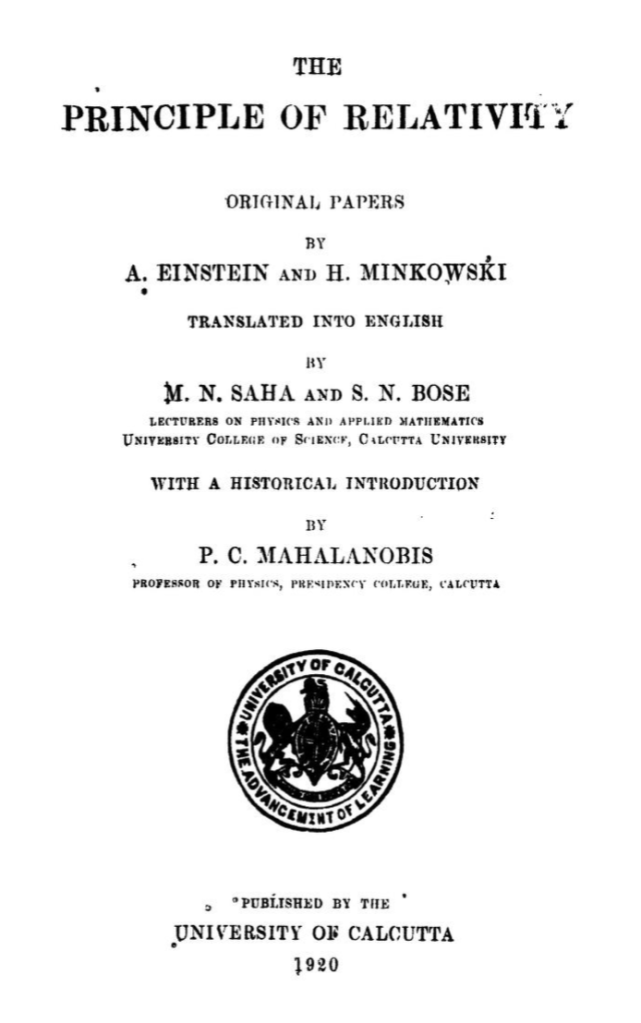
One of his books, Reconstructing India (1920), reveals his thoughts on how and why India needs to reconstruct itself based on knowledge in science, technology and humanities. The title page is shown below, and the book is free to read online, thanks to the Internet Archive.

The book, as mentioned by MV in the preface, was written just after the First World War, and contemplates problems faced by India in light of geopolitical developments. In the 17 chapters of the book, divided into 4 parts, MV discusses specific issues faced by India, and proposes that political and administrative reforms can help India become a progressive society.

The largest part of the book is on economic reconstruction, in which he proposes contemporary methods (for the 1920s) to improve various sectors of manufacturing, including agricultural technology and communication media.

The third part of the book is on social reforms, and in there, he has a dedicated chapter on Education, which caught my attention, and I found it relevant even for today’s India.

Education, Humanities, and STEM

It is important that students of science and technology have a good exposure to some aspects of the humanities, including economics, history and philosophy. The pursuit and ability to choose good problems in science and technology critically depend on the social and economic structure in which they are practiced in universities and research institutions. MV anticipated this and highlights it as:

“Secondary and university education, though producing many able recruits for subordinate positions in the Civil Service, does not provide the men needed to carry on the work of agriculture, engineering, commerce and technology. The provision for training in economics and history is inadequate, and the study of those subjects is even discouraged. An attempt is actually made to teach economics in such a way as to render India’s emergence from a state of dependency difficult.”

Even in 2025, I would suggest that STEM students pay attention to economics, as it anchors them to understand the need and functions of a society, and therefore, their work can be calibrated accordingly. This is not to discourage open-ended research, but to understand how natural sciences are connected to the societal thoughts and needs. It gives us a broader understanding of the context, which is so important while understanding the evolution of ideas.

Comparative Education Systems

There is always a lot to learn from various societies and cultures. In order to do so, one needs comparative analysis. This helps one to choose some good elements from a society that can be emulated elsewhere. MV compares and comments on the 1900s British educational system in contrast to the German and Japanese counterparts. Note that India in the 1920s was still a British colony, and in a way, MV is critical of the system in which he himself was educated and trained. As he notes:

“Britain herself has had to pay a heavy price for her hand-to-mouth policy in regard to education. The educational chaos still existing there compares unfavourably with the great yet orderly progress made by Germany and Japan, both of which countries, after weighing and testing the educational systems of the world, absorbed the best of all.”

These were words written long before the Second World War, and give us a glimpse of how German and Japanese systems were functioning in the 1920s and had a lot to offer to the world. Of course, history took its own path, and German and Japanese society had other ideas.

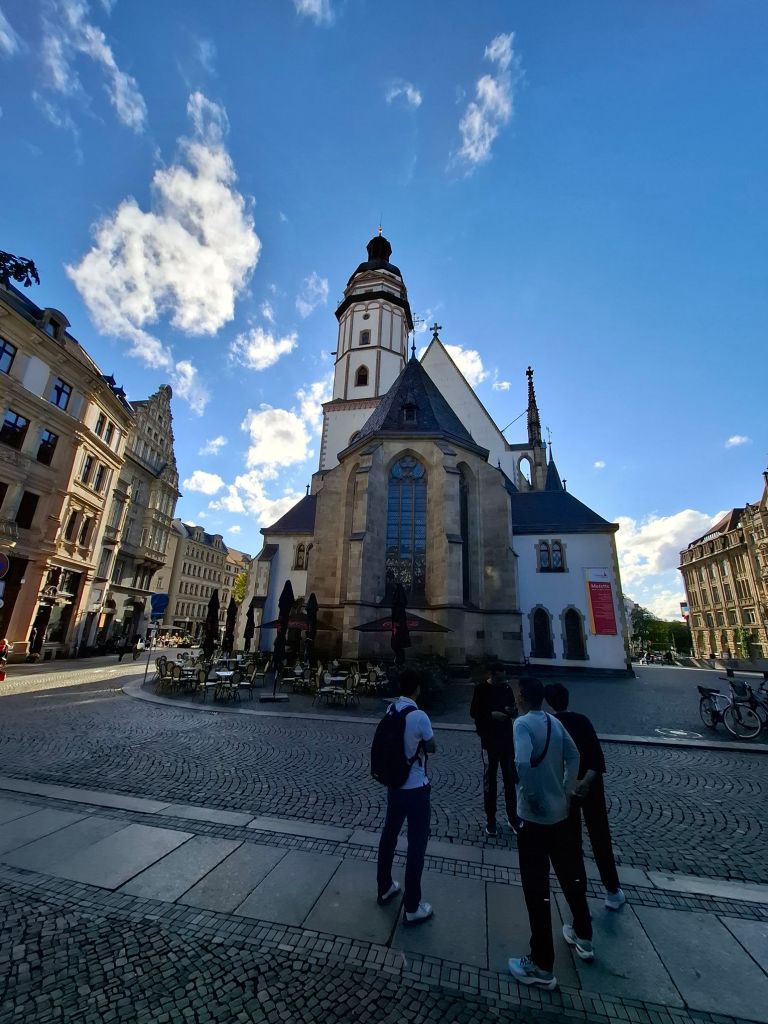
Incidentally, I am writing this piece sitting in Leipzig (eastern Germany), and I am amazed by its architectural marvels that date back centuries. Indeed, German society had (and has) a lot to offer to the world. As MV indicates above, we need to absorb the best that is on offer. In doing so, we also need to reject that which is not good for any society.

Liberal Education and Financial Support

He further adds how liberal education adds value to a society, and calls not only the government but also the people to recognize the importance of financial support for education.

“Both the Government and the people must recognize that only by pursuing a liberal educational policy, and making generous financial provision for schools and colleges can they lift India out of her present low condition and ensure rapid progress.”

These words still hold good, and as a society, India has to re-emphasize modern education that helps us become not only better doctors and engineers, but also better human characters that can add value to the “modern” world.

Call to Action

In the final part of the book, MV makes a passionate appeal to the people of India, calling them to take action and move towards becoming a progressive nation:

“Do the people of India propose to profit by the lessons which world experience has to teach them, or will they be content to allow matters to drift and themselves grow weaker and poorer year by year?
This is the problem of the hour. They have to choose whether they will be educated or remain ignorant; whether they will come into closer touch with the outer world and become responsive to its influences, or remain secluded and indifferent; whether they will be organized or disunited, bold or timid, enterprising or passive ; an industrial or an agricultural nation ; rich or poor ; strong and respected, or weak and dominated by forward nations. The future is in their own hands.”

Indeed, the future is in our hands, and these words written more than 100 years ago still resonate loudly. We need more engineers like Sir MV. The reason he was so effective was that he combined thinking and doing. Importantly, the lesson we can learn from MV’s life and by reading this book, is that an open mind can grasp good ideas at any time and anywhere. Implementing those ideas is an equally important challenge, and MV was up to this in his own way. Are we, as Indians, open to this prospect and engineer our future?

Art and Chu – in Bell labs

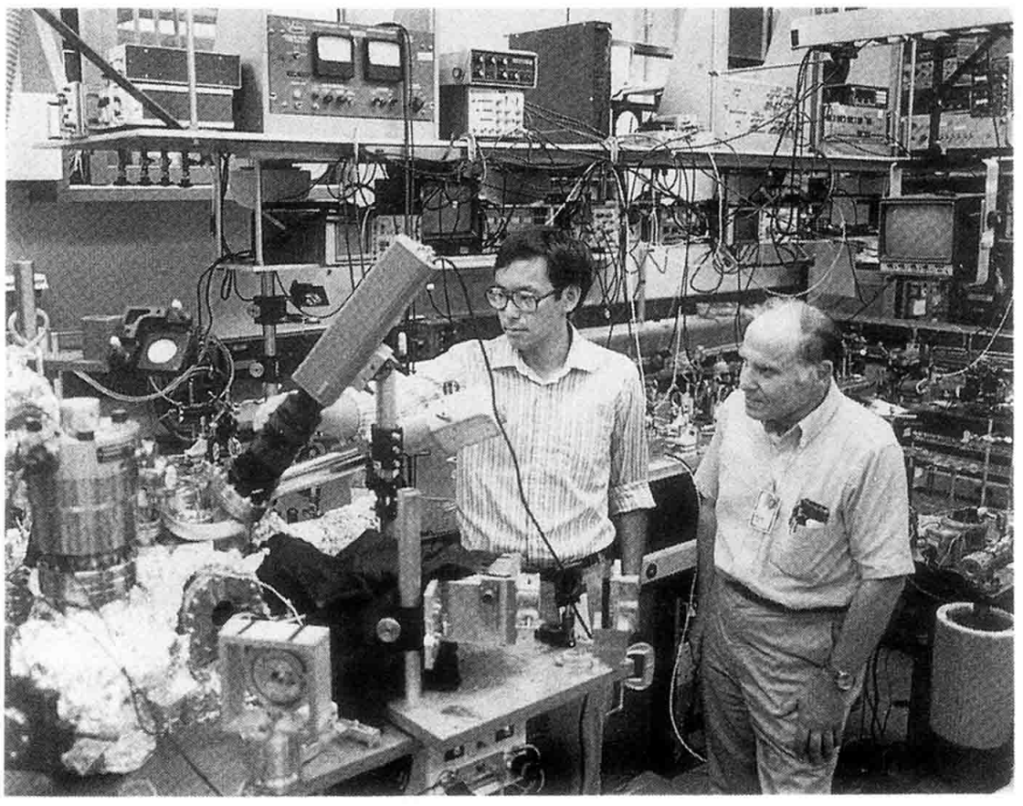
Steven Chu and Arthur Ashkin in 1986, in front of the apparatus shortly after the first optical trapping experiment was completed. Image from Chu’s Nobel lecture.

Steven Chu’s Nobel lecture has some gems. Below, he shares his experience of working with Arthur Ashkin.

“In 1986, the world was excited about atom trapping. During this time, Art Ashkin began to use optical tweezers to trap micron sized particles. While experimenting with colloidal tobacco mosaic viruses, he noticed tiny, translucent objects in his sample. Rushing into my lab, he excitedly proclaimed that he had ‘discovered Life’. I went into his lab, half thinking that the excitement of the last few years had finally gotten the better of him. In his lab was a microscope objective focusing an argon laser beam into a petri dish of water. Off to the side was an old Edmund Scientific microscope. Squinting into the microscope, I saw my eye lashes. Squinting harder, I occasionally saw some translucent objects. Many of these objects were ‘floaters’, debris in my vitreous humor that could be moved by blinking my eyes. Art assured me that there were other objects there that would not move when I blinked my eyes. Sure enough, there were objects in the water that could be trapped and would swim away if the light were turned off. Art had discovered bugs in his apparatus, but these were real bugs, bacteria that had eventually grown in his sample beads and water.”

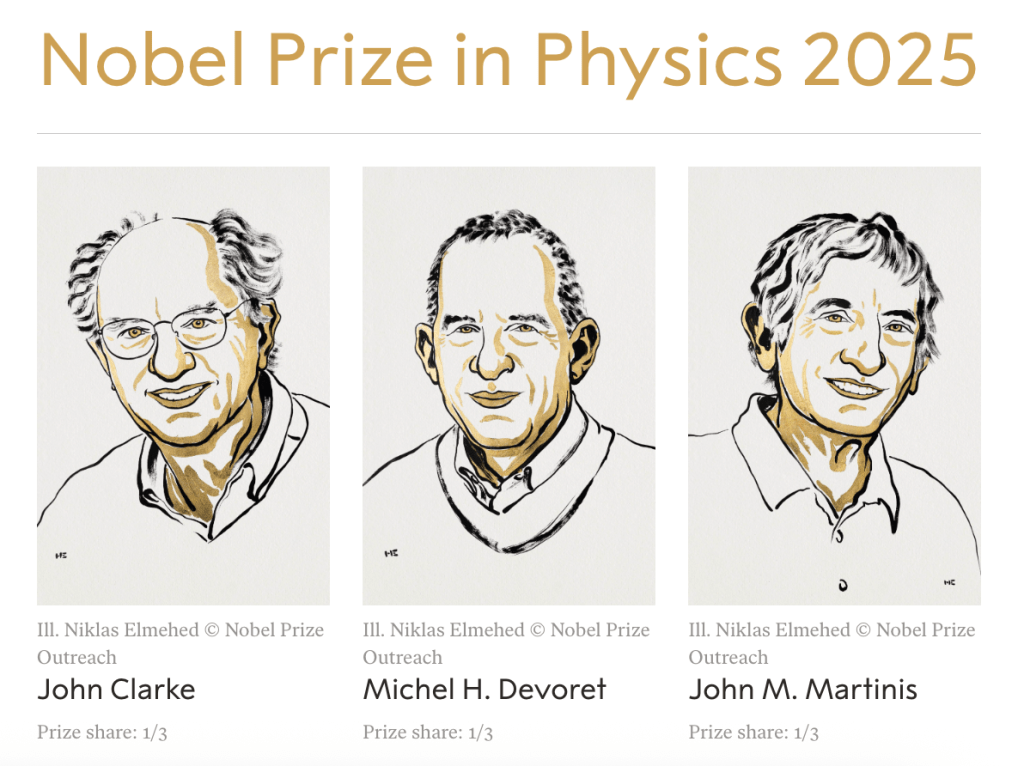
Chu won the physics Nobel in 1997, and Ashkin won the same in 2018. Ashkin was the pioneer of optical trapping and tweezers, and applied it to a variety of problems, including the manipulation of biological matter. Chu harnessed the momentum of light to trap and cool atoms. Both started their work and collaborated at Bell Labs. Chu moved to Stanford, whereas Ashkin stayed back. Bell Labs was a remarkable place in the 1980s, as Chu describes in his lecture :

“Bell Labs was a researcher’s paradise. Our management supplied us with funding, shielded us from bureaucracy, and urged us to do the best science possible. The cramped labs and office cubicles forced us to rub shoulders with each other. Animated discussions frequently interrupted seminars and casual conversations in the cafeteria would sometimes mark the beginning of a new collaboration.”

Can the world afford to have another Bell Labs in 2025? Can it recreate the magic?

Real is imaginary and vice versa

This week in my optics class, I have been teaching Kramers-Kronig (KK) relations of electric susceptibility. It is fascinating to see the causality argument emerge from the relationship between the real and imaginary parts of the complex susceptibility. Whereas the time domain explanation is relatively easier to appreciate (that dissipation follows perturbation in time), for me, the frequency domain implication in KK relation is fascinating: the fact that information about the real part of the function at all frequencies can give you insight into the imaginary part at any given frequency (and vice versa) makes it such a powerful mathematical and physical tool. For example, by knowing the absorption spectrum of a medium, you can find out the refractive index of a medium at a particular frequency that is not easily accessible in experiments.

Two inferences I draw:

1) Complex analysis combined with differential calculus is one of the most beautiful and powerful mathematical tools invented, and exploring its application in experimental scenarios has made physics intriguing, useful, and profound.

2) The KK relationship shows how causality and the structure of matter are connected to each other, and by studying them, one will be able to extrapolate the idea beyond the problem at hand and apply it to a different context in physics. It just shows how ideas hop from one domain to another and how mathematics plays a critical role in intellectual arbitrage.

Real is imaginary and vice versa. Complex numbers zindabad!

When Chandra wrote to Hawking

Learning is a lifelong process, and even the best researchers have to update their knowledge as and when they come across new information. Subrahmanyan Chandrasekhar was undoubtedly one of the most accomplished mathematical astrophysicists in the 20th century, and his range of topics covered almost all aspects of astrophysics.  Chandra (as he was known) was a lifelong learner, and took up new topics within astrophysics, researched them deeply, and wrote definitive books on them, which are still of great utility even today. In his research process, Chandra consulted various scholars across the world, irrespective of their age, and learned new things.

In 1967, Chandra, aged 57, wrote a letter to a 25-year-old researcher, Stephan Hawking, to learn more about his work ‘on the occurrence of singularities in cosmology’. In this letter, which is written in a desperate tone, Chandra mentions that he is grappling with some mathematical aspects of Stephen Hawking’s work and is asking him for references that he can consult to understand his papers. Chandra describes reading Hawking’s papers as  ‘climbing a staircase moving downwards’. Below, I reproduce the letter (from the University of Chicago archives).

 To this letter, Hawking dutifully replies (see below), suggesting specific books on topology and differential geometry. Hawking also suggests some of his published papers. Hawking himself downplays his knowledge of mathematical aspects related to the work, and mentions that it improved after he consulted the mentioned books. Below, I reproduce the handwritten letter (from the University of Chicago archives).

There are two aspects that are interesting to note:  one is the fact that even accomplished researchers have to learn and relearn many things as they get exposed to new information, which calls for humility and setting aside egos, and the second aspect is that ideas are built on existing ideas available at that time, and a major part of it is to learn from papers, books and of course communicating with people, as Chandra did in this case.

Science, after all, is a human endeavor.

Happy Independence Day & de Broglie’s birthday

Happy Independence Day to my fellow Indians !

15th Aug also happens to be birthday of Louis de Broglie, the famous French physicist who played a critical role in understanding wave-particle duality in quantum physics, and laid an important foundation through his formula

λ = h / p ;

where, λ is the wavelength of quantum particle with momentum p and h is the Planck constant.

See here for more details.

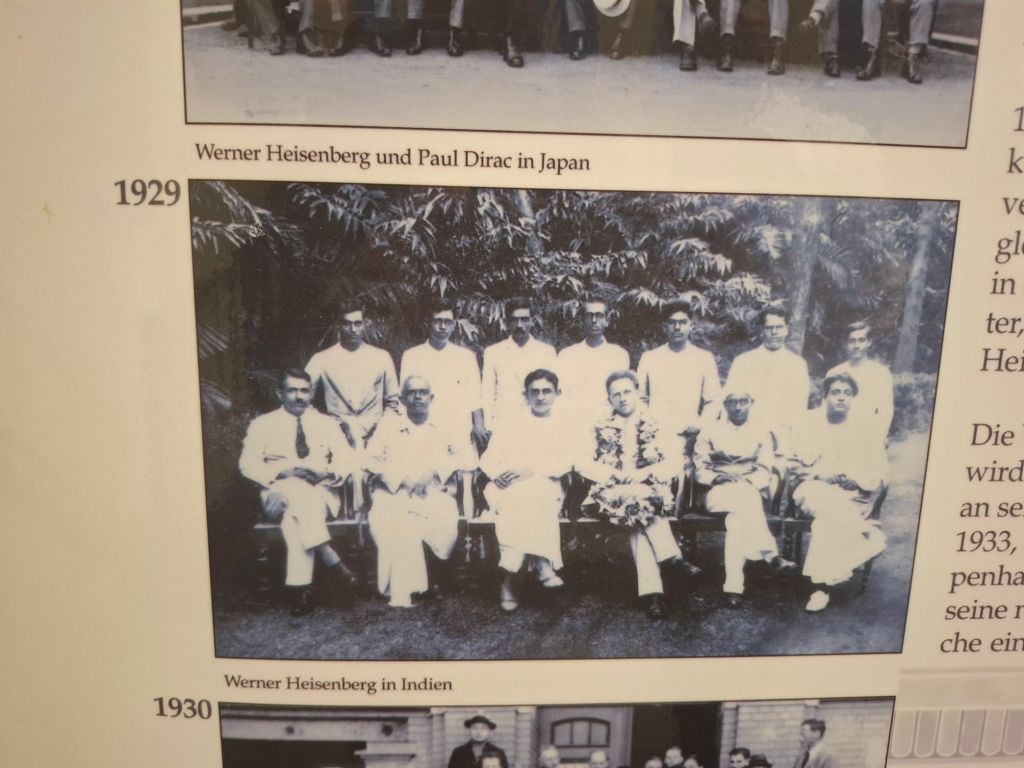
de Broglie studied and discovered the wave nature of electron, for which he received the Nobel prize in physics in the year 1929. In 1920s, understanding light from a quantum mechanical viewpoint was a challenge. Reconciling light, both as a particle and a wave, was counterintuitive and required a leap of thought that was provided by de Broglie. On 12th Dec 1928, delivered his Nobel lecture and mentions:

“I thus arrived at the following overall concept which guided my studies:
for both matter and radiations, light in particular, it is necessary to introduce
the corpuscle concept and the wave concept at the same time. In other words
the existence of corpuscles accompanied by waves has to be assumed in all
cases. However, since corpuscles and waves cannot be independent because,
according to Bohr’s expression, they constitute two complementary forces
of reality, it must be possible to establish a certain parallelism between the
motion of a corpuscle and the propagation of the associated wave.

This duality still remains, as we try understand the nature of light and harness it for information processing.

Interestingly, de Broglie was one of persons who nominated CV Raman for the Nobel prize in 1930 ! Below snapshot is from the Nobel prize nomination archives.

Light as EM wave – in Maxwell’s words

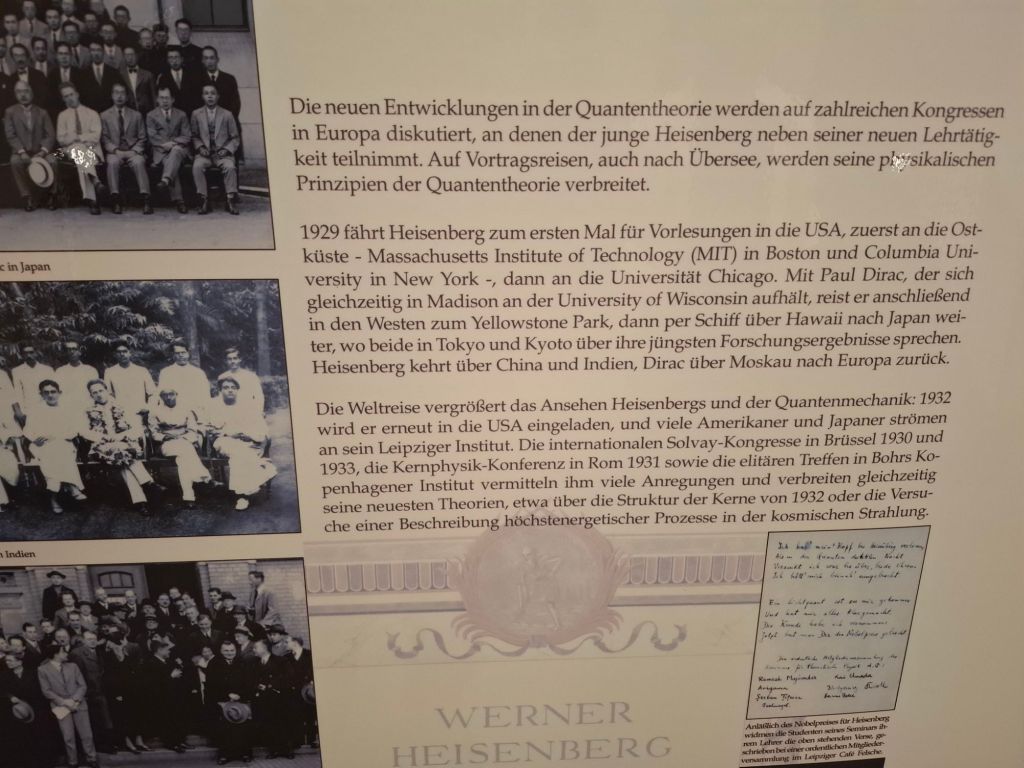
Every year, I teach an optics course to physics majors (including physics iPhD students and MS Quantum Tech students). In the process of introduction, I discuss how light was discovered to be an electromagnetic wave. One of the thrills of this topic is to quote Maxwell from his legendary 1865 paper1, in which he makes this monumental connection. Every time I teach this, I get an intellectual kick, even after doing this for almost 1.5 decades.

The highlighted text is the famous statement. Before that, Maxwell compares his result with two experimental results and confirms his prediction. I follow this up with Hertz’s experiment.

Note: Electric waves and telegraphy were already known before Maxwell’s paper. There were papers that discussed about velocity of light and its connection to electric waves. See this paper2, for example. However, these interpretations were not as comprehensive as Maxwell’s case, and importantly, the field theory viewpoint needed Faraday’s experiments and Maxwell’s interpretation.

  1. Maxwell, James Clerk. 1865. “VIII. A Dynamical Theory of the Electromagnetic Field.” Philosophical Transactions of the Royal Society of London 155 (January): 459–512. https://doi.org/10.1098/rstl.1865.0008.
    ↩︎
  2. https://www.ifi.unicamp.br/~assis/Weber-Kohlrausch(2003).pdf ↩︎

THE DIARY AND OBSERVATIONS OF THOMAS ALVA EDISON

Thomas Alva Edison was one of the greatest inventors we know about. Sometime ago, I stumbled upon a book titled THE DIARY AND OBSERVATIONS OF THOMAS ALVA EDISON, and it was an interesting read. In there, we obtain an insight into Edison’s view on many different subjects, including education, work, religion, etc. Edison was a person with strong views. His working methods were unconventional. Here are a few interesting facts I learnt from this book:
1) Edison had to recruit many executives to his labs; he always emphasized on a memory test and gave them a questionnaire to answer. He insisted that memory is very important for decision making, and he usually employed those people who had very good memory. Edison wrote “…Certainly the brain should have the facts. If a brain possesses an enormous number of facts, those facts, through action of the subconscious mind, will automatically keep themselves available when needed and will automatically keep themselves out of the way, not interfering when not required.”

2) Edison’s view on education was interesting and bold for his times, and he believed that learning through movies would be vital for future education. As early as the 1890s, he said that the best way to teach geography is either by taking the student on a tour or by showing them a movie. Edison wrote

…motion pictures can be applied to a scientific, systematic course of memory training in the schools, taking the children at an early age when the mind is plastic enough to adapt itself most readily to new habit of thought.

Most of our text books fail on two big counts. They are not sufficiently human, and their application is not sufficiently practical”

3) In the following lines, Edison gives an insight into how he worked: “When I want to discover something, I begin by reading up everything that has been done along that line in the past-that’s what all these books in the library are for. I see what has been accomplished at great labor and expense in the past. I gather the data of many thousands of experiments as a starting point, and then I make thousands more.”

“ …..The motive that I have for inventing is, I guess, like the motive of the billiard player, who always wants to do a little better-to add to his record. Under present conditions I use the reasonable profit which I derive from one invention to make experiments looking towards another invention…..”
4) Edison rates the phonograph as his greatest discovery. He writes, “Which do I consider my greatest invention ? Well, my reply to that would be that I like the phonograph best. Doubtless this is because I love music. And then it has brought so much joy into millions of homes all over this country, and , indeed, all over the world.”
5) The following quotation by Joshua Reynolds was hung in every room of Edison’s laboratory “ There is no expedient to which a man will not resort to avoid the real labor of thinking”

There are many more fascinating thoughts of Edison, many agreeable and a few disagreeable ones, in the above-mentioned book, and if you happen to find it, read it through…it’s a classic and insightful read.

The above text is from a 2011 post on my old blog.

A quantum survery – 3 thoughts

One of the joys of studying quantum mechanics, at any stage of a career, is to be aware of the fact that there is more scope for interpretations and understanding. This notion has not changed for several decades. A recent survey reinforces this thought.

There are at least 3 interesting points that I infer from the situation:

1) The interpretation of reality at the quantum scale is probabilistic. This has served us well in experiments and has led to the founding of quantum technologies. We are in a situation in the history of science where the philosophical foundations are uncertain, but the technological implications are profound.

2) Having more data is always good, but for a new leap of thought, we may have to pay attention to new connections among the data. Can AI play a role in this?

3) There is more room for exploration in the foundations of quantum physics. Philosophy of physics has a role to play in this exploration. Physics students and researchers with (analytical) philosophical inclination have an opportunity to contribution. This needs a grounding in understanding mathematics and experiments related to quantum physics. I see this as a great opportunity for someone to enter the field.

Conclusion: Good time to explore the foundations of physics*

*subject to support from society

Philosophy of Science – ideas – cartoon

Ideas in philosophy of science, especially in the 1800s and early 1900s, had their origin in physics. Two philosophers who were deeply influenced by physics were Karl Popper and Thomas Kuhn. Below is a cartoon depiction of the same. Of course, the origins of ideas in philosophy of science have diversified in recent years, and biology and technology (especially AI) dominate the scene nowadays.