Humanizing Science – A Conversation with a Student

Recently, I was talking to a college student who had read some of my blogs. He was interested in knowing what it means to humanize science. I told him that there are at least three aspects to it.

First is to bring out the wonder and curiosity in a human being in the pursuit of science. The second was to emphasize human qualities such as compassion, effort, mistakes, wrong directions, greed, competition and humour in the pursuit of science. The third thing was to bring out the utilitarian perspective.

The student was able to understand the first two points but wondered why utility was important in the pursuit of humanizing science. I mentioned that the origins of curiosity and various human tendencies can also be intertwined with the ability to use ideas. Some of the great discoveries and inventions, including those in the so-called “pure science” categories, have happened in the process of addressing a question that had its origin in some form of an application.

Some of the remarkable ideas in science have emerged in the process of applying another idea. Two great examples came into my mind: the invention of LASERs, and pasteurization.

I mentioned that economics has had a major role in influencing human ideas – directly or indirectly. As we conversed, I told the student that there is sometimes a tendency among young people who are motivated to do science to look down upon ideas that may have application and utility. I said that this needs a change in the mindset, and one way to do so is to study the history, philosophy and economics of science. I said that there are umpteen examples in history where applications have led to great ideas, both experimental and theoretical in nature, including mathematics.

Further, the student asked me for a few references, and I suggested a few sources. Specifically, I quoted to him what Einstein had said:

 “….So many people today—and even professional scientists—seem to me like someone who has seen thousands of trees but has never seen a forest. A knowledge of the historic and philosophical background gives that kind of independence from prejudices of his generation from which most scientists are suffering. This independence created by philosophical insight is—in my opinion—the mark of distinction between a mere artisan or specialist and a real seeker after truth..”

The student was pleasantly surprised and asked me how this is connected to economics. I mentioned that physicists like Marie Curie, Einstein and Feynman did think of applications and referred to the famous lecture by Feynman titled “There is Plenty of Room at the Bottom(1959).

To give a gist of his thinking, I showed what Feynman had to say on miniaturization:

There may even be an economic point to this business of making things very small. Let me remind you of some of the problems of computing machines. In computers we have to store an enormous amount of information. The kind of writing that I was mentioning before, in which I had everything down as a distribution of metal, is permanent. Much more interesting to a computer is a way of writing, erasing, and writing something else. (This is usually because we don’t want to waste the material on which we have just written. Yet if we could write it in a very small space, it wouldn’t make any difference; it could just be thrown away after it was read. It doesn’t cost very much for the material).”

I mentioned that this line of thinking on minaturization is now a major area of physics and has reached the quantum limit. The student was excited and left after noting the references.

On reflecting on the conversation, now I think that there is plenty of room to humanize science.
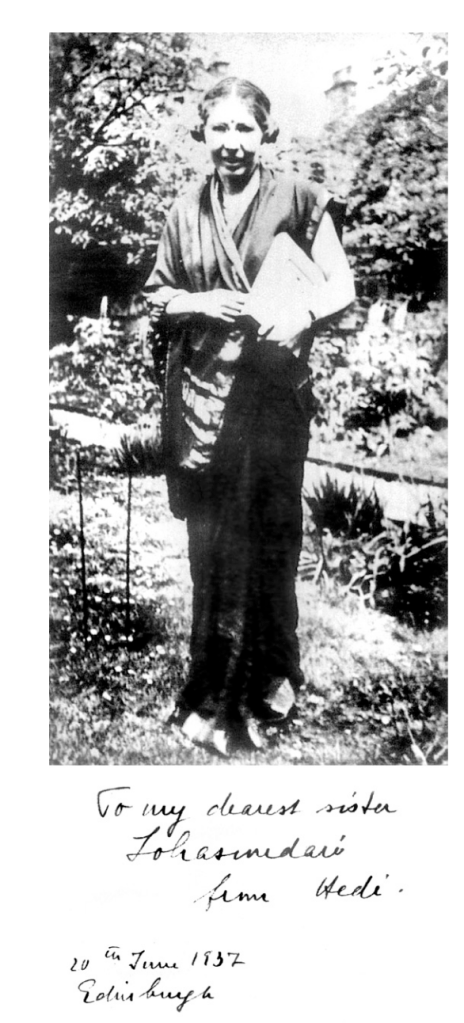
Why is astronomy interesting? Chandra likes Wigner’s answer

The questions “Why is astronomy interesting; and what is the case for astronomy?” have intrigued me; I have often discussed these questions with my friends and associates. Granted that physical science, as a whole, is worth pursuing, the question is what the particular case for astronomy is? My own answer has been this: Physical science deals with the entire range of natural phenomena; and nature exhibits different patterns at different levels; and the patterns of the largest scales are those of astronomy. (Thus Jeans’ criterion of gravitational instability is something which we cannot experience except when the scale is astronomical.) Of the many other answers to my questions, I find the following of Wigner most profound: “The study of laboratory physics can only tell us what the basic laws of nature are; only astronomy can tell us what the initial conditions for those laws are.”

from A Scientific Autobiography: S. Chandrasekhar (2011) by edited by Kameshwar C. Wali 

Polanyi’s quote

“…The example of great scientists is the light which guides all workers in science, but we must guard against being blinded by it. There has been too much talk about the flash of discovery and this has tended to obscure the fact that discoveries, however great, can only give effect to some intrinsic potentiality of the intellectual situation in which scientists find themselves…”

Michael Polanyi, in an essay titled  “My Time with X-Rays and Crystals” (1969)

Random Walks in Polarization

I have been teaching polarization of light in my optics class. In there, I introduced them to matrix representation of polarization states. One of the standard references that I use for explanation is a 1954 paper in American J. Physics, by McMaster titled: “Polarization and the Stokes Parameters.”

While skimming through the pdf of the journal paper, I found an excerpt from a 1954 book, which quotes Fresnel writing to Thomas Young:

Further, I knew from the past that S. Chandrasekhar (astrophysicist) had a role in rejuvenating Stokes vector formalism in radiative transfer. Below is his description from AIP oral history archives (May 1977):

I started the sequence of papers, and almost at the time I started it, I read the paper by Wick in which he had used the method of discrete coordinates,* and I realized at once that that method can be used in a large scale way for solving all problems. So that went on. I have always said and felt that the five years in which I worked on radiative transfer [1944 – 49] is the happiest period of my scientific life. I started on it with no idea that one paper would lead to another, which would lead to another, which would lead to another and soon for some 24 papers — and the whole subject moved with its own momentum.” (emphasis added)

He further states how he rediscovered Stokes polarization vector formalism:

All this had a momentum of it own. Then suddenly I realized one had to put polarization in; the problems of characterizing polarized light — my rediscovery of Stokes original paper, writing on Stokes parameters and calling them Stokes parameters for the first time

Chandra further adds that the Stokes formalism was almost forgotten for 50 years, and he had a role in resurrecting it.

Next, there was some noise on social media where some one questioned the utility of matrix multiplication. For them, below is a wonderful review article by McMaster (again), to explore from polarization viewpoint, and realize the power of non-commutative matrix algebra:

Finally, the original paper by Stokes on his formalism, which is hard to find (thanks to paywall). But, classic papers are hard to suppress, and I found the full paper on internet archives.

Below is a snapshot:

Enjoy your random walk !

‘We’gnana !

Recently, I saw the following tweet from the well-known historian William Dalrymple.

Congrats to the listed authors, who deserve rewards (and the money) for their effort.

I have 3 adjacent points to make:

1) India badly needs to read (and write) more on science and technology. Here, I am not referring to textbooks, but some popular-level science books (at least). Generally, educated Indians are exposed to science only through their textbooks, which are mostly dull, or, in this era, YouTube videos, which have a low signal-to-noise ratio. Good quality science & tech books at a popular level can add intellectual value, excitement, and expand scientific thinking via reading, not just in students, but also in adults.

2) In India, most of the non-fiction literature is dominated by the social sciences, particularly history (as seen in the best-seller list). I have no problem with that, but non-fiction as a genre is a broad tree. Indian readers (and publishers) can and should broaden this scope and explore other branches of the tree. Modern science books (authentic ones), especially written in the Indian context, are badly in need. I hope trade publishers are reading this!

3) Most of the public and social media discourse in India does not emphasize (or underplays) the scientific viewpoint. Scientific literature and scientific discourse should become a central part of our culture. Good books have a major role to play. Remember what Sagan’s Cosmos did to American scientific outlook, and indirectly to its economic progress. The recent Nobel in economics, especially through the work of Joel Mokyr, further reinforces the connection between science, economics and human progress. This realization should be bottom-up, down to individual families and public places.

One of the great scientists, James Maxwell, is attributed to have said: “Happy is the man who can recognise in the work of today a connected portion of the work of life and an embodiment of the work of Eternity.

Science, with its rich, global history and philosophy, in the form of good books, can connect India (and the world) to the ‘work of eternity’, and make us look forward.

Embedding science within culture, in a humane way, can lead to progress. Science books have a central role to play in this.

विज्ञान (Vignana) should transform to ‘We’gnana !

Have You Seen the Bird Flying? by D. R. Bendre

ಕನ್ನಡ ರಾಜ್ಯೋತ್ಸವದ ಶುಭಾಶಯಗಳು

Reproducing one of Da. Ra. Bendre’s Kannada poems titled “ಹಕ್ಕಿ ಹಾರುತಿದೆ ನೋಡಿದಿರಾ?” which translates to Have You Seen the Bird Flying?

A comment on the poem: In my reading, this poem is a metaphor for the exploration of the universe through the exploration of a bird. The poet periodically asks: “Have you seen the bird flying?”, thereby motivating the reader to observe what the bird may be seeing and doing. It is a poem read by school children, but there is a deeper philosophical meaning in asking humans to look up at the sky and realize the flight of a bird in themselves. YouTube also has the original audio of Bendre reciting the first few lines of the poem, and it is worth listening to.

Below is the poem, followed by a decent translation.

“ಹಕ್ಕಿ ಹಾರುತಿದೆ ನೋಡಿದಿರಾ?”

ಇರುಳಿರುಳಳಿದು ದಿನದಿನ ಬೆಳಗೆ
ಸುತ್ತಮುತ್ತಲೂ ಮೇಲಕೆ ಕೆಳಗೆ
ಗಾವುದ ಗಾವುದ ಗಾವುದ ಮುಂದಕೆ
ಎವೆ ತೆರೆದಿಕ್ಕುವ ಹೊತ್ತಿನ ಒಳಗೆ
ಹಕ್ಕಿ ಹಾರುತಿದೆ ನೋಡಿದಿರಾ?

ಕರಿನೆರೆ ಬಣ್ಣದ ಪುಚ್ಚಗಳುಂಟು
ಬಿಳಿ-ಹೊಳೆ ಬಣ್ಣದ ಗರಿ-ಗರಿಯುಂಟು
ಕೆನ್ನನ ಹೊನ್ನನ ಬಣ್ಣಬಣ್ಣಗಳ ರೆಕ್ಕೆಗಳೆರಡೂ ಪಕ್ಕದಲುಂಟು
ಹಕ್ಕಿ ಹಾರುತಿದೆ ನೋಡಿದಿರಾ?

ತಿಂಗಳಿನೂರಿನ ನೀರನು ಹೀರಿ
ಆಡಲು ಹಾಡಲು ತಾ ಹಾರಾಡಲು
ಮಂಗಳಲೋಕದ ಅಂಗಳ ಕೇರಿ
ಹಕ್ಕಿ ಹಾರುತಿದೆ ನೋಡಿದಿರಾ?

ಮುಟ್ಟಿದೆ ದಿಙ್ಮಂಡಲಗಳ ಅಂಚ
ಆಚೆಗೆ ಚಾಚಿದೆ ತನ್ನಯ ಚುಂಚ
ಬ್ರಹ್ಮಾಂಡಗಳನು ಒಡೆಯಲು ಎಂದೋ
ಬಲ್ಲರು ಯಾರಾ ಹಾಕಿದ ಹೊಂಚ
ಹಕ್ಕಿ ಹಾರುತಿದೆ ನೋಡಿದಿರಾ?

Translation (ChatGPT):

Have You Seen the Bird Flying?
(by D. R. Bendre — English rendering)

Night after night melts into day,
All around, above and below —
the world moves on and on,
as the moment of awakening opens —
Have you seen the bird flying?

It has a tail dark as rainclouds,
and feathers white, shining bright;
its wings on either side
are tinted with colors of gold and light —
Have you seen the bird flying?

It drinks the silvery water of the moon,
to play, to sing, to soar;
it enters the courtyard of the blessed world —
Have you seen the bird flying?

It’s touched the edge of the horizon,
stretched its beak to the farthest reach;
who knows — since when it has tried
to break open the universe itself —
Have you seen the bird flying?

π and population

There is a story about two friends, who were classmates in high school,
talking about their jobs. One of them became a statistician and was working
on population trends. He showed a reprint to his former classmate, The
reprint started, as usual, with the Gaussian distribution and the statistician
explained to his former classmate the meaning of the symbols for the actual
population, for the average population, and so on. His classmate was a
bit incredulous and was not quite sure whether the statistician was pulling
his leg. “How can you know that?” was his query. “And what is this
symbol here?” “Oh,” said the statistician, “this is π.” “What is that?”
“The ratio of the circumference of the circle to its diameter.” “Well, now
you are pushing your joke too far,” said the classmate, “surely the population has nothing to do with the circumference of the circle.
”’

These are the opening lines of Wigner’s famous essay titled: The Unreasonable Effectiveness of Mathematics in the Natural Sciences

Ability to Wonder

More than 25 years ago, Prof. G. Srinivasan (RRI, Bengaluru), in an astrophysics class, narrated something that has stuck in my mind. 

I am paraphrasing here. 

He told us about a conversation he had with Prof. Jocelyn Bell, the discoverer of pulsars (rotating neutron stars). 

When Jocelyn was asked: What is the most important quality to do scientific research? 

She replied: ‘ability to wonder’. 

A telescope built over 20 years

For ages, human beings have been curious about stars. Telescopes as observational tools have changed how human beings have studied and understood astronomical objects. Below is a snapshot from a 1947 edition of popular mechanics that features someone named John Cartlidge from USA. He was a mechanical engineer and an amateur astronomer. The story reveals that he took 20 years to build the telescope, and the description text from the magazine is an interesting read. An amount of $600 plus, for that era, sounds expensive. But what is astonishing is the 20-year effort to build a telescope.

This instance of human effort to pursue curiosity connects well to a wonderful poem: ‘Curiosity’ by David Jilk, and below I reproduce a stanza from it:

Your greatest teacher is the world itself
and glory comes to those who find her codes;
for she is coy, no book upon a shelf,
and must be queried via crab-walk modes:
your question is, which questions make inroads?
Instruction thus proceeds aesthetically
with obverse strokes of creativity.

Amateur astronomy fosters that strokes of creativity. After all, sky is the only limit !