Light pressure – Lebedev coin

Today, in my optics class, I discussed optical forces due to momentum in electromagnetic waves. Towards the late 1800s, it was realized that light can impart momentum. This manifested as radiation pressure in the electromagnetic theory proposed by James Maxwell.

Pyotr Nikolaevich Lebedev (24 February 1866 – 1 March 1912) was one of the earliest to experimentally measure (~1899) the radiation pressure on a surface (link to his 1900 paper in German). In 1991, the Soviet Union released a 1 ruble coin (pictured above) to commemorate Lebedev’s scientific achievement.

The formula expresses the total momentum transferred per unit time ( radiation pressure, P) by a beam of N photons, each of energy hν, that is incident on a surface with a coefficient of reflectivity ρ. The constant, c, is the speed of light.

The discussion in the class was mainly related to Ashkin’s work. I have written about this in the past.

Shared below is a delightful lecture given by Ashkin at the age of ~96, after he received his Nobel prize.

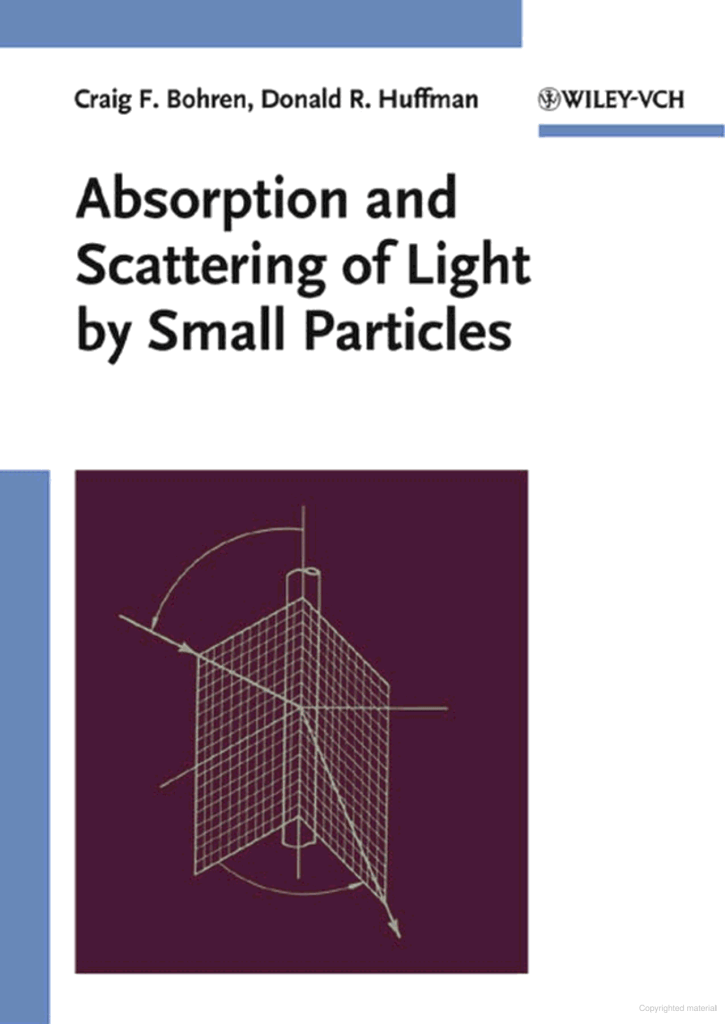
Good books : Bohren & Huffman

Cover of ‘Absorption and Scattering of Light by Small Particles’ by Craig F. Bohren and Donald R. Huffman.

It is important to read good books. Astrophysics, quantum mechanics, and gravity (including attempts to combine them with quantum mechanics) have been at the forefront in terms of popular physics imagination. These are wonderful subtopics of physics, but there are a few others that need equal emphasis. So, here is my attempt to fill this gap with some book recommendations.

The first one in the optics community is just called ‘Bohren and Huffman’ and is one of the best technical books I have read and continue to read. It is humorous and filled with wonderful insights that still engage researchers and students alike.

Craig Bohren, a theoretical physicist, is a wonderful writer, and you will see more of his books discussed here.

The book introduces the scattering matrix from a ‘light scattering’ viewpoint, and has a direct connection to laboratory measurements.

Humour is one of the key aspects of this book (as with others from Bohren), and the title of chapter 8 gives a nice glimpse:
“A Potpourri of Particles”

There is a famous section in Chapter 11 with the heading – “Extinction = Absorption + Scattering” that wonderfully explains the physics behind it.

Overall, an outstanding book for understanding optics from an electromagnetics viewpoint and also to learn how electromagnetism is harnessed to understand interactions at the classical spatio-temporal scales.

Read this if you are interested in physics…It is a delight!


In audio-visual form:

Herschel, IR radiation and the 3 steps of science

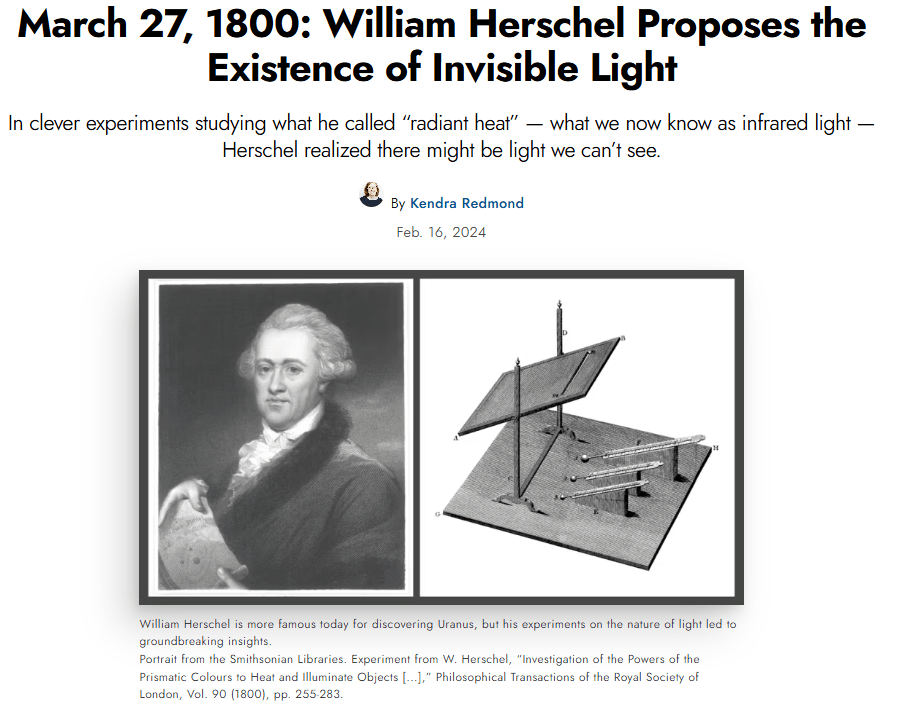
I came across a nice article on the discovery of Infra-red (IR) radiation by William Herschel. It has some information on how he detected the IR part of the electromagnetic spectrum.

It was interesting to note that Herschel’s viewpoint after writing a few papers on this topic was to conclude with uncertainty on the interpretation of his own result.

One may argue that he was not confident in his work, but to truly discover something new, one will have to be at the boundary of the unknown. At such an inflection point, uncertainty and self-criticism are so important, and I don’t blame Herschel for being circumspect.

Nevertheless, his work received attention in spite of his doubts and motivated other researchers, such as Ritter and Röntgen, to explore the extended spectrum of electromagnetic radiation.

Scientific progress is two steps forward and one step backward. The backward step (as in questioning new findings, verification, clarification and debate) is one of the hallmarks of scientific thinking, without which we may take many forward steps, albeit in a totally wrong direction.

Oliver Heaviside : A Maxwellian

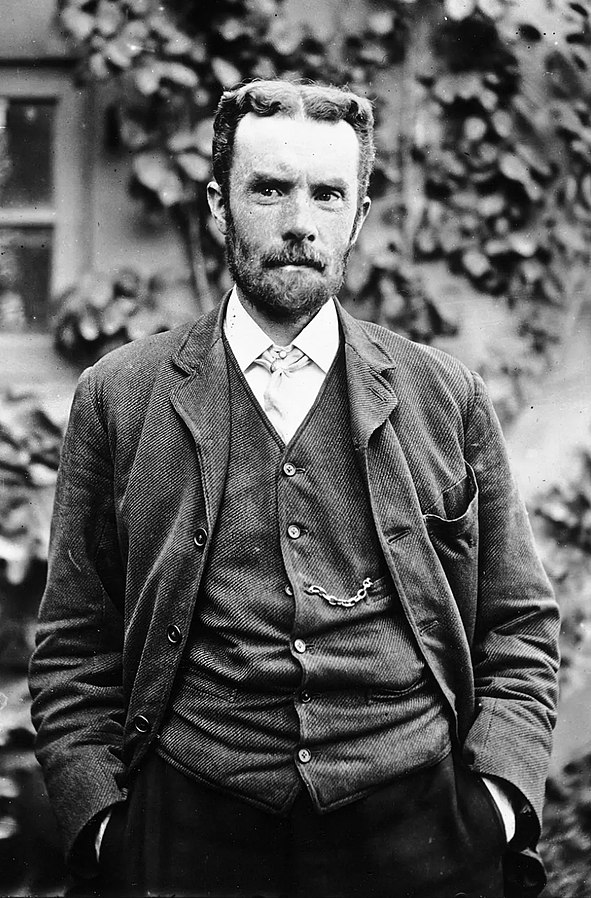
Oliver Heaviside

18 May 1850 – 3 February 1925

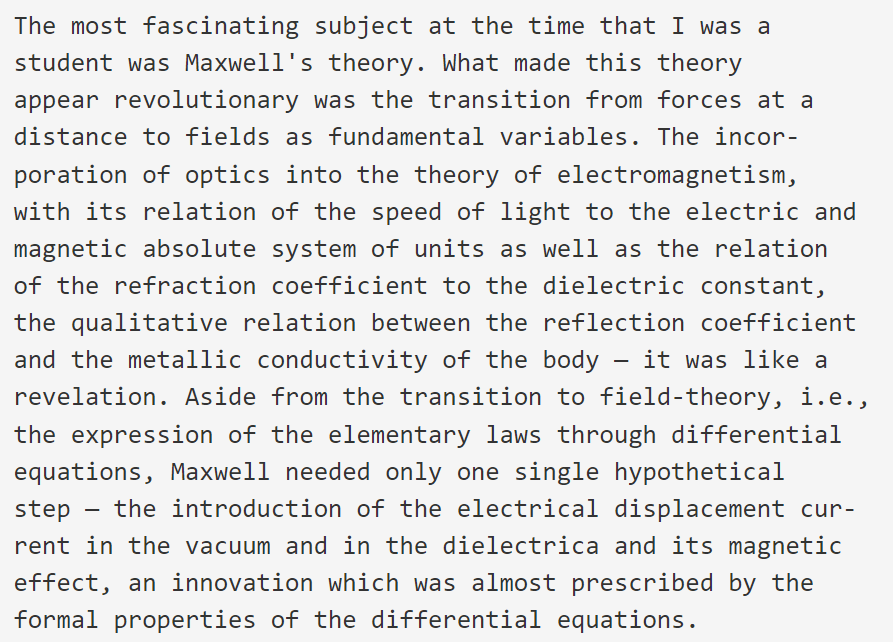
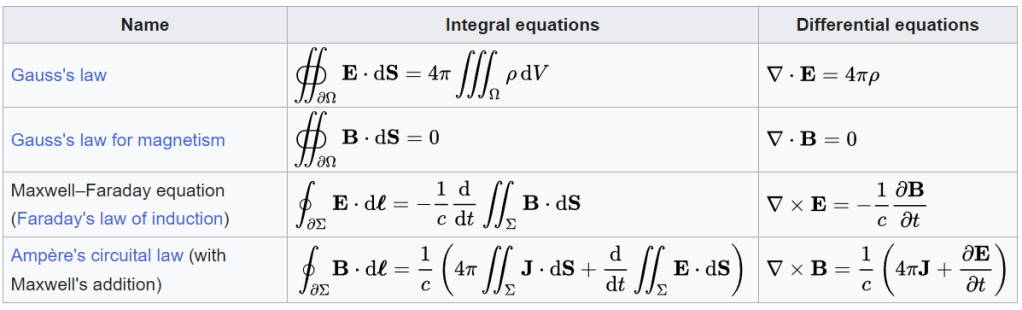
Maxwell’s equation as per Heaviside formulation. Image courtesy Wikipedia.
  • I have been teaching Optics course this semester, and in order to introduce wave theory of light, I had to use Maxwell’s equation. In there, I mentioned that the expression for Maxwell’s equation that we use now is mainly thanks to the formulation of  Oliver Heaviside.
  • Born in 1850, Heaviside grew up in poverty and had physical illness in his childhood.
  • Oliver Heaviside had an unusual life. He did not have a formal education in science or engineering, but contributed immensely to what is now called as classical electromagnetism.
  • He was nephew of Wheatstone (of the fame of Wheatstone network), who helped him to find a job in a telegraph company, which was in 1870s, a booming industry.
  • Heaviside showed a lot of promise in his work, and learnt a lot on the go.
  • Around 1872, at the age of 22, he published his first research paper in Philosophical Magazine, which caught the attention of people such as Lord Kelvin and James Maxwell.
  • At the age of 24, Heaviside quit his job (because of various reasons including ill health), and went back to live with his parents.
  • Around 1873, Maxwell’s treatise on Electricity and Magnetism was published, and this mesmerized Heaviside.
  • He studied it with dedication, but could not understand it. Therefore, he decided to re-write Maxwell’s treatise.
  • Maxwell had used quaternion, which was a number system devised by Hamilton. 
  • This formulation was cumbersome, and was not easy to understand especially in the context of electricity and magnetism.
  • Heaviside took this formulation, and re-casted it in terms of vector calculus.
  • Interestingly, Gibbs had also done the same (earlier than Heaviside), but had not published his results.
  • Nevertheless, both Heaviside and Gibbs pushed this formulation further, and eventually the research community saw its utility.
  • There are many contributions of Heaviside towards electromagnetism, and inductive loading was one of them. Initially, this loading method of introducing repeated coils along the cable was met with a lot of opposition. But eventually, the advantage was realized and Oliver (and his brother, who initiated the work) were vindicated.  
  • Heaviside was a prolific researcher, and published 3 volumes on electromagnetic theory, in addition to various research papers.
  • He also wrote a column spanning over 20 years in a magazine named The Electrician.
  • After 1914 or so, Heaviside’s could not work due to ill health and paranoia, which disturbed his mind.
  • In 1925, Oliver Heaviside passed away. 
  • There are some excellent books and  biographical notes on Heaviside. Below are a few :
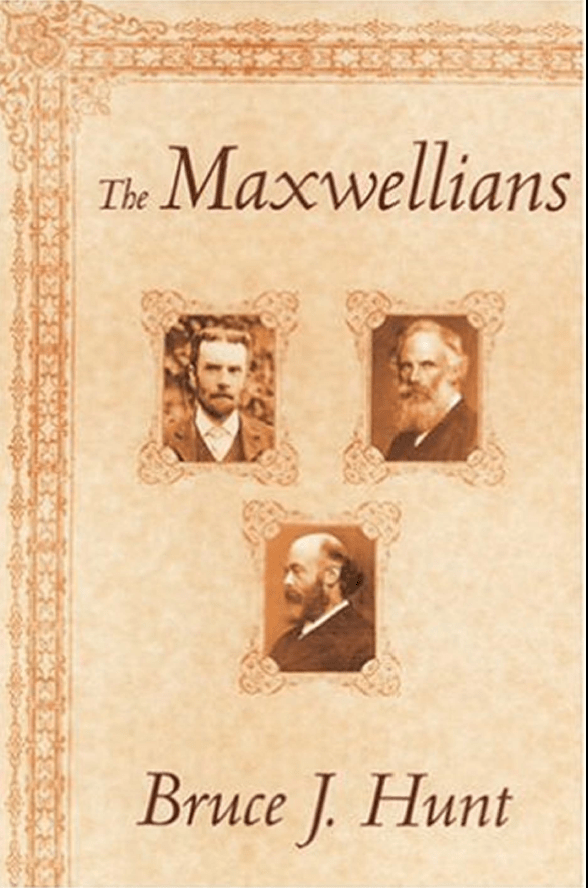
  • Hunt, Bruce J. The Maxwellians. Cornell University Press, 1994.
  • Hunt, Bruce J. “Oliver Heaviside: A First-Rate Oddity.” Physics Today 65, no. 11 (November 1, 2012): 48–54. https://doi.org/10.1063/PT.3.1788.
  • Nahin, Paul J. Oliver Heaviside: The Life, Work, and Times of an Electrical Genius of the Victorian Age. Second Edition. Baltimore, Md: Johns Hopkins University Press, 2002.

Among the books and discussion on this topic, I found this book by science historian Bruce Hunt to be very interesting. He identifies 3 plus 1 people who extensively developed Maxwell’s electromagnetic theory and presented in a way that the world could understand its significance. They were G. F. FitzGerald, Oliver Heaviside, Oliver Lodge and to a certain extent – Heinrich Hertz.

The foreword of this excellent book was written by a well known historian of science L. Peerce Williams and he sums the situation in which the theory was developed :

“Like Newton’s Principia, Maxwell’s Treatise did not immediately convince
the scientific community. The concepts in it were strange and the
mathematics was clumsy and involved. Most of the experimental basis
was drawn from the researches of Michael Faraday, whose results were
undeniable, but whose ideas seemed bizarre to the orthodox physicist.
The British had, more or less, become accustomed to Faraday’s “vision,”
but continental physicists, while accepting the new facts that poured
from his laboratory, rejected his conceptual structures. One of Maxwell’s
purposes in writing his treatise was to put Faraday’s ideas into the language
of mathematical physics precisely so that orthodox physicists
would be persuaded of their importance.
Maxwell died in 1879, midway through preparing a second edition of
the Treatise. At that time, he had convinced only a very few of his fellow
countrymen and none of his continental colleagues. That task now fell to
his disciples.

The story that Bruce Hunt tells in this volume is the story of the ways
in which Maxwell’s ideas were picked up in Great Britain, modified,
organized, and reworked mathematically so that the Treatise as a whole
and Maxwell’s concepts were clarified and made palatable, indeed irresistible,
to the physicists of the late nineteenth century. The men who
accomplished this, G. F. FitzGerald, Oliver Heaviside, Oliver Lodge, and
others, make up the group that Hunt calls the “Maxwellians.” Their relations
with one another and with Maxwell’s works make for a fascinating
study of the ways in which new and revolutionary scientific ideas move
from the periphery of scientific thought to the very center. In the process,
Professor Hunt also, by extensive use of manuscript sources, examines
the genesis of some of the more important ideas that fed into and
led to the scientific revolution of the twentieth century.

Preamble to the discovery of Raman Effect

Today is India’s National Science Day. It celebrates the discovery of Raman effect on 28th February, 1928.

For more details on the discovery of the effect, and various human aspects related to it : you can see my past blogs here, here, here and here.

In this blog, I will briefly discuss about some of the work that directly influenced Raman’s thinking that further led to a remarkable discovery that we know by his name.

All creative pursuits are motivated by ideas from the past. No one gets their ideas in vacuum. All of us are influenced by the information which we perceive and receive. This means consciously or subconsciously the world that we are creating, both in our minds and in reality, is fundamentally influenced by the information in the world.

The discovery behind the Raman effect is no exception to this particular principle. In his formative years, C V Raman was heavily influenced by the research of Rayleigh and Helmholtz, and some classical thinkers including Euclid. Raman was also closely following the development of quantum mechanics in the early 1920s, and he was keenly studying the theoretical and experimental developments in this field.

Two aspects which played a crucial role in motivating Raman’s (Nobel prize winning) work was Compton scattering and Kramers-Heisenberg formula.

Compton scattering was as outstanding experimental achievement that revealed two aspects of light-matter interaction. First, it demonstrated inelastic scattering of electromagnetic radiation interacting with a quantum object (in this case free electrons) in the laboratory frame. Second is that it laid a foundation to revisit the wave-particle duality of light from an experimental viewpoint. Raman and Krishnan’s main paper on light scattering starts by explicitly referring to Compton effect, and motivates observation for optical analogue of Compton scattering.

To quote from Raman’s Nobel lecture :

“In interpreting the observed phenomena, the analogy with the Compton effect was adopted as the guiding principle. The work of Compton had gained general acceptance for the idea that the scattering of radiation is a unitary process in which the conservation principles hold good.”

Next is the Kramers-Heisenberg formula. This mathematical description gives the scattering cross section of a photon interacting with a quantum object (in this case electron). This formula uses second-order perturbation theory, and evokes the famous ‘sum of all the intermediate states’ for non-resonant optical interaction. PAM Dirac played a vital role in deriving this formula from a quantum mechanical framework of radiation. An important and logical consequence of this formula is the emergence of stimulated emission of radiation, and this has had deep implications in understanding LASERs. Raman was keenly studying the formula and made a brilliant conceptual connection between laboratory observation and this formula that revealed the scattering cross-section.

Again to quote from Raman’s Nobel lecture:

“The work of Kramers and Heisenberg, and the newer developments in quantum mechanics which have their root in Bohr’s correspondence principle seem to offer a promising way of approach towards an understanding of the experimental results.”

The above two concepts were important ideas that motivated Raman scattering experiments. Importantly it highlights the jugalbandi between theoretical intuition with concrete experimental observations, which forms the bedrock of modern physics.

Newton famously mentioned about the discoveries he made by ‘standing on the shoulders of the giants’. Various people involved in creative pursuits including scientists acknowledge the fact that new ideas emerge from convergence/mutation of old ideas. The harder part of creativity in science, or for that matter any art form, is to choose the right ideas to combine so that the ’emergent’ new idea has greater value compared to the individual parts. In that sense, science is a great form of creative activity that not only combines old ideas to create new valuable ideas, but also transforms the perspective of the individual seed ideas. Thus ideas combine and evolve.

So let us combine good ideas and evolve. Happy Science Day !

Black hole image and optical vortex – an analogy

The recent image of the black hole at the center of the milky way has been spectacular. When I teach a course, I generally emphasize analogies across the sub-disciplines of physics. In the below video I draw some analogies between black hole image and an optical vortex.

About the black hole images : https://iopscience.iop.org/journal/2041-8205/page/Focus_on_First_Sgr_A_Results

Some work from our group on optical vortex : ACS Photonics 6, 1, 148–153 (2019) https://doi.org/10.1021/acsphotonics.8b01220

Book on singular optics : https://www.google.co.in/books/edition/Singular_Optics/H-WVDQAAQBAJ?hl=en&gbpv=1&printsec=frontcover

Science paper on optical analog of event horizon https://www.science.org/doi/epdf/10.1126/science.1153625

More surprises in Optical Momentum…

Electromagnetic momentum is a topic with rich history dating back to Maxwell, Poynting, Minkowski, Abraham, Einstein, and many more1.
It has also led to new questions, and an intriguing controversy in electromagnetism2.

An interesting and contemporary question to ask is: what is the behavior of optical momentum in artificial materials ?

One class of artificial materials is the near zero-refractive index (NZI) materials.

What are NZI materials ? The general definition of refractive index from a material view point is that it is proportional to square root of a product: dielectric permittivity (ε) and magnetic permeability (μ) of the given material.

n = (εμ)½ 

 If either of these material values go to zero at a given wavelength of light, then the refractive index goes to zero or close to zero. Such a situation creates new opportunity for enhanced or supressed light-matter interaction. See this popular review on NZI materials3

A recent theoretical paper4 addresses the consequence of evolution of optical momentum in NZI media.
This analysis has thrown a few fundamental surprises that are fascinating such as : absence of interference in Young’s double slit experiments, and some new opportunities in optical cloaking thanks to quantum nature of light. To quote the authors4 :

being inside an NZI materials would lead to an infinite uncertainty on position and zero uncertainty on momentum. Conceptually, this implies that since the resolution is poor and no correct image can be formed, an object of any shape and material can be “hidden” in a NZI material.

There are a few more interesting prospects, and of course, all of them are yet to be verified with experiments.

If you are interested in this topic, I strongly recommend this recent, popular level article5

1.           M. Buchanan, “Minkowski, Abraham and the photon momentum,” 2, Nature Phys 3(2), 73–73, Nature Publishing Group (2007) [doi:10.1038/nphys519].

2.           S. M. Barnett and R. Loudon, “The enigma of optical momentum in a medium,” Philosophical Transactions of the Royal Society A: Mathematical, Physical and Engineering Sciences 368(1914), 927–939, Royal Society (2010) [doi:10.1098/rsta.2009.0207].

3.           “Optics & Photonics News – Zero-Index Platforms: Where Light Defies Geometry,” <https://www.optica-opn.org/home/articles/volume_27/july_august_2016/features/zero-index_platforms_where_light_defies_geometry/> (accessed 5 May 2022).

4.           M. Lobet et al., “Momentum considerations inside near-zero index materials,” 1, Light Sci Appl 11(1), 110, Nature Publishing Group (2022) [doi:10.1038/s41377-022-00790-z].

5.           “Exotic Materials Through Momentum’s Looking-Glass,” <https://www.optica-opn.org/home/newsroom/2022/may/exotic_materials_through_momentum_s_looking-glass/> (accessed 5 May 2022).