THE DIARY AND OBSERVATIONS OF THOMAS ALVA EDISON

Thomas Alva Edison was one of the greatest inventors we know about. Sometime ago, I stumbled upon a book titled THE DIARY AND OBSERVATIONS OF THOMAS ALVA EDISON, and it was an interesting read. In there, we obtain an insight into Edison’s view on many different subjects, including education, work, religion, etc. Edison was a person with strong views. His working methods were unconventional. Here are a few interesting facts I learnt from this book:

1) Edison had to recruit many executives to his labs; he always emphasized on a memory test and gave them a questionnaire to answer. He insisted that memory is very important for decision making, and he usually employed those people who had very good memory. Edison wrote “…Certainly the brain should have the facts. If a brain possesses an enormous number of facts, those facts, through action of the subconscious mind, will automatically keep themselves available when needed and will automatically keep themselves out of the way, not interfering when not required.”

2) Edison’s view on education was interesting and bold for his times, and he believed that learning through movies would be vital for future education. As early as the 1890s, he said that the best way to teach geography is either by taking the student on a tour or by showing them a movie. Edison wrote

…motion pictures can be applied to a scientific, systematic course of memory training in the schools, taking the children at an early age when the mind is plastic enough to adapt itself most readily to new habit of thought.

Most of our text books fail on two big counts. They are not sufficiently human, and their application is not sufficiently practical”

3) In the following lines, Edison gives an insight into how he worked: “When I want to discover something, I begin by reading up everything that has been done along that line in the past-that’s what all these books in the library are for. I see what has been accomplished at great labor and expense in the past. I gather the data of many thousands of experiments as a starting point, and then I make thousands more.”

“ …..The motive that I have for inventing is, I guess, like the motive of the billiard player, who always wants to do a little better-to add to his record. Under present conditions I use the reasonable profit which I derive from one invention to make experiments looking towards another invention…..”

4) Edison rates the phonograph as his greatest discovery. He writes, “Which do I consider my greatest invention ? Well, my reply to that would be that I like the phonograph best. Doubtless this is because I love music. And then it has brought so much joy into millions of homes all over this country, and , indeed, all over the world.”

5) The following quotation by Joshua Reynolds was hung in every room of Edison’s laboratory “ There is no expedient to which a man will not resort to avoid the real labor of thinking”

There are many more fascinating thoughts of Edison, many agreeable and a few disagreeable ones, in the above-mentioned book, and if you happen to find it, read it through…it’s a classic and insightful read.

The above text is from a 2011 post on my old blog.

A quantum survery – 3 thoughts

One of the joys of studying quantum mechanics, at any stage of a career, is to be aware of the fact that there is more scope for interpretations and understanding. This notion has not changed for several decades. A recent survey reinforces this thought.

There are at least 3 interesting points that I infer from the situation:

1) The interpretation of reality at the quantum scale is probabilistic. This has served us well in experiments and has led to the founding of quantum technologies. We are in a situation in the history of science where the philosophical foundations are uncertain, but the technological implications are profound.

2) Having more data is always good, but for a new leap of thought, we may have to pay attention to new connections among the data. Can AI play a role in this?

3) There is more room for exploration in the foundations of quantum physics. Philosophy of physics has a role to play in this exploration. Physics students and researchers with (analytical) philosophical inclination have an opportunity to contribution. This needs a grounding in understanding mathematics and experiments related to quantum physics. I see this as a great opportunity for someone to enter the field.

Conclusion: Good time to explore the foundations of physics*

*subject to support from society

Conversation with Shivprasad Patil

Welcome to the podcast Pratidhavani – Humanizing Science

Shivprasad Patil is a Professor in the Department of Physics at the Indian Institute of Science Education and Research (IISER) Pune.

His main academic interests include nanotechnology, atomic force microscopy, and single-molecular interactions. His research centers on experimental nanomechanics and force spectroscopy, especially for probing phenomena at the single-molecule level.

In this conversation, we explore his intellectual journey from a small village in Maharashtra to a professor at IISER Pune

Spotify

References:

Force Spectroscopy Conference. n.d. “Conference on Force Spectroscopy and Microscopy, India.” Accessed July 25, 2025. https://forcespectroscopy.in/.

My Site. n.d. “Home.” Accessed July 25, 2025. https://nmlab220.wixsite.com/my-site-1.

“‪Shivprasad Patil‬ – ‪Google Scholar‬.” n.d. Accessed July 25, 2025. https://scholar.google.com/citations?user=rtuNcawAAAAJ&hl=en.

“Shivprasad Patil – IISER Pune.” n.d. Accessed July 25, 2025. https://www.iiserpune.ac.in/research/department/physics/people/faculty/regular-faculty/shivprasad-patil/313.

Philosophy of Science – ideas – cartoon

Ideas in philosophy of science, especially in the 1800s and early 1900s, had their origin in physics. Two philosophers who were deeply influenced by physics were Karl Popper and Thomas Kuhn. Below is a cartoon depiction of the same. Of course, the origins of ideas in philosophy of science have diversified in recent years, and biology and technology (especially AI) dominate the scene nowadays.

A note on experimental physics

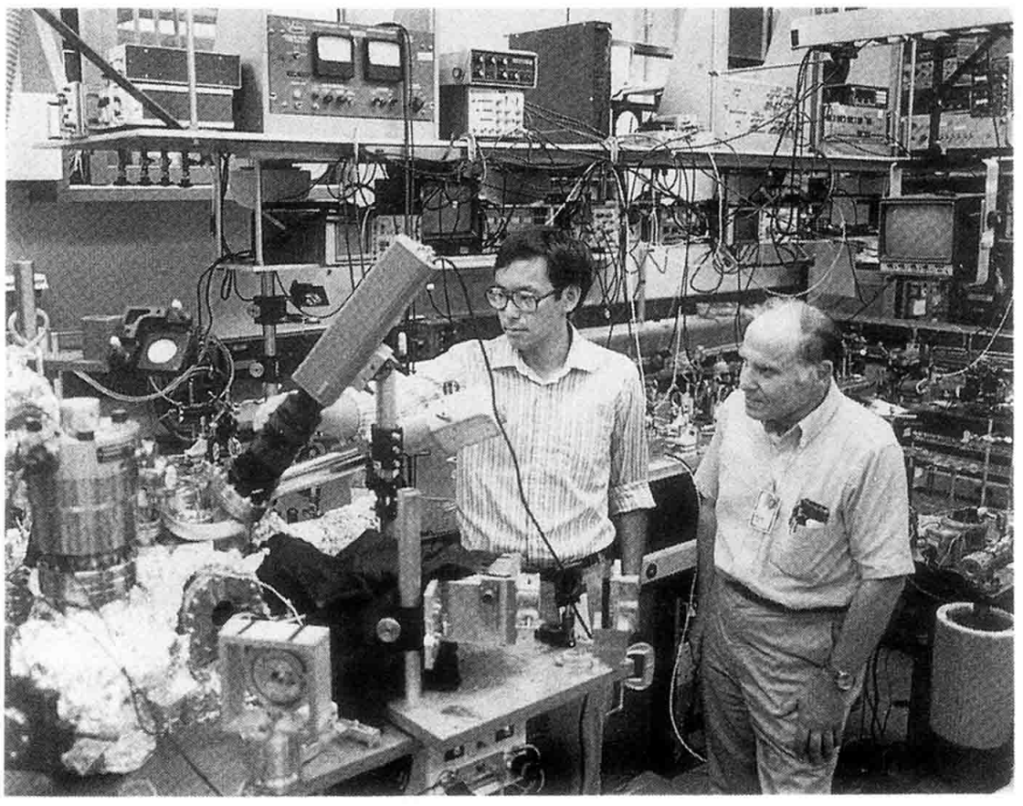
Experimental physics is one of the crucial ingredients of physics. There are at least two major tasks within its realm. The first is to examine nature through observation. These observations can then be extrapolated into systematic measurements that can be quantified. The second aspect is that experimental physics serves as a platform to test hypotheses that are already formulated by theory. In this way, it acts as a conduit connecting theory to real-world situations. Additionally, it reveals the limitations of any theory, thereby serving as a valuable test bed.

These two tasks are essentially intertwined: an observation can lead to new hypotheses, and, conversely, a well-formulated hypothesis can lead to systematic measurements.

For example, while hunting for astronomical radio sources, an important discovery was made: the observation of the cosmic microwave background. This finding turned out to be one of the crucial ones in physics, providing vital insights into the Big Bang theory and becoming a foundational aspect of observational cosmology. Another example is the special theory of relativity, where the Michelson-Morley experiment ruled out ether, which enabled Einstein to formulate his theory with greater confidence.

These two examples offer a snapshot of the possibilities within experimental physics and highlight its essential role in the duality between theory and experiment in physics. In a way, experiments and theory complement each other, and are like two sides of a coin.

Conversation with Robert T. Pennock

Welcome to the podcast Pratidhvani – Humanizing Science

My guest this time is Professor Robert T. Pennock, University Distinguished Professor at Michigan State University, with appointments in Lyman Briggs College, the Department of Philosophy, and the Department of Computer Science and Engineering: https://pennock5.msu.domains/

Robert’s research explores the deep connections between science, ethics, and philosophy. His recent book, An Instinct for Truth, presents science as a moral discipline grounded in intellectual virtues like honesty, curiosity, and humility.

At the BEACON Center for the Study of Evolution in Action, he leads interdisciplinary work on digital evolution, using artificial life systems to explore questions about complexity, adaptation, and the evolution of intelligent behavior.

In this episode, we explore his intellectual journey with an emphasis on philosophy of science.

Spotify Link

References:

  1. Robert T. Pennock – University Distinguished Professor. n.d. Accessed July 15, 2025. https://pennock5.msu.domains/.
  2. Wikipedia. 2025. “Robert T. Pennock.” April 27. https://en.wikipedia.org/w/index.php?title=Robert_T._Pennock&oldid=1287698177.
  3. Pennock, Robert T. 2019. An Instinct for Truth: Curiosity and the Moral Character of Science. The MIT Press. Amazon link
  4. American Scientist. n.d. Accessed July 16, 2025. https://www.americanscientist.org/author/robert_t._pennock.
  5. American Scientist. 2025. “A Measure of Trust.” January 22. https://www.americanscientist.org/article/a-measure-of-trust.
  6. Miller, Jon D, Belén Laspra, Carmelo Polino, Glenn Branch, Mark S Ackerman, and Robert T Pennock. 2024. “Citizen Attitudes toward Science and Technology, 1957–2020: Measurement, Stability, and the Trump Challenge.” Science and Public Policy 51 (3): 526–42. https://doi.org/10.1093/scipol/scad086.

Tony Tyson and a giant CCD camera

Recently, I came across an interview with Tony Tyson, one of the main scientists related to the Rubin telescope. He says:

“We can do better than this. We can build a larger telescope by making larger mosaics of larger CCDs.”
— Tony Tyson

On a day when India lost a test match, the first sentence rings loud…anyway, the topic of this post is a fascinating development happening in observational cosmology.

Tony’s suggestion above is a great, ambitious way to explore the Universe….by building effective observational tools that can image and comprehend the observable…and perhaps unobservable too…

For students: Observational cosmology is a great place to explore cutting-edge science: physics (experiments + theory), maths, engineering & computation…all come together..

Check out the interview of Tony Tyson…one of the brains behind the cameras of Rubin Observatory…plenty to learn…

Just like test cricket, observational cosmology needs patience…perhaps a good lesson for life too…

Sanskrit subhashita – don’t waste

Here is a Sanskrit subhashita that I like.

वृथा वृष्टि: समुद्रेषु वृथा तृप्तेषु भोजनम्।

वृथा दानम् धनाढ्येषु वृथा दीपो दिवाऽपि च॥

LLMs are getting better at translations.

Below is a comparison of translations on 2 platforms

English Translation from perplexity AI:

Rain over the ocean is wasted, food for those who are already full is wasted; Charity to the wealthy is wasted, and a lamp during the daytime is wasted.

English translation from ChatGPT:

Rain over the ocean is in vain, food for one who is already full is in vain; Charity to the wealthy is in vain, and a lamp during the day is also in vain.

ChatGPT – an experiment

Below is a small experiment with ChatGPT (GPT-4o, which is OpenAI’s most advanced model as of July 2025).

I asked for thoughts (from authentic sources) from Indian writers on the nature of the writing process (handwriting vs typewriting).

It confidently gave me quotations from Rabindranath Tagore, R.K. Narayan and U.R. Ananthmurthy. I was intrigued, and below is my conversation:

me: list the quotes from Indian writers above and give the exact sources

Chatgpt: I couldn’t find reputable sources for the exact quotes I previously suggested by Indian writers—so it’s safer to reconsider them.

This is something I have been observing with LLM chatboxes, especially when it comes to the sources that may not be mainstream. One may even say it is hallucinating, but after enquiring further, it said:

The quotes I initially provided appear to be popular paraphrases or second-hand interpretations, but none could be verified in primary texts or reliable interviews.

Then, it asked me if I wanted to use authentic sources to be presented to corroborate the initially mentioned sources. I said yes, and below was its reply:

Here are verified quotes from Rabindranath Tagore, with clear attributions to reliable sources—unfortunately, I couldn’t locate authenticated quotes for other Indian writers on writing methods

The quotes that it gave were peripheral to my initial question. It identified two to three quotations, but none of them were directly connected to my initial query.

There may be at least 2 hypotheses that I can draw from this, which need further testing:

  1. ChatGPT and its kind may be getting trained more intensely on sources that are mainly anglophonic, and its geographical distribution of sources may be skewed. Online literary sources from countries such as India may not be as dense as, say USA, the UK or even some European countries. Will depositing more authentic sources online, including their translations, help the authentic discovery of information from countries such as India?
  2. With the current developments and model training, there may already be a bias in the answers that LLM chatbots give. It may reinforce many viewpoints from Western repositories that may sometimes be disconnected or irrelevant to the user outside Western geographies. In that sense, new information is being built on old information. Are we entering a stage where data deposition asymmetry is creating an asymmetry of discovery?

I know these questions are not trivial to answer, but for LLM chatboxes to be authentic, they need to address questions with proper citations. I know some of them are trying to do that (eg, perplexity AI), but I find the links it provides for certain focused questions are not up to the mark.

My inference:

  1. I am cautiously optimistic about the developments and achievements in source-based LLM interfaces, especially when you feed an authentic source (eg, NotebookLM).
  2. But LLM chatboxes may be hyped when:
    • It comes to its capability of sourcing authentic information, and
    • The immediacy of replacements of existing knowledge systems.
  3. LLM chatboxes should be treated as an experimental tool for utilitarian tasks where the information can be verified independently.
  4. It is important to take the bottom line of ChatGPT seriously: ‘ChatGPT can make mistakes. Check important info.