From 15th to 18th June 2025, I attended a focused meeting called ConForce.
The location was at an interesting place: Casuarina Resort Park- Kurunji, which is about 70 km from Pune. It was a scenic and raw place, with an amazing landscape. The resort facilities were ok with limited facilities, but the landscape was just breathtaking. It rained almost all the time, but it created a wonderful visual across the horizon with lush green patches of mountains and grey clouds (see image).
The main theme of the meeting was related to force spectroscopy, with a greater tilt towards biophysical applications. I spoke in the optical tweezers section and enjoyed the discussion with various participants and speakers. Specifically, I presented some of our recent, unpublished work on optical binding and its optical perturbation.
New ideas are often created by the merging of two old ideas. How often is this true, and how often do we tend to forget this?
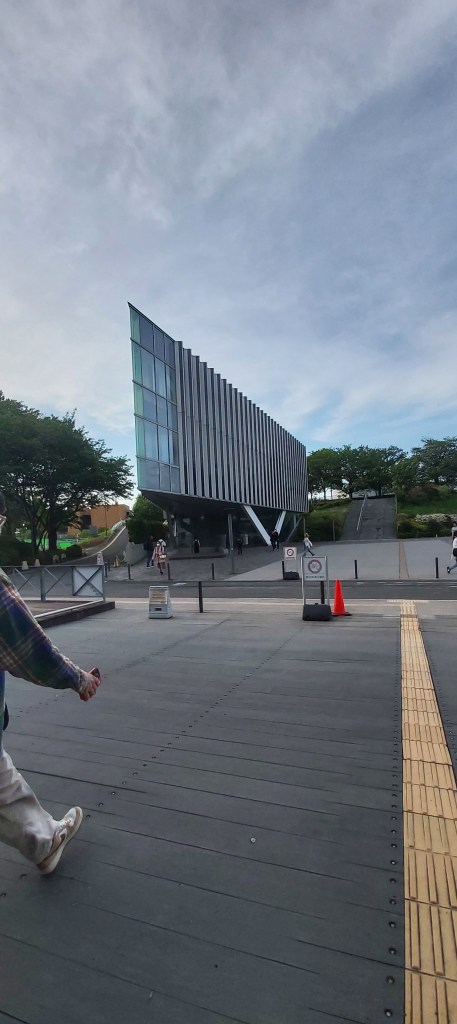
Today I visited the Institute of Science Tokyo, formerly known as Tokyo Tech. This is a new avatar of a very interesting institution funded by the government of Japan. By merging the Tokyo Institute of Technology with the Tokyo Medical and Dental University, a very interesting concept has emerged: the Institute of Science Tokyo. These two institutions have been important pillars of the research and educational landscape of Tokyo, and I had the privilege of visiting this new place, which is a result of a new merger.
Thanks to the invitation and fantastic hospitality of Prof. Daiki Nishiguchi, a faculty member in the Physics Department of the Institute of Science Tokyo, I had a memorable experience. I met Daiki a couple of years ago at the University of Tokyo, where he previously held a faculty position. Recently, he has moved to the Institute of Science Tokyo to establish his independent research group as an Associate Professor.
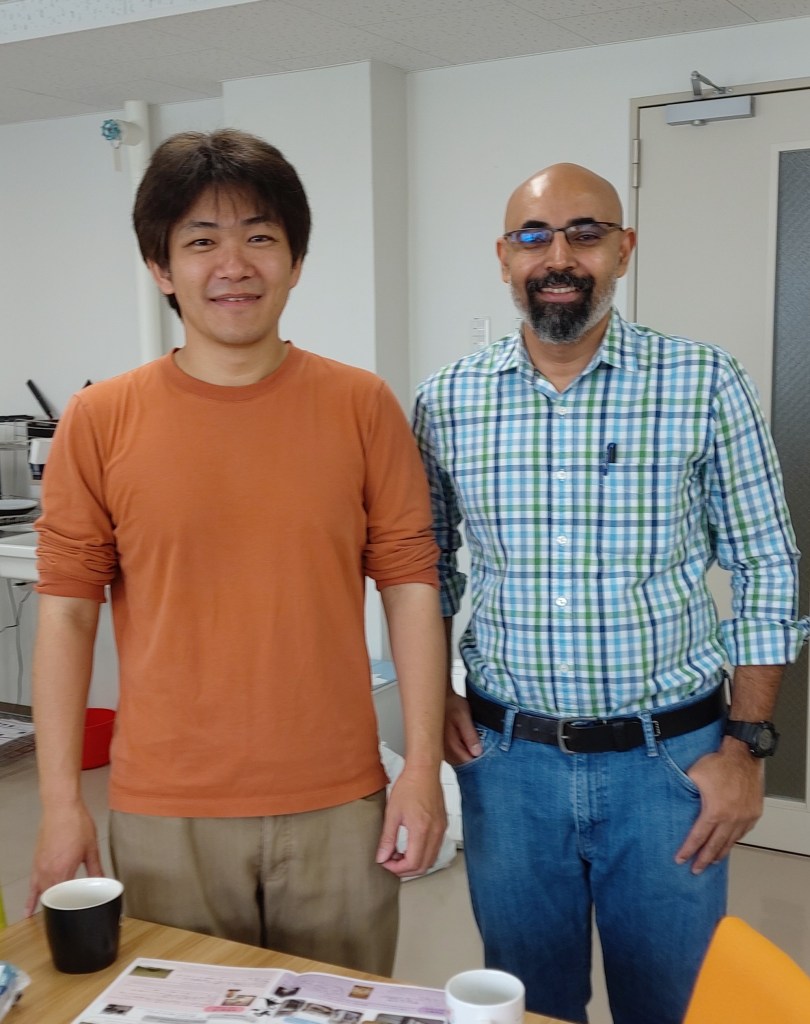
I gave a physics seminar on some of our work on structured light and confinement of soft matter, especially thermally active colloidal matter in optothermal potentials. Since Daiki and his group (see image below) have expertise in topological soft matter, my seminar emphasized structured topological beams, including ring optical beams and optical vortices. I gave an overview of our experimental results and highlighted the prospect of utilizing the topology of light to interact with topological soft matter.
There is much to explore at this interface, and again, it brings me back to the point that new ideas often emerge from the merging of evolving old ideas, such as topological light and topological soft matter.
This is my third visit to Japan, and I always find their calm, focused, and deeply committed research environment inspiring. There is much to learn from their approach to science and technology, and my visit to the Institute of Science Tokyo reinforced this thought.
I thank Daiki and his research group for the wonderful time I had at their laboratory and offer my best wishes to him in his new explorations.
Whereas Sunday was bright, sunny, and clear for outdoor activities, Monday started cloudy with a forecast of rain. I started from my living place to Kyoto University around 10 in the morning. I took the city bus, which shuttles people from the city centre to the university. Within half an hour, I was in a serene, green, and beautiful campus, typical of a Japanese university. Kyoto University has a rich blend of modern and ancient architecture, and I was not surprised to see a large maroon-coloured ark at the entrance of the university.
With Prof. Tetsuro, who hosted me at the Graduate School of Informatics at Kyoto University.
I met Tesuji Tetsuro upon arrival (our previous in-person meeting was in the 2023 Optics & Photonics Congress on optical manipulation at Yokohama). He had just arrived from his run (he is a regular marathon runner), and we had a brief chat. He had arranged an office for me to occupy for the day. We had a short discussion and thereafter went for lunch. Prof. Kazuo Aoki (Tetsuro’s erstwhile advisor at Kyoto University) accompanied us, and I was delighted to meet him. We had a delicious lunch at a small Italian restaurant.
Around 3 pm, we met at the seminar hall where I gave my talk titled Hot Brownian Dynamics Driven by Structured Light. One of the key points I emphasized in my talk was the relevance of structured light in driving Brownian dynamics of colloids. I spoke about various parts of the stochastic differential equation (see equation 1 below) that represent the dynamics of a colloidal system interacting with an external force.
A key element of my discussion was the generalized driving force on the right-hand side of the equation, where the conventional restoring force in an optical trap can be generalized to an external driving force due to structured light. This versatile force is a result of a large set of linear and angular momentum states of structured light. These states can drive soft matter, further resulting in unconventional assembly and dynamics. Furthermore, the generalized driving force can include not only the optical force but also the thermal and hydrodynamic effects initiated by optical illumination. The combination of these forces culminates in a resultant force, offering an unconventional driving mechanism to drive the structure, assembly, and dynamics of colloids and other kinds of soft matter systems, including droplets and fluids. I showed some of our experimental results related to the above-mentioned concepts with emphasis on rotational and orbital degrees of freedom. I also presented our recent results on synchronization in an optothermal trap.
campus mapnear the entrance of Kyoto University at a Japanese izakayaWith Tetsuro and some PhD students
We had a long discussion on how to measure fluid dynamic properties around such colloids, especially when there is an external perturbation force, such as a laser beam, which can itself influence the colloidal dynamics. Tetsuro also mentioned his protocols and certain simulation strategies utilized to study thermo-osmotic flows in such situations. I learned about interesting methods they have been developing to numerically simulate the interactions using differential temperatures. The strategy is interesting and deserves further attention by the community. He also showed his experimental setup and gave a tour of his laboratory facilities.
Overall, it was a long, thoughtful day with wonderful discussions on topics of common scientific interest. We ended with a delicious dinner at a Japanese izakaya, and I thank Tetsuro for his invitation and hospitality. Kyoto University has a wonderful atmosphere for research, and I hope to visit again.
Muralidharan, B., A. W. Ghosh, and S. Datta. “Probing Electronic Excitations in Molecular Conduction.” Physical Review B 73, no. 15 (April 10, 2006): 155410. https://doi.org/10.1103/PhysRevB.73.155410.




 VISMAYA - History & Philosophy of Physics