Satish Dhawan – truly a man for all seasons

Image credit: Current Science 119, no. 9 (2020): 1427–32

Today is the birth anniversary of Satish Dhawan (25 September 1920 – 3 January 2002). He was probably India’s best scientist-administrator who headed institutions such as the Indian Institute of Science and the Indian Space Research Organization. With a PhD from Caltech, he came back to India and set up a marvellous research enterprise on fluid mechanics, including aerospace science and engineering. He mentored some of the outstanding scientists of India and led scientific institutions with vision, openness and informality, which is still a great benchmark to emulate1.

Below are a couple of historical documents related to Dhawan:

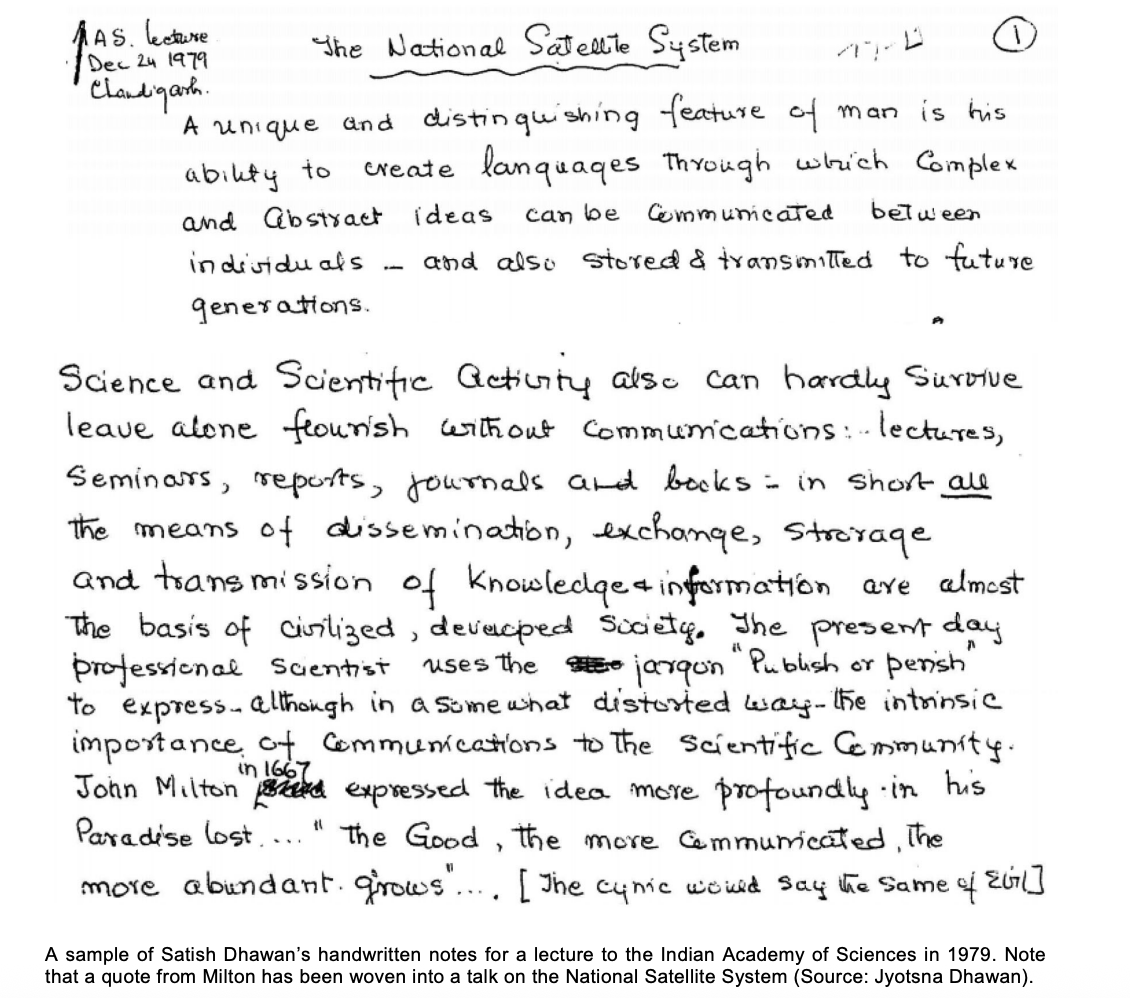
The first one is a lecture note from 1979, on making a case for a national satellite system and how it influences science and scientific activity (a copy of this note has been reproduced in a wonderful tribute to Satish Dhawan written by P. Balaram on his birth centenary2).

The next one is a beautiful perspective article written by Dhawan on ‘Bird Flight’ from an aerodynamics perspective3. It is a detailed overview of the dynamics of bird flight and shows Dhawan’s interest and ability to bridge two facets of science. It is a prototypical example of interdisciplinary research.

Finally, let me end the blog with a quote from P. Balaram on Satish Dhawan4:

“Dhawan mentored some remarkable students and built the discipline of aeronautical engineering at the Institute. He influenced aeronautical research and industry in India in a major way. He shepherded the Indian space programme following Vikram Sarabhai’s untimely death. He served the Indian scientific community in many ways. His stewardship transformed IISc. How then do we describe such a man? Dhawan studied English literature obtaining a Master’s degree in his youth. It may therefore be appropriate for me to borrow a 16th century description of Sir Thomas More:


‘[Sir Thomas] More is a man of an angel’s wit and
singular learning. I know not his fellow. For where is
the man of that gentleness, lowliness and affability?
And, as time requireth, a man of marvelous mirth and
pastimes, and sometime of as sad gravity. A man for
all seasons.’

Satish Dhawan was truly a man for all seasons.”

Happy Birthday to Prof. Satish Dhawan!

References:

  1. Current Science, in 2020, had a section of a volume dedicated to the birth centenary of Satish Dhawan, and has a foreword by his daughter and articles by many of his students and co-workers. https://www.jstor.org/stable/e27139029 ↩︎
  2. P. Balaram, “Satish Dhawan: The Transformation of the Indian Institute of Science, Bangalore,” Current Science 119, no. 9 (2020): 1427–32. This reference has many interesting references, including a handwritten obituary of CV Raman written by Dhawan https://www.jstor.org/stable/27139041. ↩︎
  3. S. Dhawan, “Bird Flight,” Sadhana 16, no. 4 (1991): 275–352, https://doi.org/10.1007/BF02745345. ↩︎
  4. P. Balaram, Current Science 119, no. 9 (2020), page 1432. https://www.jstor.org/stable/27139041. ↩︎

Leipzig – where Heisenberg worked…

From 16th to 18th Sept, 2025, I attended and gave a talk at Optofluidix 2025, thanks to the invitation of Prof. Frank Cichos and his team, Department of Physics, University of Leipzig.

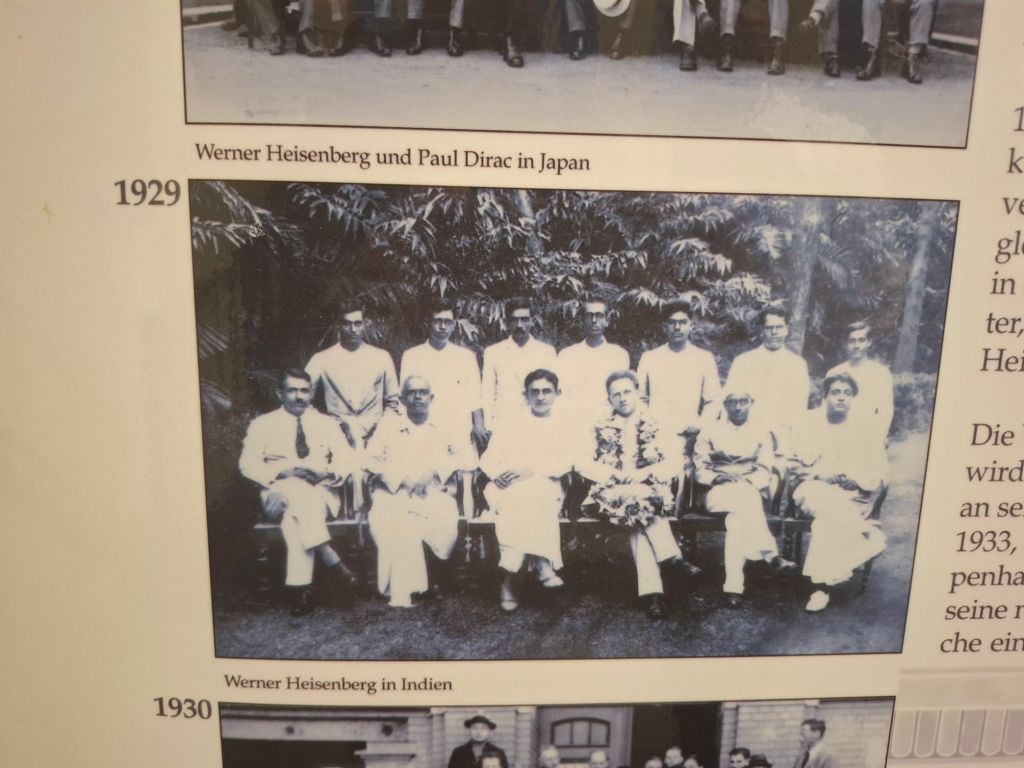
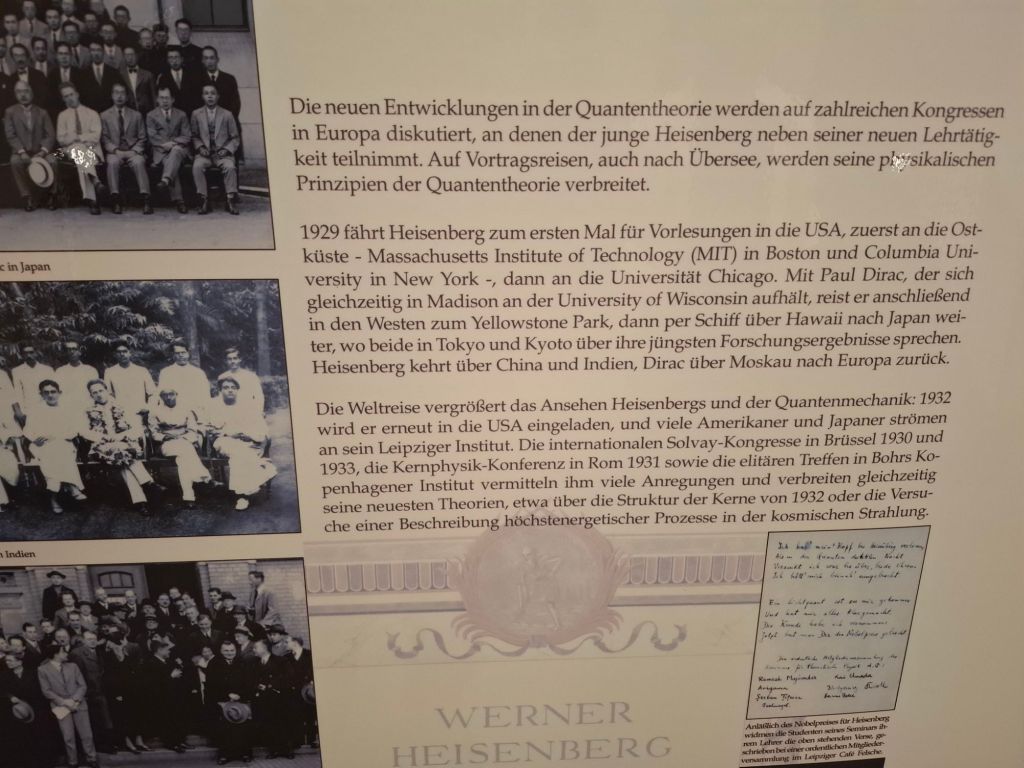
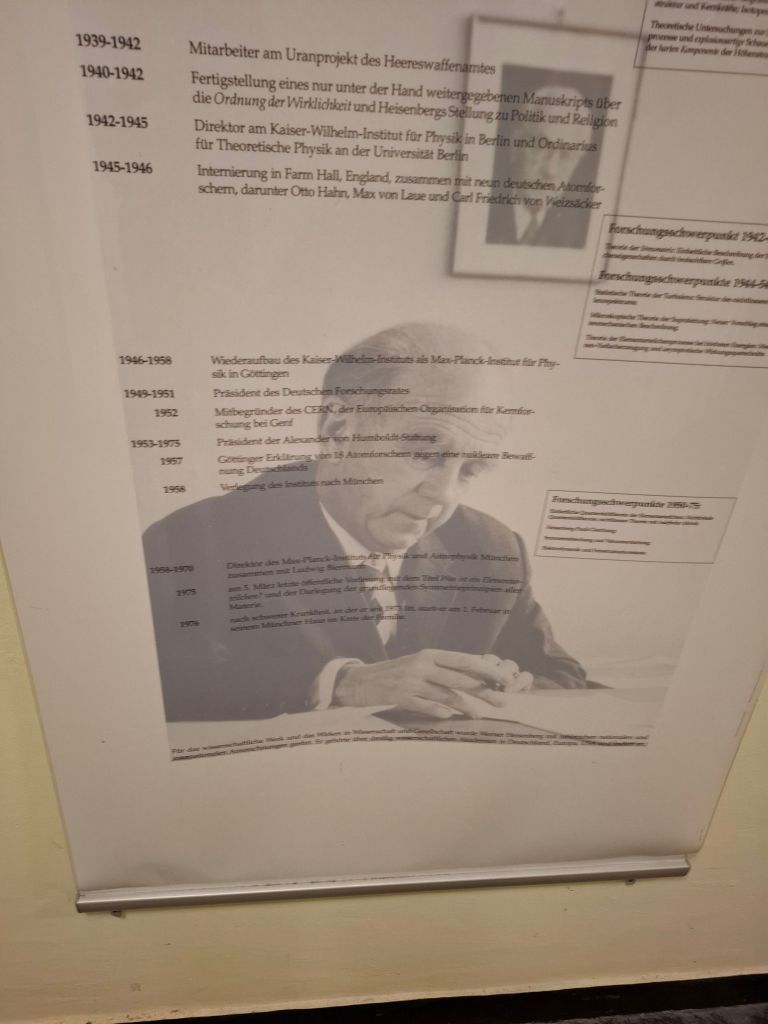
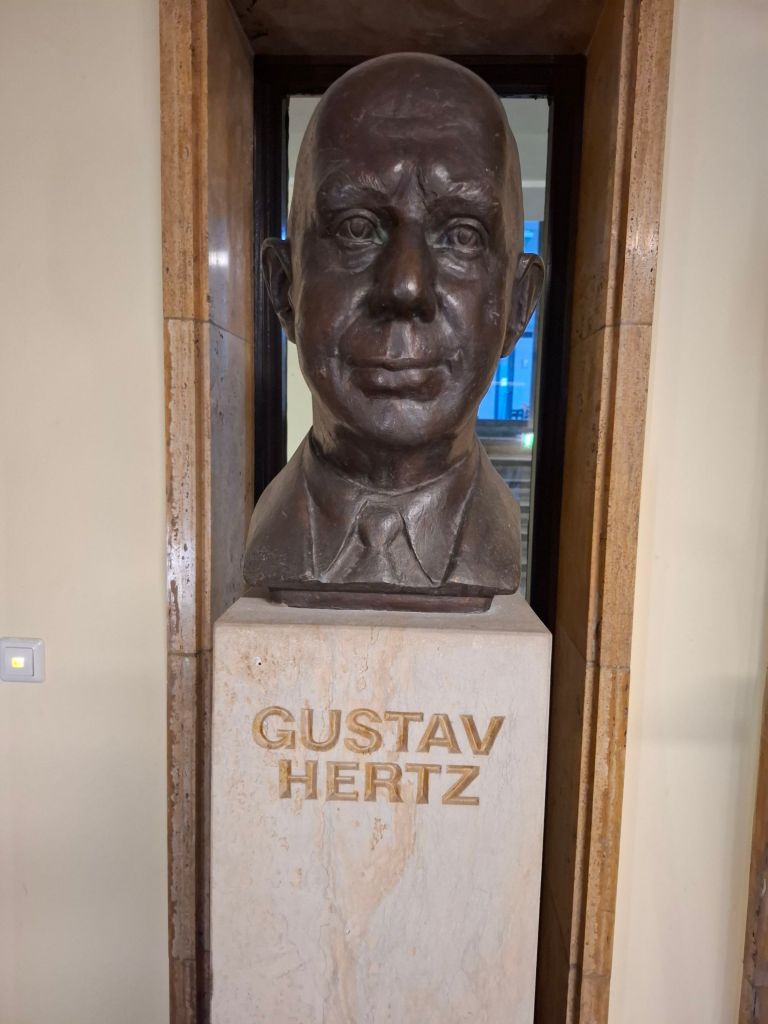
This department is steeped in history, and this post is to give you a pictorial glimpse of some people who worked there.

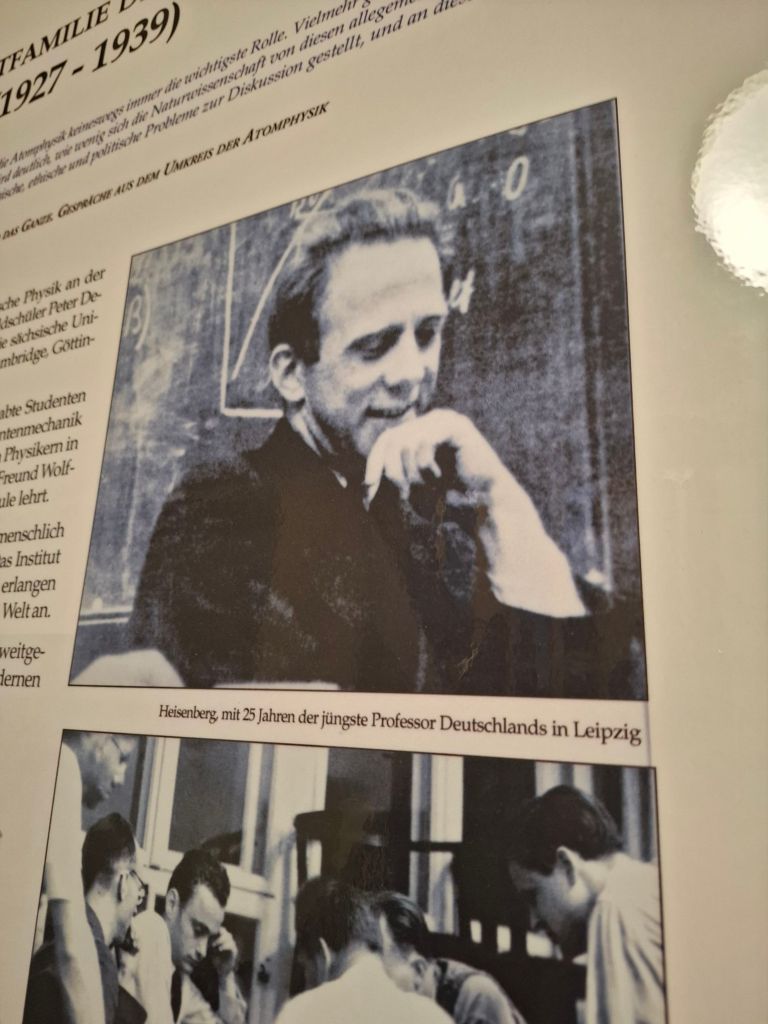
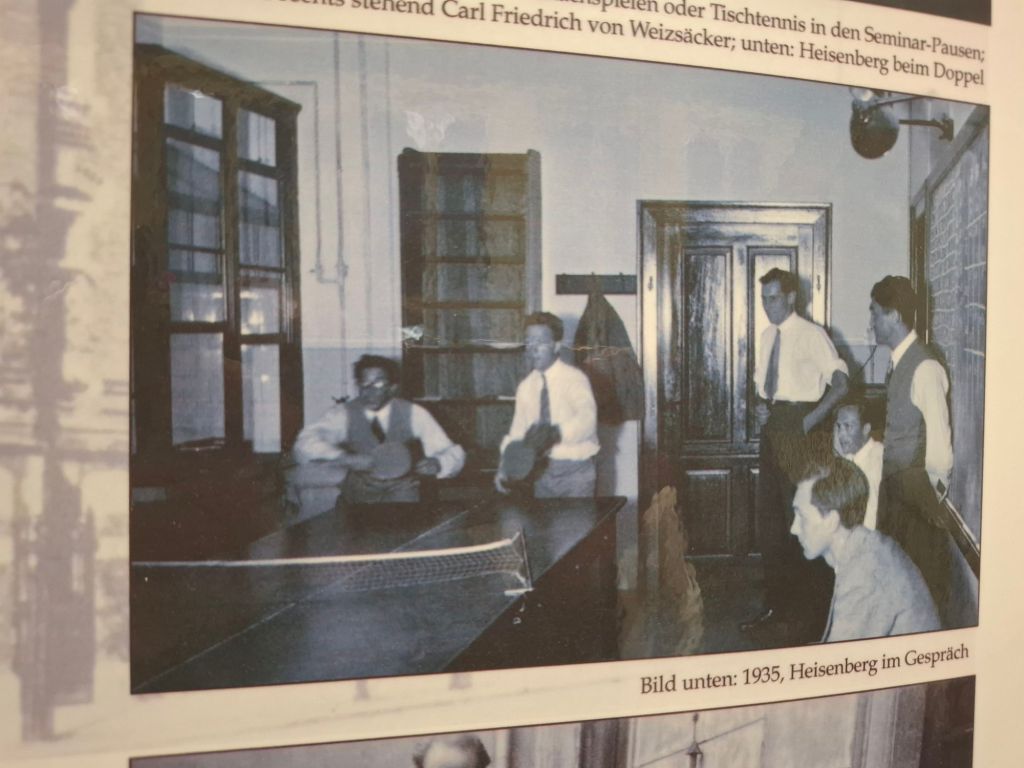
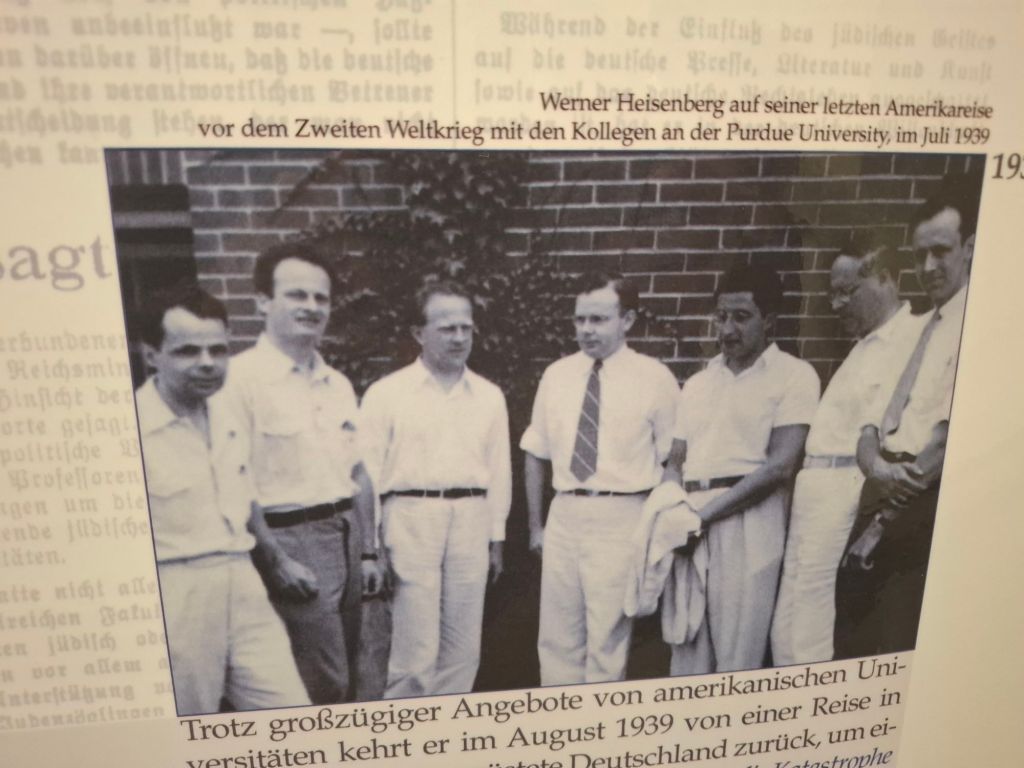
Werner Heisenberg, aged 25, became a Professor at the University of Leipzig, Germany. It was an illustrious department then, had professors such as Peter Debye, Gustav Hertz (of the Franck-Hertz experiment fame), Friedrich Hund and many others. Felix Bloch was a student of Heisenberg in Leipzig.

As the AIP archives describe, “Only 25 years old in October 1927, Heisenberg accepted appointment as professor of theoretical physics at the University of Leipzig, Germany. Friedrich Hund soon joined his former Göttingen colleague as Leipzig’s second professor of theoretical physics. Heisenberg headed the Institute for Theoretical Physics, which was a sub-section of the university’s Physics Institute, headed until 1936 by the experimentalist Peter Debye. Each of the three professors had his own students, assistants, postdocs, and laboratory technicians.”

Below are a few snapshots that I took while visiting the department. Special thanks to Diptabrata Paul (my former PhD student and currently a post-doc in Cichos’ group) for showing me around the department.

Sir MV on Education

In India, “National Engineers’ Day is celebrated every year on September 15 to honor the birth anniversary of Sir Mokshagundam Visvesvaraya, one of India’s greatest engineers”. Sir MV, as he was known, is one of the 20th-century Indians I admire. He was a forward-looking statesman who contributed immensely to building India (literally and figuratively). MV was a well-read and well-travelled person for his era, and wrote a few books and memos that are still pertinent to the current developments in India and the world.

Reconstructing India (1920)

One of his books, Reconstructing India (1920), reveals his thoughts on how and why India needs to reconstruct itself based on knowledge in science, technology and humanities. The title page is shown below, and the book is free to read online, thanks to the Internet Archive.

The book, as mentioned by MV in the preface, was written just after the First World War, and contemplates problems faced by India in light of geopolitical developments. In the 17 chapters of the book, divided into 4 parts, MV discusses specific issues faced by India, and proposes that political and administrative reforms can help India become a progressive society.

The largest part of the book is on economic reconstruction, in which he proposes contemporary methods (for the 1920s) to improve various sectors of manufacturing, including agricultural technology and communication media.

The third part of the book is on social reforms, and in there, he has a dedicated chapter on Education, which caught my attention, and I found it relevant even for today’s India.

Education, Humanities, and STEM

It is important that students of science and technology have a good exposure to some aspects of the humanities, including economics, history and philosophy. The pursuit and ability to choose good problems in science and technology critically depend on the social and economic structure in which they are practiced in universities and research institutions. MV anticipated this and highlights it as:

“Secondary and university education, though producing many able recruits for subordinate positions in the Civil Service, does not provide the men needed to carry on the work of agriculture, engineering, commerce and technology. The provision for training in economics and history is inadequate, and the study of those subjects is even discouraged. An attempt is actually made to teach economics in such a way as to render India’s emergence from a state of dependency difficult.”

Even in 2025, I would suggest that STEM students pay attention to economics, as it anchors them to understand the need and functions of a society, and therefore, their work can be calibrated accordingly. This is not to discourage open-ended research, but to understand how natural sciences are connected to the societal thoughts and needs. It gives us a broader understanding of the context, which is so important while understanding the evolution of ideas.

Comparative Education Systems

There is always a lot to learn from various societies and cultures. In order to do so, one needs comparative analysis. This helps one to choose some good elements from a society that can be emulated elsewhere. MV compares and comments on the 1900s British educational system in contrast to the German and Japanese counterparts. Note that India in the 1920s was still a British colony, and in a way, MV is critical of the system in which he himself was educated and trained. As he notes:

“Britain herself has had to pay a heavy price for her hand-to-mouth policy in regard to education. The educational chaos still existing there compares unfavourably with the great yet orderly progress made by Germany and Japan, both of which countries, after weighing and testing the educational systems of the world, absorbed the best of all.”

These were words written long before the Second World War, and give us a glimpse of how German and Japanese systems were functioning in the 1920s and had a lot to offer to the world. Of course, history took its own path, and German and Japanese society had other ideas.

Incidentally, I am writing this piece sitting in Leipzig (eastern Germany), and I am amazed by its architectural marvels that date back centuries. Indeed, German society had (and has) a lot to offer to the world. As MV indicates above, we need to absorb the best that is on offer. In doing so, we also need to reject that which is not good for any society.

Liberal Education and Financial Support

He further adds how liberal education adds value to a society, and calls not only the government but also the people to recognize the importance of financial support for education.

“Both the Government and the people must recognize that only by pursuing a liberal educational policy, and making generous financial provision for schools and colleges can they lift India out of her present low condition and ensure rapid progress.”

These words still hold good, and as a society, India has to re-emphasize modern education that helps us become not only better doctors and engineers, but also better human characters that can add value to the “modern” world.

Call to Action

In the final part of the book, MV makes a passionate appeal to the people of India, calling them to take action and move towards becoming a progressive nation:

“Do the people of India propose to profit by the lessons which world experience has to teach them, or will they be content to allow matters to drift and themselves grow weaker and poorer year by year?
This is the problem of the hour. They have to choose whether they will be educated or remain ignorant; whether they will come into closer touch with the outer world and become responsive to its influences, or remain secluded and indifferent; whether they will be organized or disunited, bold or timid, enterprising or passive ; an industrial or an agricultural nation ; rich or poor ; strong and respected, or weak and dominated by forward nations. The future is in their own hands.”

Indeed, the future is in our hands, and these words written more than 100 years ago still resonate loudly. We need more engineers like Sir MV. The reason he was so effective was that he combined thinking and doing. Importantly, the lesson we can learn from MV’s life and by reading this book, is that an open mind can grasp good ideas at any time and anywhere. Implementing those ideas is an equally important challenge, and MV was up to this in his own way. Are we, as Indians, open to this prospect and engineer our future?
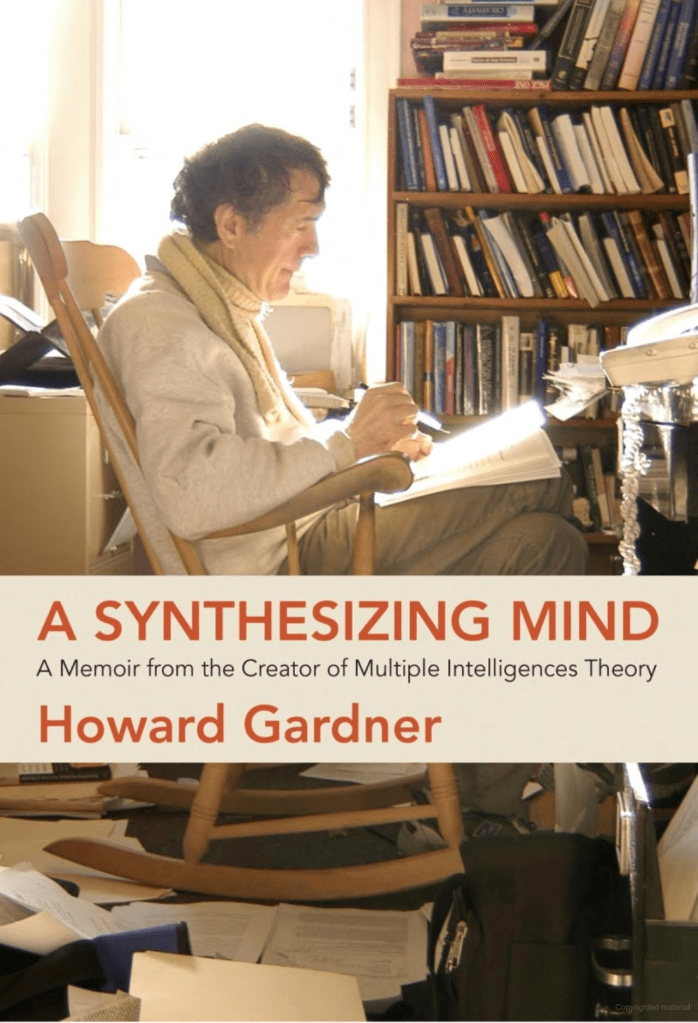
Gardner’s Synthesis

Once in a while, during my research, I come across writing by scholars from other disciplines that gives me a perspective that not only helps me to grasp the complexity of learning across disciplines, but also resonates with some thoughts on education.

Howard Gardner is one such academic who works on developmental psychology and has researched extensively on cognition and education. He has written ~30 books and ~1000 articles, and blogs regularly, even at the age of 82 or so. His recent book is titled A Synthesizing Mind.

Howard Gardner is a renowned Harvard academic and, as his book describes him as follows:

“Throughout his career, Gardner has focused on human minds in general, or on the minds of particular creators and leaders. Reflecting now on his own mind, he concludes that his is a ‘synthesizing mind’—with the ability to survey experiences and data across a wide range of disciplines and perspectives. The thinkers he most admires—including historian Richard Hofstadter, biologist Charles Darwin, and literary critic Edmund Wilson—are exemplary synthesizers. Gardner contends that the synthesizing mind is particularly valuable at this time and proposes ways to cultivate a possibly unique human capacity.”

While exploring the book and the related material, I came across an interview with Howard Gardner. In there, he is conversing about the theme of the book and discusses the synthesis of thought across disciplines. One of the pertinent aspects of learning is to know how innovation can be fostered by cross-disciplinary exploration without diluting disciplinary rigour. As Gardner says:

“I am not opposed to disciplinary learning—indeed I am an enthusiastic advocate. Any person would be a fool to try to create physics or psychology or political science from the start. But if we want to have scholars or professionals who are innovative, creative—and innovation is not something that we can afford to marginalize—then they cannot and should not be slaves of any single discipline or methodology.”

As a physicist, I can relate to this thinking within my discipline, and how innovative ideas, over the ages, have emerged by bringing ideas from mathematics, engineering and biology into physics. Particularly, the combination of biology, physics and mathematics is one of the most exciting frontiers of human exploration today, and Gardner’s words apply well in this scenario.

Going beyond science, I am always intrigued and amazed by artists (especially musicians) who can create art that simultaneously draws the attention of specialists and generalists. This is not a trivial achievement, and as a scientist, I am always trying to understand how artists resonate so well with the public. Gardner, in the abovementioned interview, frames this problem by looking at the goals of science and arts, and draws a contrast that is worth noting:

“Most scholars and observers like to emphasize the similarities between the arts and the sciences, and that is fine. But the goals of the two enterprises are different. Science seeks an accurate and well supported description of the world. The arts seek to capture and convey various aspects of experience; and they have no obligation other than to capture the interest and attention of those who participate in them.

Of course, there are some individuals who excel in both science and art (Leonardo is everyone’s favorite example). But most artists—great or not—would not know their way around a scientific laboratory. And most scientists—even if they like to play the violin or to draw caricatures or to dance the tango—would not make works of art or performances that would interest others.”

I partially agree with this assessment, as I know a few scientists who are deeply involved in various forms of art (including music) and do it very well, even at the professional level. In a way, Gardner is re-emphasizing the “two cultures” debate of C.P. Snow. My own thoughts on this viewpoint are ambivalent, as I see science, arts and sports as important pursuits that cater to different facets of the human mind. Of course, when it comes to expertise, the division may matter. There is a lot more to learn about the interface of art and science, at least for me.

Anyway, Gardner is a fabulous writer, and his blogs and books are worth reading (and studying) if one is seriously interested in understanding how to synthesize thought across disciplines.

Since we are discussing synthesis of thought, which is a kind of harmony, and coming together, let me end the blog with a line from Mankuthimmana Kagga by the Kannada poet-philosopher D.V. Gundappa:

ಎಲ್ಲರೊಳಗೊಂದಾಗು ಮಂಕುತಿಮ್ಮ” (Eladaralongodhagu manku thimma)

which loosely translates to: oh fool…be one among all (blend into world, living in harmony).

Harmony of disciplines and minds – how badly the world needs it today?

Some Optical and IR observatories in India

Below are ‘locations of some of the optical and infrared observatories marked on the Indian map’.

from: Narendranath, Shyama, Shashikiran Ganesh, Dipen Sahu, et al. 2025. “Solar System Research Prospects for the Decade and Beyond.” Journal of Astrophysics and Astronomy 46 (2): 34. https://doi.org/10.1007/s12036-025-10060-0.

Tony Tyson and a giant CCD camera

Recently, I came across an interview with Tony Tyson, one of the main scientists related to the Rubin telescope. He says:

“We can do better than this. We can build a larger telescope by making larger mosaics of larger CCDs.”
— Tony Tyson

On a day when India lost a test match, the first sentence rings loud…anyway, the topic of this post is a fascinating development happening in observational cosmology.

Tony’s suggestion above is a great, ambitious way to explore the Universe….by building effective observational tools that can image and comprehend the observable…and perhaps unobservable too…

For students: Observational cosmology is a great place to explore cutting-edge science: physics (experiments + theory), maths, engineering & computation…all come together..

Check out the interview of Tony Tyson…one of the brains behind the cameras of Rubin Observatory…plenty to learn…

Just like test cricket, observational cosmology needs patience…perhaps a good lesson for life too…

More is Different – A Brief Overview

P.W. Anderson (image from wikipedia)

In 1972, P. W. Anderson wrote what is considered one of the most remarkable essays in the history of physics, and the title of that essay is “More is Different.” In the essay, Anderson was trying to make a case for emergence, where new, interesting physical properties can emerge by the combination of matter, which you would not anticipate if you had just kept it as an individual entity.

One of the aspects related to this essay is also the thought that reductionism has its limitations and that groups act very differently compared to individuals. The higher-level rules that can emerge from the combination of small entities are actually very different from the rules that are applicable to individual entities.

For example, if you consider electrons in a solid, you have the emergence of properties of electrons such as magnetism or superconductivity, or, for that matter, putting molecules inside a compartment and, lo and behold, life arises out of that. This has turned out to be one of the most influential ways of thinking in physics because it opened up a new avenue for understanding complex systems not as just combinations of simple systems but as the emergence of properties.

Very interestingly, this essay does not actually mention the word “emergence” at all, but the concept is so fascinating that it has turned out to be one of the most influential essays ever written in physics. The whole point about this particular essay is that the whole is more than the sum of its parts, and P. W. Anderson has to be remembered for this magnificent essay.

Quartet of Modern World

Recently, I read an essay by James Read, a philosopher of physics at Oxford, in Aeon magazine.

The title of the essay is Why Philosophy of Physics?

It is a good read, and addresses a pertinent question of highlighting the role of philosophy of physics within the larger umbrella of physics as a discipline and human endeavor. Although the viewpoint and examples are mainly from theoretical physics, it makes a good case for the philosophy of physics.

Below are my thoughts:

I would add that both theoretical and experimental approaches to physics do raise philosophical questions that may be complementary, and in certain cases, necessary, to get a complete picture of the underlying physics.

I would go further and add that the foundations and approaches to engineering and its philosophy cannot be fully appreciated without grasping the underlying physics. This thought can be extrapolated to include mathematics, chemistry and biology too.

Engineering beautifully extracts knowledge from all the branches of science and puts them into use in the noisy world. By interacting with the external noise, it showcases the resilience and limitations of the foundational principles. Thus, it further motivates philosophical questions that will have to be addressed, going back to the first principles of science.

In that sense, science, technology, and philosophy form a trinity of ideas, each feeding the other, and sometimes creating a sum that is greater than its parts. To capture this evolution, we need the tools of history and hence a case for the history of science.

Together with history and philosophy of science, science and technology make an essential quartet. Our modern world stands on this quartet.

YouTube as an Archival Source

There are several models for using YouTube. One of them is to use it as a substitute for television and media outlets. This is where the number of views, subscriptions, and reach becomes important.

Another model is to harness YouTube as an archival source that is open to the public. This is one of the crucial elements of a platform that is easily accessible and, importantly, searchable. Such a platform becomes a repository for many informal academic discussions and interactions.

The archive model is an important category, especially if there is no need to generate revenue from the content deposited on the platform. A crucial aspect is that it can be accessed across the world and, in that sense, represents truly open-access content without paywalls, publication charges or subscriptions. Therefore, I am glad to see that many Indian academic programs, including NPTEL, ICTS, Science Activity Center/Media Center at IISER-Pune and many others are utilizing platforms such as YouTube to post their lectures and talks. Also, many individual academics in India are gradually using YouTube to discuss their work, in the context of research, teaching and entrepreneurship.

This development is slowly turning out to be an invaluable resource that can reach a large audience. Although YouTube is one of the most well-known platforms, many other platforms in the context of social media can also be tapped to spread knowledge. Given their reach and simplicity of use, both for creators and users, these tools become important in a vast country such as India.

As audio-visual public platforms join hands with artificial intelligence tools, they can positively (hopefully) affect how people, especially students, consume educational content. Going forward, I anticipate language translation through direct dubbing to be a game-changer. It could attract many new viewers who have been hesitant to watch technical content simply because it was in a foreign language. Of course, on these platforms, the noise is equally high compared to the signal, and therefore, curating good, targeted resources will be vital. Also, these platforms cannot be treated as a substitute for formal education, but as an extension or complementary source for research and education.

Interesting times ahead.