Zijie Yan…gone too soon

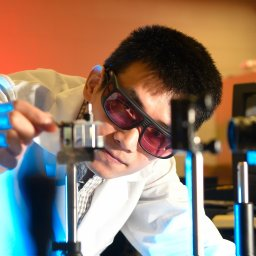
picture from Zijie Yan’s google scholar page

Scientific research is a creative pursuit. As researchers, we are always looking out for new ideas and inculcate them in our work. One way to get new ideas is to explore existing ideas and bring them together with certain degree of uniqueness and utility. As part of this exploration, scientists communicate with each other and gain some new knowledge. Therefore, as researchers, we encourage and value cooperation as part of our work culture.

Over the past couple of decades, I have been greatly benefited, motivated, and inspired by many of my fellow-colleagues across the globe. Dr. Zijie Yan was one of them. I never met Zijie in person, but I and my research group have read many of his interesting papers related to optical trapping and binding of plasmonic nanoparticles. I have been following his work ever since he was a post doc at University of Chicago, and found his work creative, interesting, and illuminating, to say the least.

In 2020, during the pandemic, we exchanged a few emails related to some technical details of trapping plasmonic colloids, and he was very generous and forthcoming in sharing his knowledge. He gave me some important leads into the wavelength-dependence of trapping capabilities, and suggested a few references. These leads were very beneficial for us to build upon some concepts and techniques that we were developing in my lab, which further led to some publications. After we published some of our results, I sent him our pre-prints, and thanked him for his input.

When I heard the sad news of Yan’s untimely death at University of North Carolina (UNC) at Chapel Hill, I was shocked. As you may, know this was caused by gun shooting (allegedly by his own graduate student). What a tragic news.

USA has great universities. In late 2000s, I spent two of my post-doctoral years in the US (Purdue University), and it was a pleasure living and working there. As an intellectual ecosystem, USA still leads the way, and it has been home to so many scientists and intellectuals from across the world. As with any society, USA has some flaws, and among them gun violence is turning out to be a major hurdle to its own progress and values. I sincerely hope that sanity will prevail among a large section of American society, and somehow this meaningless and violent aspect of their society is eliminated.

Sometimes, we take peace of mind for granted, but it is probably the most important pre-requisite to work. It is also a timely reminder for all of us in this world to emphasize the importance of humanness, compassion and rationality. Violence is never an answer.

 Zijie was emerging as one of the stars in our research community, and what a shame that we have lost him so early. Let me end with the first few sentences of Zijie’s reply to my email in 2020:

“Dear Pavan,

Thank you for your interest on our research!  Glad to hear someone from the community……”

My thoughts are with his family and well-wishers.

Goodbye Zijie. We, as a community, will remember you.

New paper : Optothermoelectric trapping of single nano-diamonds

Fluorescent video imaging of trapping a single fluorescent nano-diamond on a gold nanoparticle

We have a new paper appearing in Optics Letters on optical manipulation of fluorescent nano-diamonds. This experimental work (with some simulations) was performed by our group member Ashutosh Shukla in collaboration with the group of Prof. Kasturi Saha (IIT-Bombay). Our alumni, Sunny Tiwari, gave vital inputs to perform the experiments.

Fluorescent nano-diamonds have emerged as important (quantum) imaging agents in biological applications. It remains a challenge to manipulate them in complex fluidic environments.

Herein, we have come up with an optical trapping method based on opto-thermoelectric effect (see Fluorescence imaging video above). By using opto-thermal potentials created by a single gold nanoparticle (~200nm) on a glass surface, we have been able to trap individual nano-diamonds, and capture their spectral signatures. The Brownian motion in the trap can be tracked, and this leads to the measurement of effective trap stiffness. Furthermore, we extrapolate this thermo-plasmonic trapping method to trap and track individual nano-diamonds on silver nanowires.

As mentioned in the abstract of the manuscript, we envisage that our drop-casting platform can be extrapolated to perform targeted, low-power trapping, manipulation, and multimodal imaging of FNDs inside biological systems such as cells.

arxiv link to the paper : https://arxiv.org/abs/2210.02874

below is the snapshot of the abstract of the paper from journal’s early posting :

OMC 2023

We had a great discussion after the talk… spoke on how temperature gradients can be harnessed for optical manipulation in colloidal fluids… which further leads to some interesting Brownian dynamics

The 10th Optical Manipulation and Structured Materials Conference (OMC2023) was superb….learnt a lot.
This was part of Optics & Photonics International Congress 2023

Thanks to Prof. Takashige Omatsu for the invitation and amazing Japanese hospitality…

Nanowire kink as an antenna for 2D material

https://link.springer.com/article/10.1140/epjs/s11734-022-00511-y

A nanowire kink on a mirror can influence light scattering wavevectors and direct photoluminescence from a monolayer of a 2D material at sharp angles.

Shailendra, Sunny Tiwari , Asutosh from my group in collaboration with my colleague Atikur and his student Gokul show this unconventional nanowire antenna concept, experimentally.

The link to publication in European Physics Journal: Special Topics is above. This paper is part of a special issue on Photonic Materials

Arxiv link : https://arxiv.org/abs/2203.00391

58. Optothermal Pulling of colloids using Nanowire Plasmons – my talk at Compflu 2021

Linked is my recorded-talk presented at Compflu 2021 today (13th Dec) in the session : Active and Living Matter.

I discuss our recent work on optothermal pulling, trapping and assembly of micro-colloids under the influence of thermoplasmonic field of a single silver nanowire.

The talk was recorded on 2nd Dec 2021, so the reference on conclusion-slide is not updated.

57. Single nanoparticle driven thermoplasmonic tweezer : single-molecule SERS

We have a new paper published in Journal of Physical Chemistry Letters on “Single Molecule Surface Enhanced Raman Scattering in a Single Gold Nanoparticle-Driven Thermoplasmonic Tweezer”

Thanks to the fantastic effort by Sunny Tiwari, and excellent support by Utkarsh Khandelwal (former IISER-P undergrad) and Vandana Sharma from my group, we have been able to combine single molecule Raman scattering with a specialized nanoscale optical tweezer.

The uniqueness of this tweezer platform  is that the optical trapping process is driven by the thermo-plasmonic potential created by a SINGLE, 150nm GOLD NANOPARTICLE. Concomitantly, the same field can be used to perform single-molecule Raman spectroscopy. Kind of  “ek teer mae do shikar” strategy Smile

Using this system, not only we push the limits of optothermal trapping of a single nanoparticle (see video) at low laser powers, but also create a platform for deterministic transport of reversible colloidal assembly in a fluid.

We envisage that our nanometric plasmonic tweezer can be harnessed to trap and tweeze biological entities such as single virus and bacteria. Another possible application of our study is to create reconfigurable plasmonic metafluids in physiological and catalytic environments, and to be potentially adapted as an in vivo optothermal tweezer.

All the videos related to this study can be found on our lab’s Youtube channel : https://www.youtube.com/playlist?list=PLVIRTkGrtbrvs7BaNsaH6tjPpzLUizyMI

DoI of the published paper : https://doi.org/10.1021/acs.jpclett.1c03450

preprint version on arxiv : https://arxiv.org/abs/2109.04281

49. Optical Spin in Nanowire Plasmons

image

We have a new paper to appear in Applied Physics Letters

The work is about “Experimental observation of transverse spin of plasmon polaritons in a single-crystalline silver nanowire”

Circularly polarized laser beams carry spin angular momentum. Such “spinning” photons have a plethora of applications including optical spanners, optical information processing, chiro-optics, micro-gyroscopes, nonlinear dynamics of matter at micro and nanoscales, and many more.

An interesting question to ask is : can we generate spin states with surface electromagnetic waves such as surface plasmon polaritons ? Unlike freely propagating optical laser beams, surface electromagnetic waves can be harnessed for sub-wavelength optical interaction on a chip, and have risen to importance.

In this paper, we experimentally show how transverse spin can be generated by nanowire surface plasmons. Thanks to the outstanding effort of my group members Chetna Taneja and Diptabrata Paul, we were able to image and measure the spin density of such (quasi) one-dimensional  surface electromagnetic waves in a single-crystalline silver nanowire.

A prospect that we are interested in is to transfer this spin angular momentum to objects such as  individual nanoparticles and molecules in a trap, which can, hopefully, create some interesting (nonlinear) dynamic states.

preprint version on arxiv : https://arxiv.org/abs/2104.09303


41. New paper

A small thing to cheer during these gloomy times…

A new collaborative paper in Optics Express on modal and wavelength conversions in plasmonic nanowires

Work done by Adrian, Deepak K Sharma et al,
as part of Ifcpar Cefipra grant

We show that plasmonic nanowire-nanoparticle systems can perform nonlinear wavelength and modal conversions and potentially serve as building blocks for signal multiplexing and novel trafficking modalities. When a surface plasmon excited by a pulsed laser beam propagates in a nanowire, it generates a localized broadband nonlinear continuum at the nanowire surface as well as at active locations defined by sites where nanoparticles are absorbed (enhancement sites). The local response may couple to new sets of propagating modes enabling a complex routing of optical signals through modal and spectral conversions. Different aspects influencing the optical signal conversions are presented, including the parameters defining the local formation of the continuum and the subsequent modal routing in the nanowire.

Link to the paper: https://doi.org/10.1364/OE.421183