There is a nice report from the Columbia Quantum Initiative on the Nature paper.
It highlights the role of Aron (a key author in the paper, who passed away in 2022) and his legacy.
Undoubtedly, the graviton-like connection has created a buzz. As the above report mentions, it has also taken a lot of time and effort on the part of the authors to measure it.
Thanks to my colleague Surjeet Singh, I also learnt about the importance of heterostructures in this work and that authors do not oversell the connection to gravitons in the paper.
For me, as an outsider to the field(s), a few questions remain:
What lessons can we learn from graviton-like modes in solids that will help us understand the actual undetected graviton?
How is it different from the collective excitation of quasiparticles, such as exciton-polaritons in semiconductor heterostructures? Similar experimental methods are used to study them.
Is the prominence only due to spin-2 collective excitation?
Finally – applying Occam’s razor – can there be a simple explanation without evoking graviton-like modes?
It would be great to know the answers, hopefully, in the coming days.
The paper makes interesting claim on observation of ‘chiral graviton modes’ in certain ultra-cooled semiconductors (Gallium Arsenide – famously called GaAs). The cooled temperature is quite low (~50 mK), which is impressive, and the chirality of the mode is unveiled using polarization-resolved Raman scattering. The observation of this so-called ‘Graviton modes’ is essentially a quasiparticle excitation, and has created some buzz. In my opinion, graviton-like behavior is a bit of an exaggeration.
Anyway, this paper has set an interesting discussion among my colleagues (condensed matter and high energy physics) in our department. To add to their discussion, I wrote on 2 points (and an inference) from optics perspective, which I am sharing below :
The measurement scheme used to unveil the chirality of the quasi-particles is a well-known trick in polarization optics. In fact, I teach it to our undergrads. Notice the use of quarter-wave plates (indicated by the arrow in the figure below). This is also the measurement at the heart of unveiling optical anisotropy. Experimentally, what is impressive is the ultra-low energy excitation captured via Raman scattering. This is again thanks to the excellent cooling of the sample (50 mK).
Figure from the Nature paper.
2. The last author of this paper, Aron Pinczuk, was a well-known expert in light scattering in solids. He was an Argentinian-American professor at Columbia University, and passed away in 2022.
The first edition (1976) of a great series : Light Scattering in Solids
My initial inference on the paper : This is an old Argentinan wine of quasiparticles in a new GaAs bottle at ultra-low temperature….and NATURE is selling it as champagne de graviton made in China !
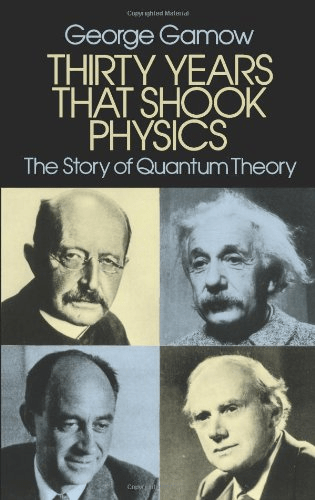
Gamow, George. 1966. Thirty Years That Shook Physics: The Story of Quantum Theory.
An excerpt from the book mentioned above:
“Planck was a typical German professor of his time, serious and probably pedantic, but not without a warm human feeling, which is evidenced in his correspondence with Arnold Sommerfeld who, following the work of Niels Bohr, was applying the Quantum Theory to the structure of the atom. Referring to the quantum as Planck’s notion, Sommerfeld in a letter to him wrote:
You cultivate the virgin soil, Where picking flowers was my only toil.
and to this answered Planck:
You picked flowers—well, so have I. Let them be, then, combined; Let us exchange our flowers fair, And in the brightest wreath them bind.”
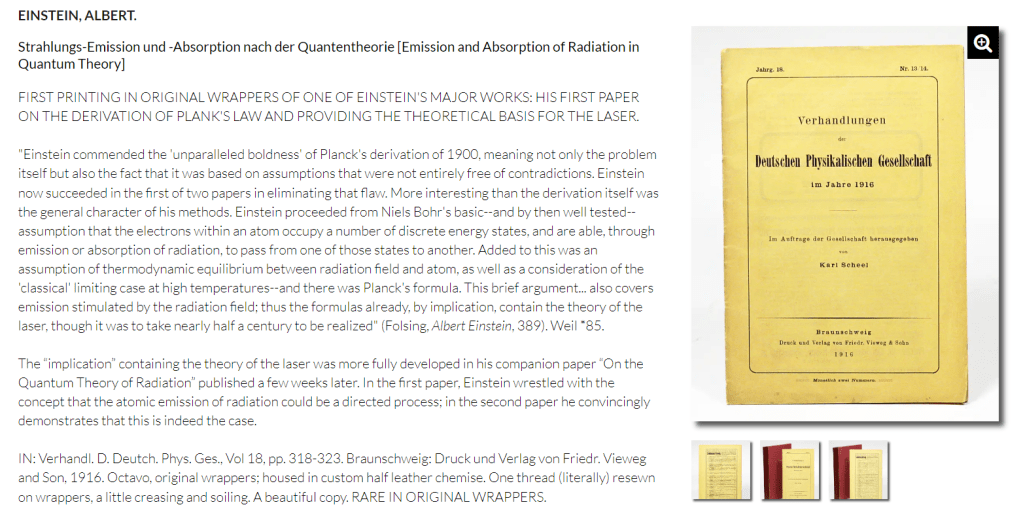
Today, I will be teaching the origins of LASERs in my optics class. Some of the content may interest science enthusiasts here. I present some snapshots from my notes. As expected, it starts with Einstein introducing his A and B coefficients and the stimulated emission.
He introduced them in a paper written in German: Einstein, A. (1916). “Strahlungs-Emission und -Absorption nach der Quantentheorie”. Verhandlungen der Deutschen Physikalischen Gesellschaft. 18: 318–323.
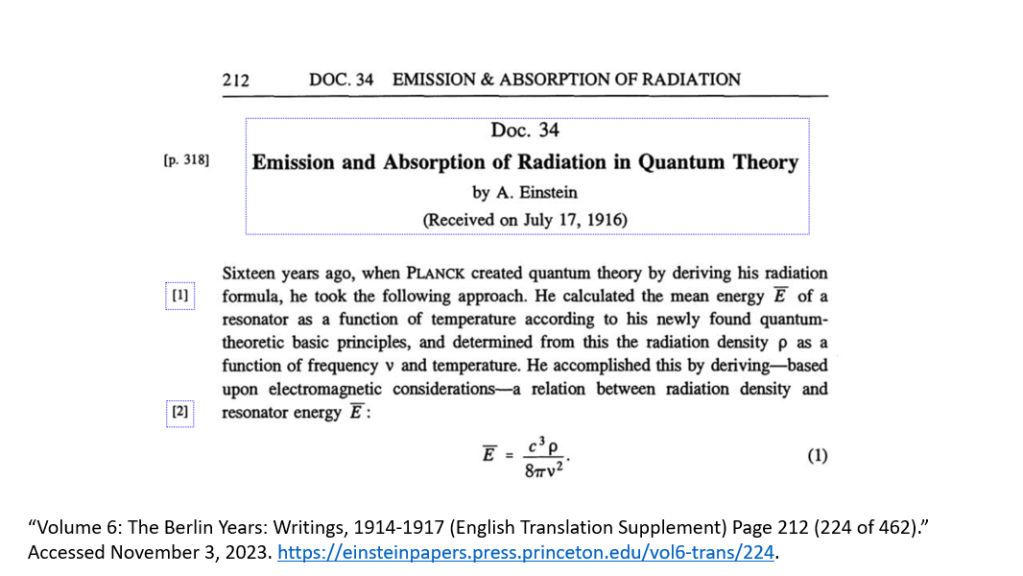
The English translation of the paper: “Volume 6: The Berlin Years: Writings, 1914-1917 (English Translation Supplement) Page 212 (224 of 462).” Accessed November 3, 2023. https://einsteinpapers.press.princeton.edu/vol6-trans/224.
Under thermodynamic equilibrium, the detailed balance gives us the connection between the coefficients…and amplification and stimulated emission of radiation become a measurable prospect.
The pic shows the leading characters behind the invention of the Light Amplification by Stimulated Emission of Radiation (LASER) Charles Townes was the intellectual pioneer behind microwave variety… and Maiman….the freak behind the optical version..
The history of the invention is fascinating and dramatic. I did a podcast on this a few months ago. Check it out..
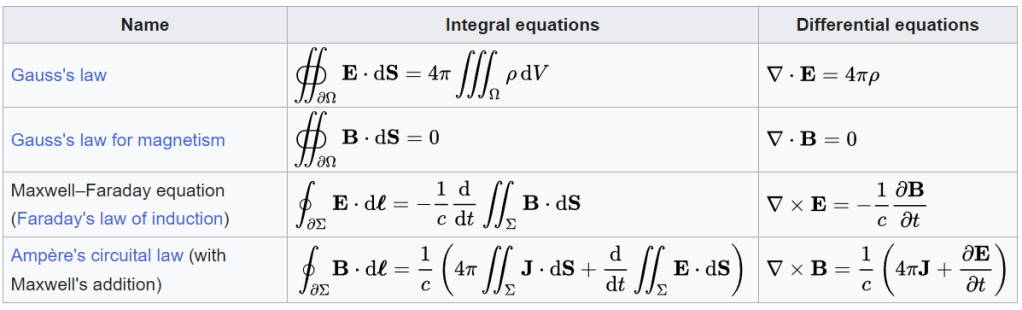
Maxwell’s equation as per Heaviside formulation. Image courtesy Wikipedia.
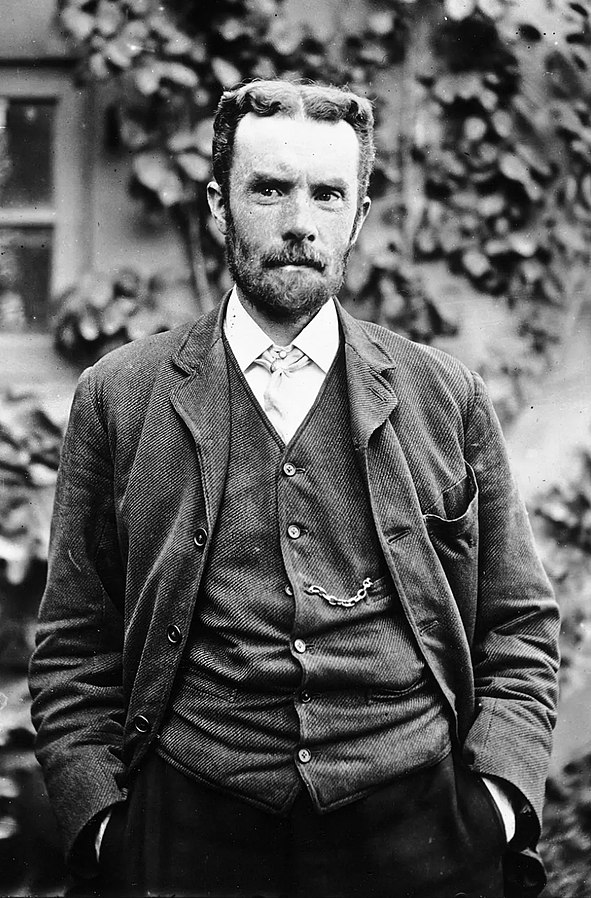
I have been teaching Optics course this semester, and in order to introduce wave theory of light, I had to use Maxwell’s equation. In there, I mentioned that the expression for Maxwell’s equation that we use now is mainly thanks to the formulation of Oliver Heaviside.
Born in 1850, Heaviside grew up in poverty and had physical illness in his childhood.
Oliver Heaviside had an unusual life. He did not have a formal education in science or engineering, but contributed immensely to what is now called as classical electromagnetism.
He was nephew of Wheatstone (of the fame of Wheatstone network), who helped him to find a job in a telegraph company, which was in 1870s, a booming industry.
Heaviside showed a lot of promise in his work, and learnt a lot on the go.
Around 1872, at the age of 22, he published his first research paper in Philosophical Magazine, which caught the attention of people such as Lord Kelvin and James Maxwell.
At the age of 24, Heaviside quit his job (because of various reasons including ill health), and went back to live with his parents.
Around 1873, Maxwell’s treatise on Electricity and Magnetism was published, and this mesmerized Heaviside.
He studied it with dedication, but could not understand it. Therefore, he decided to re-write Maxwell’s treatise.
Maxwell had used quaternion, which was a number system devised by Hamilton.
This formulation was cumbersome, and was not easy to understand especially in the context of electricity and magnetism.
Heaviside took this formulation, and re-casted it in terms of vector calculus.
Interestingly, Gibbs had also done the same (earlier than Heaviside), but had not published his results.
Nevertheless, both Heaviside and Gibbs pushed this formulation further, and eventually the research community saw its utility.
There are many contributions of Heaviside towards electromagnetism, and inductive loading was one of them. Initially, this loading method of introducing repeated coils along the cable was met with a lot of opposition. But eventually, the advantage was realized and Oliver (and his brother, who initiated the work) were vindicated.
Heaviside was a prolific researcher, and published 3 volumes on electromagnetic theory, in addition to various research papers.
He also wrote a column spanning over 20 years in a magazine named TheElectrician.
After 1914 or so, Heaviside’s could not work due to ill health and paranoia, which disturbed his mind.
In 1925, Oliver Heaviside passed away.
There are some excellent books and biographical notes on Heaviside. Below are a few :
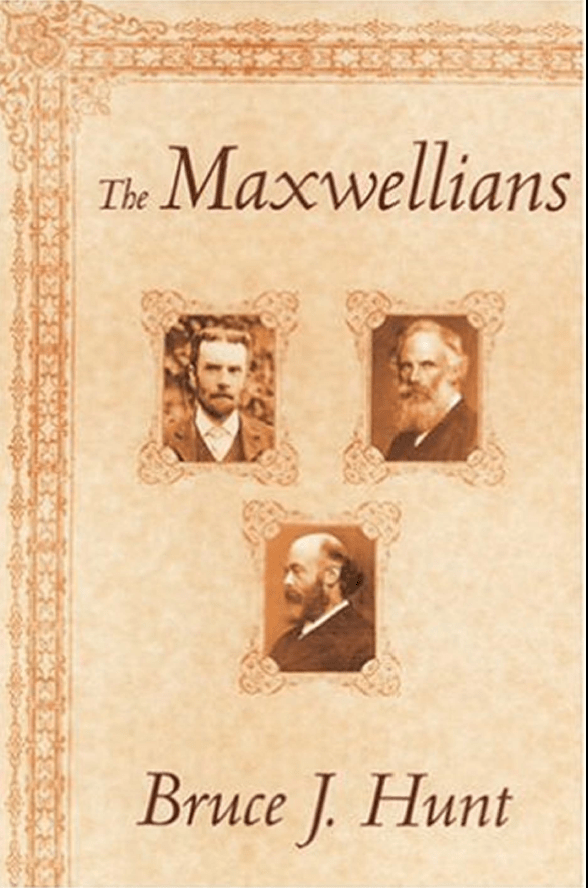
Hunt, Bruce J. The Maxwellians. Cornell University Press, 1994.
Hunt, Bruce J. “Oliver Heaviside: A First-Rate Oddity.” Physics Today 65, no. 11 (November 1, 2012): 48–54. https://doi.org/10.1063/PT.3.1788.
Nahin, Paul J. Oliver Heaviside: The Life, Work, and Times of an Electrical Genius of the Victorian Age. Second Edition. Baltimore, Md: Johns Hopkins University Press, 2002.
Among the books and discussion on this topic, I found this book by science historian Bruce Hunt to be very interesting. He identifies 3 plus 1 people who extensively developed Maxwell’s electromagnetic theory and presented in a way that the world could understand its significance. They were G. F. FitzGerald, Oliver Heaviside, Oliver Lodge and to a certain extent – Heinrich Hertz.
The foreword of this excellent book was written by a well known historian of science L. Peerce Williams and he sums the situation in which the theory was developed :
“Like Newton’s Principia, Maxwell’s Treatise did not immediately convince the scientific community. The concepts in it were strange and the mathematics was clumsy and involved. Most of the experimental basis was drawn from the researches of Michael Faraday, whose results were undeniable, but whose ideas seemed bizarre to the orthodox physicist. The British had, more or less, become accustomed to Faraday’s “vision,” but continental physicists, while accepting the new facts that poured from his laboratory, rejected his conceptual structures. One of Maxwell’s purposes in writing his treatise was to put Faraday’s ideas into the language of mathematical physics precisely so that orthodox physicists would be persuaded of their importance. Maxwell died in 1879, midway through preparing a second edition of the Treatise. At that time, he had convinced only a very few of his fellow countrymen and none of his continental colleagues. That task now fell to his disciples.
The story that Bruce Hunt tells in this volume is the story of the ways in which Maxwell’s ideas were picked up in Great Britain, modified, organized, and reworked mathematically so that the Treatise as a whole and Maxwell’s concepts were clarified and made palatable, indeed irresistible, to the physicists of the late nineteenth century. The men who accomplished this, G. F. FitzGerald, Oliver Heaviside, Oliver Lodge, and others, make up the group that Hunt calls the “Maxwellians.” Their relations with one another and with Maxwell’s works make for a fascinating study of the ways in which new and revolutionary scientific ideas move from the periphery of scientific thought to the very center. In the process, Professor Hunt also, by extensive use of manuscript sources, examines the genesis of some of the more important ideas that fed into and led to the scientific revolution of the twentieth century.“
Scientific research is a creative pursuit. As researchers, we are always looking out for new ideas and inculcate them in our work. One way to get new ideas is to explore existing ideas and bring them together with certain degree of uniqueness and utility. As part of this exploration, scientists communicate with each other and gain some new knowledge. Therefore, as researchers, we encourage and value cooperation as part of our work culture.
Over the past couple of decades, I have been greatly benefited, motivated, and inspired by many of my fellow-colleagues across the globe. Dr. Zijie Yan was one of them. I never met Zijie in person, but I and my research group have read many of his interesting papers related to optical trapping and binding of plasmonic nanoparticles. I have been following his work ever since he was a post doc at University of Chicago, and found his work creative, interesting, and illuminating, to say the least.
In 2020, during the pandemic, we exchanged a few emails related to some technical details of trapping plasmonic colloids, and he was very generous and forthcoming in sharing his knowledge. He gave me some important leads into the wavelength-dependence of trapping capabilities, and suggested a few references. These leads were very beneficial for us to build upon some concepts and techniques that we were developing in my lab, which further led to some publications. After we published some of our results, I sent him our pre-prints, and thanked him for his input.
When I heard the sad news of Yan’s untimely death at University of North Carolina (UNC) at Chapel Hill, I was shocked. As you may, know this was caused by gun shooting (allegedly by his own graduate student). What a tragic news.
USA has great universities. In late 2000s, I spent two of my post-doctoral years in the US (Purdue University), and it was a pleasure living and working there. As an intellectual ecosystem, USA still leads the way, and it has been home to so many scientists and intellectuals from across the world. As with any society, USA has some flaws, and among them gun violence is turning out to be a major hurdle to its own progress and values. I sincerely hope that sanity will prevail among a large section of American society, and somehow this meaningless and violent aspect of their society is eliminated.
Sometimes, we take peace of mind for granted, but it is probably the most important pre-requisite to work. It is also a timely reminder for all of us in this world to emphasize the importance of humanness, compassion and rationality. Violence is never an answer.
Zijie was emerging as one of the stars in our research community, and what a shame that we have lost him so early. Let me end with the first few sentences of Zijie’s reply to my email in 2020:
“Dear Pavan,
Thank you for your interest on our research! Glad to hear someone from the community……”
My thoughts are with his family and well-wishers.
Goodbye Zijie. We, as a community, will remember you.
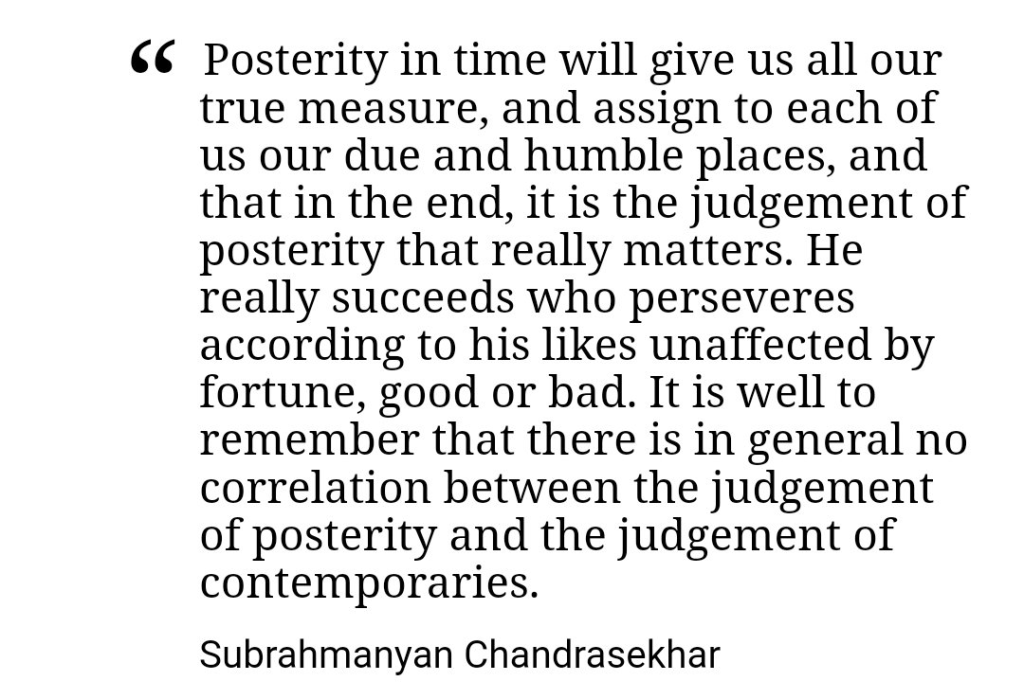
One of my all time fav. quotes. Chandra got it from Milne. Chandra had great temperament for scholarly work, & one can learn a lot from his style of working. His biographer, KC Wali, was a particle physicist, & his article linked is worth reading: https://jstor.org/stable/24100199
If interested, you can listen to a podcast I did on Chandra (one of the two of the similar name)…
In the exuberance of the #OppenheimerFilm, lest we forget the PhD advisor of Oppenheimer – Max Born and one of the fundamental principles of molecular quantum physics :





 VISMAYA - History & Philosophy of Physics