Sabra, A. I. (1989). The Optics of Ibn alHaytham: Books IIII: On Direct Vision. London: The Warburg Institute.
Sabra, A. I. (2002). The Optics of Ibn alHaytham: Edition of the Arabic Text of Books IVVII. Kuwait: National Council for Culture, Arts and Letters.
Sabra, A. I. (2023). The Optics of Ibn alHaytham Books IV–V: On Reflection and Images Seen by Reflection (Revised ed.). Chicago, IL: The University of Chicago Press.
Thomson, William. 1849. “XXXVI.—An Account of Carnot’s Theory of the Motive Power of Heat; with Numerical Results Deduced from Regnault’s Experiments on Steam.,” January. https://doi.org/10.1017/s0080456800022481.
Asimov, Isaac. 1982. Asimov’s Biographical Encyclopedia of Science and Technology : The Lives and Achievements of 1510 Great Scientists from Ancient Times to the Present Chronologically Arranged. Garden City, N.Y. : Doubleday. http://archive.org/details/asimovsbiographi00asim.
On 9th June 2024, the great Roger Federer gave a commencement speech at Dartmouth College. In this speech, he made some interesting observations on the parallels between tennis and life. He made three relevant observations. First, he mentioned that effortlessness is a myth. Secondly, he emphasized that failure is part of one’s journey. Third, he mentioned that life is greater than the court, meaning there are bigger priorities in life, such as family, health, etc.
One of the fascinating facts he revealed is that he ended up victorious in about 80% of the matches he played, but this was achieved by winning only about 54% of all the points. This highlighted the point (no pun intended) that one will always have lows in life’s journey. I really felt the speech made some profound observations about life by making a great analogy between life and the game of tennis.
During this discussion, Federer made a comparison between being gifted and gritty. He brought the ‘question of talent’ to play and made pertinent observations. He mentioned that talent has a broad definition, including human abilities such as discipline, trusting oneself, loving the work process, managing oneself and a few others. The proposition that discipline is also a talent caught my attention as it resonated with my opinion.
This motivated me to ask how discipline plays a critical role in learning science and mathematics? We need to put in time and effort to learn anything at some depth. This kind of dedication to be disciplined is, in fact, a talent. Other features, such as managing time and balancing breadth and depth of knowledge, are also included. Generally, such features are not considered talents, but Federer’s speech hints at broadening the definition of talent.
In the history of science, there are many examples of people who were not considered gifted while growing up but made important contributions to science and technology. Albert Einstein is one such example. So much so that Einstein was considered a failure by his school teachers, and many did not consider him competent even up to the stage of his PhD. Now, we all know how wrong those people and their judgements were.
Another example is S. Chandrashekar, the famous astrophysicist. At an early age, he was considered brilliant, but a significant feature of Chandra was that he worked very hard (although he was rated highly). He was indeed very gritty and dedicated himself to the pursuit of science. He combined ‘giftedness’ with ‘grittiness’, so to speak.
These examples show a variety of characteristics that can lead to good work. Being patient, dedicated and hardworking can be an asset in any career and scientific research is no exception. In a way, this reinforces Federer’s thoughts on broadening the definition of talent.
Federer was undoubtedly one of the greatest tennis players ever. There is a lot to learn from him and his recent speech. There are some profound lessons for teachers and researchers like me from his points (again, no pun intended 🙂).
The takeaway from all this is “discipline is a form of talent”, and the world has to take note of this. Now that is a game, set & lesson for life.
New vlog post: I take, e.g. from the game of cricket (ft. Laxman, Dravid), soft matter physics, ants, Feynman’s seminar & a few other references to explain the emergence, self-organization and spontaneous order in our world
Araújo, Nuno A. M., Liesbeth M. C. Janssen, Thomas Barois, Guido Boffetta, Itai Cohen, Alessandro Corbetta, Olivier Dauchot, et al. 2023. “Steering Self-Organisation through Confinement.” Soft Matter 19 (9): 1695–1704. https://doi.org/10.1039/D2SM01562E.
Tromp, Catrinel, and John Baer. 2022. “Creativity from Constraints: Theory and Applications to Education.” Thinking Skills and Creativity 46 (December): 101184. https://doi.org/10.1016/j.tsc.2022.101184.
One of the research questions I am interested in is how light interacts with the liquid state of matter?
A related question is how is it different from the interaction of light with a solid state?
Specifically, I am interested in understanding how optical forces can influence the structure of liquid matter and if one can control such interaction.
The liquid state of matter is ubiquitous but not as well understood as the solid or gaseous state of matter. This is because the nature of interaction in liquid is intermediate between the other two states, and the way molecules and atoms interact depends on parameters that include interaction in classical and quantum physics.
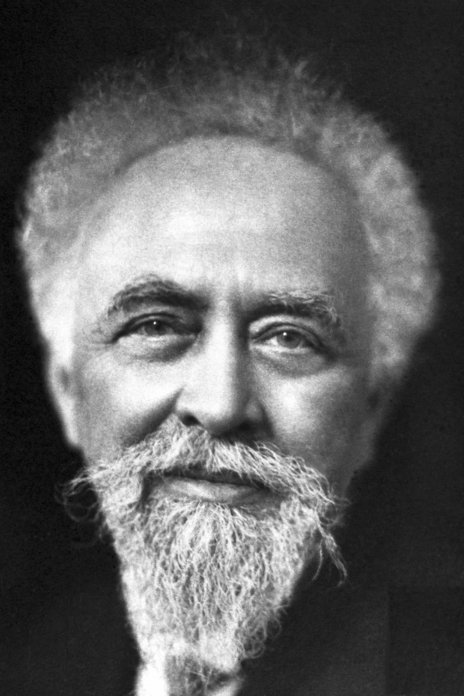
Jean Perrin – Image courtesy: Nobel Foundation archive.
A connected question to this problem is how liquid behaves under and out of equilibrium. This classification is again non-trivial as it depends on the spatio-temporal scales under which one is making an observation. An important aspect of the liquid state is the local and global fluctuations, which complicate the problem. Jean Perrin, in his 1926 Nobel lecture, alludes to this problem very succinctly.
There is still much to learn about the liquid state, and enormous progress has been made from experimental and theoretical viewpoints. But there are some fascinating ‘landscapes’ yet to be fully explored in this domain.
Sometime in the future, I will write more about how this is done and what the historical context is, especially from an optical force viewpoint.
On a related note :
Here is an illustration of the Brownian motion of gold nanoparticles..imaged using a dark field optical trapping microscope..this is a custom-built system in my lab. We study the effect of laser traps on Brownian dynamics..more on this later.
Exactly a year ago, I was in Japan – on a conference and a lecture tour. On a pleasant evening walk at Tokyo University (around the library, see pics), I thought of starting a podcast for the first time.


 VISMAYA - History & Philosophy of Physics