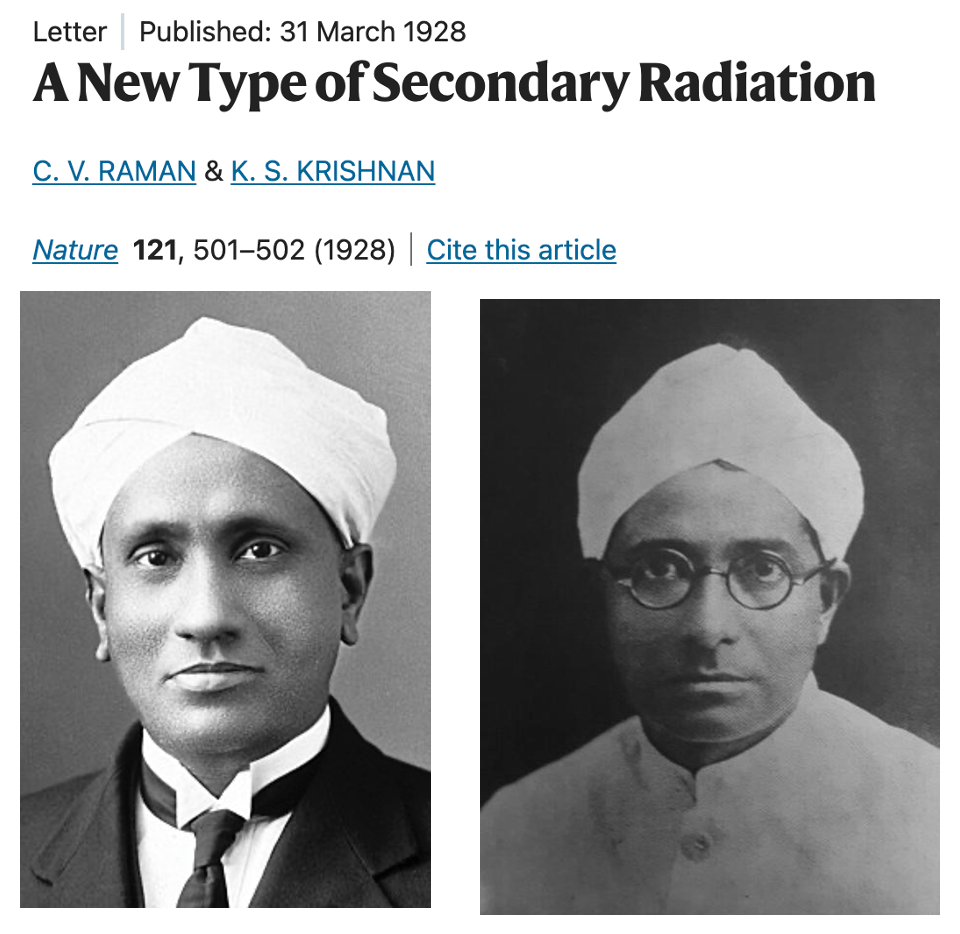
On 28th February, we commemorate the first confirmed observation of the Raman effect, dating back to 1928. Raman’s student, K. S. Krishnan (imaged on the right), had an important role in this observation, and the scientific paper associated with Raman scattering has both Raman and Krishnan as the authors (see picture above). Scientific discoveries and inventions happen with constant effort spread over a long duration. It also happens on a strong foundation of knowledge that has already been established.
Raman recognised this and, as he mentions in his talk on scientific outlook, “The happy discoverer in science is invariably a seeker after knowledge and truth working in a chosen field of his own and inspired in his labours by the hope of finding at least a little grain of something new. The commentators who like to consider discoveries as accidents forget that the most important part of a scientific discovery is the recognition of its true nature by the observer, and this is scarcely possible if he does not possess the requisite capacity or knowledge of the subject. Rarely indeed are any scientific discoveries made except as the result of a carefully thought-out programme of work. They come, if they do come, as the reward of months or years of systematic study and research in a particular branch of knowledge.” (Raman, 1951, p. 243)
This, I think, is generally good advice for researchers, especially the younger ones. One cannot over-emphasize the importance of systematic study.
On this commemorative day, it will be good for us, Indians, to commit ourselves to sincere, honest, hard work motivated by a scientific outlook. As Raman mentions, we need to be seekers of knowledge and truth. Not everything may lead to spectacular results, but it will give us a reason for having done something correct and hopefully useful to humanity. In doing so, we may live a meaningful and purposeful life. Science and scientific thinking can have a central role in realizing such a life.
Happy National Science Day to India…and to the world. After all, science is global.
Reference: Raman, C. V. ‘The Scientific Outlook’. The New Physics – Talks on Aspects of Science by C V Raman, Philosophical Library, New York, 1951. https://doi.org/10.1007/BF02835148.
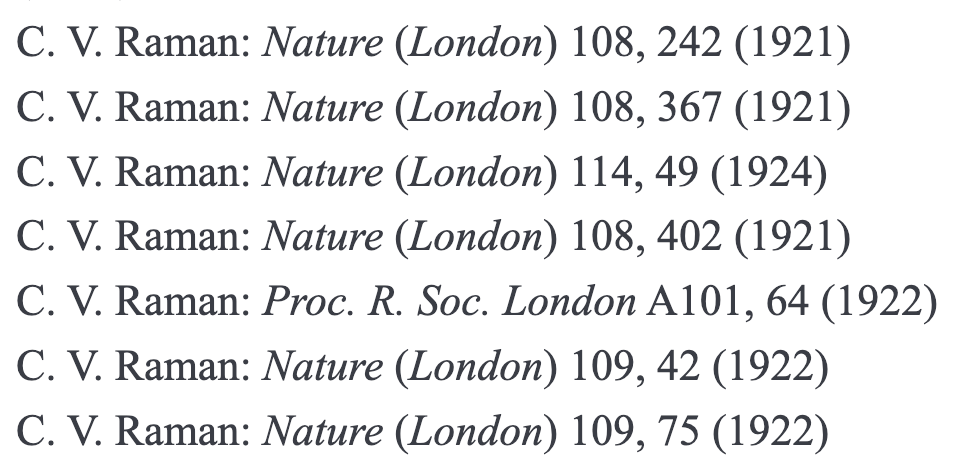
A small sampling of Raman’s publication. These papers are related to light scattering and form the foundation on which he made his famous discovery. Raman wrote more than 400 research papers in his lifetime (apart from monographs, lectures and public talks). Writing such a series of papers on a particular topic can be observed throughout his career.
A note to young scholars: intellectual monuments are built this way: thought after thought, day after day, paper after paper. Never underestimate what can be achieved with consistent, honest effort.
C.V. Raman was obsessed with science, and he was actively thinking about research problems even on odd occasions when he was supposed to be socializing. Nagendra Nath, in 1971, recounts1:
In November 1969, he and Lady Lokasundari Raman were graciously pleased to attend the marriage reception of my daughter. Professor drew me aside outside the reception hall and told me for nearly half-an-hour that his latest problem was to give a proper theory of earthquakes. The present theories were based on models which were highly deficient as they did not properly take into account the shape of the earth and the wave nature of the disturbance.
Nearly half an hour !! Imagine the condition of Nagendra Nath :-)
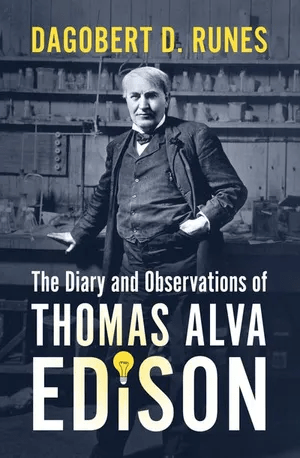
Thomas Alva Edison was one of the greatest inventors we know about. Sometime ago, I stumbled upon a book titled THE DIARY AND OBSERVATIONS OF THOMAS ALVA EDISON, and it was an interesting read. In there, we obtain an insight into Edison’s view on many different subjects, including education, work, religion, etc. Edison was a person with strong views. His working methods were unconventional. Here are a few interesting facts I learnt from this book:
1) Edison had to recruit many executives to his labs; he always emphasized on a memory test and gave them a questionnaire to answer. He insisted that memory is very important for decision making, and he usually employed those people who had very good memory. Edison wrote “…Certainly the brain should have the facts. If a brain possesses an enormous number of facts, those facts, through action of the subconscious mind, will automatically keep themselves available when needed and will automatically keep themselves out of the way, not interfering when not required.”
2) Edison’s view on education was interesting and bold for his times, and he believed that learning through movies would be vital for future education. As early as the 1890s, he said that the best way to teach geography is either by taking the student on a tour or by showing them a movie. Edison wrote
“…motion pictures can be applied to a scientific, systematic course of memory training in the schools, taking the children at an early age when the mind is plastic enough to adapt itself most readily to new habit of thought.
Most of our text books fail on two big counts. They are not sufficiently human, and their application is not sufficiently practical”
3) In the following lines, Edison gives an insight into how he worked: “When I want to discover something, I begin by reading up everything that has been done along that line in the past-that’s what all these books in the library are for. I see what has been accomplished at great labor and expense in the past. I gather the data of many thousands of experiments as a starting point, and then I make thousands more.”
“ …..The motive that I have for inventing is, I guess, like the motive of the billiard player, who always wants to do a little better-to add to his record. Under present conditions I use the reasonable profit which I derive from one invention to make experiments looking towards another invention…..”
4) Edison rates the phonograph as his greatest discovery. He writes, “Which do I consider my greatest invention ? Well, my reply to that would be that I like the phonograph best. Doubtless this is because I love music. And then it has brought so much joy into millions of homes all over this country, and , indeed, all over the world.”
5) The following quotation by Joshua Reynolds was hung in every room of Edison’s laboratory “ There is no expedient to which a man will not resort to avoid the real labor of thinking”
There are many more fascinating thoughts of Edison, many agreeable and a few disagreeable ones, in the above-mentioned book, and if you happen to find it, read it through…it’s a classic and insightful read.
The above text is from a 2011 post on my old blog.
In 1972, P. W. Anderson wrote what is considered one of the most remarkable essays in the history of physics, and the title of that essay is “More is Different.” In the essay, Anderson was trying to make a case for emergence, where new, interesting physical properties can emerge by the combination of matter, which you would not anticipate if you had just kept it as an individual entity.
One of the aspects related to this essay is also the thought that reductionism has its limitations and that groups act very differently compared to individuals. The higher-level rules that can emerge from the combination of small entities are actually very different from the rules that are applicable to individual entities.
For example, if you consider electrons in a solid, you have the emergence of properties of electrons such as magnetism or superconductivity, or, for that matter, putting molecules inside a compartment and, lo and behold, life arises out of that. This has turned out to be one of the most influential ways of thinking in physics because it opened up a new avenue for understanding complex systems not as just combinations of simple systems but as the emergence of properties.
Very interestingly, this essay does not actually mention the word “emergence” at all, but the concept is so fascinating that it has turned out to be one of the most influential essays ever written in physics. The whole point about this particular essay is that the whole is more than the sum of its parts, and P. W. Anderson has to be remembered for this magnificent essay.
The Greco-Roman era, which extended across various parts of Europe and Egypt, had a profound influence on the development of knowledge and architectural construction. During this period, there was a notable interaction between manual labor and intellectual inquiry, culminating in the emergence of mechanics as a significant domain of human knowledge. While written texts often addressed mechanics from an abstract perspective, construction activities and the use of small machines embodied their practical applications.
Take, for example, the lever: a device with direct, practical utility in a wide range of contexts. A deeper exploration of such a device reveals foundational concepts in mechanics and mechanical engineering. This established an important two-way relationship between abstract theory and practical implementation, a mode of thinking most clearly exemplified in the works of Hero of Alexandria.
Hero’s writings were closely linked to mechanics and mechanical engineering[1], and the knowledge he produced spread across Europe and the Arabic world. He was deeply influenced by Archimedes, frequently referencing his works across multiple treatises. In doing so, Hero consolidated earlier knowledge and repurposed it for a variety of mechanical applications. He is also credited with creating what is now considered one of the earliest forms of the steam engine using a simple pneumatic device[2].
He was also indirectly influenced by Aristotelian thought; traces of Aristotle’s Mechanica can be observed in Hero’s approach and conceptual framework. A central feature of Hero’s work lies in the foundational principles through which he analyzed mechanical devices. Specifically, he focused on five fundamental mechanical elements: the wheel and axle, lever, pulley, wedge, and screw. Hero sought to relate these devices to a core geometrical principle: the circle, and further connected them to the concept of balance. This integration of geometric abstraction with practical devices was at the heart of Hero’s methodology, making him one of the earliest thinkers to approach mechanics as both a physicist and an engineer.
Another significant aspect of his work is his use of models[1], which provided new insights into the operation and design of mechanical systems. During that period, understanding how large weights could be moved using relatively small forces, such as through the use of a lever, posed a conceptual and practical challenge. Addressing this challenge led to deeper investigations into balance and the principles underlying mechanical advantage.
At the center of these intellectual developments was Hero of Alexandria. His work exemplifies the dual nature of mechanics as both an intellectual pursuit and a practical tool. Hero’s influence helped shape the treatment of mechanics as a cornerstone of ancient scientific and technological achievement. In many ways, he unified physics and technology on a single conceptual platform, offering a distinctive way of understanding natural phenomena and applying that understanding toward practical ends.
2. About Hero – Hero’s Time and Place
Let us now examine the details concerning Hero of Alexandria. As with many ancient historical figures, it is quite difficult to determine the exact dates of his life[3]. However, there is a general scholarly consensus that he lived sometime between the 1st and 2nd centuries CE in the city of Alexandria, located in present-day Egypt.
During this era, Alexandria was under the rule of Greek authorities, and the period is typically characterized by Greco-Roman influence, often referred to as the Hellenistic period. Interestingly, one of the methods by which Hero’s era has been dated involves a lunar eclipse recorded in his book Dioptra. This particular eclipse occurred on March 13, 62 CE, and scholars think[3] this observation provides a useful temporal marker for situating Hero in history.
Little is known about his personal life, aside from the fact that he lived and worked at the University of Alexandria. This conclusion is largely inferred from the numerous books he authored, which correspond closely with the scientific and technological knowledge of that time. With regard to intellectual influences, it is clear from his writings that Hero received a thorough education in Greek literature available up to that period.
In particular, his works frequently reference those of Archimedes. There is also an indirect influence of Aristotelian thought, although explicit references to Aristotle are less common than those to Archimedes. It is important to note that Archimedes’ contributions had a profound influence on scientific thought for generations, and Hero of Alexandria was no exception.
What is particularly fascinating about Hero is that he not only demonstrated a deep understanding of Archimedean work but also possessed considerable knowledge of devices and simple machines available in his time[4]. Alongside these intellectual currents, Hero was also influenced by Ctesibius of Alexandria. His writings exhibit a connection to this earlier Greek scholar, and some scholars even speculate that Hero may have been a student of Ctesibius.
It is worth noting that the transmission of influence from older scholars to later ones was largely facilitated through published works. Given that the University of Alexandria was a renowned center of learning, it is unsurprising that Hero of Alexandria was familiar with the work of many earlier scholars.
3. His Books – Hero’s Published Works
From the existing literature, Hero of Alexandria is associated with fourteen texts, of which eight are directly attributed to him, while six other works are associated with him with less certainty[1]. Among these works, his books on Pneumatica, Metrica, and Mechanics have garnered significant attention. In the context of Pneumatica, the subject pertains to the pressure of air, water, and steam, and their applications for various purposes, including entertainment.
Mechanica, of course, covers simple devices and machines, and this work is primarily preserved in the Arabic language. It is generally attributed to a few scholars from a later period. There is also an interesting piece of work titled Automata, in which automatic machines of that time are discussed in the context of mechanics and the associated engineering. It is the Metrica that is associated with the calculation of volumes of various solids and certain planes and surfaces, which has drawn considerable attention and has become a well-known source of information.
Of course, Hero also worked on war machines, and this particular work is available in Greek. The lifting of weights was a major technical challenge during that era, and Hero of Alexandria naturally approached this problem from the standpoint of mechanics. Many of his works, including Pneumatica and Mechanica, contain elaborate discussions on various forms of weights and the techniques for lifting them.
This, obviously, is associated with the engineering tasks necessary for constructing the architectural works of that period. Another interesting aspect of Hero’s work is associated with geometry, especially through the work titled Geometrica. He also investigated calculations related to three-dimensional objects, which show a close connection to measurement principles relevant not only to devices but also to surveying landscapes and measuring distances, including those associated with human constructions such as tunnels.
There are a few works associated with definitions of mathematical entities, and their attribution remains debated. Nevertheless, all this evidence indicates a prolific intellectual life of Hero of Alexandria, and many scholars attribute this productive authorship to his position as a teacher at the University of Alexandria. For example, if one examines certain works such as Pneumatica, the instructional style in such books appears to resemble manuals for students to gain an overview of devices.
Also, the discussions are not very terse, and many scholars interpret this as a recap for students who are advancing their knowledge in mechanics and related problems. It is noteworthy that the entire body of work suggests that Hero of Alexandria not only had a strong command over mechanical machines but also possessed the ability to think in abstract terms. This is evident from his writings related to mathematics.
Such a combination of application and abstraction is one of the most significant features of Hero of Alexandria.
4. Pneumatica
Now let us look at some specific works of Hero of Alexandria, beginning with Pneumatica. The word pneuma means “wind” in Greek. The adjective essentially refers to something that contains or operates using air or gas under certain pressure. In this context, Hero’s Pneumatica describes various aspects related to the utility of air and gases for mechanical motion.
Figure 1 Drawing of an Aeolipile
The theme of this work is fascinating because it is not an abstract or purely theoretical exposition on mechanics or mechanical engineering. Rather, it is directly connected to small devices used for a variety of purposes, including entertainment. Among these are descriptions of several toys, such as birds that sing, coin-operated machines, and what is probably the first vending machine recorded in literature[2].
Among the many devices discussed, the one that has particularly captured the attention of historians of science is a device called the aeolipile[2], [5]. This is considered a prototype of the earliest steam engine. It operates using steam generated by boiling water in a kettle. The kettle is connected to a sphere with two nozzles. When the water boils, the steam enters the sphere and causes it to rotate.
The key aspect of this design is that the sphere is connected to a horizontally placed shaft. As the steam exits the nozzles, it causes the sphere to spin, thereby converting thermal energy into mechanical motion. This device has drawn the interest of many historians studying the origins of steam engines, as it represents one of the earliest known examples of thermal-to-mechanical energy conversion[2], [5].
The book itself contains fascinating descriptions of miniature devices adapted for various uses, including magic shows and theatre productions. Unlike some of Hero’s other writings, Pneumatica reads more like a manual for operating small devices, with concise and practical descriptions rather than theoretical elaboration. The quality of the diagrams in this work is particularly notable and has attracted considerable attention from historians.
One of the best-known surviving translations[6] of this work is by the Englishman Bennet Woodcroft, published in 1851 (Figure 2). This translation has become a standard reference for scholars seeking to understand the nature of Hero’s contributions. It highlights Hero’s practical orientation, which is quite distinctive among scholars of his stature.
Figure 2. An English translation of Hero’s book on Pneumatics
In comparison, the works of Archimedes and his immediate followers are generally more rigorous and focused on mathematical applications. Most of them do not discuss simple or seemingly trivial devices in the manner that Hero does in Pneumatica. Nevertheless, it is important to emphasize that Hero was deeply influenced by Archimedes. Many of the devices described in this book are based on principles associated with Archimedes and his pioneering work.
This is characteristic of Greek scholars, who regarded Archimedes as one of the earliest scientists to understand the natural world through systematic mathematics and physical models. In some of Hero’s other works, one sees this intellectual lineage in action, combining abstract analysis with practical application. This synthesis of theoretical and applied thinking positions Hero as a pioneer in engineering mechanics. Many of the devices he designed continue to be of great interest to both engineers and artists.
In this light, Pneumatica offers a compelling insight into Hero’s intellectual curiosity and his pedagogical intent, particularly in presenting devices to students through detailed and accessible instruction manuals.
5. Mechanica
Next, let us consider an overview of Hero’s book titled Mechanica. This work comprises three volumes, and the surviving text is available only in an Arabic translation. Some scholars believe that the content may have undergone certain alterations during the process of translation and transmission.
One of the earliest references to Mechanica dates to around 300 CE, made by Pappus of Alexandria, in a discussion on heavy weights and the methods used to lift them. The book is strongly grounded in principles originally proposed by Archimedes. It presents several mechanical principles with a degree of abstraction.
The concept of the balance, its theoretical foundations, and its relationship to various mechanical devices, such as pulleys, screws, and the wheel and axle, are discussed in considerable detail. A distinctive feature of this book is its treatment of the transportation of heavy objects using mechanical aids, as well as the application of the concept of the center of gravity to various solid forms and shapes.
The text includes a significant degree of abstraction and presents a theory of motion that provides insights into Hero’s understanding of mechanics and mechanical engineering. In this work, Hero refers to Archimedes as many as ten times, indicating a deep intellectual debt. Moreover, scholars have observed that Hero’s approach is indirectly influenced by Aristotelian perspectives on mechanical motion.
A notable aspect of the book is its emphasis on connecting abstract mechanical principles with practical applications. Devices such as the lever, pulley, wheel and axle, and various forms of screws are examined in depth. In this respect, Mechanica can be seen as an early treatise in engineering physics, serving as a key reference for understanding ancient mechanics and mechanical engineering.
The book’s content also reflects the context of the Hellenistic period, which was marked by elaborate construction projects. The principles and techniques discussed in Mechanica have potential relevance to these large-scale engineering efforts.
Finally, Mechanica exhibits strong intellectual continuity with Hero’s other works and shares conceptual commonalities with a few additional sources. This cohesion underscores Hero’s broader contribution to the understanding and development of mechanics in antiquity.
6. Other Works
Let us now consider a few other works of Hero of Alexandria. First among them is Metrica, a collection of three books and arguably the most well-known of his works. This text is primarily concerned with measurement and geometry and includes an elaborate discussion of what is now known as Hero’s formula—a well-known result in elementary geometry for calculating the area of a triangle given the lengths of its sides[7].
Metrica also explores the computation of square roots using iterative methods, a topic with significant applications in basic mathematics. The work focuses on the ability to perform measurements, including the calculation of volumes of solids such as Platonic solids and other fundamental geometric shapes. Ratios form another important aspect of the discussion, with solids considered in terms of divisions by arbitrary ratios, providing a geometric perspective on their structure.
The next important work is Dioptra, which deals with the measurement of length. It includes a discussion of the instrument known as the dioptra[8], which is directly related to surveying instruments that continue to be used in modified forms even today.
An interesting section of this work also discusses the odometer, a device used to measure the distance traveled by a moving object. This provides one of the earliest known references to such a device and highlights Hero’s interest in practical instrumentation.
Another fascinating work is Automata, in which Hero discusses automatic machines in great detail. This text is associated with the domains of magic, theatre, and mechanical marvels that were designed to captivate observers. There is extensive discussion on automatic doors and related architectural mechanisms, which were likely employed in temples or public spaces during Hero’s time. The work also includes ingenious systems for pouring and transporting liquids automatically, illustrating Hero’s advanced understanding of fluid mechanics and automation.
Taken together, these works reflect the rich intellectual repertoire of Hero of Alexandria. At the core of all his writings is a deep engagement with mechanics, approached both abstractly and practically. In this light, Hero’s contributions are of immense significance, offering valuable insights into the interplay between theory and application in ancient science and engineering.
7. Conclusion
Hero of Alexandria, embodied ancient human thought process that mixed physics and technology for intellectual and practical purposes. In a way, he laid the foundation to harness mechanics for practical applications and built on ideas proposed and utilised by great thinkers such as Archimedes and his followers. It is quite remarkable that a person of that era could come up with such interesting innovations for not only practical applications, but also for teaching and demonstrations for the public. Credit should also be given to the followers and students of Hero, who took his work forward and spread it across the world. Perhaps that is the best way to leave a legacy, by learning, creating and sharing knowledge.
REFERENCES:
[1] M. J. Schiefsky, “Theory and Practice in Heron’S Mechanics,” in Mechanics and Natural Philosophy Before the Scientific Revolution, W. R. Laird and S. Roux, Eds., Dordrecht: Springer Netherlands, 2008, pp. 15–49. doi: 10.1007/978-1-4020-5967-4_1.
[3] R. Masia, “On dating Hero of Alexandria,” Arch. Hist. Exact Sci., vol. 69, no. 3, pp. 231–255, 2015.
[4] A. G. (Aage G. Drachmann, The mechanical technology of Greek and Roman antiquity, a study of the literary sources. Copenhagen, Munksgaard; Madison, University of Wisconsin Press, 1963. Accessed: Jun. 11, 2025. [Online]. Available: http://archive.org/details/mechanicaltechno0000unse
[5] P. D. Bardis, “Hero, the Da Vinci of Alexandria: His Aeolosphaera and Other Inventions,” Sch. Sci. Math., vol. 65, no. 6, pp. 535–542, 1965, doi: 10.1111/j.1949-8594.1965.tb13497.x.
[6] H. (of Alexandria.), The Pneumatics of Hero of Alexandria: From the Original Greek. Charles Whittingham, 1851.
I have been amazed to explore the archives on Hideki Yukawa, which have been systematically categorized and meticulously maintained by Osaka University in Japan. My sincere thanks and acknowledgment to the Yukawa Memorial.
Below are a few gems from their public archives :
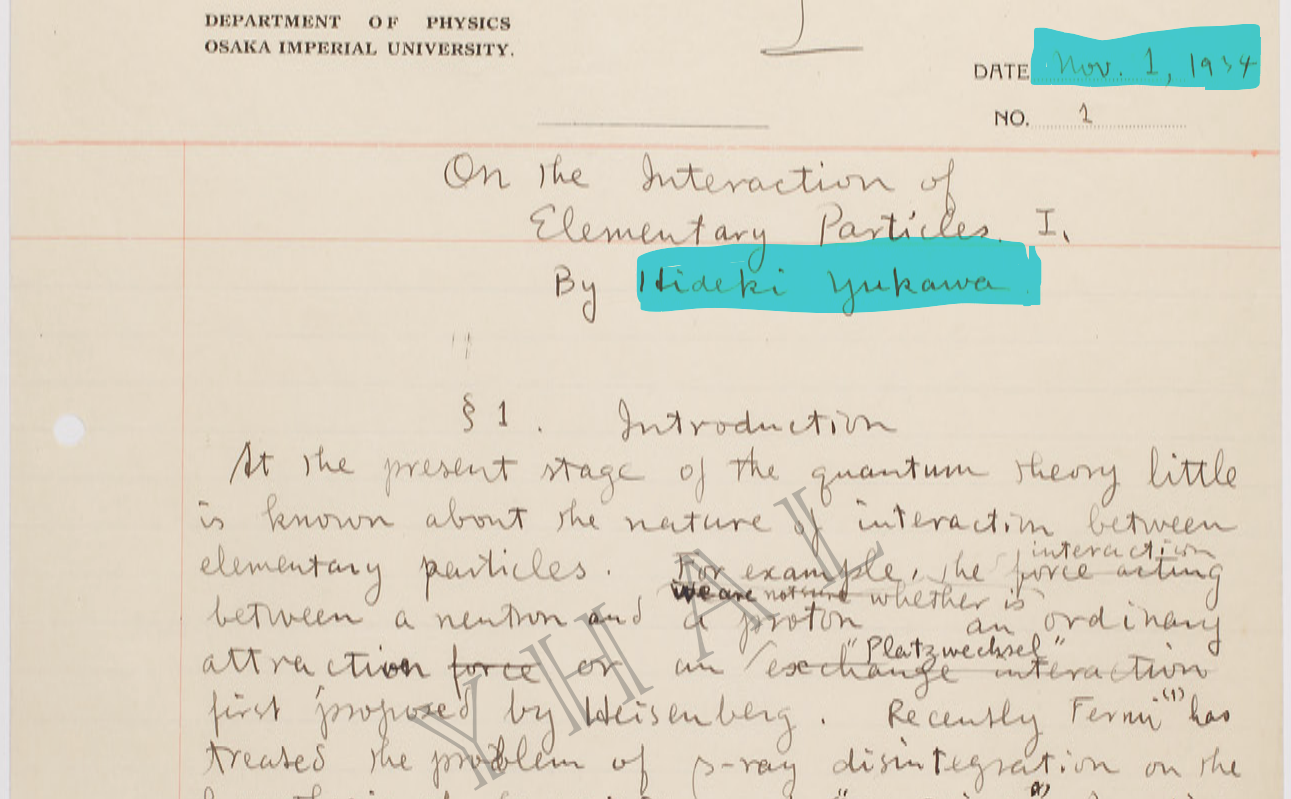
Draft of the paperwritten in 1934 – The making of the groundbreaking paper of Yukawa, which eventually led to his Nobel Prize in 1949.
The archive draft is accompanied by a note which reads:
Yukawa had not published any paper before then. In 1933, Yukawa began working at Osaka Imperial University and tackled the challenge of elucidating the mystery of nuclear forces while Seishi Kikuchi and other prominent researchers were producing achievements in nuclear physics and quantum physics. The idea of γ’ (gamma prime) that Yukawa came up with in early October led to the discovery of a new particle (meson) that mediates nuclear forces. The idea of introducing a new particle for the purpose of explaining the forces that act between particles was revolutionary at that time. Yukawa estimated the mass of the new particle and the degree of its force. No other physicists in the world had thought of this idea before.
2. Letters between Tomonaga and Yukawa
Sin-Itiro Tomonaga was a legendary theoretical physicist from Japan, who independently formulated the theory of quantum electrodynamics (apart from Feynman and Schwinger) and went on to win the Nobel Prize in physics in 1965.
Both these theoreticians were intensely working on interrelated problems and constantly exchanged ideas. The archival note related to the letter has to say the following:
During this period, Yukawa and Tomonaga concentrated on elucidating nuclear forces day in and day out, and communicated their thoughts to each other. In this letter, before starting the explanation, Tomonaga wrote “I am presently working on calculations and I believe that the ongoing process is not very interesting, so I omit details.” While analyzing the Heisenberg theory of interactions between neutrons and protons, Tomonaga attempted to explain the mass defects of deuterium by using the hypothesis that is now known as Yukawa potential. The determination of potential was arbitrary and the latest Pegrum’s experiment at that time was taken into consideration. Tomonaga also compared his results with Wigner’s theorem and Majorana’s theory.
3. Rejection letter from Physical Review
Which physicist can escape a rejection from the journal Physical Review?
Even Yukawa was not spared :-) Below is a snapshot of a rejection letter from 1936, and John Tate does the honours.
The influence of Yukawa and Tomonaga can be seen and felt at many of the physics departments across Japan. Specifically, their influence on nuclear and particle physics is deep and wide, and has inspired many in Japan to do physics. As the archive note says:
Yukawa and Tomonaga fostered the theory of elementary particles in Japan from each other’s standpoint. Younger researchers who were brought up by them, so to speak, must not forget that the establishment of Japan’s rich foundation for the research of the theory of elementary particles owes largely to Yukawa and Tomonaga.
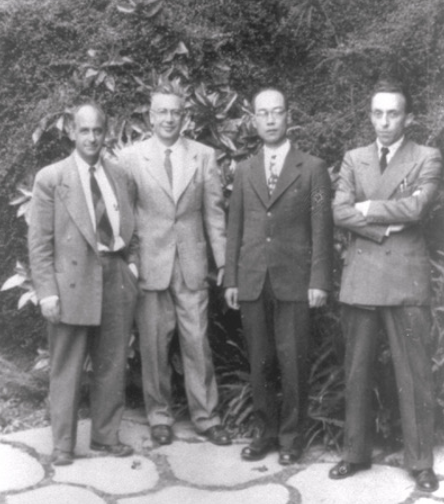
4. Lastly, below is a picture of the legends from the archive: Enrico Fermi, Emilio Segrè, Hideki Yukawa, and James Chadwick.
From the archive note on the picture from September 1948:
Yukawa met Prof. Fermi and other physicists of the University of Chicago who were staying in Berkeley for the summer lectures. From the left: Enrico Fermi, Emilio Segrè, Hideki Yukawa, and James Chadwick.
Tomorrow, I will conclude my third trip to Japan. I always take a lot of inspiration from this wonderful country. As usual, I have not only met and learnt a lot from contemporary Japanese researchers, but also have metaphorically visited the past masters who continue to inspire physicists like me across the world.
In the 1960s, C. V. Raman wrote a series of papers on floral colors and the physiology of vision. In there, he was very interested in the origin of colors from various different flowers. This was also motivated by his fascination with optics and natural colors in vegetation. Specifically, during that era, he had a large garden at his institution and he was deeply immersed in understanding the origin of the colors from these wonderful living creatures.
By using his knowledge of spectroscopy and the chemistry of pigments, he was able to explore some of the spectral features of the floral colors. The diagrams that you are seeing are illustrations from his paper published in 1963.
As you can observe, these illustrations are beautifully created. I don’t know whether Raman himself drew these pictures, but one should really appreciate the artist who has created them.
In a broader sense, it also indicates two important aspects. The first is that Raman was deeply motivated by natural phenomena. His intuition of optics helped him to understand the origins of a variety of natural optical processes. Spectroscopy was a crucial element in all the things that he did. The second aspect is that, in a deeper sense, aesthetics is interwoven with the pursuit of science and Raman’s work, especially towards the later part of his life, showcased it.
There is a fascinating video conversation with Richard Feynman where he describes the appreciation of the beauty of flowers by a scientist. Raman’s appreciation of beauty is close to what Feynman is describing in the video.
C. V. Raman was a curious person. He had a deep inclination to explore natural phenomena, using the knowledge and tools he had accumulated over several decades. In that sense, he was a scientist driven by curiosity before and after his Nobel prize.
Next time when you see a flower, remember that it is a creature of beauty and science merged together.
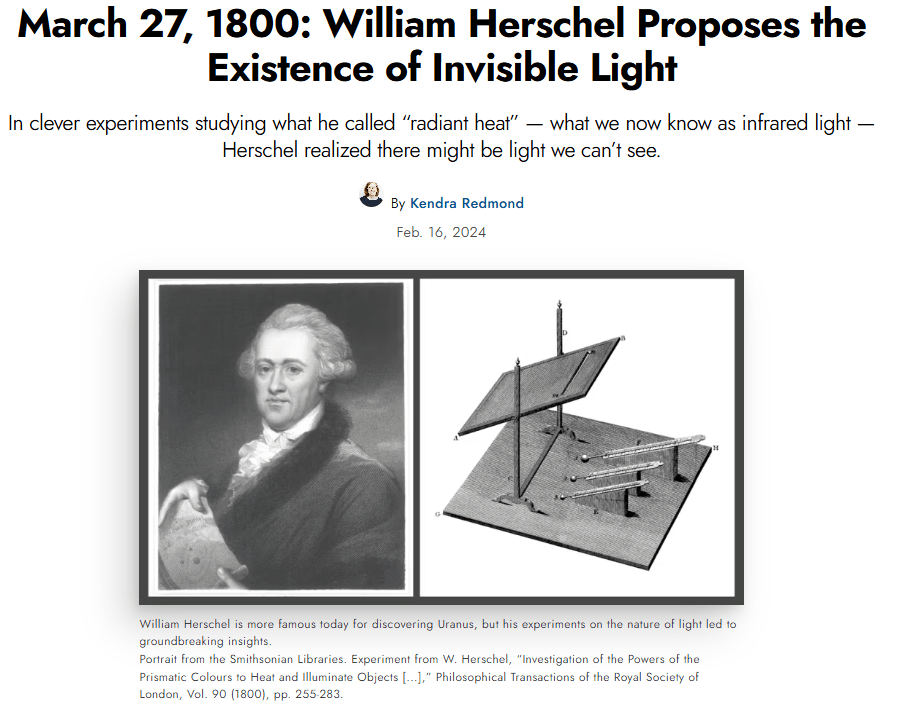
I came across a nice article on the discovery of Infra-red (IR) radiation by William Herschel. It has some information on how he detected the IR part of the electromagnetic spectrum.
It was interesting to note that Herschel’s viewpoint after writing a few papers on this topic was to conclude with uncertainty on the interpretation of his own result.
One may argue that he was not confident in his work, but to truly discover something new, one will have to be at the boundary of the unknown. At such an inflection point, uncertainty and self-criticism are so important, and I don’t blame Herschel for being circumspect.
Nevertheless, his work received attention in spite of his doubts and motivated other researchers, such as Ritter and Röntgen, to explore the extended spectrum of electromagnetic radiation.
Scientific progress is two steps forward and one step backward. The backward step (as in questioning new findings, verification, clarification and debate) is one of the hallmarks of scientific thinking, without which we may take many forward steps, albeit in a totally wrong direction.






 VISMAYA - History & Philosophy of Physics