More is Different – A Brief Overview

P.W. Anderson (image from wikipedia)

In 1972, P. W. Anderson wrote what is considered one of the most remarkable essays in the history of physics, and the title of that essay is “More is Different.” In the essay, Anderson was trying to make a case for emergence, where new, interesting physical properties can emerge by the combination of matter, which you would not anticipate if you had just kept it as an individual entity.

One of the aspects related to this essay is also the thought that reductionism has its limitations and that groups act very differently compared to individuals. The higher-level rules that can emerge from the combination of small entities are actually very different from the rules that are applicable to individual entities.

For example, if you consider electrons in a solid, you have the emergence of properties of electrons such as magnetism or superconductivity, or, for that matter, putting molecules inside a compartment and, lo and behold, life arises out of that. This has turned out to be one of the most influential ways of thinking in physics because it opened up a new avenue for understanding complex systems not as just combinations of simple systems but as the emergence of properties.

Very interestingly, this essay does not actually mention the word “emergence” at all, but the concept is so fascinating that it has turned out to be one of the most influential essays ever written in physics. The whole point about this particular essay is that the whole is more than the sum of its parts, and P. W. Anderson has to be remembered for this magnificent essay.
Soft Matter – emergence of a physics domain

Recently, I read a nice interview with Sid Nagel, who is a pioneer in soft condensed matter physics.

Sid Nagel has given an aura to an area of physics that was not considered fashionable even as late as the 2010s. Part of his elevation is because “Soft Matter Physics” has become so vital to understand our everyday world (including biological) that it is hard to ignore it anymore. Chemical Engineers, too, have played a major role in this elevation, and the James Frank Institute at Chicago has been an epicenter for this way of thinking.

A major shift in thinking, especially among physicists, is thanks to PW Anderson. His essay – ‘More is Different” did a great service to soft matter and complex systems by highlighting the importance of emergence (side note: the word emergence does not occur in his essay, even once !) It further got a major headway with a Nobel to de Gennes. Suddenly, condensed matter physicists had something to explore beyond electrons and their density functions. The French school had a major hand in this.

For me, soft matter physics, in a way, makes physics experiments democratic. One can still dare to do some ‘breakthrough science’ in a tiny kitchen 🙂

Where Ideas Merge: A Visit to the Institute of Science Tokyo

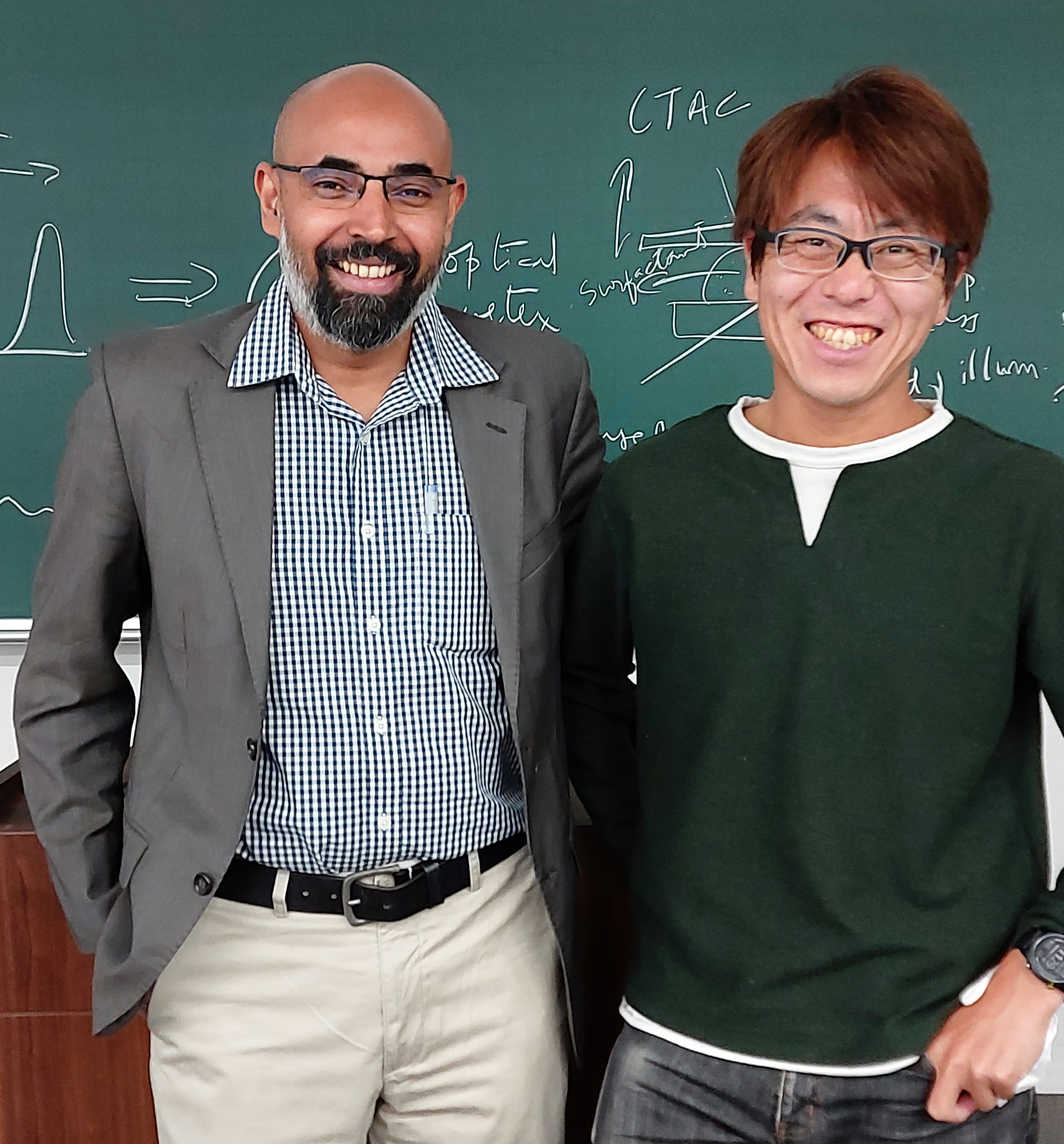
With Prof. Daiki Nishiguchi

New ideas are often created by the merging of two old ideas. How often is this true, and how often do we tend to forget this?

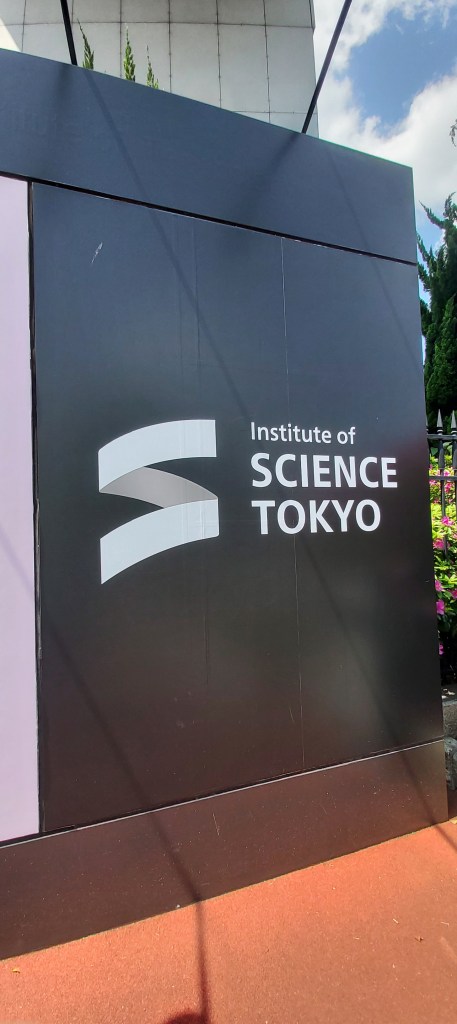
Today I visited the Institute of Science Tokyo, formerly known as Tokyo Tech. This is a new avatar of a very interesting institution funded by the government of Japan. By merging the Tokyo Institute of Technology with the Tokyo Medical and Dental University, a very interesting concept has emerged: the Institute of Science Tokyo. These two institutions have been important pillars of the research and educational landscape of Tokyo, and I had the privilege of visiting this new place, which is a result of a new merger.

Thanks to the invitation and fantastic hospitality of Prof. Daiki Nishiguchi, a faculty member in the Physics Department of the Institute of Science Tokyo, I had a memorable experience. I met Daiki a couple of years ago at the University of Tokyo, where he previously held a faculty position. Recently, he has moved to the Institute of Science Tokyo to establish his independent research group as an Associate Professor.

Daiki has done amazing work on topological soft matter, and his recent results include remarkable observations related to turbulence and vorticity in suspensions of bacteria under spatial confinement. He has also been setting up interesting experiments involving Janus particles, and I got a nice overview of his work. Thanks to him and his research group, I got a flavor of the research being carried out in their lab, and I was also treated to a wonderful lunch by Daiki.

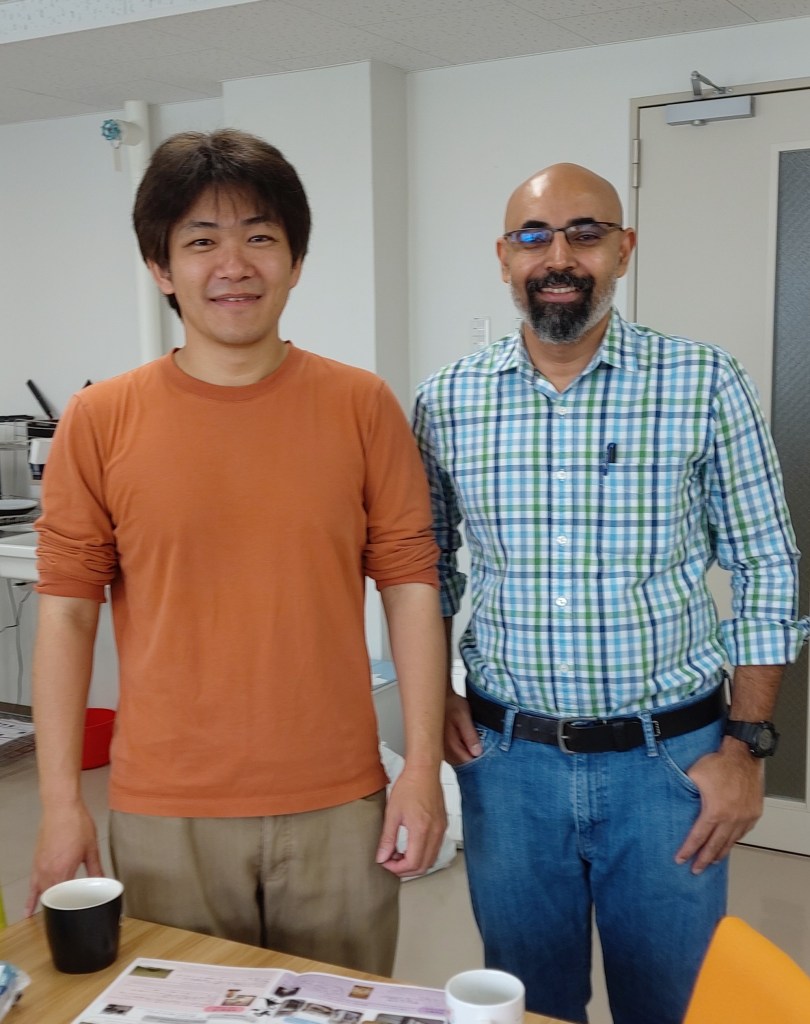
I gave a physics seminar on some of our work on structured light and confinement of soft matter, especially thermally active colloidal matter in optothermal potentials. Since Daiki and his group (see image below) have expertise in topological soft matter, my seminar emphasized structured topological beams, including ring optical beams and optical vortices. I gave an overview of our experimental results and highlighted the prospect of utilizing the topology of light to interact with topological soft matter.

There is much to explore at this interface, and again, it brings me back to the point that new ideas often emerge from the merging of evolving old ideas, such as topological light and topological soft matter.

This is my third visit to Japan, and I always find their calm, focused, and deeply committed research environment inspiring. There is much to learn from their approach to science and technology, and my visit to the Institute of Science Tokyo reinforced this thought.

I thank Daiki and his research group for the wonderful time I had at their laboratory and offer my best wishes to him in his new explorations.

How confinement leads to emergence ?

New vlog post: I take, e.g. from the game of cricket (ft. Laxman, Dravid), soft matter physics, ants, Feynman’s seminar & a few other references to explain the emergence, self-organization and spontaneous order in our world

References:

“Second Test, 2000–01 Border–Gavaskar Trophy.” 2024. In Wikipedia. https://en.wikipedia.org/w/index.php?title=Second_Test,_2000%E2%80%9301_Border%E2%80%93Gavaskar_Trophy&oldid=1207694527.

Araújo, Nuno A. M., Liesbeth M. C. Janssen, Thomas Barois, Guido Boffetta, Itai Cohen, Alessandro Corbetta, Olivier Dauchot, et al. 2023. “Steering Self-Organisation through Confinement.” Soft Matter 19 (9): 1695–1704. https://doi.org/10.1039/D2SM01562E.

arxiv link : https://arxiv.org/abs/2204.10059

FeynmanChaser, dir. 2008. Feynman Chaser – Imagination in a Straitjacket. https://www.youtube.com/watch?v=IFBtlZfwEwM.

“Why Constraints Are Good for Innovation.” n.d. Accessed May 3, 2024. https://hbr.org/2019/11/why-constraints-are-good-for-innovation.

Tromp, Catrinel, and John Baer. 2022. “Creativity from Constraints: Theory and Applications to Education.” Thinking Skills and Creativity 46 (December): 101184. https://doi.org/10.1016/j.tsc.2022.101184.

New paper – Emergence of Directional Rotation

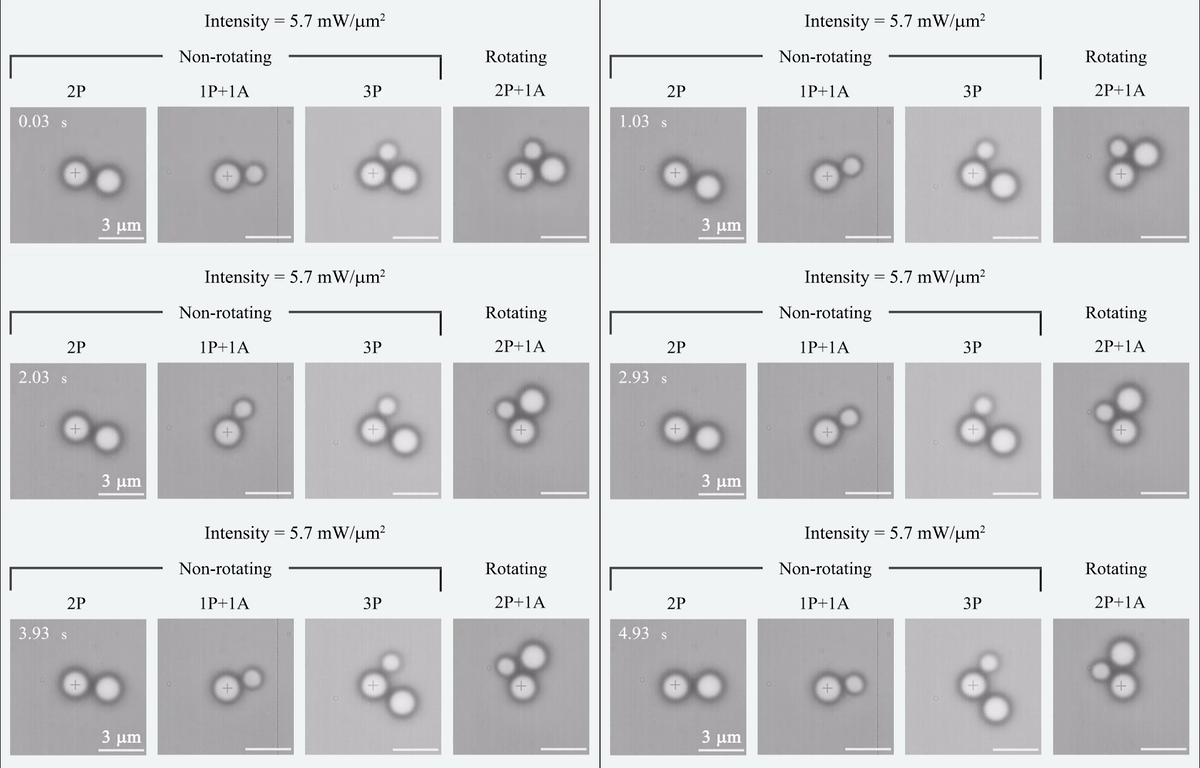
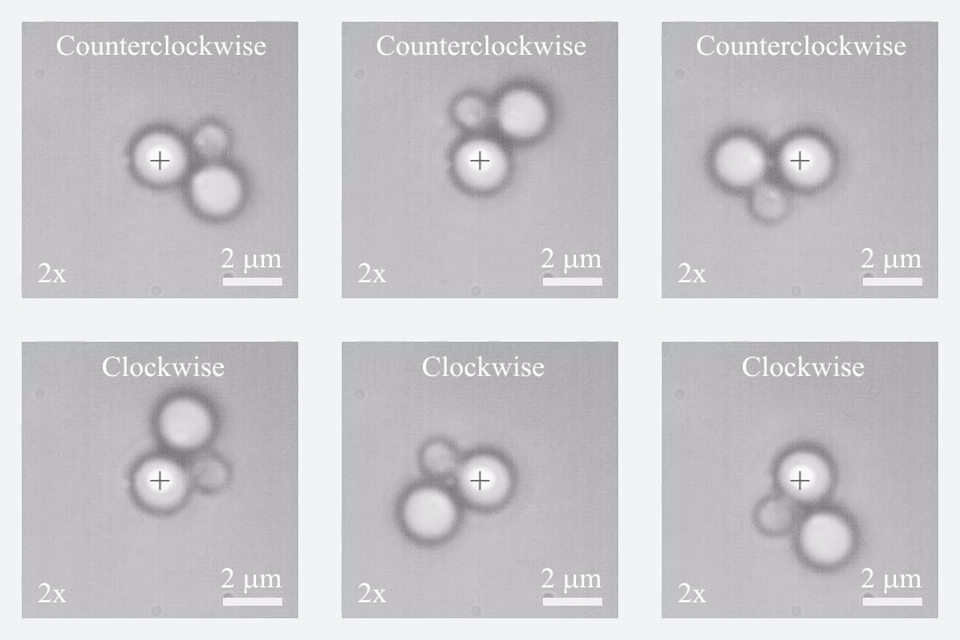
We have a new paper to appear in ACSPhotonics. Great effort by Rahul Chand, Chaudhary Eksha Rani and Diptabrata Paul from our group. We ask : How & why does directional rotation emerge in an optical trap of thermally active (smaller) + passive colloidal combination ?

By combining light absorbing colloid (smaller one) with a normal colloid (bigger ones), we can observe directional rotation in a 2D optical trap. What determines the rotation direction is the relative position of the active colloid in the assembly.

One can switch the direction of rotation, by changing the relative position of active colloid.

For the rotation to emerge, the symmetry of the colloidal arrangement matters. As you see, if there are two active colloids (smaller ones) are symmetrically positions with respect to passive colloids (bigger one), we do not observe rotation.

There is a lot more interesting stuff and explanation of the observed effect discussed in our paper. You can read the pre-print of the our paper in arxiv : https://arxiv.org/abs/2309.12740

Active Collective Motion – a video

References :

“Active Matter.” Accessed August 20, 2023. https://www.nature.com/collections/hvczfmjfzl.

apratim. “IISER-Pune Soft Matter Groups.” Accessed August 20, 2023. https://apratimchatterji.wixsite.com/apratim/iiser-pune-soft-matter-groups.

Marchetti, M. C., J.-F. Joanny, S. Ramaswamy, T. B. Liverpool, J. Prost, Madan Rao, and R. Aditi Simha. “Soft Active Matter.” arXiv, July 12, 2012. https://doi.org/10.48550/arXiv.1207.2929.

“Members | Cytoskeleton and Cell Shape (CyCelS) Lab.” Accessed August 20, 2023. http://www3.iiserpune.ac.in/~cathale/?page_id=27.

Ramaswamy, Sriram. “The Mechanics and Statistics of Active Matter.” Annual Review of Condensed Matter Physics 1, no. 1 (2010): 323–45. https://doi.org/10.1146/annurev-conmatphys-070909-104101.

Two talks in Tokyo

Wonderful Japanese-Gothic architecture at The University of Tokyo

I gave two talks in Tokyo.

First was on 24th April at Department of Applied Physics, Faculty of Advanced Engineering, Tokyo University of Science. My host was Prof. Yutaka Sumino. I spoke about “Soft Matter in Opto-Thermal Gradients“. I gave a short introduction to opto-thermal perturbations and potentials, and discussed some of our work on opto-thermophoretic trapping and Brownian dynamics. The audience contained a few master students too, and I really enjoyed discussing some concepts related to Brownian motion in an optothermal trap, and related experiments. Also, I had a very interesting discussion with Sumino and his students on their experiments on Janus particles.

with Yutaka
with Yutaka”s group

The second talk was on 25th April at Department of Physics, University of Tokyo. My host was Prof. Kazumasa Takeuchi. I spoke about “Soft Matter in Opto-Thermal Gradients : Evolutionary Dynamics and Pattern Formation“.

This talk was also announced on Japan’s statphys mailing list, and also live-casted over zoom. I discussed about the origins of optothermal effects in a laser trap, and how it can lead to some interesting dynamics and pattern formation in soft-matter system. Specifically, I highlighted the concept of Hot Brownian motion, and how it can be influenced using thermo-plasmons. The talk and discussion went on for almost 2 hours, and I really loved it. Also, Takeuchi and his students gave an overview of their work including a live demonstration on turbulence in liquid crystals, and it was fantastic.

with Takeuchi
with Takeuchi’s group

Soft Matter Optics – talk at ACS -India

About 2 years ago (22nd May 2020), when all the academic activities were online, I gave a talk on “Soft-Matter Optics: A Cabinet of Curiosities” organized by American Chemical Society as part of India Science Talks. Below is the embedded video of the online talk.

Link to ACS website can be found here.

In there, I give a broad overview of how interesting optical function can emerge from the complex world of soft matter. In addition to this, I have emphasized how optics can be harnessed to study structure and dynamics of soft-matter systems including colloids, liquid crystal and some biological matter. The target audience are new PhD students and anyone who is entering the field of light-soft matter interaction.

58. Optothermal Pulling of colloids using Nanowire Plasmons – my talk at Compflu 2021

Linked is my recorded-talk presented at Compflu 2021 today (13th Dec) in the session : Active and Living Matter.

I discuss our recent work on optothermal pulling, trapping and assembly of micro-colloids under the influence of thermoplasmonic field of a single silver nanowire.

The talk was recorded on 2nd Dec 2021, so the reference on conclusion-slide is not updated.