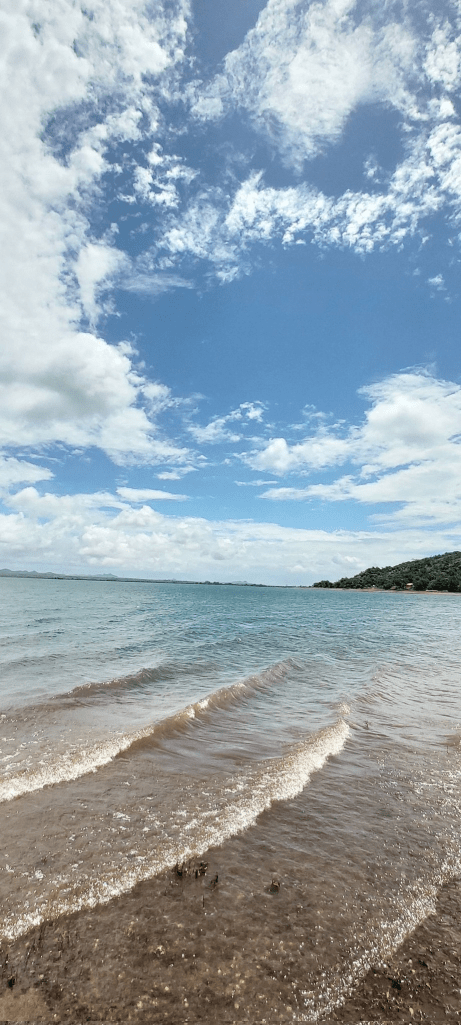
Veer dam backwaters..
Sahyadri range of the Western ghats..
not far from Pune…
Beautiful #maharashtra Great ecology..
More details: https://maharashtratourism.gov.in/-/veer-dam
Veer dam backwaters..
Sahyadri range of the Western ghats..
not far from Pune…
Beautiful #maharashtra Great ecology..
More details: https://maharashtratourism.gov.in/-/veer-dam
On 23rd Aug 2023, ISRO made history by landing a spacecraft close to the south pole of the moon. For a long time in India, I have not seen such an enthusiasm for science and technology, and it was indeed heartening to experience this. In reference to the proceedings in recent times, below are some brief lessons I learnt :
E Arunan is a physical chemist and Professor at Department of Inorganic and Physical Chemistry, Indian Institute of Science, Bengaluru
webpage : https://ipc.iisc.ac.in/~ea/arunan_cv_December2020.html
twitter : https://twitter.com/earunan?lang=en
In this episode (2 hour+) we discussed his biography, learning science in Tamil, his transition from Madurai to Madras to Delhi to Kansas and finally to IISc Bangalore. We discuss about his work including microwave spectroscopy, hydrogen bonding, Indian academia, and Tamil poetry and its contemporary relevance…
Listen as we humanize science.
our youtube channel : https://www.youtube.com/@g.v.pavankumarlab2908/playlists
episode on youtube (audio) :
spotify :
apple podcast : https://podcasts.apple.com/us/podcast/ep-17-conversation-with-e-arunan-the-physical-chemist/id1687861465?i=1000625320693
References :
Arunan, E. “Arunan’s Lab Webpage.” Accessed August 19, 2023. https://ipc.iisc.ac.in/~ea/.
earunan. “Arunan’s Blogpage,” January 2, 2022. https://earunan.org/.
“Indian Institute of Science.” Accessed August 19, 2023. https://iisc.ac.in/events/remembering-prof-vasant-natarajan-1965-2021/.
“Inorganic and Physical Chemistry.” Accessed August 19, 2023. https://ipc.iisc.ac.in/.
“The American College | Madurai.” Accessed August 19, 2023. https://americancollege.edu.in/.
Arunan, Elangannan, Gautam R. Desiraju, Roger A. Klein, Joanna Sadlej, Steve Scheiner, Ibon Alkorta, David C. Clary, et al. “Definition of the hydrogen bond (IUPAC Recommendations 2011).” Pure and Applied Chemistry 83, no. 8 (July 8, 2011): 1637–41. https://doi.org/10.1351/PAC-REC-10-01-02.
“Current Science.” Accessed August 19, 2023. https://www.currentscience.ac.in/show.author.php?id=3002.
driftonblog. “Ode to My Mozart in Physics.” Driving and Drifting… (blog), December 29, 2021. https://driftonblog.wordpress.com/2021/12/29/ode-to-my-mozart-in-physics/.
“EA>Research.” Accessed August 19, 2023. https://ipc.iisc.ac.in/~ea/research.html.
Episode 08 : Gripping History of Laser Invention, 2023. https://www.youtube.com/watch?v=atjcoM8UANs.
“Gautam Radhakrishna Desiraju.” In Wikipedia, July 12, 2023. https://en.wikipedia.org/w/index.php?title=Gautam_Radhakrishna_Desiraju&oldid=1164957848.
“Kural.” In Wikipedia, August 12, 2023. https://en.wikipedia.org/w/index.php?title=Kural&oldid=1169933209.
“Pankaj Mandal’s Webpage – Pankaj Was One of the PhD Students of Arunan.” Accessed August 19, 2023. https://sites.google.com/view/iiser-pankaj-mandal/team.
References :
“Active Matter.” Accessed August 20, 2023. https://www.nature.com/collections/hvczfmjfzl.
apratim. “IISER-Pune Soft Matter Groups.” Accessed August 20, 2023. https://apratimchatterji.wixsite.com/apratim/iiser-pune-soft-matter-groups.
Marchetti, M. C., J.-F. Joanny, S. Ramaswamy, T. B. Liverpool, J. Prost, Madan Rao, and R. Aditi Simha. “Soft Active Matter.” arXiv, July 12, 2012. https://doi.org/10.48550/arXiv.1207.2929.
“Members | Cytoskeleton and Cell Shape (CyCelS) Lab.” Accessed August 20, 2023. http://www3.iiserpune.ac.in/~cathale/?page_id=27.
Ramaswamy, Sriram. “The Mechanics and Statistics of Active Matter.” Annual Review of Condensed Matter Physics 1, no. 1 (2010): 323–45. https://doi.org/10.1146/annurev-conmatphys-070909-104101.
I share 15 lessons that I have learnt as an Indian Professor, academic scientist, teacher and a citizen…
This is an audio-visual episode. The video is available on below
audio here :
apple podcast : https://podcasts.apple.com/us/podcast/id1687861465
References :
Kumar, G. V. Pavan. “12 Years as a Faculty Member in India – 12 Lessons.” Scatterings (blog), May 25, 2022. https://backscattering.wordpress.com/2022/05/25/12-years-as-a-faculty-in-india-12-lessons/.
“A Case for Compassionate Rationality.” Scatterings (blog), July 1, 2023. https://backscattering.wordpress.com/2023/07/01/a-case-for-compassionate-rationality/.
“New Episode : Science, Rationality and Compassion.” Scatterings (blog), May 27, 2023. https://backscattering.wordpress.com/2023/05/27/new-episode-science-rationality-and-compassion/.Pinker, Steven. “Rationality.” Accessed May 26, 2023. https://www.google.co.in/books/edition/Rationality/HT0NEAAAQBAJ?hl=en&gbpv=1&printsec=frontcover.
Weinberg, Steven. “Four Golden Lessons.” Nature 426, no. 6965 (November 2003): 389–389. https://doi.org/10.1038/426389a.
Ranjini is a experimental soft condensed matter physicist. She is a Professor at Raman Research Institute, Bengaluru.
Ranjini’s lab webpage : https://ranjinibandyopadhy.wixsite.com/complexfluids
She and her lab have been working on fascinating experiments on soft squishy matter including : Structure-dynamics correlations in colloidal suspensions; Mixed clay dispersions; Active colloids (synthesis and the study of active glasses); Interfacial instabilities and many other things.
In this episode we explore her biography, her ability to design and develop experiments, the difference between impact of research and impact factor of research, the process of articulation, importance of soft matter science and its relevance to India.
Listen…as we humanize science…
youtube (audio) :
spotify :
apple podcast :
google podcast :
https://podcasts.google.com/feed/aHR0cHM6Ly9hbmNob3IuZm0vcy9lMTcyMGUwYy9wb2RjYXN0L3Jzcw
References :
Twitter. “Ranjini Bandyopadhyay (@RanjiniRRI) / Twitter,” July 20, 2023. https://twitter.com/RanjiniRRI.
“Ajay K. Sood.” In Wikipedia, July 19, 2023. https://en.wikipedia.org/w/index.php?title=Ajay_K._Sood&oldid=1166154434.
“Ajay Sood’s Home Page.” Accessed July 23, 2023. http://www.physics.iisc.ernet.in/~asood/.
Basak, Rajib, and Ranjini Bandyopadhyay. “Encapsulation of Hydrophobic Drugs in Pluronic F127 Micelles: Effects of Drug Hydrophobicity, Solution Temperature, and PH.” Langmuir 29, no. 13 (April 2, 2013): 4350–56. https://doi.org/10.1021/la304836e.
complexfluids. “Group Members and Recent Lab News.” Accessed July 23, 2023. https://ranjinibandyopadhy.wixsite.com/complexfluids/page3.
complexfluids. “Ranjini Bandyopadhyay.” Accessed July 23, 2023. https://ranjinibandyopadhy.wixsite.com/complexfluids.
“Durian Group – Home.” Accessed July 23, 2023. https://www.physics.upenn.edu/duriangroup/.
Mukherjee, Siddhartha. The Emperor of All Maladies. HarperCollins UK, 2011.
Nagel, Sidney R. “Experimental Soft-Matter Science.” Reviews of Modern Physics 89, no. 2 (April 12, 2017): 025002. https://doi.org/10.1103/RevModPhys.89.025002.
Phillips, Rob, and Stephen R. Quake. “The Biological Frontier of Physics.” Physics Today 59, no. 5 (May 2006): 38–43. https://doi.org/10.1063/1.2216960.
Related Twitter thread
Some ironies of publishing:
a) An open access paper highlighted by a paywalled news article
b) Journal coverpage is a highlight paid by the author to the journal (many ppl don’t know this)
c) most of the Journal coverpages are designed by the authors at their own cost
 VISMAYA - History & Philosophy of Physics