Zijie Yan…gone too soon

picture from Zijie Yan’s google scholar page

Scientific research is a creative pursuit. As researchers, we are always looking out for new ideas and inculcate them in our work. One way to get new ideas is to explore existing ideas and bring them together with certain degree of uniqueness and utility. As part of this exploration, scientists communicate with each other and gain some new knowledge. Therefore, as researchers, we encourage and value cooperation as part of our work culture.

Over the past couple of decades, I have been greatly benefited, motivated, and inspired by many of my fellow-colleagues across the globe. Dr. Zijie Yan was one of them. I never met Zijie in person, but I and my research group have read many of his interesting papers related to optical trapping and binding of plasmonic nanoparticles. I have been following his work ever since he was a post doc at University of Chicago, and found his work creative, interesting, and illuminating, to say the least.

In 2020, during the pandemic, we exchanged a few emails related to some technical details of trapping plasmonic colloids, and he was very generous and forthcoming in sharing his knowledge. He gave me some important leads into the wavelength-dependence of trapping capabilities, and suggested a few references. These leads were very beneficial for us to build upon some concepts and techniques that we were developing in my lab, which further led to some publications. After we published some of our results, I sent him our pre-prints, and thanked him for his input.

When I heard the sad news of Yan’s untimely death at University of North Carolina (UNC) at Chapel Hill, I was shocked. As you may, know this was caused by gun shooting (allegedly by his own graduate student). What a tragic news.

USA has great universities. In late 2000s, I spent two of my post-doctoral years in the US (Purdue University), and it was a pleasure living and working there. As an intellectual ecosystem, USA still leads the way, and it has been home to so many scientists and intellectuals from across the world. As with any society, USA has some flaws, and among them gun violence is turning out to be a major hurdle to its own progress and values. I sincerely hope that sanity will prevail among a large section of American society, and somehow this meaningless and violent aspect of their society is eliminated.

Sometimes, we take peace of mind for granted, but it is probably the most important pre-requisite to work. It is also a timely reminder for all of us in this world to emphasize the importance of humanness, compassion and rationality. Violence is never an answer.

 Zijie was emerging as one of the stars in our research community, and what a shame that we have lost him so early. Let me end with the first few sentences of Zijie’s reply to my email in 2020:

“Dear Pavan,

Thank you for your interest on our research!  Glad to hear someone from the community……”

My thoughts are with his family and well-wishers.

Goodbye Zijie. We, as a community, will remember you.

Conversation with Kaneenika Sinha

Kaneenika Sinha is a mathematician and is as associate professor in department of mathematics at Indian Institute of Science Education and Research Pune. She is a number theorist, and her research interest is in analytic number theory and arithmetic statistics of modular forms. Kaneenika did her PhD from Queen’s University in Canada, and spent a few more years as post doc in Univ of Toronto, Univ of Alberta and  Mathematical Sciences Research Institute, Berkeley. She started her independent career at IISER Kolkata before moving to IISER Pune.

“Kaneenika Sinha’s webpage.” Accessed August 26, 2023. http://sites.iiserpune.ac.in/~kaneenika/.

Twitter. “Kaneenika Sinha (@kaneenikasinha) / X,” June 15, 2023. https://twitter.com/kaneenikasinha.

Youtube (audio) :

Spotify :

google podcast :

apple podcast :

https://podcasts.apple.com/us/podcast/ep-18-conversation-with-kaneenika-sinha-mathematician/id1687861465?i=1000626139139

In this episode we discussed

  • her biography
  • on how she developed interest in mathematics
  • her influences during college days in Delhi
  • her exposure to a summer programme in TIFR, Mumbai
  • where she found her spark and origins for mathematics research
  • She also tells us about her experience on learning and doing research in mathematics including number theory
  • We discussed various aspects of her research including her recent book and the process of writing, and why it is so important to research, teaching and learning
  • We discussed importance of mathematics and its role in society and how academics, scientists and of course mathematicians can contribute towards betterment of society
  • There is also an excellent segment in pristine hindi, in which Kaneenika describes her research with eloquence, which is fascinating to hear.
  • We also discussed about her interest in literature and reading and she wonderfully elaborates on some of her influences and likings including Harivansh Rai Bachchan
  • Kaneenika is one the most articulate colleagues i have interacted with, and discussing research and its motivations with her is always a pleasure. I learnt a lot from this conversation, and I am sure you will too…Listen, as we humanize science..

References :

1. Link to her article on Prime numbers in the Bhavana Magazine: https://bhavana.org.in/primes-of-our-lives/

2. Link to a biographical article she wrote on Sarvadaman Chowla: https://bhavana.org.in/sarvadaman-chowla-the-perpetual-ambassador-for-number-theory/

3. Her TedX talk on Prime numbers: 

4. Link to a blog post on Harivansh Rai Bachchan: https://academic-garden.blogspot.com/2022/12/harivansh-rai-bachchan-inspiring-phd.html

5. Link to two articles on C R Rao in Bhavana Magazine :

6. Link to Resonance: https://www.ias.ac.in/Journals/Resonance_%E2%80%93_Journal_of_Science_Education

7. Link to her book on the AMS webpage: https://bookstore.ams.org/STML/104

8. Link to preface of the book : https://www.ams.org/bookstore/pspdf/stml-104-pref.pdf

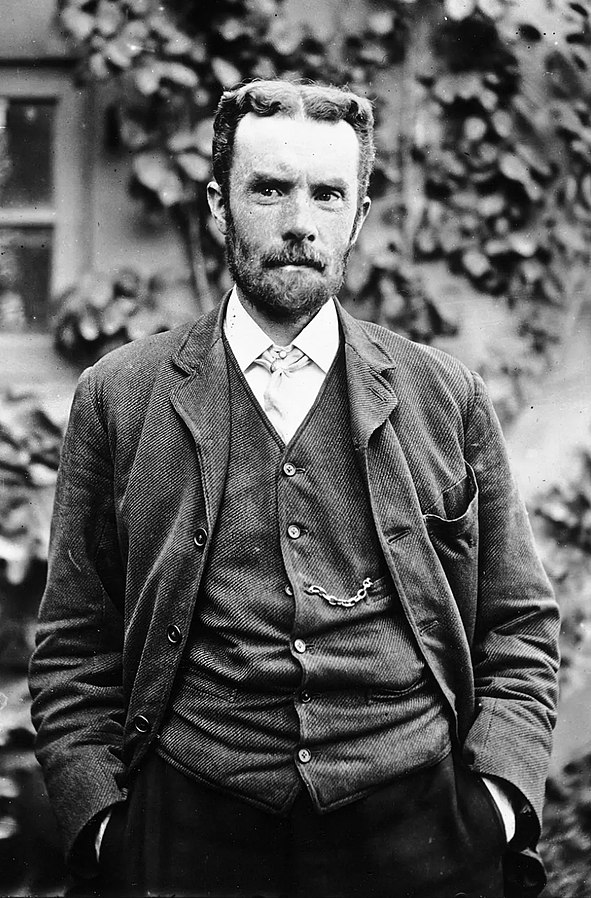
Chandra quoting Milne..

One of my all time fav. quotes. Chandra got it from Milne. Chandra had great temperament for scholarly work, & one can learn a lot from his style of working. His biographer, KC Wali, was a particle physicist, & his article linked is worth reading: https://jstor.org/stable/24100199

If interested, you can listen to a podcast I did on Chandra (one of the two of the similar name)…

10 things I learnt from Chandrayan 3

On 23rd Aug 2023, ISRO made history by landing a spacecraft close to the south pole of the moon. For a long time in India, I have not seen such an enthusiasm for science and technology, and it was indeed heartening to experience this. In reference to the proceedings in recent times, below are some brief lessons I learnt :

  1. For space programs, strong foundations in computation coupled with deep understanding of computer-assisted hardware is vital. Traditionally, India had good strength in computational aspect, but this mission showcased its capability in computer-assisted hardware and manipulation. As expected, ISRO is leading the way, and it is important to emulate this software-hardware coherence in other sectors.
  2. Science and Technology need not be a zero-sum game. Collectively, they have a lot to offer to the Indian society. The mission shows how investing in scientific activities can positively influence a society. In an essence, collective scientific endeavors like Chandrayaan strengthens our democracy.
  3. ISRO’s ability to learn from past failure is commendable. It showcased how scientific experiments should be approached, and how missions should be accomplished.
  4. There was a significant proportion and contribution of women in Chandrayaan 3.
  5. A reasonable and sustained research-budget given to a dedicated set of people can, sometimes, achieve remarkable things. That should not be a reason to limit funding towards research. This should encourage our society to further support scientific research.
  6. Some parts of social media and online news portals played a better role in broadcasting and discussing the mission than Indian TV channels.
  7. Some news papers (I read Indian Express (in print) and non-paywalled parts of Hindu online) did a good job of explaining many scientific concepts.
  8. Global south has tremendous scientific potential. The Indian sub-continent must take up collective scientific endeavors to have a greater impact in the region. India can lead the way.
  9. Classical physics and Engineering Science is alive and kicking. There is still a lot to explore and understand nature at ‘macro’ scale. It also highlights the importance of strong foundations in science and mathematics.
  10. At the heart of all these things is human curiosity and rationality. Nurturing this curiosity and rationality is our collective responsibility. It not only offers transient joy, but also orients our collective action to make this world a better place. After all, it resonates with वसुधैव कुटुम्बकम (“The World Is One Family“).

Conversation with E Arunan

E Arunan is a physical chemist and Professor at Department of Inorganic and Physical Chemistry, Indian Institute of Science, Bengaluru

webpage : https://ipc.iisc.ac.in/~ea/arunan_cv_December2020.html

twitter : https://twitter.com/earunan?lang=en

In this episode (2 hour+) we discussed his biography, learning science in Tamil, his transition from Madurai to Madras to Delhi to Kansas and finally to IISc Bangalore. We discuss about his work including microwave spectroscopy, hydrogen bonding, Indian academia, and Tamil poetry and its contemporary relevance…

Listen as we humanize science.

our youtube channel : https://www.youtube.com/@g.v.pavankumarlab2908/playlists

episode on youtube (audio) :

spotify :

apple podcast : https://podcasts.apple.com/us/podcast/ep-17-conversation-with-e-arunan-the-physical-chemist/id1687861465?i=1000625320693

google podcast https://podcasts.google.com/feed/aHR0cHM6Ly9hbmNob3IuZm0vcy9lMTcyMGUwYy9wb2RjYXN0L3Jzcw/episode/YWFhNGNiYTgtMjgxOS00OTUwLThkNjctNDUxYWIzNmY2NmYz?sa=X&ved=0CAUQkfYCahcKEwjozbyVyfGAAxUAAAAAHQAAAAAQAQ

References :

Arunan, E. “Arunan’s Lab Webpage.” Accessed August 19, 2023. https://ipc.iisc.ac.in/~ea/.

earunan. “Arunan’s Blogpage,” January 2, 2022. https://earunan.org/.

“Indian Institute of Science.” Accessed August 19, 2023. https://iisc.ac.in/events/remembering-prof-vasant-natarajan-1965-2021/.

“Inorganic and Physical Chemistry.” Accessed August 19, 2023. https://ipc.iisc.ac.in/.

“The American College | Madurai.” Accessed August 19, 2023. https://americancollege.edu.in/.

Arunan, Elangannan, Gautam R. Desiraju, Roger A. Klein, Joanna Sadlej, Steve Scheiner, Ibon Alkorta, David C. Clary, et al. “Definition of the hydrogen bond (IUPAC Recommendations 2011).” Pure and Applied Chemistry 83, no. 8 (July 8, 2011): 1637–41. https://doi.org/10.1351/PAC-REC-10-01-02.

“Current Science.” Accessed August 19, 2023. https://www.currentscience.ac.in/show.author.php?id=3002.

driftonblog. “Ode to My Mozart in Physics.” Driving and Drifting… (blog), December 29, 2021. https://driftonblog.wordpress.com/2021/12/29/ode-to-my-mozart-in-physics/.

“EA>Research.” Accessed August 19, 2023. https://ipc.iisc.ac.in/~ea/research.html.

Episode 08 : Gripping History of Laser Invention, 2023. https://www.youtube.com/watch?v=atjcoM8UANs.

“Gautam Radhakrishna Desiraju.” In Wikipedia, July 12, 2023. https://en.wikipedia.org/w/index.php?title=Gautam_Radhakrishna_Desiraju&oldid=1164957848.

Kural.” In Wikipedia, August 12, 2023. https://en.wikipedia.org/w/index.php?title=Kural&oldid=1169933209.

“Pankaj Mandal’s Webpage – Pankaj Was One of the PhD Students of Arunan.” Accessed August 19, 2023. https://sites.google.com/view/iiser-pankaj-mandal/team.

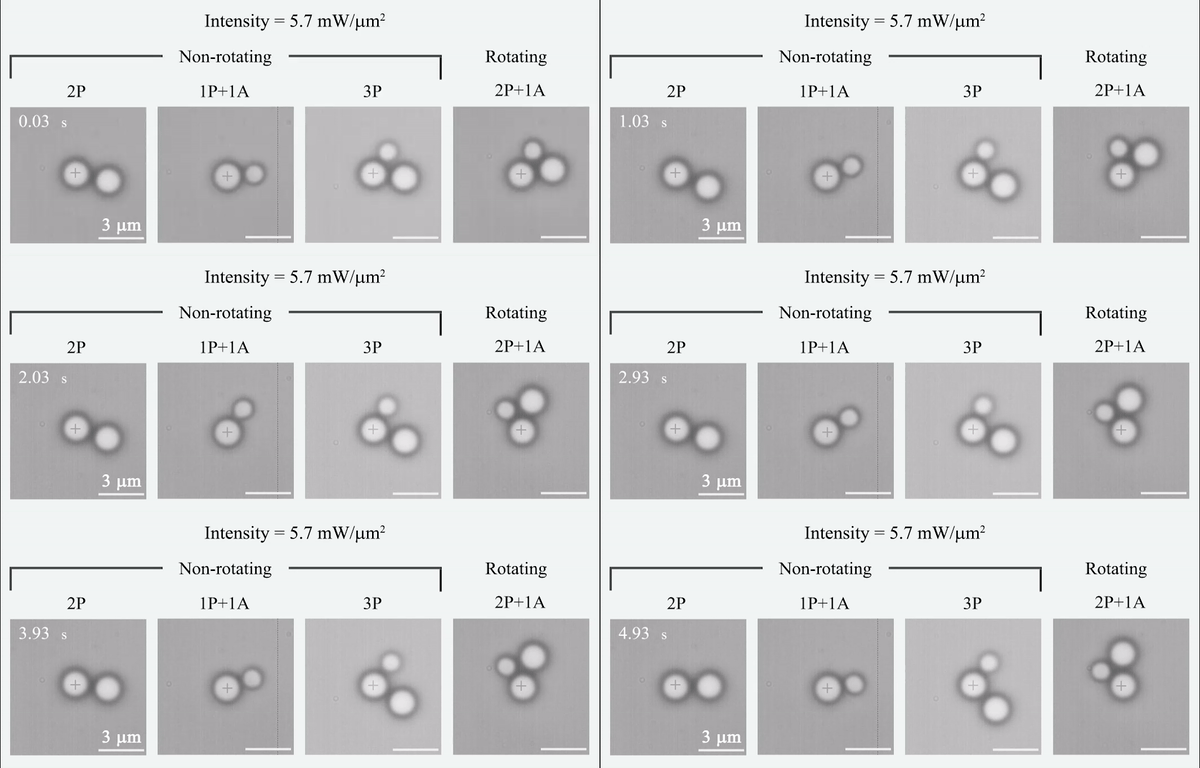
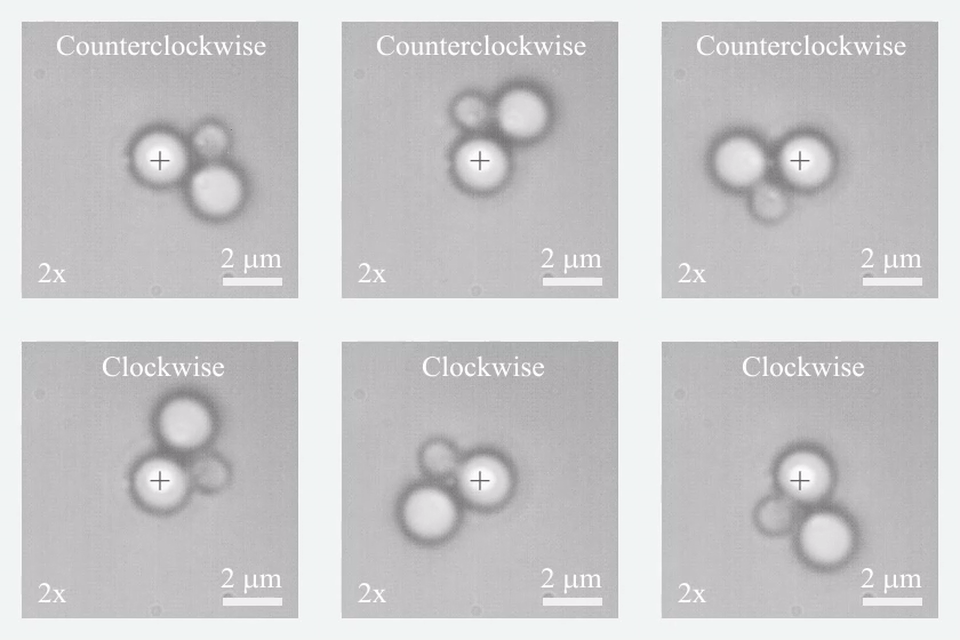
Active Collective Motion – a video

References :

“Active Matter.” Accessed August 20, 2023. https://www.nature.com/collections/hvczfmjfzl.

apratim. “IISER-Pune Soft Matter Groups.” Accessed August 20, 2023. https://apratimchatterji.wixsite.com/apratim/iiser-pune-soft-matter-groups.

Marchetti, M. C., J.-F. Joanny, S. Ramaswamy, T. B. Liverpool, J. Prost, Madan Rao, and R. Aditi Simha. “Soft Active Matter.” arXiv, July 12, 2012. https://doi.org/10.48550/arXiv.1207.2929.

“Members | Cytoskeleton and Cell Shape (CyCelS) Lab.” Accessed August 20, 2023. http://www3.iiserpune.ac.in/~cathale/?page_id=27.

Ramaswamy, Sriram. “The Mechanics and Statistics of Active Matter.” Annual Review of Condensed Matter Physics 1, no. 1 (2010): 323–45. https://doi.org/10.1146/annurev-conmatphys-070909-104101.

New episode – audio-visual podcast – An Indian Prof’s 15 lessons

I share 15 lessons that I have learnt as an Indian Professor, academic scientist, teacher and a citizen…

This is an audio-visual episode. The video is available on below

audio here :

google podcast : https://podcasts.google.com/feed/aHR0cHM6Ly9hbmNob3IuZm0vcy9lMTcyMGUwYy9wb2RjYXN0L3Jzcw/episode/MjVmN2NkMmYtNzQ0ZC00ZmYzLWExMmUtZDdkMmI1OTkxYTI4?sa=X&ved=0CAUQkfYCahcKEwjwiabayOGAAxUAAAAAHQAAAAAQAQ

apple podcast : https://podcasts.apple.com/us/podcast/id1687861465

References :


Kumar, G. V. Pavan. “12 Years as a Faculty Member in India – 12 Lessons.” Scatterings (blog), May 25, 2022. https://backscattering.wordpress.com/2022/05/25/12-years-as-a-faculty-in-india-12-lessons/.

“A Case for Compassionate Rationality.” Scatterings (blog), July 1, 2023. https://backscattering.wordpress.com/2023/07/01/a-case-for-compassionate-rationality/.

“New Episode : Science, Rationality and Compassion.” Scatterings (blog), May 27, 2023. https://backscattering.wordpress.com/2023/05/27/new-episode-science-rationality-and-compassion/.Pinker, Steven. “Rationality.” Accessed May 26, 2023. https://www.google.co.in/books/edition/Rationality/HT0NEAAAQBAJ?hl=en&gbpv=1&printsec=frontcover.

Weinberg, Steven. “Four Golden Lessons.” Nature 426, no. 6965 (November 2003): 389–389. https://doi.org/10.1038/426389a.