Namaste, Hola & Welcome from G.V. Pavan Kumar.
I am a Professor of Physics at the Indian Institute of Science Education and Research, Pune, India.
My research interests are :
(1) Optics & Soft Matter: Optically Induced Forces – Assembly, Dynamics & Function;
(2) History and Philosophy of Science – Ideas in Physical Sciences.
I am interested in the historical and philosophical evolution of ideas and tools in the physical sciences and technology. I research the intellectual history of past scientists, innovators, and people driven by curiosity, and I write about them from an Indian and Asian perspective. My motivation is to humanize science.
In the same spirit, I write and host my podcast Pratidhvani – Humanizing Science.
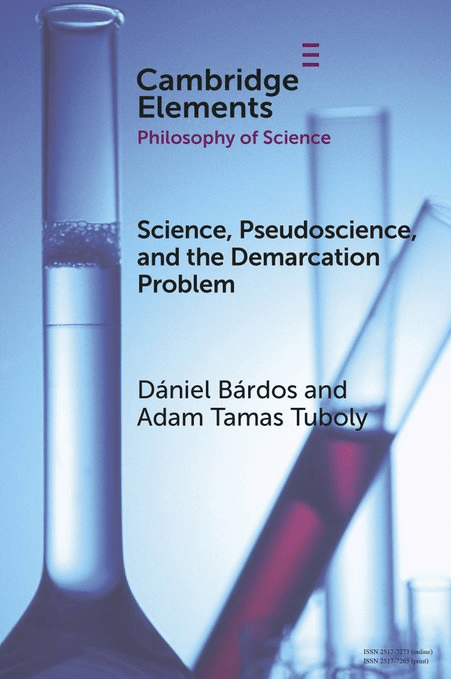
There is a new book (88 pages) on the philosophy of science that discusses the demarcation problem between science and pseudoscience. The topics look interesting, and have relevance in a day and age where science has been appropriated for various purposes, including spirituality.
One will have to ask how to differentiate science from something that may sound like science but, with further exploration, turns out to be a hoax?
This book tries to address this issue from a philosophical viewpoint.
She and her research group work on tropical ecology and evolution of plants. Her lab specializes in plant ecology and evolution, with a focus on Zingiberaceae and Gesneriaceae. Their research interests include floral evolution, community ecology, plant-pollinator interactions, and reproductive ecology.
In the episode, we explore her intellectual journey and find how she got interested in botany via explorations in fauna and flora.
[6]“Vinita Gowda: Success has never been my weakness (@vinita_gowda) / X,” X (formerly Twitter). Accessed: Feb. 21, 2025. [Online]. Available: https://x.com/vinita_gowda
This episode is based on an essay by G.V. Pavan Kumar – to be published in the journal Resonance (March 2025) arxiv preprint of the article: https://arxiv.org/abs/2403.04773
Sangeeta is a materials physicist, Professor and Dean at Defence Institute of Advanced Technology (DIAT) Pune
(DIAT is a University supported by the Ministry of Defence, India)
She is also the Co-Director and Founder ofNavyukti Innovations Private Limited, astart-up company working on Sensor Development and Healthcare Solutions.
In this episode, we explore her intellectual journey so far.
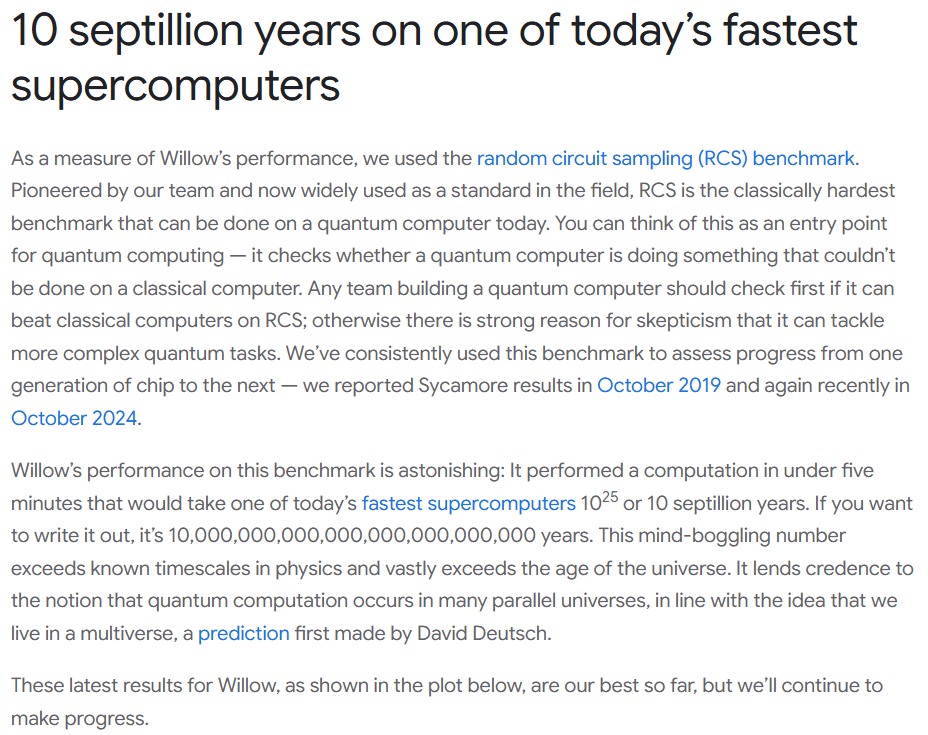
In scientific research, comparative analysis is an excellent way to objectively quantify two measurable entities. The recent Google quantum chip (named Willow) does that efficiently as it compares its capability with today’s fastest supercomputers. The comparison note on Google’s blog is worth reading.
In scientific analysis, such comparison teaches us three things:
a) how a scientific boundary is claimed to be pushed?
b) how a benchmark problem is used to achieve comparison?
c) what is the current state-of-the-art in that research area?
Some further observations on the work:
The theme of the Nature paper reporting this breakthrough is mainly on error correction. Technically, it shows how error tolerance is measured for a quantum device. This device is based on superconducting circuits, which were tested first on a 72-qubit processor and then on a 105-qubit processor.
Interestingly, as the authors mention in the paper, the origins of the errors are not understood well.
The paper is quite technical to read, and, to my limited understanding as an outsider, it makes a good case for the claim. The introduction and the outlook of the paper are written well, and give more technical information that can be appreciated by a general scientific audience.
There is more to come ! It looks like Google has further plans to expand on this work, and it will be interesting to see in which direction they will take the capability. The Google blog shows a roadmap and mentions their ambition as follows: “The next challenge for the field is to demonstrate a first “useful, beyond-classical” computation on today’s quantum chips that is relevant to a real-world application. We’re optimistic that the Willow generation of chips can help us achieve this goal.”
In the past 12 months or so, there has been a lot of buzz related to AI tools (thanks to GPTs, Nobels and perplexities :-), which are mainly in the realm of software theoretical development. This breakthrough in the realm of ‘hardware’ tells us how the physical world is still important!
More to learn and explore…interesting times ahead..
 VISMAYA - History & Philosophy of Physics