New ideas are often created by the merging of two old ideas. How often is this true, and how often do we tend to forget this?
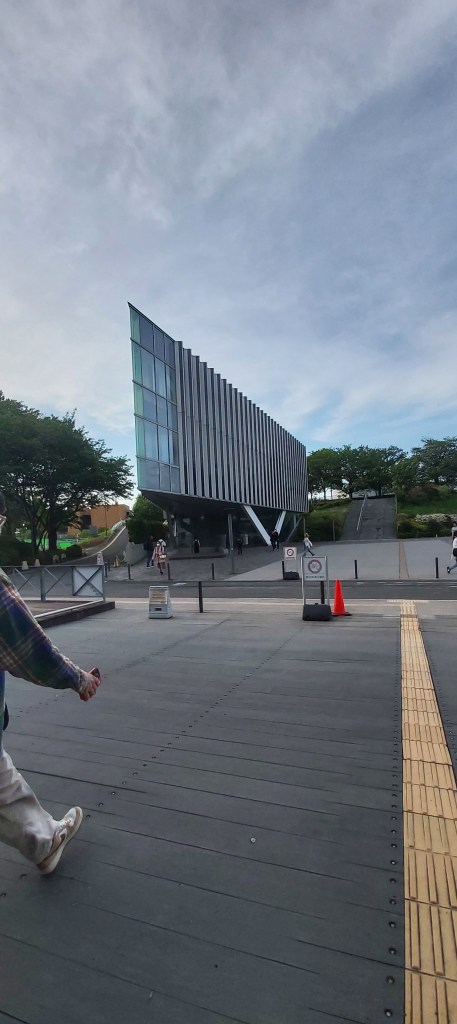
Today I visited the Institute of Science Tokyo, formerly known as Tokyo Tech. This is a new avatar of a very interesting institution funded by the government of Japan. By merging the Tokyo Institute of Technology with the Tokyo Medical and Dental University, a very interesting concept has emerged: the Institute of Science Tokyo. These two institutions have been important pillars of the research and educational landscape of Tokyo, and I had the privilege of visiting this new place, which is a result of a new merger.
Thanks to the invitation and fantastic hospitality of Prof. Daiki Nishiguchi, a faculty member in the Physics Department of the Institute of Science Tokyo, I had a memorable experience. I met Daiki a couple of years ago at the University of Tokyo, where he previously held a faculty position. Recently, he has moved to the Institute of Science Tokyo to establish his independent research group as an Associate Professor.

Daiki has done amazing work on topological soft matter, and his recent results include remarkable observations related to turbulence and vorticity in suspensions of bacteria under spatial confinement. He has also been setting up interesting experiments involving Janus particles, and I got a nice overview of his work. Thanks to him and his research group, I got a flavor of the research being carried out in their lab, and I was also treated to a wonderful lunch by Daiki.
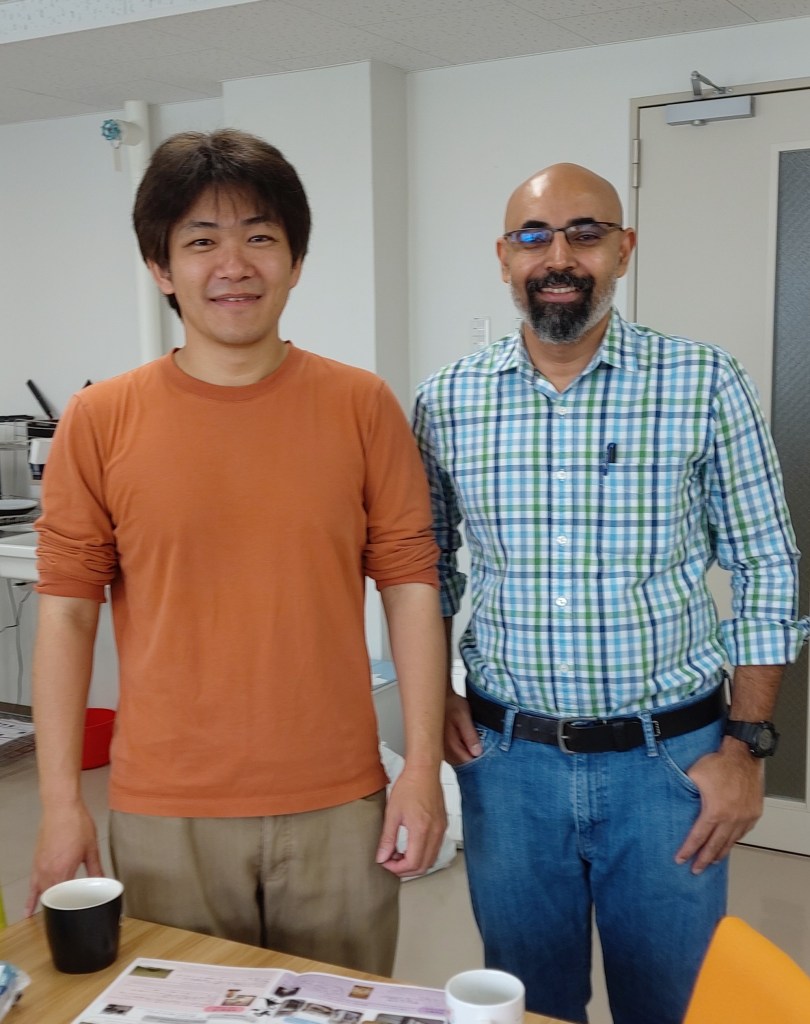
I gave a physics seminar on some of our work on structured light and confinement of soft matter, especially thermally active colloidal matter in optothermal potentials. Since Daiki and his group (see image below) have expertise in topological soft matter, my seminar emphasized structured topological beams, including ring optical beams and optical vortices. I gave an overview of our experimental results and highlighted the prospect of utilizing the topology of light to interact with topological soft matter.

There is much to explore at this interface, and again, it brings me back to the point that new ideas often emerge from the merging of evolving old ideas, such as topological light and topological soft matter.
This is my third visit to Japan, and I always find their calm, focused, and deeply committed research environment inspiring. There is much to learn from their approach to science and technology, and my visit to the Institute of Science Tokyo reinforced this thought.
I thank Daiki and his research group for the wonderful time I had at their laboratory and offer my best wishes to him in his new explorations.

 VISMAYA - History & Philosophy of Physics