One of the research questions I am interested in is how light interacts with the liquid state of matter?
A related question is how is it different from the interaction of light with a solid state?
Specifically, I am interested in understanding how optical forces can influence the structure of liquid matter and if one can control such interaction.
The liquid state of matter is ubiquitous but not as well understood as the solid or gaseous state of matter. This is because the nature of interaction in liquid is intermediate between the other two states, and the way molecules and atoms interact depends on parameters that include interaction in classical and quantum physics.
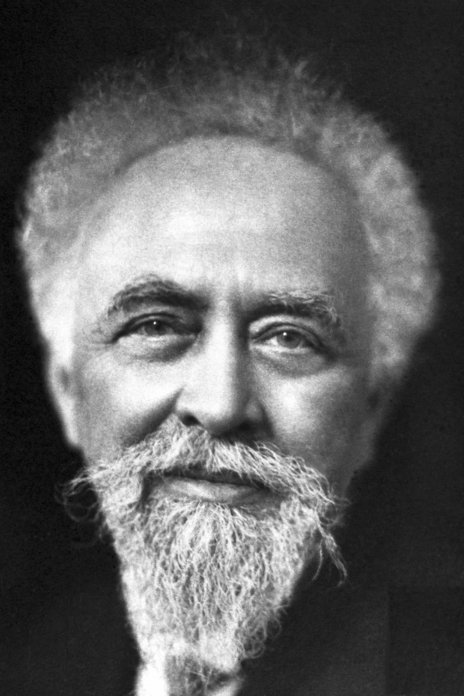
A connected question to this problem is how liquid behaves under and out of equilibrium. This classification is again non-trivial as it depends on the spatio-temporal scales under which one is making an observation. An important aspect of the liquid state is the local and global fluctuations, which complicate the problem. Jean Perrin, in his 1926 Nobel lecture, alludes to this problem very succinctly.

There is still much to learn about the liquid state, and enormous progress has been made from experimental and theoretical viewpoints. But there are some fascinating ‘landscapes’ yet to be fully explored in this domain.
Sometime in the future, I will write more about how this is done and what the historical context is, especially from an optical force viewpoint.
On a related note :
Here is an illustration of the Brownian motion of gold nanoparticles..imaged using a dark field optical trapping microscope..this is a custom-built system in my lab. We study the effect of laser traps on Brownian dynamics..more on this later.

 VISMAYA - History & Philosophy of Physics